In this guide
- 01Types of Roof Shingles: The Full List Explained
- 023-Tab Asphalt Shingles: The Budget Option
- 03Architectural Shingles vs 3-Tab: Why Laminated Won
- 04Class 4 Impact-Resistant Shingles: The Hail Rating Explained
- 05Designer and Luxury Shingles
- 06Metal and Rubber Shingles: The Premium Hail-Resistant Options
- 07Cedar Shake Roofs in Alberta: Beauty With Strings Attached
- 08Roof Shingle Types Compared: Cost, Lifespan, Hail and Weight
- 09How Many Bundles of Shingles in a Square?
- 10Which Types of Roof Shingles Suit Alberta?
- 11Get Samples and a Free Quote for Any Shingle Type
Types of Roof Shingles: The Full List Explained
Understanding the types of roof shingles on the market matters more in Alberta than almost anywhere else in Canada. Our roofs deal with golf-ball hail, Chinook freeze-thaw swings, prairie wind and long UV summers, and different shingle types handle those stresses very differently. A shingle that is perfectly good in Ontario can be a poor choice in Airdrie.
The word shingle covers a lot of ground. It includes cheap 3-tab asphalt, the architectural asphalt that dominates the market, the impact-rated versions of those, premium designer profiles, stamped metal panels made to look like shingles or shakes, rubber and synthetic composites, and natural cedar. Each has its own cost tier, lifespan, hail behaviour, weight and look.
This guide walks through every roof shingle type in turn, then puts them side by side in a comparison table, answers the bundles-per-square question you need for estimating, and finishes with a frank take on which types suit Alberta. For the deeper brand-by-brand comparison, our pillar guide to the best shingles for Alberta's climate is the companion piece.
3-Tab Asphalt Shingles: The Budget Option
A 3-tab shingle is a single flat strip of fibreglass mat coated in asphalt and granules, with two slots cut into the bottom edge so each strip looks like three separate tabs once installed. The result is a flat, uniform, slightly brick-like pattern. Until the late 1990s this was the standard roof on almost every Canadian house, and there are still plenty on older Airdrie bungalows in Big Springs, Thorburn and Meadowbrook.
The appeal is price. As of 2026, 3-tab shingles run roughly $30 to $40 per bundle, and a full reroof with them can come in a few hundred to a thousand dollars below the same job in architectural shingles. That is about the only argument for them.
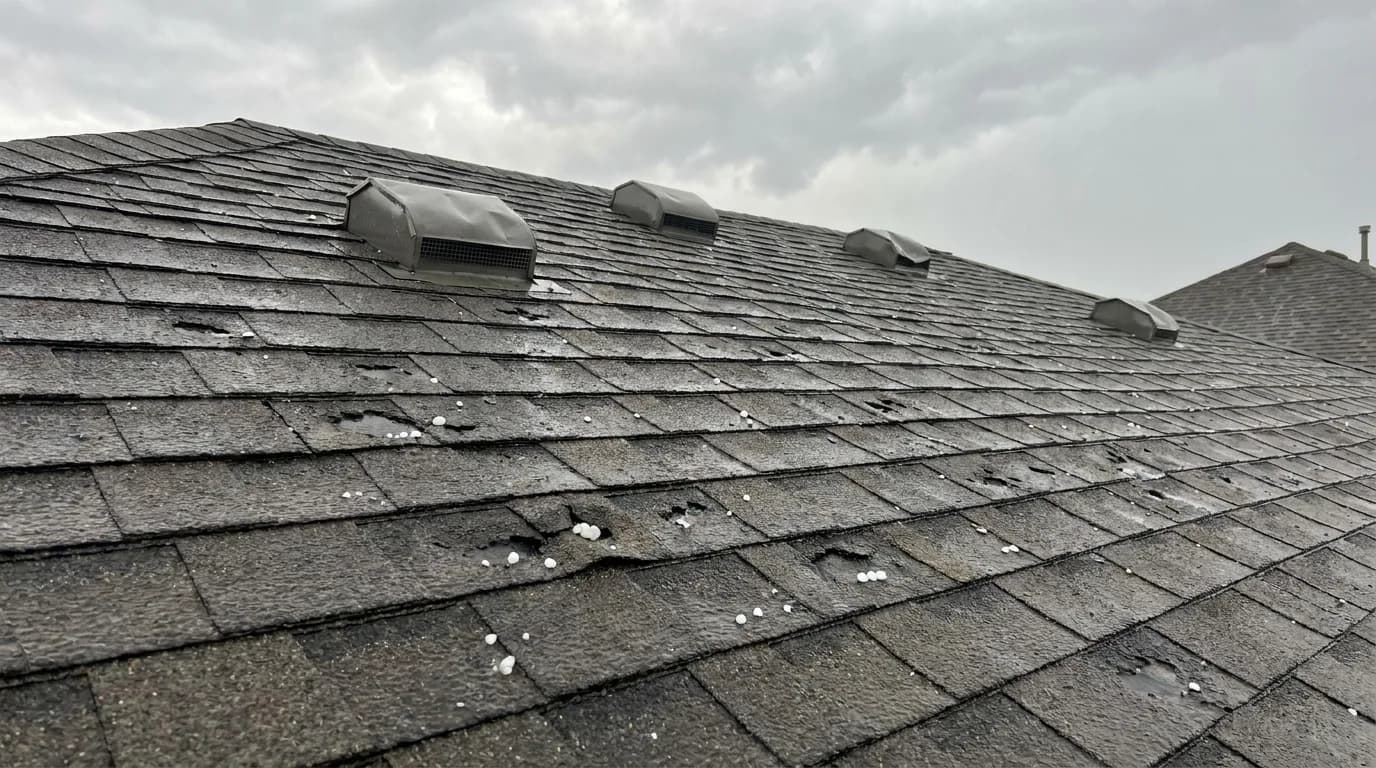
The drawbacks are significant in Alberta. 3-tab shingles are thin, so they bruise easily under hail. The individual tabs catch wind, and manufacturer wind ratings are typically 60 mph (about 100 km/h), which Chinook gusts exceed. Warranties are shorter, commonly 20 to 25 years, and real-world life here is often 12 to 18 years. Most manufacturers have also shrunk their 3-tab lines, and several insurers are less generous with them on hail claims because matching product is hard to find. For a new roof today, we rarely recommend them except for a detached garage, a shed or a short-term flip.
Architectural Shingles vs 3-Tab: Why Laminated Won
Architectural shingles, also called laminated or dimensional shingles, are built from two or more layers of asphalt-coated mat bonded together, with the top layer cut into random-width tabs. That extra layer makes the shingle thicker and heavier, and the staggered cut gives the roof depth and shadow lines that mimic wood shakes. This is what almost every new roof in Airdrie has worn for the last 20 years.
On the architectural shingles vs 3-tab question, the numbers speak for themselves:
- Thickness and weight: architectural shingles weigh roughly 240 to 300 lb per square versus about 200 lb for 3-tab, which is a big part of why they resist hail and wind better.
- Wind rating: typically 110 to 130 mph (about 180 to 210 km/h) with proper nailing, versus 60 mph for most 3-tab.
- Warranty: limited lifetime coverage is standard, versus 20 to 25 years for 3-tab.
- Real lifespan in Alberta: usually 20 to 30 years, versus 12 to 18 for 3-tab.
- Cost: about $40 to $60 per bundle as of 2026, or roughly 15 to 25 percent more than 3-tab on the material line, which is a small share of the total reroof price because labour is the same.
- Look: dimensional, with shadow lines; available in far more colours.
Because labour and tear-off are identical, the difference between a 3-tab reroof and an architectural one on an average Airdrie home is usually under $1,500 as of 2026, and you get 5 to 10 extra years of roof. That is why architectural is the default recommendation, and why the IKO vs GAF vs BP comparison is mostly a comparison between architectural lines.
Class 4 Impact-Resistant Shingles: The Hail Rating Explained
Class 4 is not a separate style of shingle. It is a test rating under UL 2218, in which a 2-inch steel ball is dropped from 20 feet onto the shingle twice in the same spot. If the mat does not crack, the product earns Class 4, the highest of four levels. Manufacturers achieve it in asphalt shingles by using a modified asphalt (usually SBS polymer, essentially rubberised asphalt), a heavier mat, or both.
In Hailstorm Alley, this rating has gone from a niche upgrade to something close to standard on quality reroofs. The reasons are practical. Class 4 shingles come through quarter and loonie-sized hail with far less bruising, so you are less likely to be filing a claim every few years. Many Alberta insurers offer a premium discount for a Class 4 roof, typically in the range of 5 to 20 percent on the home policy, and the City of Calgary's resilient roofing rebate has periodically offered money toward them. Some insurers have also begun to treat non-impact-rated roofs less favourably on hail claims.
The premium as of 2026 is roughly $15 to $30 more per bundle than a standard architectural shingle from the same brand, which works out to about $1,000 to $2,500 extra on an average Airdrie reroof. Popular Class 4 options stocked in Alberta include IKO Nordic and Dynasty, Malarkey Vista and Legacy, GAF Timberline AS II, Owens Corning Duration Flex and BP Vangard. Our dedicated guide to Class 4 impact-resistant shingles in Alberta covers each one, the insurance discounts and whether the upgrade pays back.
One honest caveat: Class 4 means the mat resists cracking. It does not mean the shingle is immune to cosmetic granule loss from a severe storm, and insurers sometimes decline cosmetic damage on Class 4 roofs. Read the policy wording and ask your broker how your insurer treats it before you count on a discount.
Designer and Luxury Shingles
Designer shingles, sometimes called luxury or premium shingles, are the top tier of asphalt. They are built from thicker, multi-layer laminates cut into shapes that convincingly imitate slate or hand-split cedar shakes, with deeper shadow lines and more colour blending than standard architectural products. Examples include GAF Grand Sequoia and Camelot, IKO Armourshake and Royal Estate, CertainTeed Grand Manor and Presidential, and Owens Corning Woodcrest.
They weigh 350 to 500 lb per square, which is why they need four or five bundles per square instead of three, and why crews charge a little more to carry and install them. Many designer lines are also Class 4 rated, either as standard or in an impact-resistant version, and their sheer thickness helps them shrug off hail. Wind ratings are typically 130 mph.
The cost is the barrier. Designer shingles run roughly $80 to $150 per bundle as of 2026, and with the extra bundles and labour, a designer reroof can land at 1.5 to 2 times the price of a standard architectural job. On an average Airdrie two-storey that might mean $18,000 to $28,000 rather than $10,000 to $16,000. They make sense on estate homes in Cooper's Crossing or Kings Heights where the roof is a major visual feature and the owner wants a slate or shake look without the weight, cost or maintenance of the real thing.
Metal and Rubber Shingles: The Premium Hail-Resistant Options
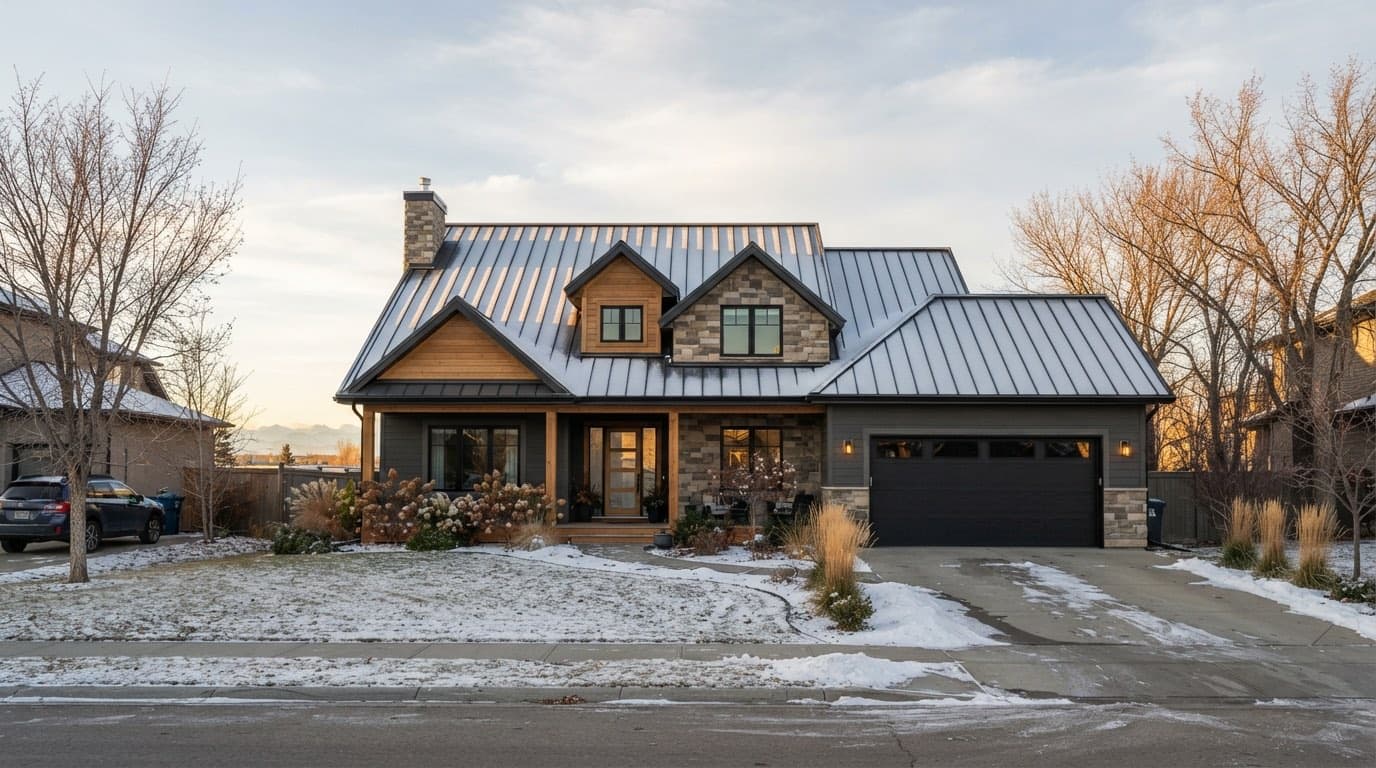
Metal roofing comes in two broad forms. Standing seam uses long vertical panels with raised interlocking seams. Metal shingles are smaller stamped steel or aluminium panels, formed and painted to look like asphalt shingles, cedar shakes, slate or tile, and installed in interlocking courses. Both are gaining ground in Alberta for the same reasons: hail and lifespan. Quality steel with a Kynar or similar finish carries a Class 4 rating and typically a 40 to 50 year finish warranty, with realistic lifespans of 40 to 70 years. Hail dents thick steel rather than fracturing it, so the roof keeps shedding water after a bad storm, although insurers may treat those dents as cosmetic and decline to pay for them.
The cost is the main trade-off. As of 2026, metal roofing typically runs two to three times the price of architectural asphalt, roughly $15,000 to $45,000 or more for a typical Airdrie home depending on profile and complexity. Our metal roofing in Airdrie service page covers the profiles we install, and the metal roof vs shingles comparison weighs the lifetime economics.
Rubber shingles are a Canadian success story. Euroshield, made in Calgary, produces shingles from recycled tires (roughly 95 percent recycled content) moulded to look like slate or shakes, and synthetic composites such as DaVinci and Brava use engineered polymers to the same end. All are nailed in courses much like asphalt. For Hailstorm Alley they are arguably the most hail-proof roof you can buy: Class 4 rated, with Euroshield offering a hail warranty covering stones up to 2 inches in diameter, which is unusual in the industry. Rubber flexes rather than cracks through freeze-thaw and Chinook swings and carries limited lifetime warranties with realistic 50-year lifespans.
The trade-offs are cost, weight and colour range. Rubber shingles generally land between premium designer asphalt and metal on price, some profiles are heavy enough that the roof structure should be checked first, and the palette is mostly blacks, greys and browns. If you plan to stay in the house for 20 years and you are tired of hail claims, they are worth a serious look. Our full review of Euroshield rubber roofing in Alberta goes into pricing, warranty terms and what it looks like on a real roof.
Cedar Shake Roofs in Alberta: Beauty With Strings Attached
A cedar shake roof is the original architectural shingle. Hand-split or resawn western red cedar shakes, or thinner sawn cedar shingles, weather to a silver grey and give a home a texture no manufactured product fully matches. There are still cedar roofs on older acreages around Airdrie and on some 1980s and 1990s estate homes, and homeowners regularly ask about replacing them like for like.
Before you do, weigh the Alberta realities:
- Hail: cedar splits and dents under large hail, and there is no impact rating to point to. Old, dry shakes are especially brittle.
- Fire: untreated cedar is combustible. Fire-retardant treated shakes exist but cost more, and some rural fire-risk zones and insurers restrict untreated wood roofs.
- Insurance: many Alberta insurers surcharge cedar roofs, apply short depreciation schedules, or decline to write new policies on them, particularly once the roof passes 15 to 20 years. Confirm with your broker before you commit.
- Maintenance: cedar needs debris cleared, moss controlled and periodic treatment to reach its potential. Neglected cedar in a dry, sunny prairie climate can be done in 15 to 20 years; well-maintained cedar can reach 30 or more.
- Cost: as of 2026, a cedar shake roof typically runs 2 to 3 times the price of architectural asphalt, similar to metal, and skilled installers are fewer each year.
For most Airdrie homeowners who love the look, a designer asphalt shake profile, a rubber shake, or a metal shake panel gives the appearance with a hail rating and an insurer that will not flinch. Where a genuine cedar roof still makes sense is a heritage property, a home in a treed setting where the look is central, or an owner who accepts the maintenance and has confirmed insurance terms in writing.
Roof Shingle Types Compared: Cost, Lifespan, Hail and Weight
The table below pulls the roof shingle types together. Cost tiers are 2026 Alberta market guides for supply and install relative to standard architectural asphalt, which sits at roughly $450 to $800 per square installed. Lifespans are realistic Alberta ranges, not warranty lengths. Confirm exact figures with a free on-site quote.
| Shingle type | Cost tier (installed) | Realistic Alberta lifespan | Hail rating | Weight per square | Look |
|---|---|---|---|---|---|
| 3-tab asphalt | Lowest, about 10–15% under architectural | 12–18 years | None (Class 1–2 typical) | About 200 lb | Flat, uniform |
| Architectural asphalt | Baseline, $450–$800 per square | 20–30 years | Class 2–3 typical, Class 4 available | 240–300 lb | Dimensional |
| Class 4 architectural | Baseline plus $100–$200 per square | 22–30+ years | Class 4 (UL 2218) | 250–320 lb | Dimensional |
| Designer / luxury asphalt | 1.5–2× baseline | 30–40 years | Class 3–4 depending on line | 350–500 lb | Slate or shake imitation |
| Metal shingles / standing seam | 2–3× baseline | 40–70 years | Class 4 (dents, not cracks) | 60–150 lb | Shake, slate, tile or panel |
| Rubber / synthetic | 1.8–2.5× baseline | 40–50+ years | Class 4, some with 2-inch hail warranty | 250–400 lb | Slate or shake |
| Cedar shake | 2–3× baseline | 15–30 years depending on care | Not rated | 350–450 lb | Natural wood |
Two things stand out. First, the gap between architectural and Class 4 architectural is small in cost and large in hail performance, which is why it is the default recommendation in Hailstorm Alley. Second, metal and rubber cost a lot more up front but often work out cheaper per year of service, especially once fewer hail claims and insurance discounts are factored in.
How Many Bundles of Shingles in a Square?
Shingles are sold by the bundle but priced and estimated by the square, and a roofing square is 100 square feet of roof surface. The question of how many bundles of shingles in a square comes up because the answer varies with the product.
- 3-tab asphalt: 3 bundles per square is standard.
- Architectural asphalt: 3 bundles per square for almost every line from IKO, BP, GAF, Owens Corning and Malarkey; a few heavier or larger-format lines use 4.
- Class 4 architectural: usually 3, occasionally 4 for the heaviest SBS-modified products.
- Designer / luxury asphalt: 4 or 5 bundles per square because each shingle is much thicker.
- Rubber / synthetic: varies by profile; Euroshield is sold per square rather than per bundle in most cases, and coverage depends on exposure.
- Metal and cedar: not sold in bundles; metal is priced per square or per panel, cedar shakes come in bundles that typically cover about 25 square feet at standard exposure, so roughly 4 bundles per square.
To estimate, take your roof area in squares (footprint times a pitch multiplier, divided by 100), add 10 to 15 percent for waste, starters and ridge cap, then multiply by the bundles-per-square figure for your product. A 20-square architectural roof at 3 bundles per square with 12 percent waste needs about 67 bundles. Our roof pitch guide explains the multiplier step, and the 2026 shingle price guide gives current per-bundle numbers to turn that into a material budget.
Which Types of Roof Shingles Suit Alberta?
Alberta is not a neutral climate for roofing, and the honest ranking of shingle types here is different from a national one. Hail is the first filter. Any roof in the Calgary to Red Deer corridor will be hit by damaging hail at some point in its life, and probably more than once, so impact resistance is not a luxury. Freeze-thaw and Chinooks are the second filter: a shingle needs to stay flexible at minus 30 and not soften at plus 15 the next afternoon, which favours SBS-modified asphalt, rubber and metal over cheap oxidised asphalt. UV and wind round it out.
Put those filters together and the practical shortlist for most Airdrie homes as of 2026 looks like this. For the best value, a Class 4 architectural shingle from a brand stocked in Alberta, installed with a six-nail pattern and ice-and-water shield at the eaves and valleys. For a premium look on a budget that stretches, a Class 4 designer shingle. For a 40-plus-year roof and the fewest hail claims, rubber or metal. For a garage, shed or short-term hold, standard architectural; our shed roof shingles guide covers that smaller-scale job on its own.
Brand matters less than grade and installation. IKO and BP are Canadian and widely stocked, and GAF, Owens Corning, Malarkey and CertainTeed all have solid Alberta distribution. What matters most is that the shingle is installed to specification by a crew that will still be around in ten years, because most premature failures we see on tear-offs are installation problems rather than product problems.
Get Samples and a Free Quote for Any Shingle Type
The best way to choose between roof shingle types is to hold them. Colour boards and product samples show you the thickness, the granule texture and how each option reads against your siding and brick, and a walk around the neighbourhood will usually turn up a real roof in the product you are considering.
Apex Roofing Airdrie installs architectural, Class 4, designer, rubber and metal roofing across Airdrie, Crossfield, Balzac and Cochrane with our own in-house crew. Every estimate is free, on site and no obligation, and comes as an itemised written quote that lists the exact product, the square count and the bundles so you can compare it with any other bid. Every roof we install carries a written workmanship guarantee on top of the manufacturer warranty.
Start with our roof replacement in Airdrie page for asphalt and rubber options, or metal roofing in Airdrie if you are leaning toward steel. If your current roof took hail this summer, book a free inspection first through our hail damage roof repair page, because the answer to which shingle you want next may well be the one your insurer is about to help pay for.
Written by the Apex Roofing Airdrie crew
Practical guidance from the local roofers who inspect, repair and replace roofs across Airdrie and Rocky View County every season. We review our guides against current Alberta practice and update them when materials, code or insurer behaviour changes. About our team.