In this guide
- 01Why snow guards for metal roof owners are an Alberta necessity, not an option
- 02What a roof avalanche actually damages
- 03Types of roof snow guards and which panel each one suits
- 04Snow guard placement: the rules that matter
- 05Chinook thaw cycles: why Alberta metal roofs slide when you least expect it
- 06Snow guards installation cost in 2026
- 07Warranty and penetration cautions before you drill anything
- 08Snow guards, eavestroughs and the ice at the eave
- 09Getting snow retention right on your roof
Why snow guards for metal roof owners are an Alberta necessity, not an option
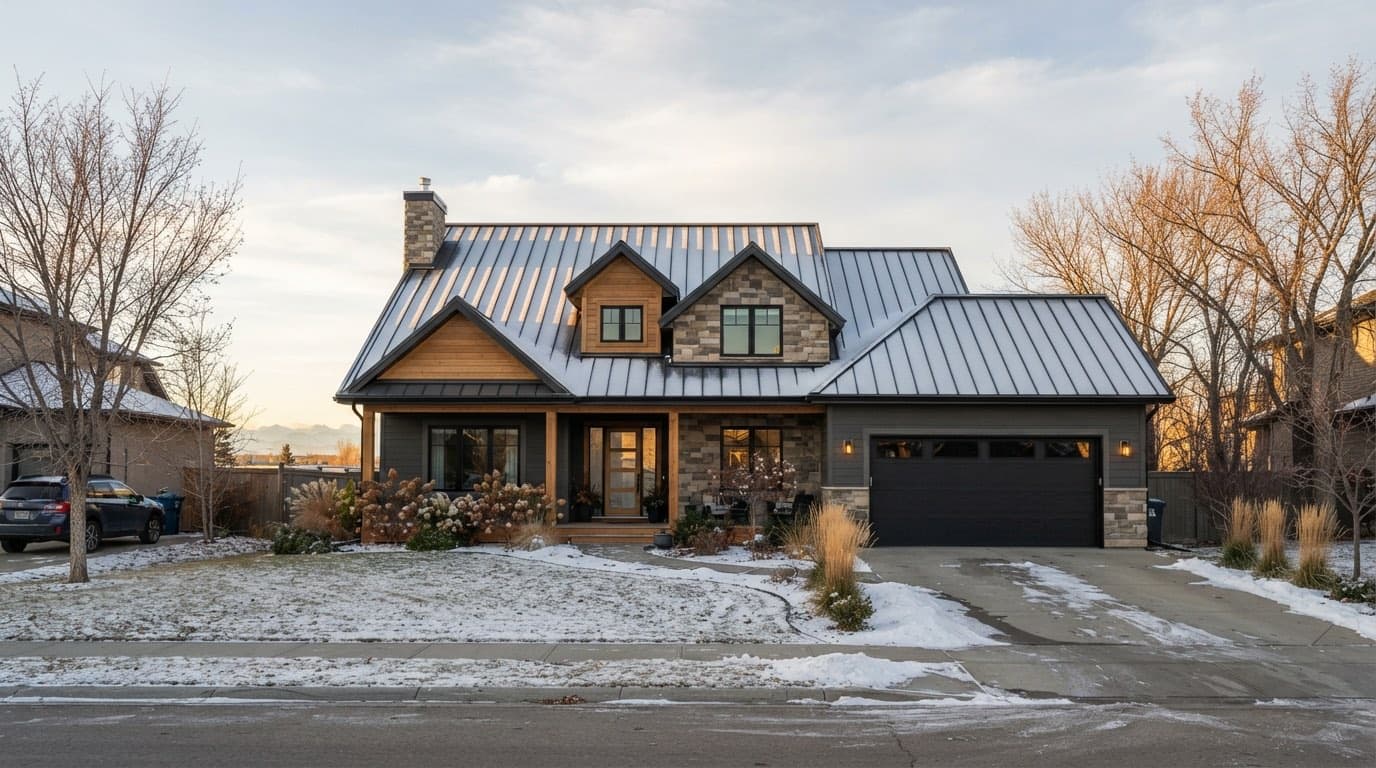
Snow guards for metal roof surfaces solve a problem asphalt roofs mostly do not have. Shingles are rough, so snow bonds to them and melts in place. Metal is smooth, and as soon as the panel surface warms above freezing, a film of meltwater forms between the metal and the snowpack. The whole slab lets go at once. This is a roof avalanche, and on a 12 m wide two-storey slope it can be several hundred kilograms of dense snow and ice landing in the space of a second.
Chinooks make this worse in Alberta than almost anywhere in Canada. A week of -25°C builds a deep, compacted pack; then the air jumps 20 degrees in a few hours, the sun hits the panels and the pack releases. Homes across Airdrie, Cochrane and Crossfield see this a dozen times a winter, and anyone at the front door, on the deck or beside the gas meter in the drop zone is at risk.
The point of metal roof snow retention is not to keep the snow on the roof forever. It is to hold the pack so it melts and drains gradually, and to break a single large slide into small, harmless ones. If you are weighing up metal for a new roof, our guide to metal roofs vs shingles in Alberta covers snow shedding alongside the other trade-offs.
What a roof avalanche actually damages
The injury risk is the reason to fit guards, but the property damage is what most homeowners notice first, and it repeats every winter until it is fixed.
- Eavestroughs. A sliding pack rips the trough off its hangers or crushes it flat. This is the single most common damage we see on metal roofs without guards, and it is why our eavestrough repair service in Airdrie sees so many metal-roofed homes each spring.
- Entrances and steps. A block of ice on the front step, or a pile that blocks the door, plus the risk to anyone underneath.
- Decks, railings and pergolas. Snow dropping from a second-storey roof onto a deck snaps rails and cracks boards.
- Gas meters and regulators. Utility companies in Alberta specifically warn about roof snow hitting meters; a damaged regulator is a gas leak.
- AC condensers and heat pumps. Fins and fan housings crushed by a slide.
- Lower roofs. A slide from an upper slope onto a porch or garage roof dents panels and overloads the lower structure.
- Vehicles and landscaping. Dented hoods, broken windshields, flattened shrubs.
On many homes the fix is targeted: guards above the door, above the deck, above the meter, and nowhere else. On a house where the whole eave line runs over a walkway, a continuous system is the better answer.
Types of roof snow guards and which panel each one suits
There are two families of snow guards for metal roof systems. Individual pad-style guards (also called snow cleats or snow stops) are small blocks or brackets placed in a pattern across the slope. Continuous systems run a pipe, rail or fence horizontally along the roof, supported by brackets every 60 to 120 cm. Which family you choose depends on the panel profile, the snow load and how much you want to spend.
| Guard type | How it attaches | Best on | Rough 2026 cost installed (guide) |
|---|---|---|---|
| Polycarbonate or metal pad guards, adhesive-mounted | Structural adhesive to panel surface | Exposed-fastener and standing seam, light to moderate loads | $8–$15 each |
| Screw-down pad guards | Fastened through the panel into purlins or deck with sealed screws | Exposed-fastener (screw-down) panels | $10–$25 each |
| Clamp-on pad guards | Set-screw clamp onto the standing seam, no penetration | Standing seam only | $15–$30 each |
| Pipe or rail system, one or two rails | Clamp-on brackets (standing seam) or screw-down brackets (exposed fastener) | Long slopes, heavy loads, entrances | $25–$45 per linear foot |
| Fence-style system | Clamp-on or screw-down brackets with a vertical fence panel | Steep slopes, commercial, the heaviest loads | $35–$60 per linear foot |
The attachment method is the important line in that table. On a standing seam roof, clamp-on guards grip the seam without putting a hole in the panel, which preserves the panel warranty and the weathertightness. On an exposed-fastener roof there is no seam to clamp, so guards are screwed through the panel with gasketed fasteners into solid backing, or bonded with adhesive. Screwing guards into a standing seam roof, or using adhesive pads where the load calls for a rail, are the two most common mistakes.
Snow guard placement: the rules that matter
A poorly placed guard is worse than none, because it either fails and joins the slide or holds a partial pack that lets go later in a bigger lump. Manufacturers publish layout calculators based on roof pitch, panel length, ground snow load and panel type, and any installer should be able to show you one. The general rules below are what those calculators produce for typical Airdrie roofs.
- Start near the eave, not at it. The first row sits roughly 30 to 60 cm up from the eave so the load is carried on the roof structure, not the overhang.
- Stagger the rows. Pad guards go in a staggered grid so no straight channel forms between them for snow to slide through.
- Add rows for long slopes. As a guide, a second row about a third of the way up the panel on runs over 6 m, and a third row on long or steep roofs; the calculator sets the exact spacing.
- Cover the whole width over protected areas. Guards over a door need to extend well past both sides, because snow spreads sideways as it moves.
- Respect the panel structure. Clamp-on brackets go on seams; screw-down brackets go into purlins or solid deck, never into the flat of an unsupported panel.
- Keep guards clear of valleys and gable ends. Snow moving in a valley concentrates load, and guards there are often overloaded and torn off.
- Do not guard a slope that drains onto nothing. A rear slope dropping onto open lawn can be left to shed if the eavestrough is designed for it or omitted.
Pitch matters. Below about 3/12 metal roofs rarely avalanche. From 4/12 to 8/12, which covers most Airdrie homes, guards over protected areas are the sensible minimum. Above 8/12, a continuous rail or fence is usually needed because pads alone cannot hold the load.
Chinook thaw cycles: why Alberta metal roofs slide when you least expect it
Most of the country's snow-guard guidance was written for regions where snow accumulates through winter and melts in spring. Alberta's foothills do not work that way. Airdrie can see several Chinook events a month from December to March, each one taking the air from -20°C to +8°C within a day. On a dark metal roof in full sun, the panel surface can reach well above freezing even when the air is still below it.
So the slide risk is not a spring event; it is any sunny afternoon after a snowfall, and the pack that slides is dense, layered and partly refrozen, which makes it heavier than fresh snow. Guards on an Alberta metal roof see more load cycles per winter than the same guards in Ontario, and adhesive-only pads rated for a light annual melt can fail here in two or three seasons.
The practical takeaway is to size up: where a calculator gives a borderline answer between pads and rails, choose rails, and choose mechanical over adhesive attachment on any slope over a protected area. If prairie wind loads snow onto one slope, treat it as the heavy-load case. A cold, well-ventilated attic also helps by stopping the roof warming from below; our guide on attic ventilation and roof vents in Alberta explains how.
Snow guards installation cost in 2026
Treat these as rough 2026 market guides for the Airdrie and Calgary area. The biggest variable in the cost of snow guards for metal roof retrofits is not the hardware; it is access, and whether the guards go on with a new roof or afterward on a steep two-storey that needs fall protection.
| Scenario | Rough 2026 cost (guide) |
|---|---|
| Pad guards over one entrance, roughly 20 to 30 guards, fitted with a new metal roof | $250–$600 |
| Pad guards over one entrance, retrofit on an existing roof | $400–$900 |
| Two-rail pipe system over a 10 m eave, clamp-on, new roof | $300–$500 |
| Two-rail pipe system over a 10 m eave, retrofit | $500–$900 |
| Whole-house continuous system, average two-storey, retrofit | $2,500–$6,000 |
| Repair of eavestroughs torn off by a slide (for comparison) | $300–$1,500 per section |
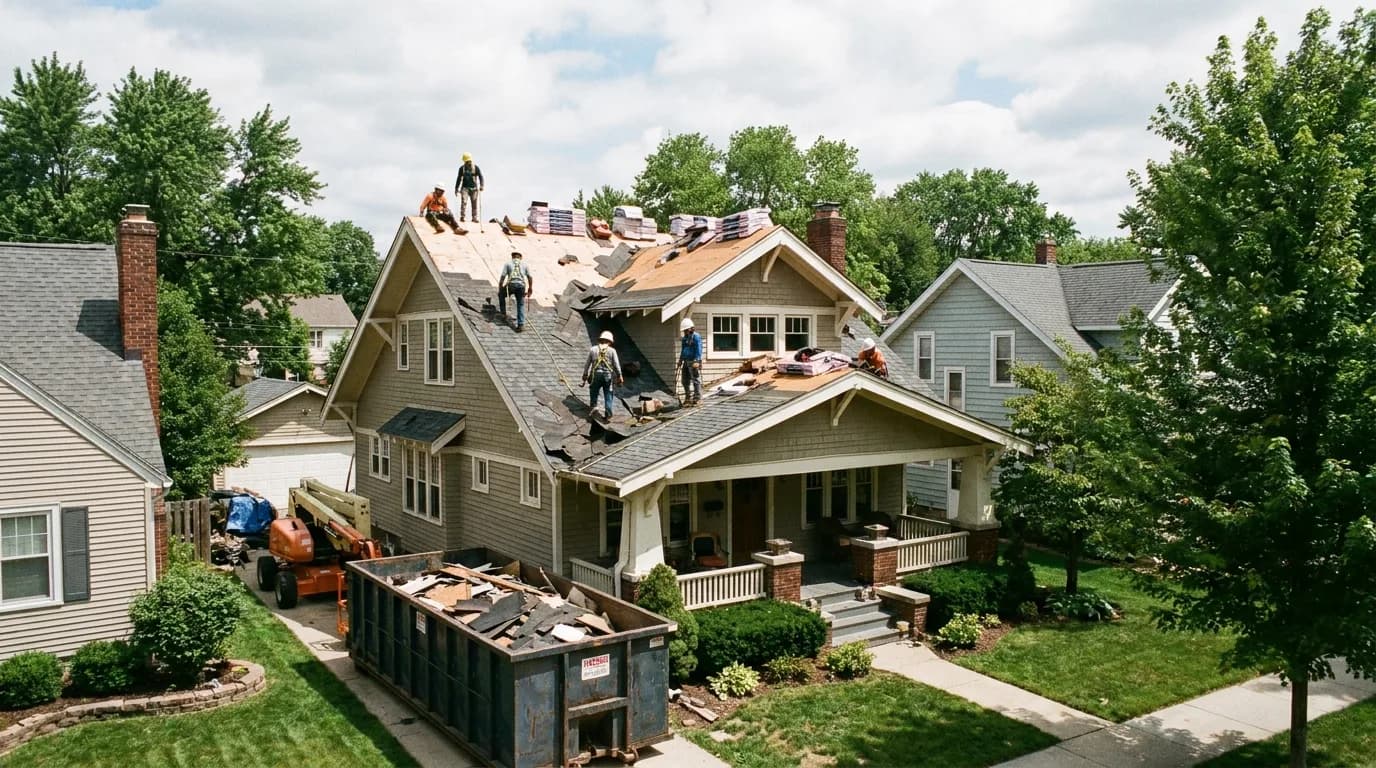
On a new roof, guards are a small line item and by far the cheapest to fit, because the crew is already up there with no snow in the way. Our metal roofing service in Airdrie prices snow retention into every quote for a home with protected areas below the eave. For a fuller picture of where guards sit in the total, see our guide to metal roof cost in Alberta.
Warranty and penetration cautions before you drill anything
Metal panel manufacturers are precise about what can be attached to their product and how. Read the panel warranty before choosing snow guards for metal roof panels, because two common approaches can void it.
Screwing through a standing seam panel is the first. Standing seam panels float on clips so they can expand and contract, and a screw through the flat pins the panel and leads to oil-canning, tear-out and leaks at the hole; clamp-on guards exist to avoid this. The second is adhesive not approved for the panel's paint finish. Some adhesives soften certain coatings, some pads bond poorly to textured or PVDF finishes, and all of them need warm, dry conditions to cure, which rules out most of the Alberta year.
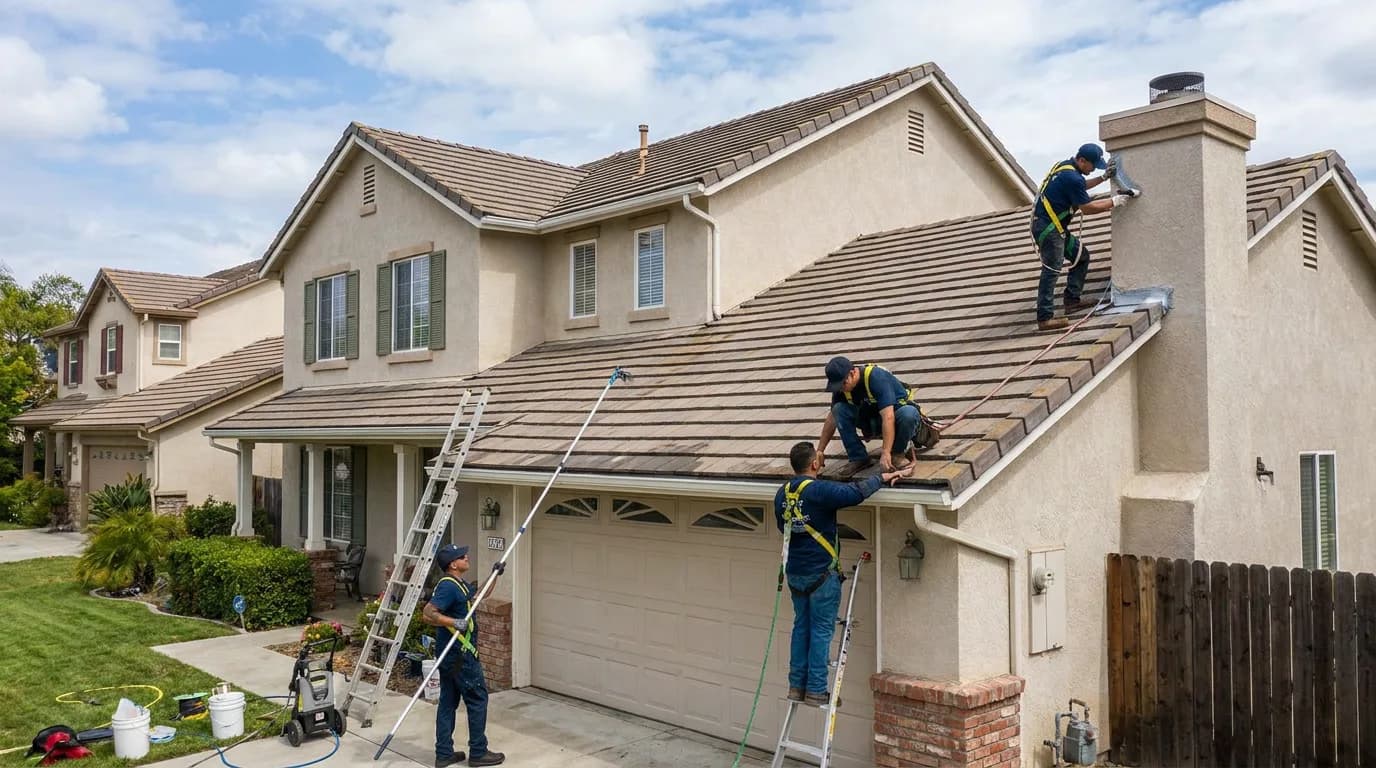
On exposed-fastener roofs, every screw-down guard is a new penetration that needs a gasketed fastener into solid backing on a sealant bed. Screws driven into thin deck or between purlins pull out under load and leave a hole; a roofer who installs metal knows where the backing is, a general handyman may not. Keep the layout drawing and data sheet with your roof paperwork, because a guard failure that tears off a strip of panels is a warranty question, and our guide on roof warranties explained covers what is usually covered.
Snow guards, eavestroughs and the ice at the eave
Metal roofs and eavestroughs have an uneasy relationship in Alberta. Without guards, the slide takes the trough with it. With guards, the pack is held, but the meltwater from a Chinook still has to go somewhere, and on a shaded eave it refreezes in the trough and builds an ice ridge behind the guards.
Three things keep that under control: set the front lip of the trough below the roof plane so any residual slide passes over it, use heavy-gauge trough with closely spaced hangers because ice loading is higher than on shingles, and keep the guards far enough up the slope that the held pack does not overhang the trough. Some owners with open ground below simply omit the eavestrough on that slope and manage runoff at grade.
If ice builds in the trough every winter despite guards, the roof is warming from below. That is an attic insulation and ventilation problem, and the same one behind ice dams on shingle roofs; our guide to preventing ice dams in Airdrie applies to metal roofs too.
Getting snow retention right on your roof
Metal is an excellent roof for Alberta: it shrugs off hail better than most shingles, sheds the snow load that stresses other roofs and lasts decades. The one thing it does badly is hold snow where you need it held, and snow guards for metal roof slopes are the simple, proven fix. Fit the type that matches your panel, place it by a layout calculator rather than by eye, and put it on when the roof goes on if you can.
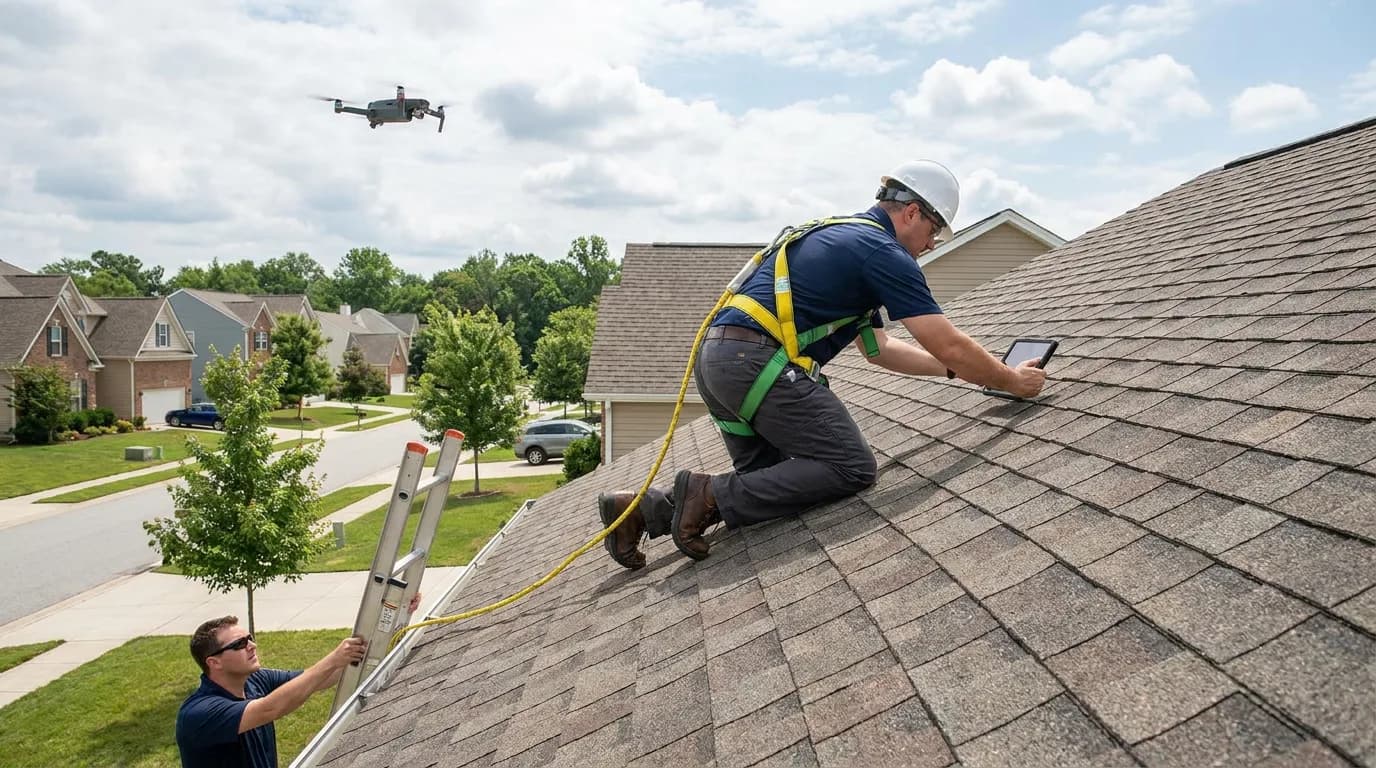
If you already have a metal roof that dumps snow on the front step, or you are planning one and want retention built into the quote, Apex Roofing Airdrie offers a free, no-obligation on-site estimate. Our local crew will look at the panel profile, the slopes and what sits below them, and give you an itemised written quote for the right system, backed by our written workmanship guarantee on top of the manufacturer's warranty. For the wider question of which roof covering suits your home, our pillar guide to the best shingles for Alberta's climate compares metal with the asphalt options.
Written by the Apex Roofing Airdrie crew
Practical guidance from the local roofers who inspect, repair and replace roofs across Airdrie and Rocky View County every season. We review our guides against current Alberta practice and update them when materials, code or insurer behaviour changes. About our team.