In this guide
- 01What an ice dam is, and how it wrecks a roof
- 02Why Airdrie winters are perfect ice-dam weather
- 03The real fix: a cold, dry roof deck
- 04Balanced attic ventilation
- 05Ice-and-water shield: the backup barrier at the eaves
- 06How to deal with a dam that has already formed, safely
- 07Treat the cause, not just the symptom
What an ice dam is, and how it wrecks a roof
An ice dam is a ridge of ice that builds up along the cold eaves of your roof and traps meltwater behind it. The mechanism is simple and sneaky. Heat escaping from the house warms the roof deck and melts the underside of the snow on the upper roof. That meltwater runs down until it reaches the eaves and the overhang, which are not warmed from below and stay below freezing, where it refreezes. Layer by layer the ice grows into a dam, and the water pooling behind it has nowhere to go but sideways and up, under the shingles and into the house.
That trapped water is the real damage. Shingles are designed to shed water flowing downhill, not to hold back a standing pool, so once water backs up under them it finds the seams and runs into the attic, the insulation, the ceilings, and the wall cavities. By the time you see a brown stain spreading on an upstairs ceiling in February, water has usually been moving through the structure for a while, and the pattern is one of the clearest signs of a roof leaking in winter rather than a hole in the shingles. Knowing how to prevent ice dams matters because the fix for a bad one is far more expensive and disruptive than the prevention.
Why Airdrie winters are perfect ice-dam weather
Airdrie hands ice dams everything they need. Our winters deliver real snow load that sits on the roof for weeks, deep cold snaps that keep the eaves frozen solid, and then Chinooks that swing the temperature above freezing and back down again within a day. That freeze-thaw whiplash is the engine of ice-dam formation: the Chinook melts the snowpack, the water runs to the cold eaves, and the next plunge in temperature locks it into ice. A single Chinook cycle can build a dam that a steady deep freeze never would.
The homes most at risk are the ones losing the most heat through the roof, older or under-insulated houses, homes with finished attic spaces or cathedral ceilings, and anywhere bathroom fans, pot lights, or attic hatches leak warm air upward. Complex rooflines with valleys and low-slope sections also trap snow and give dams more places to form. None of this is a roofing defect on its own. It is a heat-and-airflow problem that shows up as a roof leak, which is exactly why the durable fixes happen below the shingles.
The real fix: a cold, dry roof deck
Here is the principle that ties every effective solution together: the colder and more evenly cold your roof deck stays, the less snow melts and the fewer ice dams form. You are not trying to heat the eaves, you are trying to stop heating the rest of the roof. That means keeping household warmth where it belongs, inside the living space, and out of the attic. Get that right and ice dams largely stop happening, because there is nothing melting the snow from beneath in the first place.
The two levers are air sealing and insulation, and air sealing comes first. Warm, moist household air leaks into the attic through gaps around light fixtures, the attic hatch, plumbing stacks, bathroom and kitchen fans, and top plates. Sealing those leaks stops both the heat that drives ice dams and the moisture that causes attic frost and mould. Then insulation, brought up to a proper depth across the whole attic floor, slows the remaining heat from reaching the deck. Our attic insulation service in Airdrie handles both the air sealing and the top-up, and our attic insulation cost guide sets out what that runs as of 2026. Together they are the highest-value, longest-lasting defence you can buy, and they cut your heating bill at the same time.
Balanced attic ventilation
Ventilation is the partner to insulation. A properly vented attic pulls cold outdoor air in at the soffits and lets it out at the ridge, flushing away any heat and moisture that do get through so the underside of the deck stays close to the outdoor temperature. An even, cold deck melts snow uniformly and slowly rather than creating the warm-top, cold-eave gradient that builds dams. The key word is balanced: roughly equal intake low at the eaves and exhaust high at the ridge, so air actually moves.
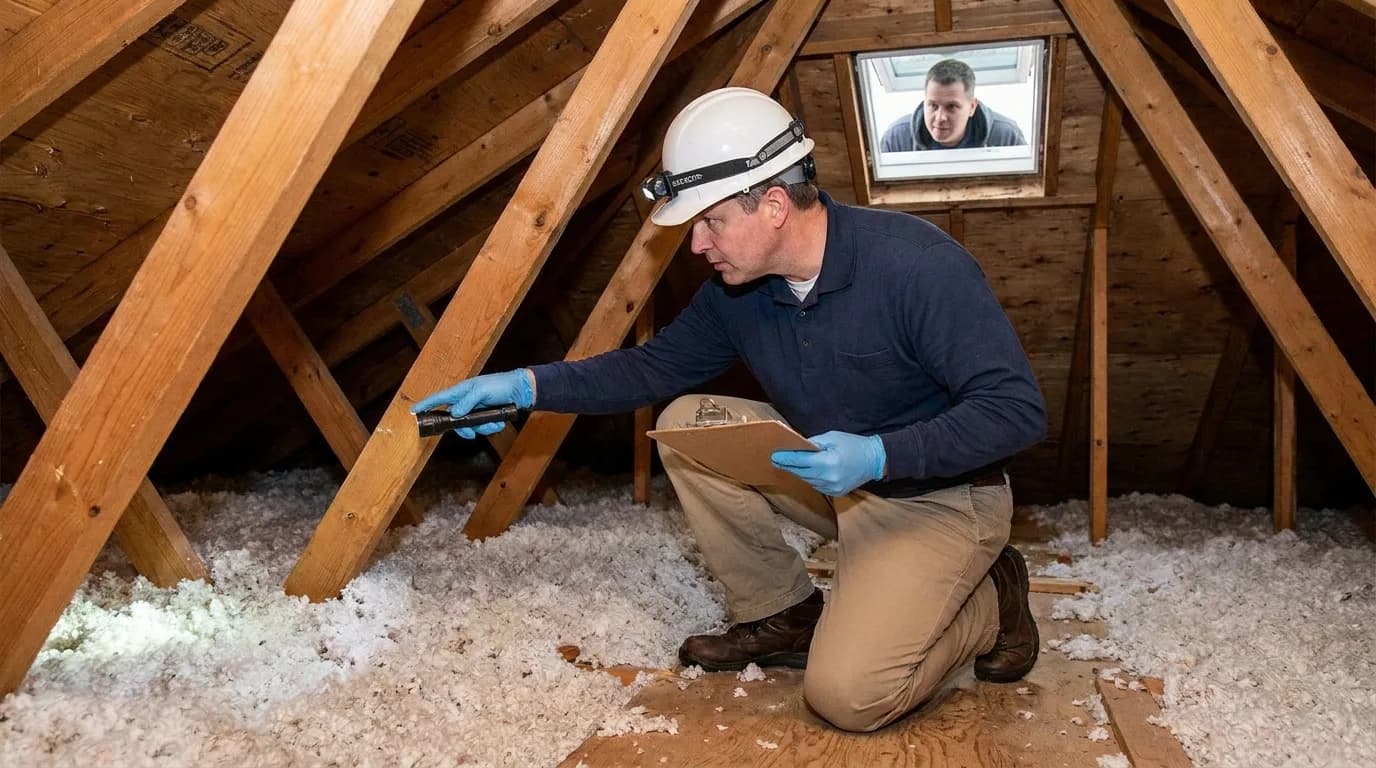
Two common faults undo this. Soffit vents get stuffed with insulation during a top-up, choking the intake so the system cannot breathe, which is one of the most common issues we find during a soffit and fascia inspection, and exhaust is sometimes added at the ridge with no matching intake, which does little. When we inspect an attic we check that the soffits are clear with baffles holding insulation back, that intake and exhaust are balanced, and that bathroom and kitchen fans vent outside through the roof rather than dumping warm, wet air into the attic. Our roof ventilation service in Airdrie corrects exactly this kind of imbalance. These are not big jobs, but they are the difference between a roof that breathes and one that bakes a dam every Chinook.
Ice-and-water shield: the backup barrier at the eaves
Insulation and ventilation prevent most dams, but on an Airdrie roof you want a backup for the worst winters, and that backup is ice-and-water shield. This is a self-sealing waterproof membrane that goes on the deck along the eaves and in the valleys before the shingles, the exact zones where dams form and water backs up. If a dam does develop, the membrane keeps the trapped water from reaching the deck and getting inside. It does not stop the dam, it stops the dam from leaking, which is what actually protects your ceilings.
The catch is that ice-and-water shield can only be installed when the roof is open, so a re-roof is the moment to make sure it is there and run far enough up from the eaves to clear the warm wall line. Building code in our climate requires it, but cut-rate roofs sometimes skimp on coverage, which is one more reason to read an itemised quote. If your home has a history of ice dams and the shield is thin or missing, upgrading it during your next roof replacement is one of the smartest winter investments you can make.
How to deal with a dam that has already formed, safely
If a dam is already there and you can see water getting in, the priority is to relieve it without harming the roof or yourself. Do not climb onto an icy roof, and do not chip at the ice with a hammer, axe, or anything sharp, because you will crack and tear the shingles underneath and turn a winter leak into a spring repair. Pressure washers and torches are just as damaging. From the ground, a roof rake with a long handle can pull the snow off the lower few feet of roof, removing the fuel that feeds the dam, which often slows or stops the leak on its own. Clear eavestroughs help too, since a trough already packed with ice gives a dam less room to drain; gutter guards that are rated for snow load can reduce how often that happens.
To melt a channel through an existing dam, a sock or stocking filled with calcium chloride ice melt, laid vertically across the dam, will slowly open a drainage path, and unlike rock salt it is gentler on metal and vegetation below. For a serious dam, or any time water is actively coming through a ceiling, the safe and lasting move is to call a roofer who can steam the dam off without damaging the shingles and then find and fix the source. Steam is the only method professionals use precisely because it clears the ice without harming the roof. Inside, move belongings clear and put a container under any drip while you wait.
Treat the cause, not just the symptom
The trap with ice dams is treating them as a snow problem every winter instead of a heat-and-airflow problem once. Raking the roof and melting channels are useful emergency measures, but if you are doing them year after year, the house is telling you the attic is too warm or too leaky. The lasting fix is to air-seal and insulate the attic, balance the ventilation, and make sure ice-and-water shield is in place at the eaves, and then the dams stop forming rather than needing to be managed.
If ice dams are a recurring story on your roof, the honest first step is an inspection that looks at the attic as well as the shingles, because that is where the answer lives. We can tell you whether you are looking at a quick ventilation correction, an insulation and air-sealing upgrade, or membrane work best done at your next re-roof, and we will tell you plainly which one your home actually needs. A roof that stays cold and dry is a roof that gets through an Airdrie winter without leaking.
Written by the Apex Roofing Airdrie crew
Practical guidance from the local roofers who inspect, repair and replace roofs across Airdrie and Rocky View County every season. We review our guides against current Alberta practice and update them when materials, code or insurer behaviour changes. About our team.