Roof Vent Installation in Airdrie
Roof vent installation and replacement in Airdrie: ridge, box, turbine, power and bathroom-fan vents fitted, flashed and sealed properly. Free written quotes.
- Free estimates
- Insurance-claim support
- Written guarantee
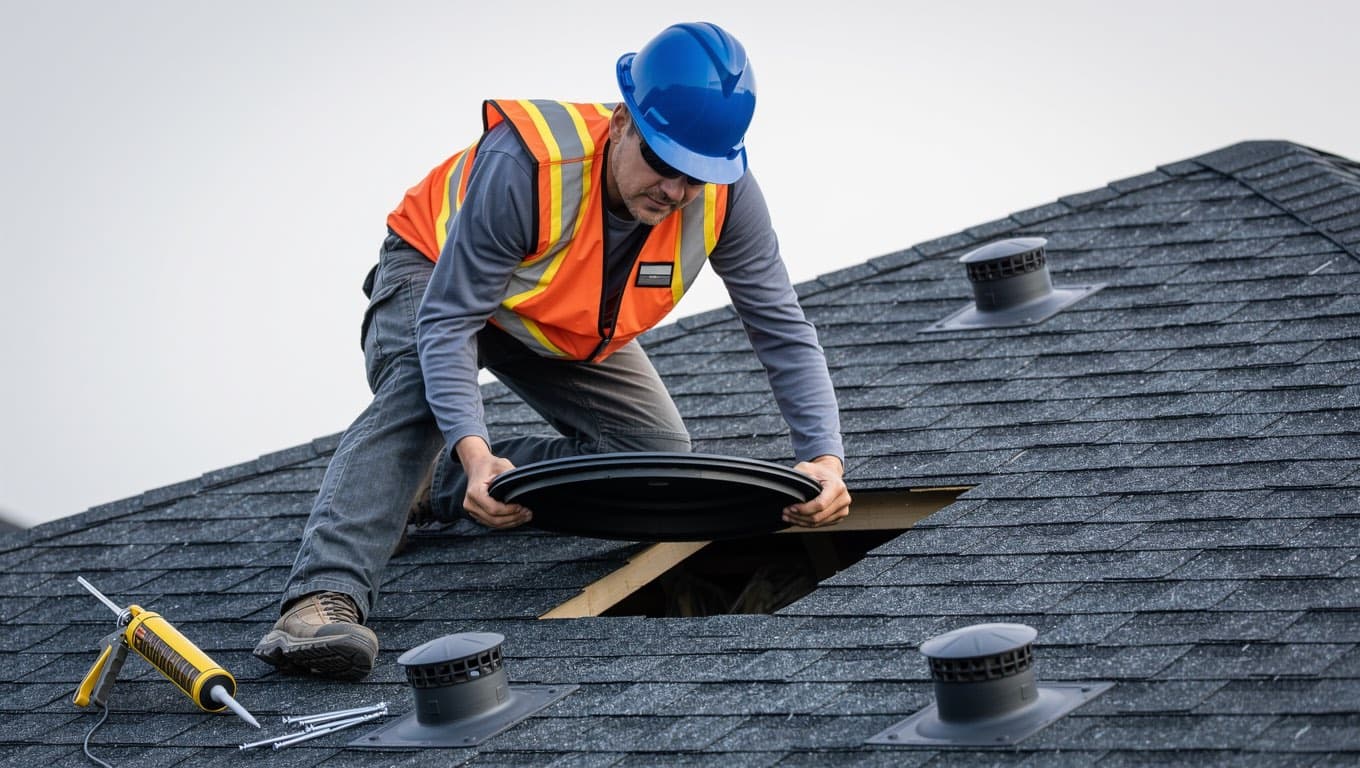
Roof vent installation in Airdrie means cutting a proper opening in the roof deck, setting the vent so it sits under the shingles above it and over the shingles below, and sealing every edge so wind-driven rain cannot get underneath. We install and replace ridge vents, box vents, turbines, power vents, gable vents, and bathroom or kitchen exhaust vents, balancing intake and exhaust so the attic actually vents instead of trapping heat and moisture.
What Roof Vent Installation in Airdrie Involves
What to expect from roof vent installation with Apex Roofing Airdrie, start to finish.
A roof only works as a system if air moves through the attic properly, and roof vent installation is how that airflow gets built into a house or restored on one that never had it right. Intake vents low at the soffit pull cool outside air into the attic, and exhaust vents high at or near the ridge let that air escape again once it has picked up heat and moisture from the rooms below. That balance is what roof ventilation Airdrie homes actually need, and getting it right is one of the cheapest things a homeowner can do for an otherwise ordinary roof. When intake and exhaust are matched to the size of the attic, the space stays close to the outdoor temperature through the year, which keeps the underside of the shingles cooler in July and keeps the roof deck cold and dry through an Alberta winter.
Airdrie roofs use a handful of exhaust vent types, and which one fits a given house comes down to roof shape more than preference. Ridge vent installation is the most common choice on newer subdivisions with long, simple ridgelines, since one continuous vent hidden under the cap shingles moves more air with less visible hardware than anything else on the roof. Box vents, sometimes called static or louvre vents, are the small dome-shaped vents scattered across a roof field, and they remain the standard retrofit on older Airdrie bungalows with hip roofs or short ridges where a ridge vent will not fit. Turbines spin with the wind to pull air out mechanically, which works well on a gusty Chinook day but does almost nothing on the still, cold days when ice damming actually happens. Power vents run on a thermostat-controlled fan and move more air than anything else, though they need an electrical run to the attic and will not help a roof that does not have enough soffit intake feeding them. Gable vents, set into the peak of the end wall on many older homes, can work against a ridge vent if both stay open at once, pulling air sideways instead of up, so we close or remove one when we add the other.
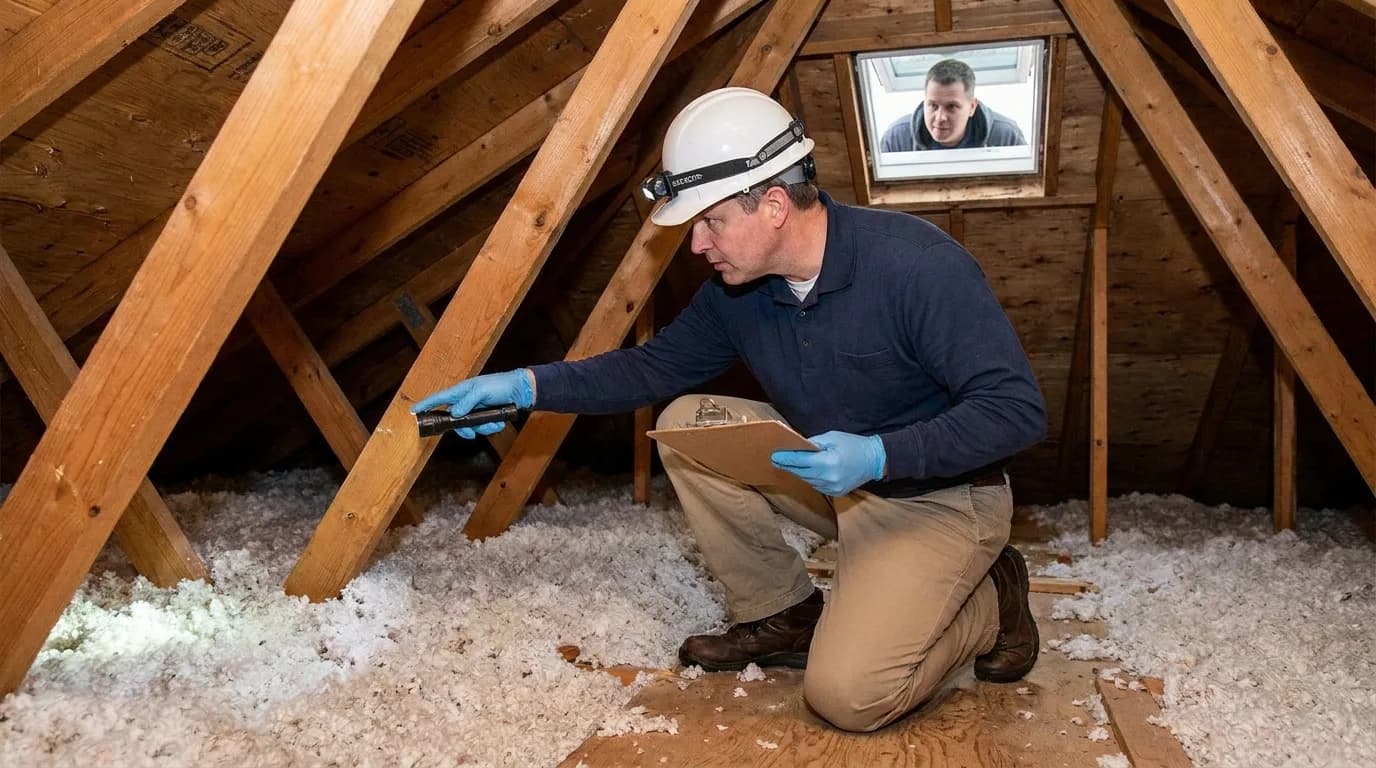
Failing attic ventilation shows up in ways that look like other problems until you trace them back. A hot upstairs in July that no amount of air conditioning fixes is often simply an attic with nowhere for solar heat to escape. Curling or blistering shingles from below, rather than from age and sun alone, point to the same trapped heat cooking the underside of the deck. In winter the pattern flips: frost forming on the underside of the roof deck or on nail tips in a cold snap, and ice damming at the eaves every time a Chinook melts the snow, both trace back to warm, moist air finding its way into an attic that cannot exhaust it fast enough. A musty smell in the upstairs closets is usually the same moisture problem working on the insulation and framing rather than the roof itself.
Roof vent installation, roof vent replacement, and any broader attic ventilation installation work all start the same way for us: on the ground, sizing the intake and exhaust the attic actually needs against its square footage rather than guessing. On the roof, we mark the vent location, cut a clean opening through the deck at the ridge or in the field, and set the vent base so it sits under the course of shingles above it and over the course below, which is the detail that keeps water running over the vent instead of under it. Flashing and sealant go around every edge and fastener, the surrounding shingles are reattached or replaced to match the existing pattern as closely as possible, and we check airflow at the vent and at the soffit before calling the job done. A straightforward vent swap on an existing opening is usually finished within a couple of hours; adding new vents where none existed, or converting gable vents to a ridge vent system, takes longer because it involves more cutting and more shingle work around each new opening.
Plastic roof vent caps and turbine housings are some of the most fragile parts of an Airdrie roof, and they are usually the first thing to crack in a bad hailstorm. Hail that only bruises shingles will often punch straight through a thin plastic box vent or dent and crease a turbine's blades, and UV exposure over the years makes the plastic more brittle every summer, so even a moderate hailstorm can finish off a vent that survived earlier storms. After a hail event we check every vent on the roof as part of the inspection, not just the shingles, and photograph and measure any cracked, punctured, or dented vent so it goes into the same claim as the rest of the storm damage. Whether a cracked vent cap is treated as storm damage or written off as normal wear depends on its age and condition before the storm, and that determination is ultimately your insurer's, so confirm the details with your insurer or broker. Either way, a cracked vent is an open hole in the roof and should not wait for the claim to be settled before it gets a temporary cover.
Bathroom fan roof vent installation is its own category, and one we see done wrong often enough to call out specifically. A bathroom or kitchen exhaust fan is supposed to carry warm, moist air straight outside through its own dedicated roof or wall vent, complete with a one-way flap that stops outside air and pests from coming back in. On too many Airdrie homes, especially ones finished by a previous owner, that duct simply dumps into the attic instead of running all the way to a roof cap. Every shower and every pot of pasta then pumps moisture straight into the insulation, which is a fast way to grow attic frost and mould even on a roof with otherwise good ventilation. When we find a bathroom fan vented into the attic, we run new insulated ducting to a proper roof vent and seal the penetration, and we always check where these ducts terminate whenever we are up doing other ventilation work, because it costs little to fix while the roof is already open.
Chinook winds are hard on ridge vent installation and static vent flashing in particular, because the same gusts that clear snow off a roof in an afternoon also work at any lap in the flashing that was not sealed tight the first time. A ridge vent that was fastened loosely, or shingle caps over it that were not sealed down properly, will lift at the edges in a sustained wind event and let wind-driven rain track sideways under the cap instead of shedding over it. We have seen this show up as a leak that only ever happens in a windstorm and never in a calm rain, which is one of the more confusing symptoms for a homeowner to diagnose alone. Re-sealing or reinstalling the ridge cap over a vent, with fresh sealant rated for our temperature swings, usually solves it, and it is one of the first things we check on an older roof with an intermittent leak.
Freeze-thaw cycling is the mechanism behind most of the winter ventilation problems we get called out for in Airdrie. A Chinook can push the temperature from minus 20 to plus 10 in a single afternoon, and every one of those swings melts and refreezes snow on a roof that is not venting properly. Warm, moist attic air condenses as frost on the cold underside of the deck overnight, and that frost thaws the moment the attic warms up, dripping onto the insulation below. On the outside of the roof, heat leaking up through a poorly ventilated attic melts the snow directly above the warm part of the house while the eaves stay cold, and the meltwater refreezes right at the edge into the ice dam that backs water up under the shingles. Correcting the intake and exhaust balance is usually the single most effective fix for a roof with repeated ice damming, more effective than adding insulation alone, because insulation slows heat loss but ventilation is what actually clears the moisture and evens out the roof deck temperature.
As a rough 2026 market guide, replacing an existing roof vent in Airdrie, like swapping a cracked box vent or turbine for a new one in the same opening, typically runs somewhere in the 150 to 400 dollar range per vent depending on type and roof height. Installing a full ridge vent system on a reroof, or adding new box vents and matching soffit intake to correct a poorly ventilated attic, generally falls somewhere between 500 and 2,000 dollars depending on how much cutting, flashing, and shingle-matching is involved and how many vents the attic needs. A dedicated bathroom or kitchen fan re-vent, running new ducting from the fan to a proper roof cap, is usually a few hundred dollars on top of that if the duct run is short. Those are ranges rather than quotes, and the only way to get an exact number for your roof vent installation or replacement is a free on-site look at the attic and the roof, after which we put the recommended work in an itemised written quote.
Late spring through early fall is the best window for roof vent installation in Airdrie, because the sealant and adhesive used around every vent base needs warm enough temperatures to cure and bond properly, and shingles are far less brittle to work with above freezing than they are in a January cold snap. A summer or early fall job also means the vent has a full winter ahead of it to prove out before the next round of ice-damming weather arrives. We will still get up on a roof for an emergency vent repair, like a cracked cap letting water straight through, at any time of year, but a planned upgrade or a full retrofit is better scheduled for the warmer months when the materials and the roof itself cooperate.
Canadian building code calls for a minimum ratio of net free ventilation area to insulated ceiling area, generally in the range of 1 to 300 with a vapour barrier in place, split between intake and exhaust, though the exact ratio and any local amendments can vary. We size roof vent installation and any accompanying soffit intake work to that kind of ratio as a baseline and then adjust for the attic's actual shape, insulation depth, and any skylights or complex rooflines that eat into usable vent area. Requirements and any permit thresholds can differ by project and by municipality, so confirm the specifics that apply to your home with the City of Airdrie or your local building department before a large ventilation retrofit, particularly if it is bundled with other roof work.
Roof vent installation is easiest to get right during a full reroof, because the deck is already exposed and vents, flashing, and shingles all go on together instead of being cut into finished roofing after the fact. If you are planning a reroof we will lay out the ventilation upgrade as part of that project rather than as an afterthought, and it rarely adds much to the schedule. Shingle manufacturers generally require adequate attic ventilation as a condition of their warranty, since a shingle that is cooked from underneath by trapped heat will fail long before its rated life regardless of how well it was installed, so proper roof vent installation actually protects the warranty on the rest of the roof. Where a vent was cracked or blown loose in a storm, we handle that as part of the same hail or wind claim as the shingles rather than a separate line item, with the same photo documentation, though the final call on what is covered sits with your insurer. Every roof vent job, whether it is one cracked cap or a full retrofit, carries our written workmanship guarantee on top of whatever warranty the vent manufacturer provides.
Signs you need roof vent installation in Airdrie
Frost or ice on the underside of the roof deck
Frost on nail tips or sheathing in a cold snap means warm, moist air is reaching the attic faster than the vents can clear it.
Ice damming at the eaves every winter
Meltwater refreezing at the cold eaves during a Chinook usually traces back to an intake and exhaust imbalance rather than the eavestrough itself.
An attic noticeably hotter than outside in summer
A properly vented attic stays close to the outdoor temperature. One that bakes well above it in July is losing the fight against solar heat.
Shingles curling or blistering from underneath
Heat trapped in a poorly vented attic cooks the underside of the deck and shortens shingle life long before its rated warranty is up.
A musty smell in upstairs rooms or closets
Trapped moisture from poor ventilation settles into insulation and framing and often shows up as smell before it shows up as visible mould.
Cracked, faded or hail-dented plastic vent caps
Sun-brittle or hail-damaged vent housings are an open path for water and pests and are worth checking after every hailstorm.
What Roof Vent Installation in Airdrie Includes
Every roof vent installation we carry out in Airdrie is done by our own crew to the same standard.
- Ridge, box, turbine, power, gable and soffit vent installation and replacement
- Bathroom and kitchen exhaust fan re-venting through a proper roof cap, not into the attic
- Intake and exhaust balance check against your attic's actual square footage
- New flashing and sealant at every vent, tied into the surrounding shingle courses
- Hail and wind-damaged vent documentation for your insurance claim
- Written workmanship guarantee on top of the manufacturer's vent warranty
How we work
Three clear steps from your free estimate to a finished roof.
Free on-site estimate
We visit your Airdrie home, walk the roof, and assess what it actually needs, then answer your questions face to face.
Clear written quote
An itemised, no-surprises quote with photos and notes. If anything changes once we start, we flag it before we proceed.
Done right, guaranteed
A tidy install by our own crew, a magnetic nail sweep, a final walkthrough, and your written guarantee in hand.
Why Airdrie homeowners choose us
No rotating subcontractors and no pressure, just the standard we hold on every Airdrie roof.
Local Airdrie crew
The same in-house crew on every roof, no rotating subcontractors, no corner-cutting. You deal with the people doing the work.
Free, no-obligation estimates
An on-site look, an honest assessment, and a clear written quote. No pressure and no fee to find out where your roof stands.
Insurance-claim support
We document hail and storm damage the way adjusters require and work your claim end to end, so an approved claim covers the work.
Written workmanship guarantee
Every job is backed in writing on top of the manufacturer’s material warranty. We stand behind what we install.
Hit by hail or a storm in Airdrie?
Airdriesits in Alberta's hail belt. We inspect for free, document the damage your insurer needs, and handle the claim end to end, so a covered repair or replacement is the one your loss actually calls for.
Hail Damage Roof Repair
Hail and storm damage roof repair in Airdrie: emergency tarping, free documented inspections, and full insurance-claim support in Alberta’s Hailstorm Alley.
Learn more02Roof Insurance Claims
Roof insurance claim help in Airdrie, we document the loss, meet your adjuster, and guide your Alberta hail or storm claim end to end.
Learn more03Emergency Roof Repair
Emergency roof repair in Airdrie for active leaks and storm damage: fast tarping to stop the water, then a proper permanent repair, documented for your insurer.
Learn moreRoof Vent Installation Airdrie: common questions
01How should roof vents be installed?
A roof vent should sit under the course of shingles above it and over the course below, with flashing and sealant at every edge and fastener so water sheds over the vent rather than finding its way underneath. Intake and exhaust need to be sized together against the attic's square footage, since a well-installed vent still underperforms if there is not enough matching intake at the soffit.
02How much does it cost to put in roof vents?
As a rough 2026 guide, replacing an existing roof vent in Airdrie runs about 150 to 400 dollars per vent, and installing a new ridge vent system or adding box vents to correct a poorly ventilated attic generally falls between 500 and 2,000 dollars depending on the scope. A free on-site look gives you an exact, itemised figure.
03Can I install roof vents on an existing roof?
Yes. Adding or replacing roof vents on an existing roof is a common retrofit and does not require a full reroof. It does involve cutting into the existing shingles around each new opening, so the surrounding shingles are reattached or replaced to match as closely as possible.
04Do you install roof vents before or after the shingles?
During a reroof, vents go in as the shingles are laid, woven into the courses above and below at the correct point. On an existing roof, we cut back the shingles already in place, set the vent, and reattach or replace the shingles around it, so the sequence ends up the same either way.
05What is the difference between a ridge vent and a box vent?
A ridge vent runs continuously along the peak of the roof and is hidden under the ridge cap shingles, moving air along the whole length of the roof. Box vents are individual dome-shaped vents placed across the roof field and are the standard choice where the roof shape does not suit a continuous ridge vent.
06Do bathroom fans need to vent through the roof?
Yes. A bathroom or kitchen exhaust fan should run through its own dedicated duct to a roof or wall vent with a one-way flap, not simply dump into the attic. Venting into the attic pushes moisture straight into the insulation and is a common cause of attic frost even on an otherwise well-ventilated roof.
07Can hail damage to a roof vent be claimed on insurance?
Often, yes, as part of the same claim as any hail damage to the shingles. We photograph and measure cracked or dented vents during the storm inspection so they are documented alongside the rest of the roof. Whether a specific vent is treated as storm damage depends on its age and condition, so confirm with your insurer or broker.
08What time of year is best for roof vent installation in Alberta?
Late spring through early fall, since the sealant used around every vent base needs warm temperatures to cure properly and shingles handle much better above freezing. We will still repair a cracked vent that is actively leaking at any time of year.
09How many roof vents does my attic need?
It depends on the attic's square footage and the type of vent, since intake and exhaust need to be sized together rather than picking a number of vents. We calculate this from the attic dimensions during the on-site visit rather than guessing.
Other roofing services we offer
 01
01Roof Replacement
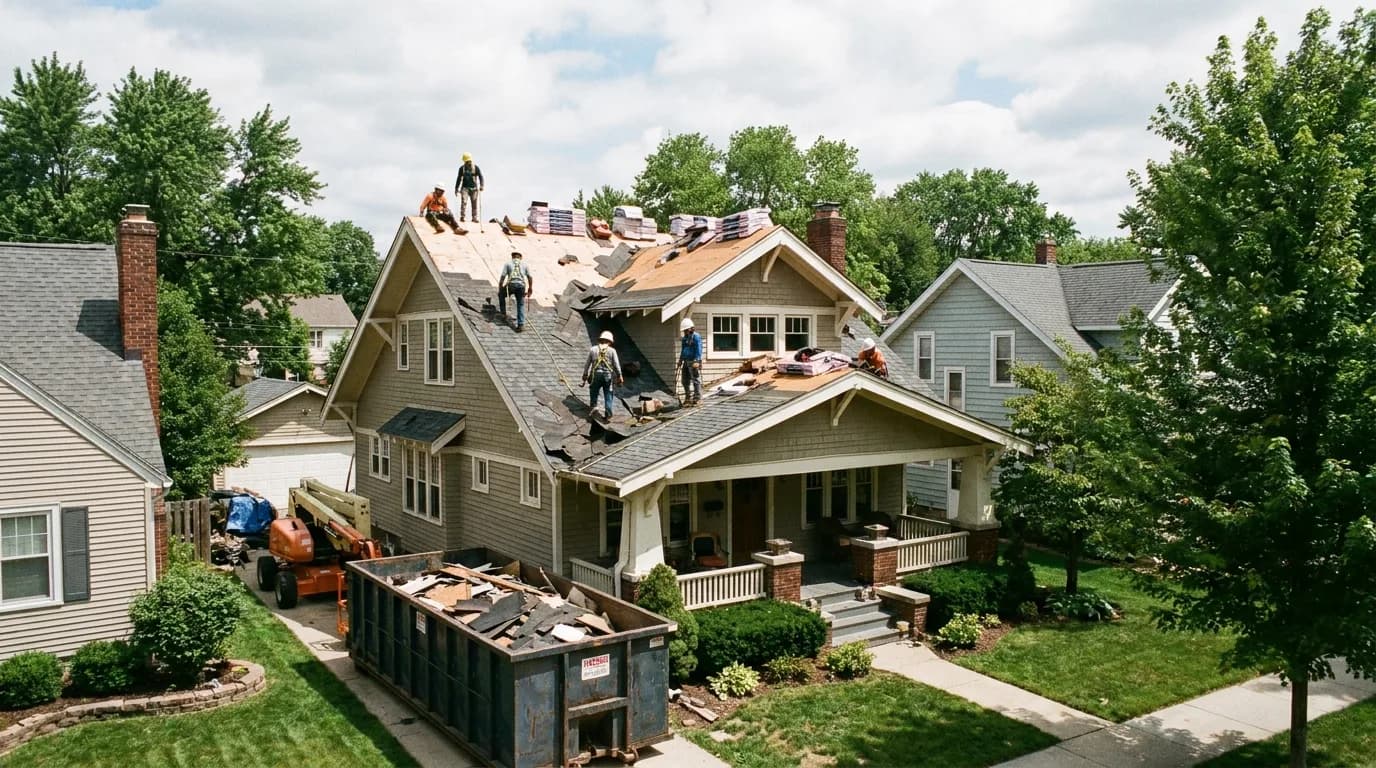
Full tear-off roof replacement in Airdrie, built for Alberta hail and Chinook winds, with a written workmanship guarantee.
Learn more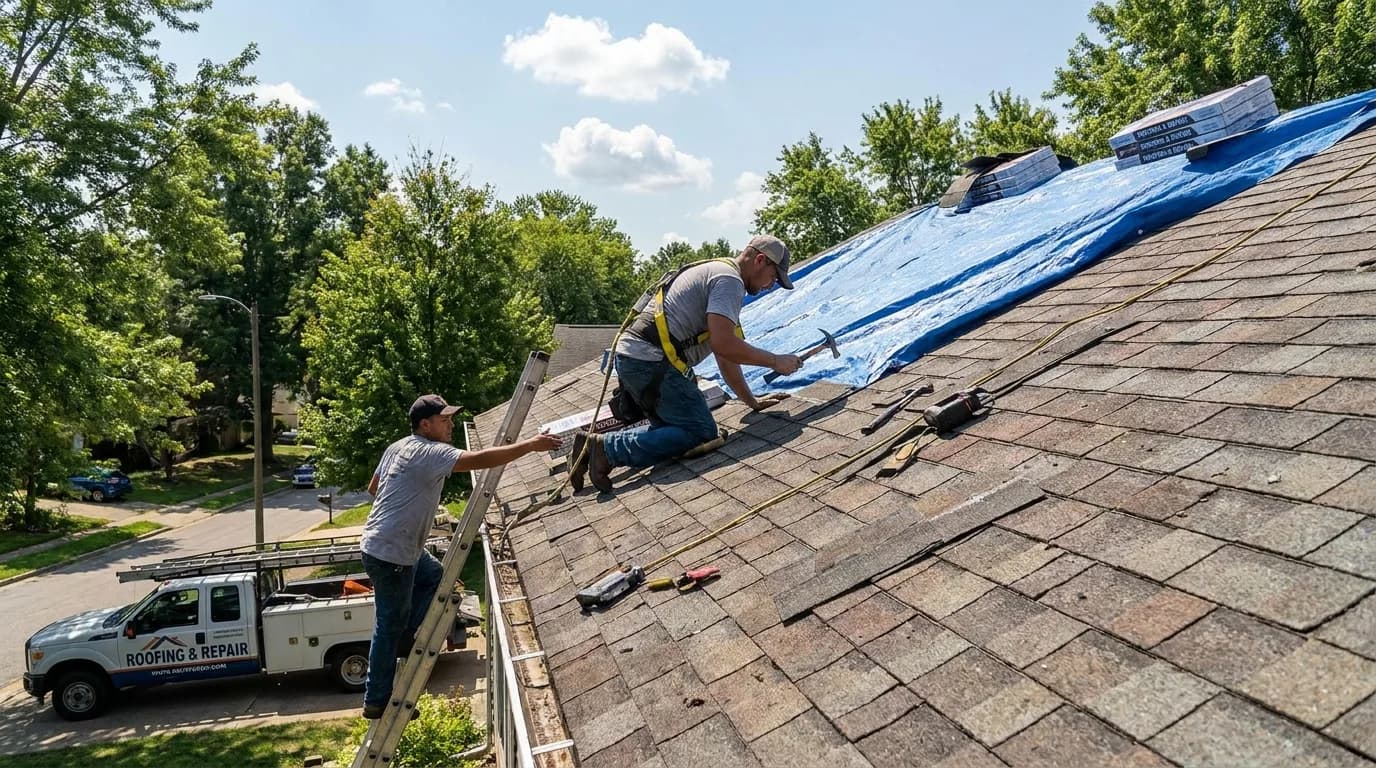 02
02Roof Repair
Fast, lasting roof repair in Airdrie for leaks, missing shingles, failed flashing, and storm damage, diagnosed properly, no upsell.
Learn more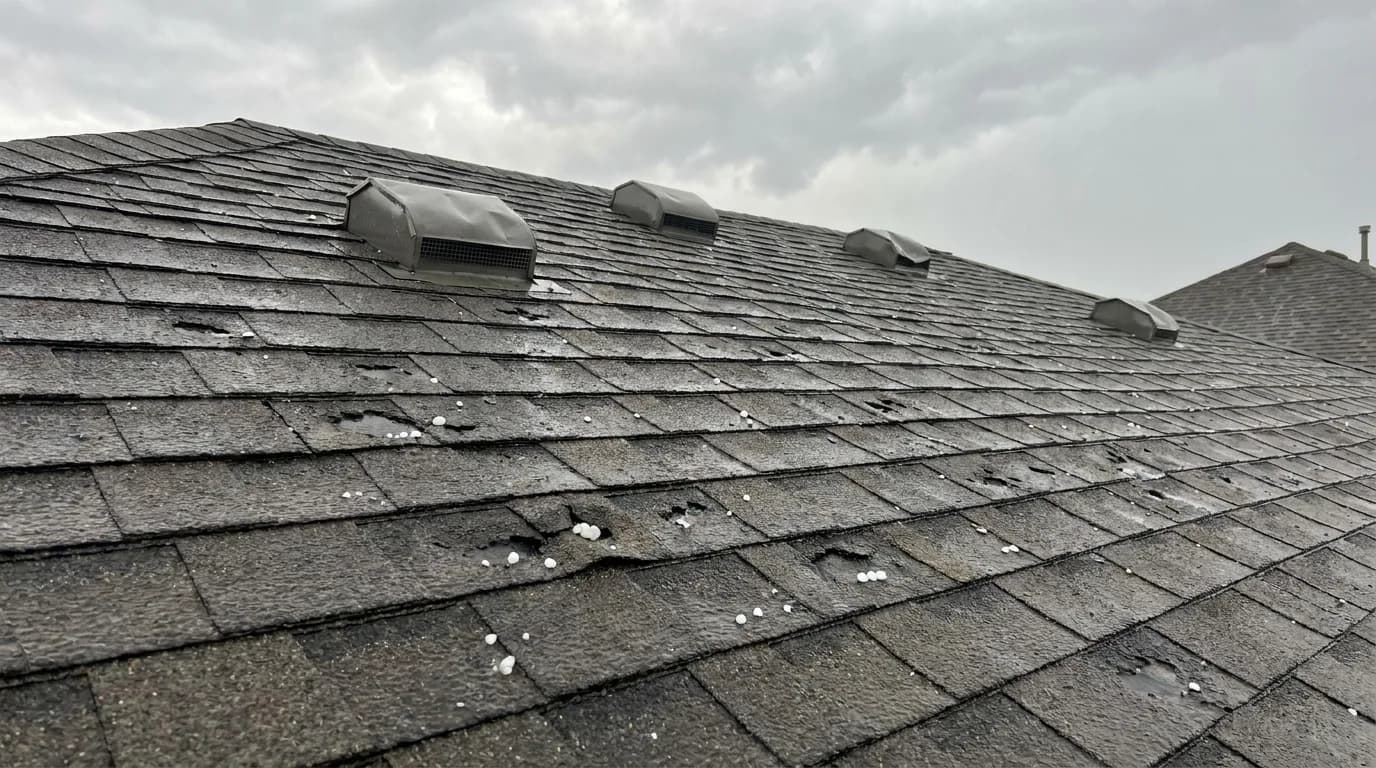 03
03Hail Damage Roof Repair
Hail and storm damage roof repair in Airdrie: emergency tarping, free documented inspections, and full insurance-claim support in Alberta’s Hailstorm Alley.
Learn moreFree roof estimate in Airdrie
Roof Vent Installation Airdrie: free on-site estimate, itemised written quote, same-week booking.