In this guide
- 01How to read the signs you need a new roof in Airdrie
- 021. Your roof is 18 to 25+ years old
- 032. Widespread shingle curling, cracking or cupping
- 043. Granule loss showing up in your gutters
- 054. Hail bruising and dents in soft metal
- 065. Daylight or water stains in the attic
- 076. A sagging or uneven roofline
- 087. The same leak keeps coming back
- 098. Missing shingles after Chinook winds
- 109. Moss, rot or failing flashing
- 11Repair or replace? How to weigh it honestly
- 12How a professional inspection settles the question
- 13The real cost of waiting on a failing roof
How to read the signs you need a new roof in Airdrie
Airdrie roofs work harder than most. We sit inside Hailstorm Alley, we take Chinook winds that gust hard out of the west, and our winters cycle through freeze and thaw that lifts shingles and feeds ice dams. Add summer UV, and an asphalt roof here ages faster than the same roof would in a milder climate.
The honest truth is this: not every warning sign means you need a full reroof. Sometimes a targeted repair buys you several more good years. The trick is knowing which signs point to a small fix and which point to the end of roof life. Below are nine signs, explained plainly, with what each one usually means for an Airdrie home. Read them together, not in isolation, because it is the pattern that tells the real story.
1. Your roof is 18 to 25+ years old
Age is the single most useful clue. A standard asphalt shingle roof in our climate typically lasts somewhere in the 18 to 25 year range, and harsh hail seasons can shorten that. If you know your roof is past 20 years, the other signs on this list matter more, because the materials are already near the end of their service life.
If your roof is genuinely old and showing two or three other symptoms, repeated repairs start to throw good money after bad. That is usually the point where roof replacement in Airdrie becomes the smarter spend. If it is only 8 or 10 years old, though, most problems are worth repairing first.
2. Widespread shingle curling, cracking or cupping
Walk to the kerb and look up. Healthy shingles lie flat and uniform. When you see edges curling upward, surfaces cracking, or shingles cupping in the middle, the asphalt has dried out and lost its flexibility. Our UV-heavy summers and freeze-thaw winters are the main drivers here.
A few curled shingles on one slope can often be replaced. But when the curling and cracking is widespread across the whole roof, it is a strong signal of age-related shingle damage, and patching one area while the rest fails is rarely worth it.
3. Granule loss showing up in your gutters
Asphalt shingles are coated in fine granules that protect them from UV and shed water. As shingles wear out, those granules let go and wash into the gutters and downspouts. If you are scooping out what looks like coarse black sand, your shingles are shedding their protective layer.
On a newer roof, light granule loss after a storm can be normal. On an older roof, heavy and ongoing granule loss usually means the shingles are near the end of roof life and a reroof is on the horizon.
4. Hail bruising and dents in soft metal
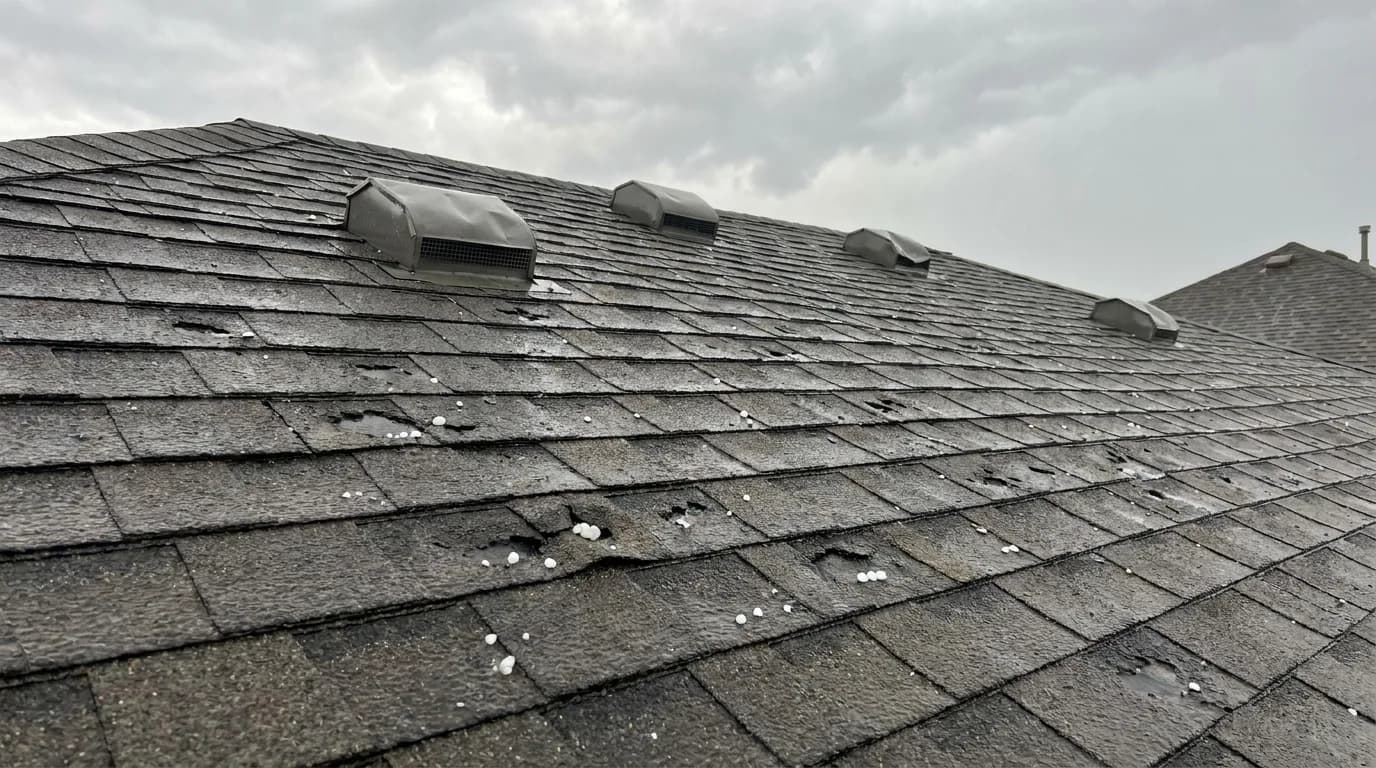
Airdrie's place in Hailstorm Alley makes this one critical. Hail does not always tear shingles. It bruises them, knocking granules loose and softening the mat underneath, which you may feel as tender spots when pressed. The damage can be hard to see from the ground.
A reliable tell is the soft metal on your roof: check vents, flashing and the gutters for dents and dimples. If the soft metal is peppered, the shingles almost certainly took a beating too. Storm damage can sometimes be repaired, but a serious hail event often justifies a full claim and replacement, so it is worth documenting and getting it inspected promptly.
5. Daylight or water stains in the attic
Your attic tells the truth that the surface hides. On a dry day, go up with a torch and look at the underside of the roof deck. If you can see daylight coming through, water is getting in too. Dark stains, streaking on the wood, or a damp, musty smell all point to active or past leaks.
An attic inspection is one of the fastest ways to gauge how serious things are. Localised staining around a vent or chimney often means a flashing repair. Widespread staining across the deck points toward bigger problems and, frequently, replacement.
6. A sagging or uneven roofline
Sight along your roofline from across the street. It should be straight and crisp. Any dip, sag or wave in the deck is a serious red flag, because it usually means moisture has weakened the wood underneath, or the structure is struggling under load.
A sagging roofline is rarely a simple repair. In our freeze-thaw climate, trapped moisture and the weight of ice and snow can rot decking over time. If you see sagging, stop reading and book an inspection, because this one can affect safety, not just water-tightness.
7. The same leak keeps coming back
One leak after a violent storm is bad luck. The same stain reappearing on your ceiling after every heavy rain or every spring melt is a pattern, and patterns matter. Repeated leaks in the same spot often mean the underlying problem was never truly fixed, or the roof system as a whole is failing.
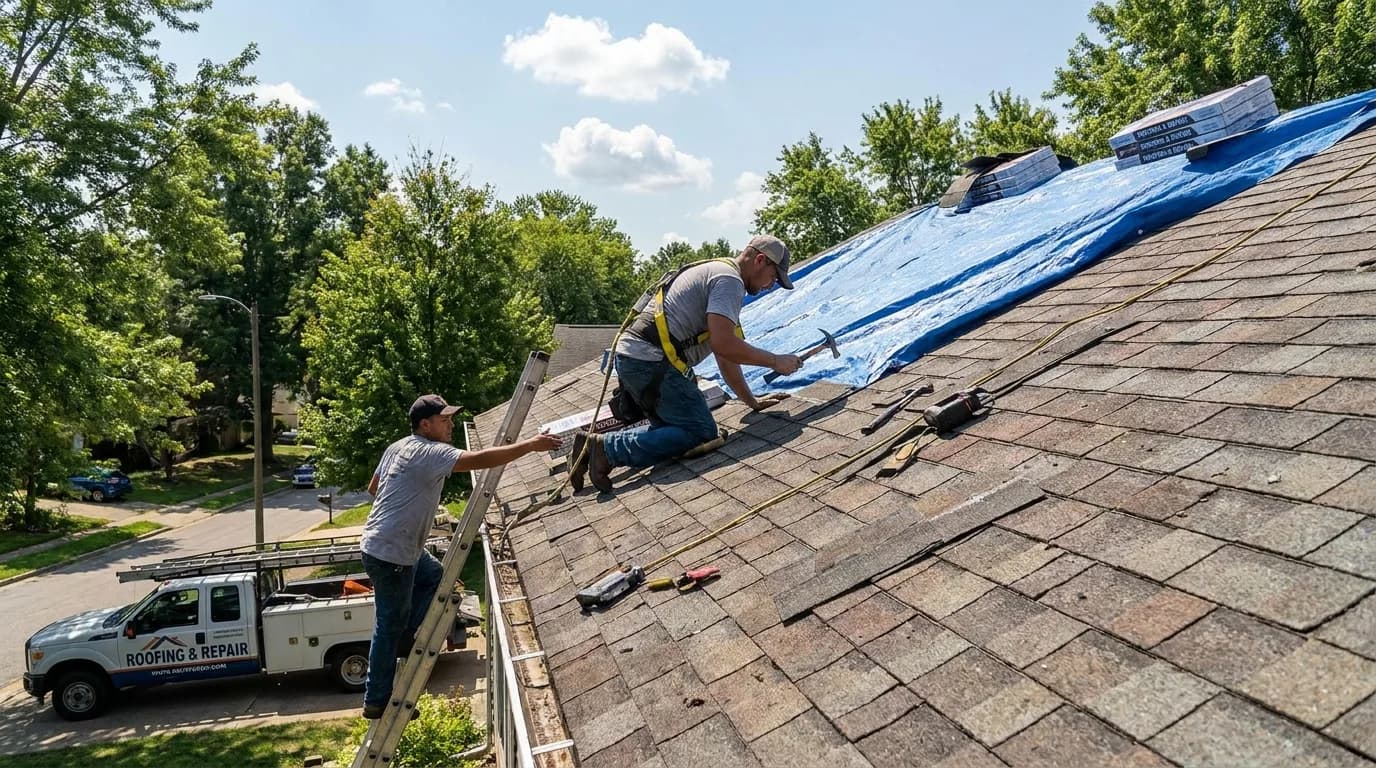
When you find yourself calling for the same repair two or three times, the maths usually shifts. At that point, paying once for a proper reroof tends to cost less than an endless run of patches. This is a classic repair vs replace decision, and it is worth getting an honest second opinion.
8. Missing shingles after Chinook winds
Chinooks roll into Airdrie warm and fast, and the gusts can lift and tear shingles, especially older or already-loose ones. After a big wind event, look for bare patches, shingles in the yard, or exposed underlayment.
A handful of missing shingles on an otherwise sound roof is a straightforward repair, and you should get it sealed quickly before water finds the gap. But if the wind keeps stripping shingles every season, the adhesive and the shingles themselves are likely too far gone to keep chasing, and replacement becomes the practical fix.
9. Moss, rot or failing flashing
Flashing is the metal that seals the joints around chimneys, vents, valleys and skylights, and it is where a surprising number of leaks begin. Rusted, cracked or lifting flashing lets water in even when the shingles look fine. Moss and visible rot, meanwhile, signal that moisture is sitting on the roof and breaking it down.
Failing flashing on its own is very often a repair, not a replacement, which is good news. But moss combined with rot and soft decking points the other way. As always, it is the combination that decides it.
Repair or replace? How to weigh it honestly
Here is the principle we work by: one isolated sign usually means repair, while several signs appearing together usually mean replacement. A few missing shingles, one piece of tired flashing, or a single fresh leak are all things a good repair can handle.
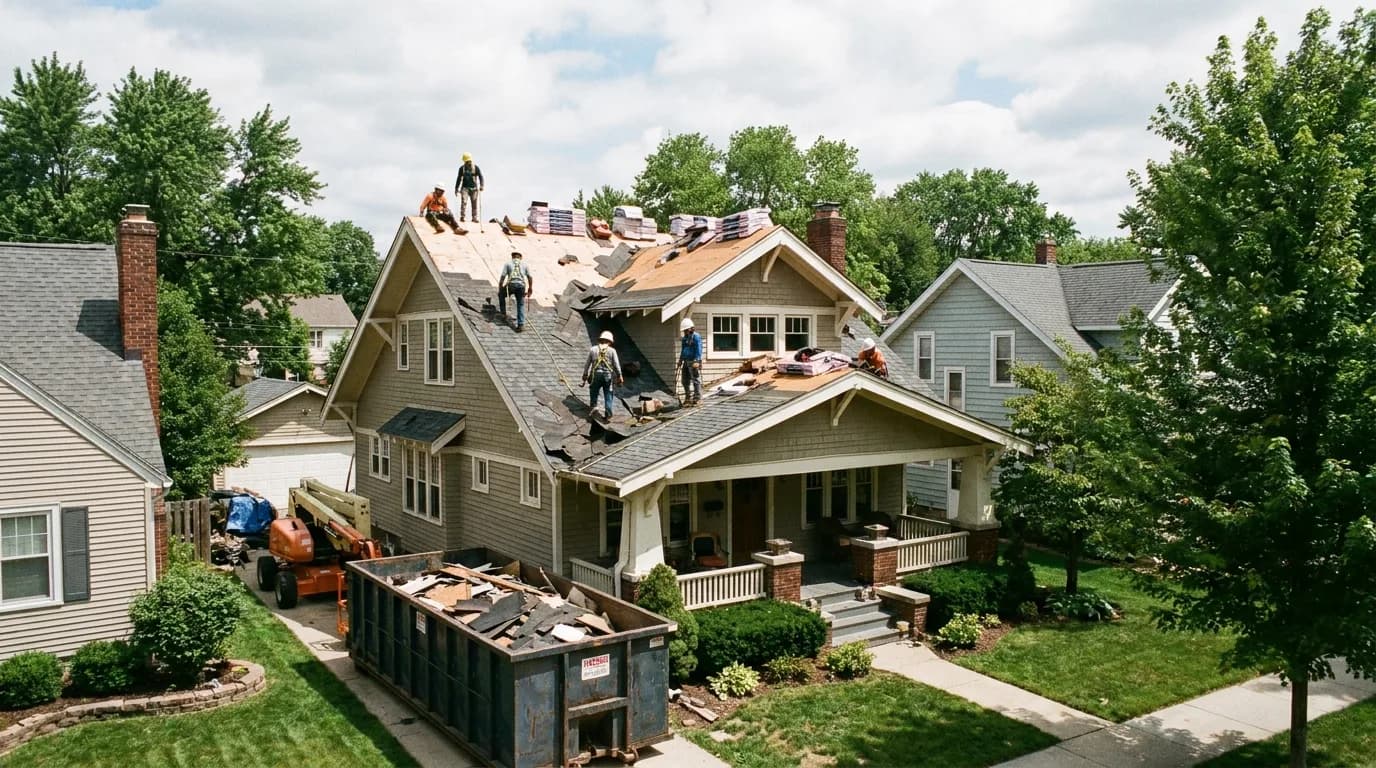
Replacement starts to make sense when the roof is past 20 years, when granule loss and curling are widespread, when the same leak keeps returning, or when an attic inspection shows staining across the deck rather than one spot. Cost matters too: if you are spending repeatedly and the roof is old, a reroof often works out cheaper over a few years than the running total of patches.
We would rather tell you a repair is enough when it genuinely is. Selling a homeowner a full replacement they do not need is not how we want to work, and a roof with years of life left should be repaired, not torn off.
How a professional inspection settles the question
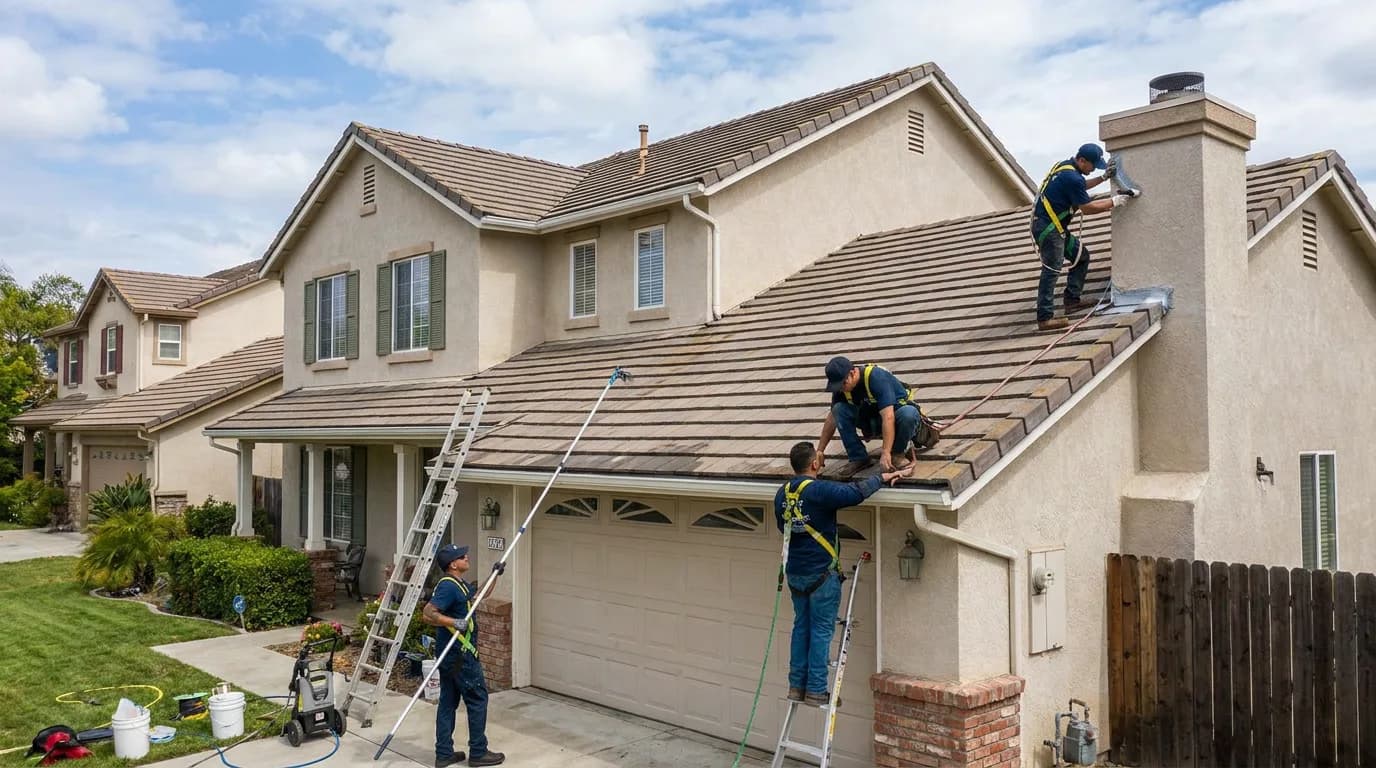
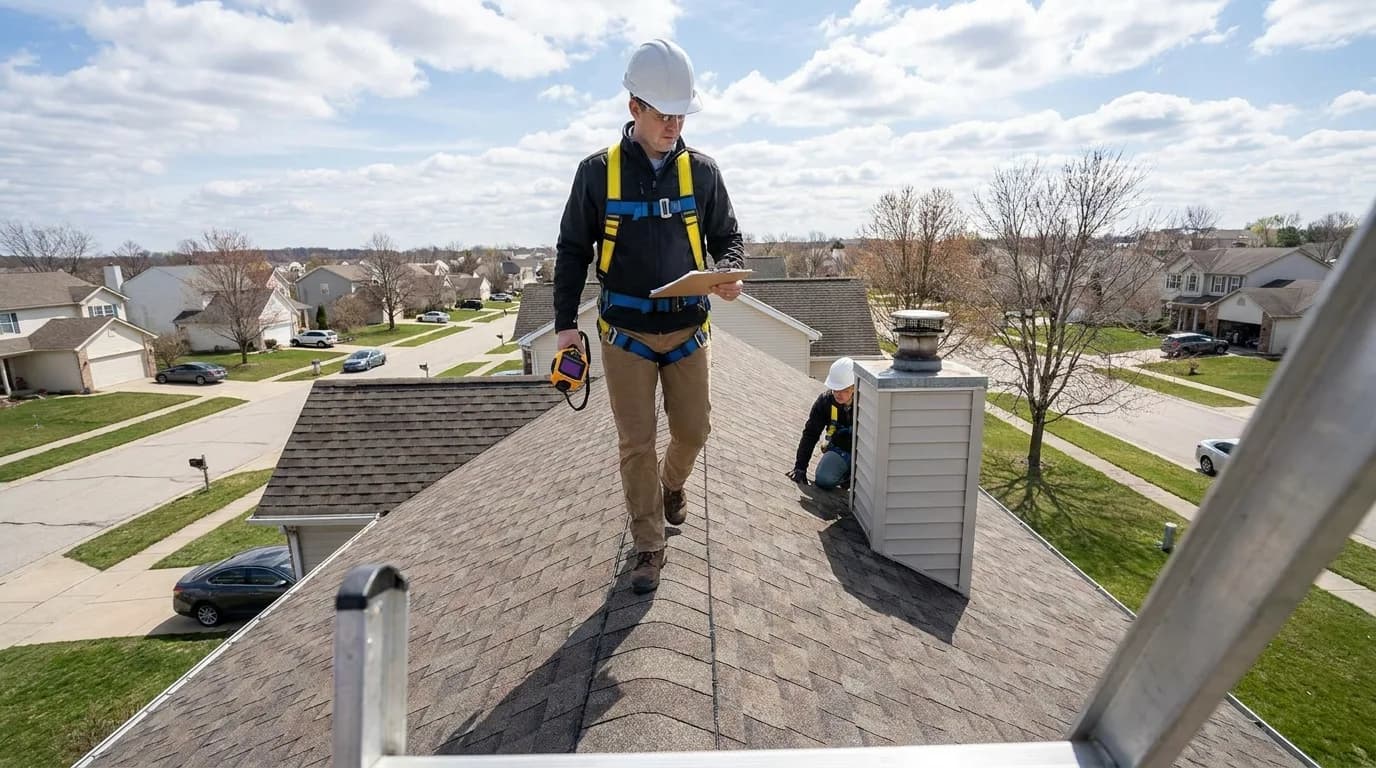
When the signs are mixed and you cannot tell repair from replacement, a roof and attic inspection settles it. A proper inspection looks at the shingles up close for bruising and wear, checks the soft metal for hail, examines the flashing and valleys, and goes into the attic to check the deck for daylight, staining and rot.
That combination of surface and attic findings is what separates a confident repair from a genuine end-of-roof-life call. It also creates the documentation you need if hail or storm damage turns into an insurance claim, which is common here in Hailstorm Alley.
If your roof is ticking several boxes on this list, the honest next step is not to panic and not to ignore it. Book an inspection, get a clear read on what is repair and what is replacement, and make the decision on facts rather than guesswork. Apex Roofing Airdrie can give you that straight answer.
The real cost of waiting on a failing roof
The temptation with most of these signs is to wait and see. Sometimes that is the right call, but it pays to understand what waiting actually risks. Once the weather barrier is compromised, water does not stay on the surface. It works into the plywood decking, soaks the insulation, stains the drywall, and in Airdrie it freezes and thaws through all of it over winter, prying the damage wider every cycle. A problem that was a straightforward reroof in September can drag the deck, the attic, and the ceilings into the bill by spring.
There is a second clock running too. If the trigger was a hailstorm, most Alberta insurers require the claim to be filed within roughly twelve months, and the evidence fades fast: fresh bruising that an adjuster would have approved in summer is much harder to argue once a winter has softened it. Acting while the damage is recent and documented is what keeps a covered claim on the table. The honest position is simply this: if the signs point to a sound roof, a good roofer will tell you to wait and save your money. If they point to a failing one, every season you delay tends to make the eventual job bigger, not smaller.
Written by the Apex Roofing Airdrie crew
Practical guidance from the local roofers who inspect, repair and replace roofs across Airdrie and Rocky View County every season. We review our guides against current Alberta practice and update them when materials, code or insurer behaviour changes. About our team.