Soffit and Fascia Installation in Airdrie
Soffit and fascia installation and repair in Airdrie: aluminum, vinyl, and wood options, proper attic venting, and honest 2026 CAD pricing.
- Free estimates
- Insurance-claim support
- Written guarantee
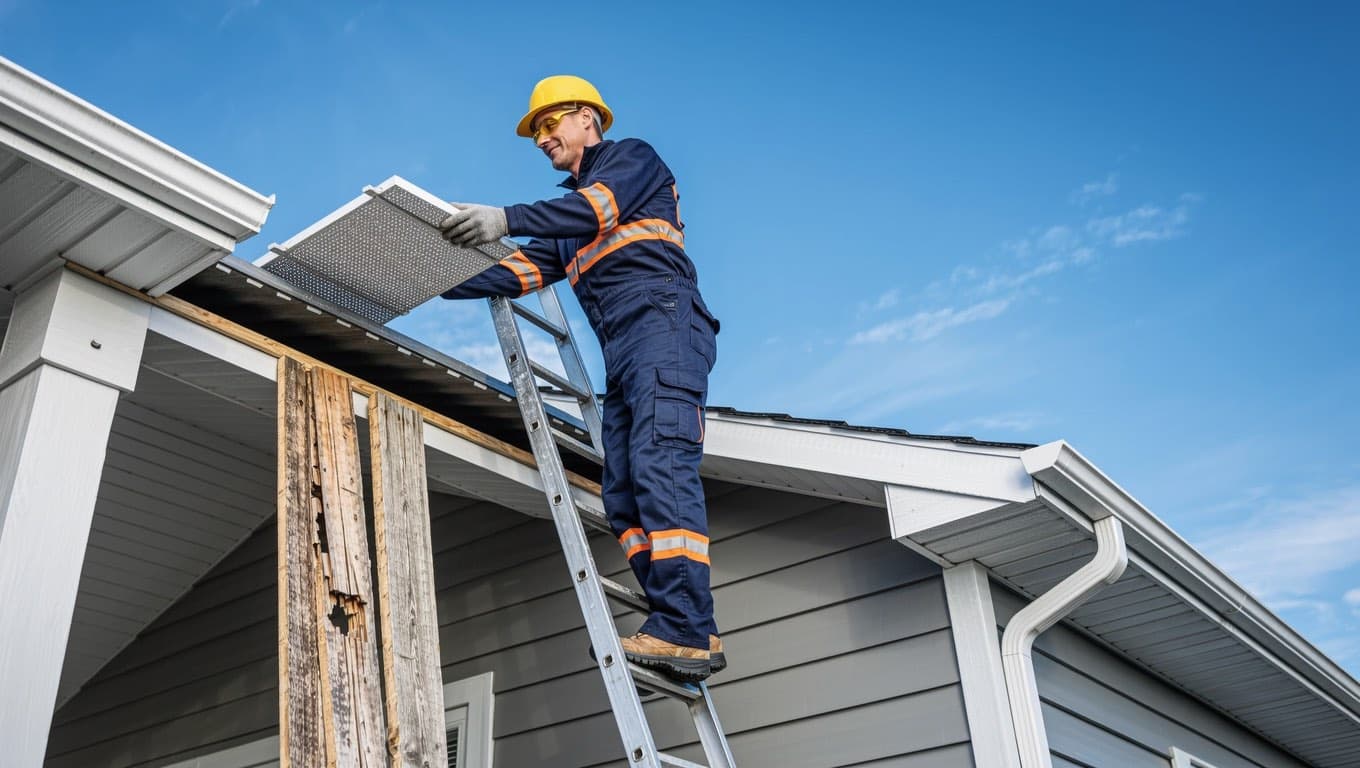
Soffit and fascia installation in Airdrie protects the roof edge and the rafter tails behind it, the fascia carries the eavestrough and closes off the ends of the rafters, while the soffit seals the underside of the overhang and feeds fresh air into the attic. We install and repair aluminum, vinyl, and wood soffit and fascia, replace anything rotten or hail-dented, confirm intake venting stays open, and document storm damage for your insurance claim.
What Soffit and Fascia Installation in Airdrie Involves
What to expect from soffit and fascia installation with Apex Roofing Airdrie, start to finish.
Soffit and fascia installation in Airdrie deals with the two pieces of trim that finish the roof edge and protect what is underneath it. Fascia is the vertical board that runs along the edge of the roof, closing off the ends of the rafters or trusses and giving the eavestrough something solid to hang from. Soffit is the panel underneath the overhang, running from the fascia back to the wall, and its job is to close that gap while still letting air into the attic through its perforations. Together they keep rain, snow, birds, and insects out of the attic space, hide the rough carpentry at the roof edge, and, when the venting is done properly, help the attic breathe the way it needs to in an Alberta climate that swings from minus 30 to plus 30 over a single year.
Soffit and fascia rarely fail without warning. Fascia rots from the back where it sits against wet sheathing or a failed drip edge long before the paint on the front shows anything wrong, and by the time you can see grey, spongy wood or peeling paint, the board has usually been wet for more than one season. Soffit panels sag, pull loose at the J-channel, or develop gaps where birds, wasps, and squirrels get into the attic. Water stains on the soffit itself, or on the top of an exterior wall just below the roofline, are one of the more reliable outside clues that something behind the trim needs attention rather than a fresh coat of paint. Minor soffit repairs caught at this stage are far cheaper than the reactive job that follows once a full section has pulled loose or rotted through.
Aluminum soffit and fascia is what we install on the large majority of Airdrie homes, and for good reason. It does not rot, does not need painting, shrugs off UV and freeze-thaw cycling far better than wood, and comes pre-finished in colours that match the siding and trim. Fascia is typically wrapped over an existing wood sub-fascia with coil stock bent on site, so the profile matches the house exactly rather than coming from a limited stock of pre-formed pieces. Vinyl soffit is the budget option and performs well in moderate conditions, though it becomes noticeably more brittle than aluminum in a deep Alberta cold snap, and a stray hailstone or a ladder set against it in January is more likely to crack a vinyl panel than dent an aluminum one.
Wood and cedar soffit and fascia still show up on older Airdrie homes and on some higher-end builds where the look matters more than the maintenance. Real wood needs regular painting or staining to survive our climate, and once water gets past that finish, rotten fascia board repair becomes a recurring job rather than a one-time fix, at which point a full fascia replacement is usually the more economical choice than patching the same board again. Steel fascia and soffit, less common residentially, offer the same low-maintenance profile as aluminum with extra strength, and we will sometimes recommend it on a home that has already had repeated wind or impact damage. Whatever the material, we always check the sub-fascia and rafter tails underneath before installing anything new, because new trim fastened to soft, rotten wood behind it will not hold for long no matter how good the finish looks.
A soffit and fascia installation or repair starts with removing the damaged sections and inspecting what is behind them. Any rotten sub-fascia or rafter tail gets cut back to sound wood and sistered or replaced before anything new goes up, since fastening aluminum over punky wood is a short-term fix that fails within a season or two. New fascia is measured, cut, and either wrapped in bent aluminum coil or replaced outright with new board and aluminum cladding, set with the eavestrough hanger positions in mind so the two go up as one properly aligned system. Soffit panels are cut to fit between the fascia and the wall, set into F-channel or J-channel on each side, and fastened without pulling them drum-tight, since aluminum and vinyl both expand and contract across an Alberta summer to winter swing and need room to move.
We finish by confirming every vent opening in the new soffit lines up with clear attic space above it, because a soffit and fascia installation that looks perfect from the ground can still starve the attic of the air it needs.
Soffit is not just trim, it is half of your attic's ventilation system, and getting it wrong causes problems that show up nowhere near the roofline. Intake air comes in through the soffit vents, moves up under the roof deck, and exits at the ridge or through roof vents, carrying moisture and heat out before either one causes damage. When soffit vents are painted shut, blocked by insulation pushed too far into the eaves, or simply too few for the attic's size, moist household air condenses on the cold underside of the roof deck instead of venting out.
That trapped moisture feeds frost in the attic in deep winter, contributes to ice damming at the eaves during a Chinook melt, and can rot the roof deck itself from the inside over several seasons. Getting the venting right at the time of soffit and fascia installation matters more here than almost anywhere else in Canada, because none of it is visible again until the damage shows up somewhere else in the house.
Chinook winds put a different kind of stress on soffit and fascia than most of Canada ever sees. A jump from minus 20 to plus 10 in an afternoon, followed by a hard refreeze that night, expands and contracts aluminum and vinyl trim repeatedly through a single week rather than once a season. Over years that cycling works fasteners loose, opens gaps at panel joints, and leaves vinyl soffit more prone to cracking the next time it gets cold and something strikes it. We fasten soffit and fascia with that movement in mind, using slotted holes and proper spacing rather than pulling everything rigid, which is the detail that separates trim that survives a decade of Chinooks from trim that starts rattling and gapping within a couple of years.
Aluminum soffit and fascia dents and creases under large hail in much the same way eavestrough does, and it is frequently overlooked in a hail claim because homeowners and even some adjusters focus on the shingles first. We check soffit and fascia as part of every storm inspection, photographing dents, creases, and any panels knocked loose by wind alongside the roof damage, so the whole exterior envelope is documented in one report rather than a series of separate discoveries. Whether soffit and fascia damage is included in your settlement, and how it is valued, depends on your specific policy, so confirm the details with your insurer or broker before assuming it is or is not covered.
Soffit and fascia work in Airdrie has a wider install season than roofing itself, since it does not depend on shingles sealing down in warm weather. Aluminum and vinyl can go up in cold conditions as long as the material is handled carefully, since cold aluminum and especially cold vinyl become more prone to cracking if flexed too far during installation. Spring and fall are the easiest windows because material is at its most workable and ladders and lifts are not fighting ice or standing water at the base of the house, but a genuine repair, a section pulled loose by wind or a length rotted through, gets scheduled as soon as it is found rather than left open to the weather until a more convenient season.
As a rough 2026 market guide, soffit and fascia installation in the Airdrie and Calgary area typically runs somewhere in the range of 15 to 28 dollars per linear foot for aluminum soffit and fascia together, or roughly 8 to 15 dollars per linear foot if only one of the two is being replaced, with wood, cedar, or extensive rot repair pushing individual sections higher. Those figures move with how much rot we find once the old trim comes off, so our Airdrie soffit and fascia replacement cost guide walks through every variable in detail, and here we give you an honest, itemised written number once we have actually looked at your roofline.
Soffit and fascia is one of the more DIY-accessible parts of a home's exterior, and a handy homeowner can install a straightforward run of soffit on a single-storey home with the right tools and a careful eye for level. Soffit panels are held by the F-channel and J-channel rather than fastened through the panel face, and where fasteners are used they should be screws rather than nails, since nails back out under thermal movement far more easily than screws do. Where DIY gets risky is working two storeys up, cutting fascia to match a roofline that is not perfectly straight, and knowing how much rotten wood underneath needs to come out before new trim goes on. A proper installation treats the channel size, the fastening, and the venting as one system rather than three separate steps. A licensed contractor also carries the liability and the workmanship guarantee that a homeowner working from a rented ladder does not, which is usually the deciding factor once the job is more than a single ground-level section.
We treat soffit and fascia as part of the roof system rather than a separate side job, because the two meet at the same edge and a mistake in one undoes good work in the other. Every soffit and fascia installation we do gets the same free on-site look, itemised written quote, and workmanship guarantee as our roofing and eavestrough work, and because it is our own crew rather than a rotating subcontractor, the person who quotes the job is accountable for how it turns out. We also handle soffit and fascia Calgary homeowners on the north side of the city need, since the same aluminum systems and Chinook considerations apply just as much a few kilometres south of Airdrie.
Signs you need soffit and fascia installation in Airdrie
Sagging or wavy soffit panels
Sagging usually means the channel or fasteners have let go, often from moisture or repeated thermal movement behind the panel.
Grey, soft, or spongy fascia board
Soft wood behind the trim has been wet for a while and will not hold a new eavestrough hanger or fascia cap securely.
Gaps or holes where birds or pests get in
A gap at a joint or a chewed corner is an open door to the attic, and pests only make the opening larger over time.
Peeling paint or staining on the soffit
Discolouration on the underside of the overhang usually means moisture is escaping the attic through a gap in the vent or channel.
Dents or creasing after a hailstorm
Aluminum soffit and fascia mark under large hail in the same way eavestrough does, and it is easy to miss if you are only checking the shingles.
Fasteners loose or panels rattling in the wind
Chinook temperature swings work screws and clips loose over the years, and a rattling panel is usually close to letting go entirely.
What Soffit and Fascia Installation in Airdrie Includes
Every soffit and fascia installation we carry out in Airdrie is done by our own crew to the same standard.
- Removal of damaged soffit and fascia and inspection of the sub-fascia and rafter tails
- Aluminum, vinyl, or wood soffit and fascia installation cut and fitted to your roofline
- Rotten wood repair or sistering before any new trim is fastened
- Soffit vents matched to your attic's actual intake needs, not just the old opening
- Hail and wind damage documentation for your insurance claim
- Itemised written quote and workmanship guarantee on every job
How we work
Three clear steps from your free estimate to a finished roof.
Free on-site estimate
We visit your Airdrie home, walk the roof, and assess what it actually needs, then answer your questions face to face.
Clear written quote
An itemised, no-surprises quote with photos and notes. If anything changes once we start, we flag it before we proceed.
Done right, guaranteed
A tidy install by our own crew, a magnetic nail sweep, a final walkthrough, and your written guarantee in hand.
Why Airdrie homeowners choose us
No rotating subcontractors and no pressure, just the standard we hold on every Airdrie roof.
Local Airdrie crew
The same in-house crew on every roof, no rotating subcontractors, no corner-cutting. You deal with the people doing the work.
Free, no-obligation estimates
An on-site look, an honest assessment, and a clear written quote. No pressure and no fee to find out where your roof stands.
Insurance-claim support
We document hail and storm damage the way adjusters require and work your claim end to end, so an approved claim covers the work.
Written workmanship guarantee
Every job is backed in writing on top of the manufacturer’s material warranty. We stand behind what we install.
Hit by hail or a storm in Airdrie?
Airdriesits in Alberta's hail belt. We inspect for free, document the damage your insurer needs, and handle the claim end to end, so a covered repair or replacement is the one your loss actually calls for.
Hail Damage Roof Repair
Hail and storm damage roof repair in Airdrie: emergency tarping, free documented inspections, and full insurance-claim support in Alberta’s Hailstorm Alley.
Learn more02Roof Insurance Claims
Roof insurance claim help in Airdrie, we document the loss, meet your adjuster, and guide your Alberta hail or storm claim end to end.
Learn more03Emergency Roof Repair
Emergency roof repair in Airdrie for active leaks and storm damage: fast tarping to stop the water, then a proper permanent repair, documented for your insurer.
Learn moreSoffit and Fascia Installation Airdrie: common questions
01Should you screw or nail soffit?
Screws hold soffit panels in place better than nails, since nails back out under the thermal movement Alberta's temperature swings cause. We fasten with screws sized for the channel and leave enough play for the panel to expand and contract without buckling.
02Do you use F channel or J channel for soffit?
Both, depending on where the panel meets. J-channel is used where the soffit meets the fascia or a wall with nothing to hide behind it, and F-channel is used where one edge needs a flatter, more finished look, often against a wall. We choose based on the specific junction rather than using one channel everywhere.
03What holds a soffit in place?
The F-channel and J-channel fastened to the fascia and the wall do most of the work, with the panel itself simply cut to length and slid into the channel rather than fastened rigidly at every point. This lets the panel expand and contract with temperature without buckling or pulling loose.
04Can I install a soffit myself?
A straightforward run on a single-storey home is within reach for a handy homeowner with the right tools. It gets harder two storeys up, on an uneven roofline, or where rotten sub-fascia needs to be found and repaired first, which is where most DIY soffit jobs run into trouble.
05How much does soffit and fascia installation cost in Airdrie?
As a rough 2026 guide, aluminum soffit and fascia together runs about 15 to 28 dollars per linear foot, or roughly 8 to 15 dollars per linear foot for just one of the two, with wood, cedar, or rot repair adding to that. Our Airdrie soffit and fascia replacement cost guide breaks down the full range, and we give an exact, itemised quote after looking at your roofline.
06Is hail damage to soffit and fascia covered by insurance?
Often, yes, as part of the same claim as roof or eavestrough hail damage. Aluminum dents and creases under large hail, and we photograph and measure it alongside any other storm damage. Confirm the details of your specific policy with your insurer or broker.
07Can soffit and fascia be installed in winter in Airdrie?
It can, though cold aluminum and especially cold vinyl are more prone to cracking if flexed too far during installation. Spring and fall are the easiest windows, but a genuine repair, a section torn loose by wind, gets scheduled as soon as it is found rather than left open to the weather.
08What is the difference between soffit and fascia?
Fascia is the vertical board at the roof edge that carries the eavestrough and closes off the rafter ends. Soffit is the panel underneath the overhang that closes the gap to the wall while still letting air into the attic through its vents.
09Why is soffit venting important?
Soffit vents are the intake side of your attic's ventilation system. Blocked or insufficient soffit venting traps moist air in the attic, which contributes to frost, condensation, and ice damming at the eaves during a Chinook melt.
Other roofing services we offer
 01
01Roof Replacement
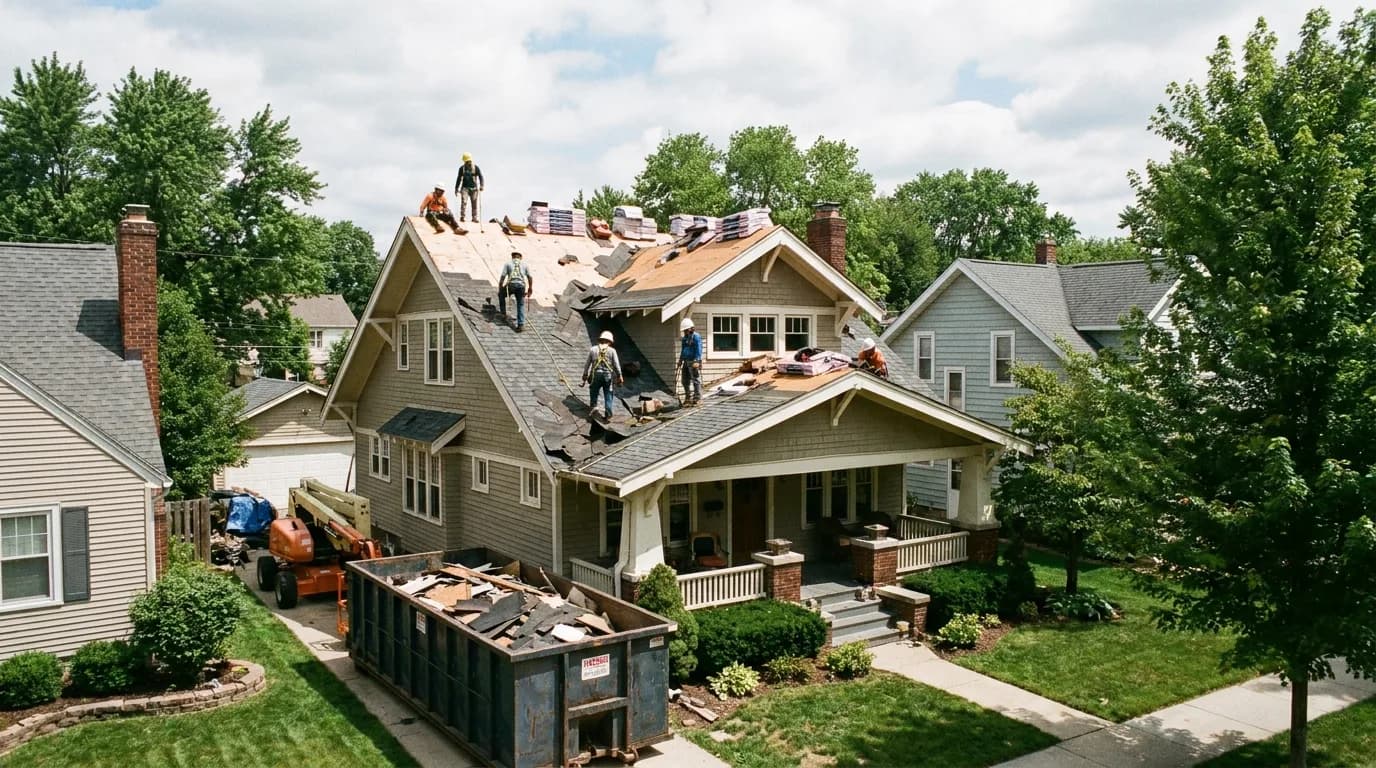
Full tear-off roof replacement in Airdrie, built for Alberta hail and Chinook winds, with a written workmanship guarantee.
Learn more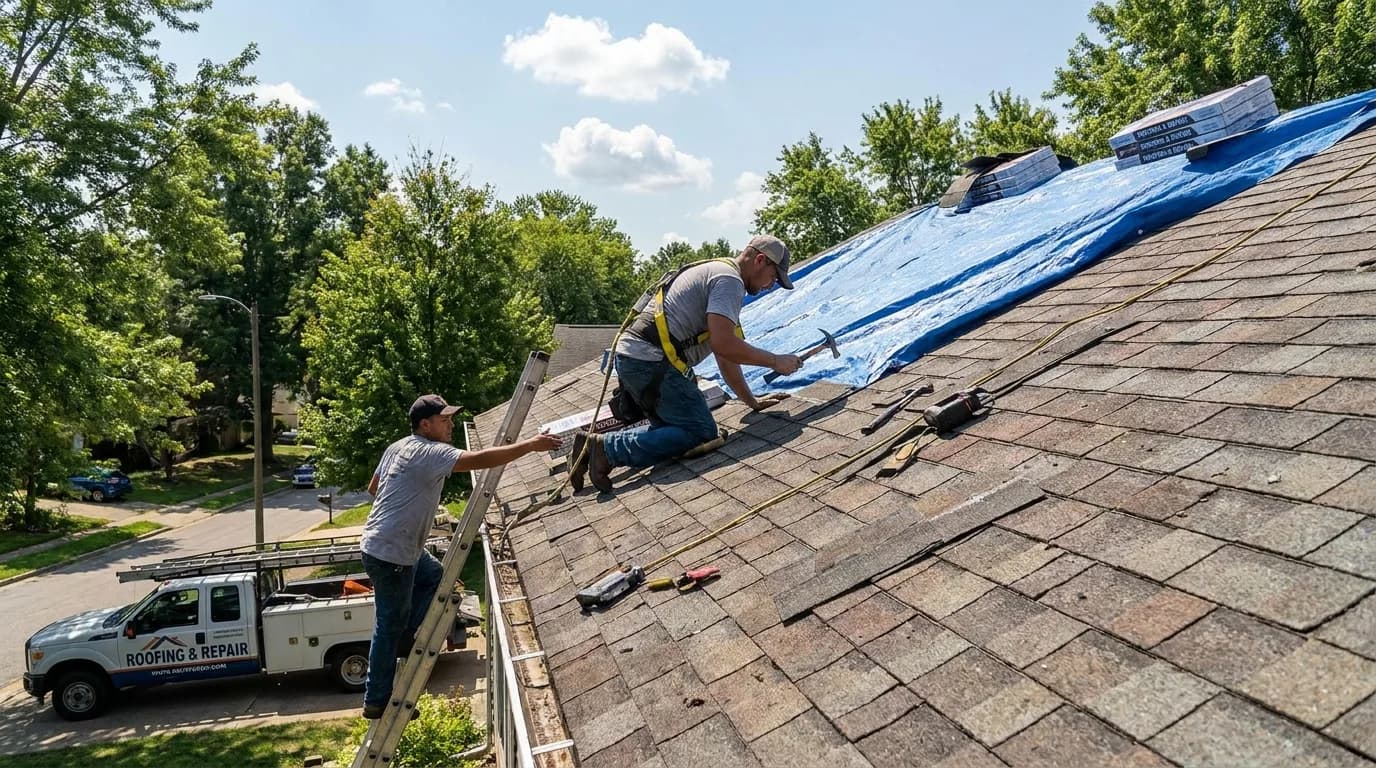 02
02Roof Repair
Fast, lasting roof repair in Airdrie for leaks, missing shingles, failed flashing, and storm damage, diagnosed properly, no upsell.
Learn more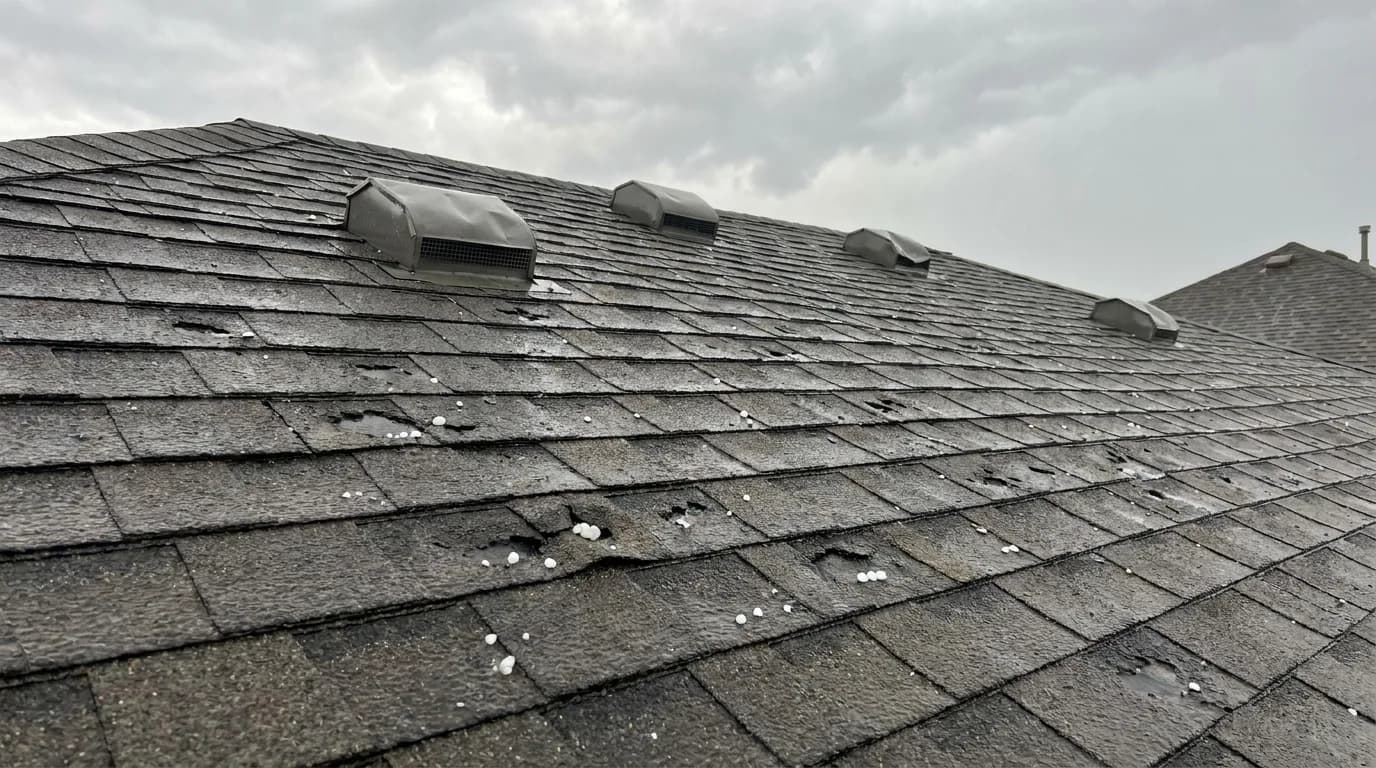 03
03Hail Damage Roof Repair
Hail and storm damage roof repair in Airdrie: emergency tarping, free documented inspections, and full insurance-claim support in Alberta’s Hailstorm Alley.
Learn moreFree roof estimate in Airdrie
Soffit and Fascia Installation Airdrie: free on-site estimate, itemised written quote, same-week booking.