In this guide
- 01Metal roof vs shingles: the honest short answer for Alberta
- 02Side-by-side comparison: metal roof vs asphalt shingles
- 03Metal roof pros and cons at a glance
- 04Lifespan: 40 to 70 years versus 15 to 30
- 05Hail: metal roof dents versus shingle bruising
- 06Snow, ice and Chinook wind
- 07Cost: what metal and shingles run in Airdrie as of 2026
- 08Resale value, curb appeal and insurance
- 09Noise, lightning and other metal roof myths
- 10Standing seam vs exposed-fastener panels vs asphalt
- 11Which is right for your Airdrie home?
Metal roof vs shingles: the honest short answer for Alberta
Every summer after hail rolls through Airdrie, we hear the same question at estimates: should I just go to metal? The metal roof vs shingles decision is a real one in Alberta, because our climate punishes roofs from every direction, hail in July, Chinook gusts in January, snow load in between, and long summers of high-altitude UV.
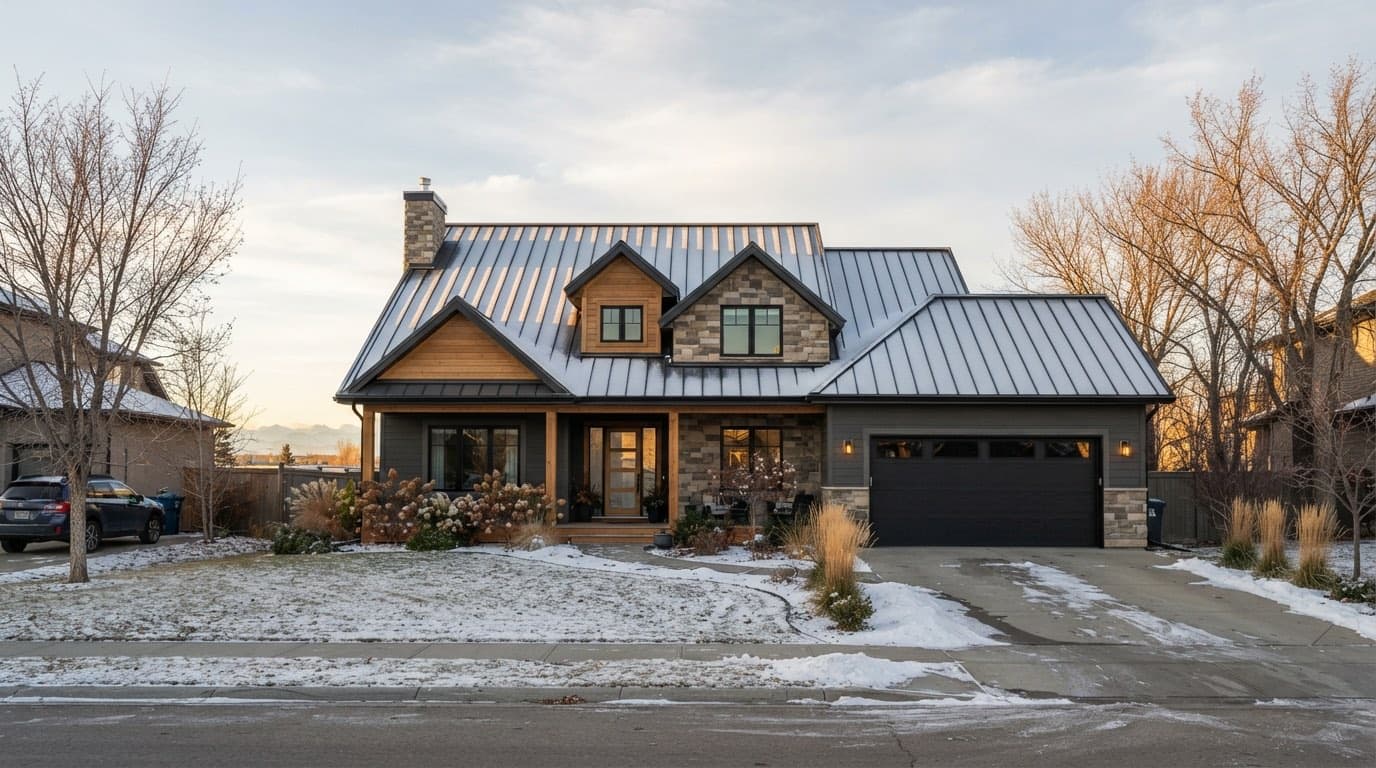
The short version: metal is the longest-lasting, lowest-maintenance roof you can put on a house, and it handles hail without cracking or losing granules. It also costs two to three times what a shingle roof does, it can dent, and it is a specialised installation. Class 4 impact-resistant shingles have narrowed the performance gap for far less money. Which is right depends on how long you plan to stay, your budget, and how much you value never re-roofing again.
Side-by-side comparison: metal roof vs asphalt shingles
| Factor | Steel roof (standing seam or panel) | Asphalt shingles (architectural or Class 4) |
|---|---|---|
| Expected lifespan in Alberta | 40 to 70 years | 15 to 30 years, Class 4 toward the upper end |
| Installed cost, average Airdrie home (2026 guide) | About $15,000 to $45,000 or more | About $6,000 to $18,000 |
| Hail | Resists cracking; can dent, usually cosmetic | Class 4 resists bruising; standard shingles bruise and shed granules |
| Wind | Excellent when fastened to spec | Good; high-wind nailing pattern essential |
| Snow | Sheds quickly; snow guards often needed | Holds snow; ice dams a risk without ventilation |
| Repairs | Specialised, panel replacement | Easy, any roofer, inexpensive patches |
| Weight | Light | Heavier |
| Insurance | May carry a cosmetic-damage exclusion; confirm with broker | Class 4 may earn a premium discount with some insurers |
| Resale | Premium feature, slow to recoup | Familiar, broad buyer appeal |
| Noise | Quiet over a solid deck and insulated attic | Quiet |
Cost figures are rough market guides as of 2026, not quotes. Get a free on-site quote for an exact figure for your home.
Metal roof pros and cons at a glance
The table above is the summary. Here is the same metal roof vs shingles comparison as a plain list of trade-offs, because most homeowners end up weighing three or four of these against each other rather than all ten.
- Pro: lifespan. One roof for the rest of your ownership, and probably the next owner's too.
- Pro: hail and wind. No granules to lose, no mat to bruise, and very high uplift ratings when clipped to spec.
- Pro: snow and ice. Sheds snow, and a slick surface gives ice dams less to grip.
- Pro: low maintenance. Occasional fastener and sealant checks instead of periodic shingle repairs.
- Pro: fire and weight. Non-combustible and lighter than asphalt, so structure is rarely a concern.
- Con: upfront cost. Two to three times an asphalt reroof as of 2026.
- Con: denting. Large hail can dimple panels, and some insurers exclude cosmetic damage.
- Con: fewer installers. Metal is a specialised trade, and a poor metal install is harder to fix than a poor shingle install.
- Con: repairs and matching. Replacing a panel years later means sourcing the same profile and matching a faded colour.
- Con: snow slides. Needs snow guards over doors, walkways and eavestroughs.
Asphalt's list is close to the mirror image: lower cost, easy repairs, a broad installer base and familiar looks on one side; shorter life, hail vulnerability (much reduced with Class 4) and held snow on the other.
Lifespan: 40 to 70 years versus 15 to 30
In the metal roof vs shingles lifespan comparison, metal wins by a wide margin. A properly installed steel roof with a quality paint system (PVDF finishes such as Kynar are the benchmark) will typically outlast two or even three asphalt roofs. Fasteners, sealants and flashings may need attention at the 20 to 30 year mark, but the panels themselves are not wearing out the way asphalt does.
Asphalt shingles in Alberta rarely reach the number printed on the warranty. UV, freeze-thaw and hail age them faster than in milder provinces, so 15 to 25 years is a realistic range for a standard architectural roof, with Class 4 shingles doing better. Over a 50 year ownership horizon, a metal roof can cost less in total, even at double the upfront price. Over a 10 year horizon, asphalt almost always wins. Our guide on how long a roof lasts in Alberta goes deeper into real-world lifespans.
Hail: metal roof dents versus shingle bruising
Airdrie is in the heart of Hailstorm Alley. The Insurance Bureau of Canada (IBC) puts insured hail damage in Alberta at roughly $6 billion over the past five years alone, and the August 8, 2026 storm that dropped quarter-sized hail along the Crossfield to Airdrie corridor is the latest example. So how each roof takes a hit matters a great deal.
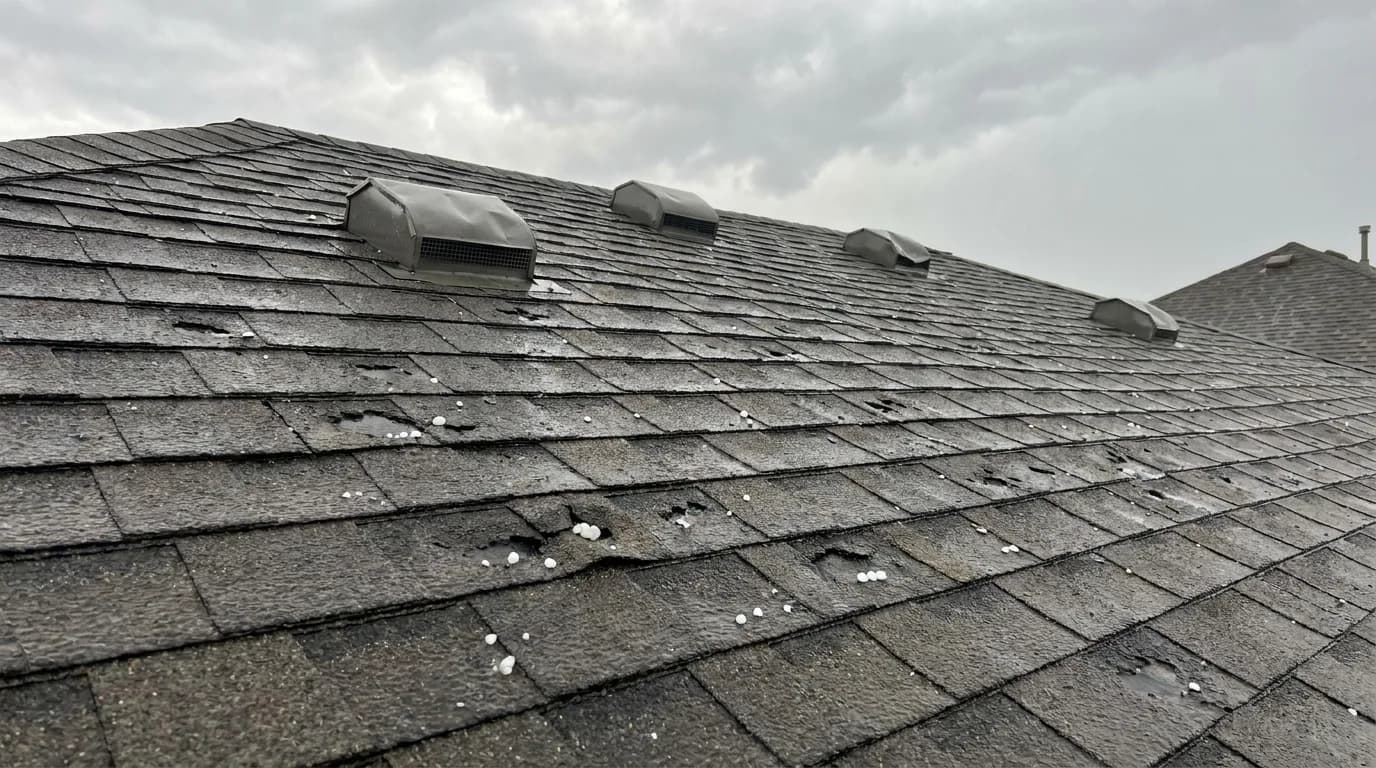
Hail does two different things to the two materials. On asphalt, a stone bruises the mat, cracks the surface and knocks granules loose, which is functional damage: the shingle now ages faster and will eventually leak. On steel, a stone can leave a dent, which is usually cosmetic: the panel still sheds water and the paint is generally intact, but the roof looks dimpled from the ground. Thicker gauges (24 gauge is sturdier than 26 or 29) and textured or striated panels hide dents better, and many steel products carry Class 4 impact ratings of their own.
The insurance wrinkle is important. Because dents do not cause leaks, some insurers add a cosmetic-damage exclusion to metal roofs, meaning a dimpled but watertight roof may not be covered for replacement. Others treat it case by case. Before you choose metal partly for insurance reasons, confirm with your insurer or broker exactly how they handle metal roof hail damage. Our post on Class 4 impact-resistant shingles explains how the asphalt side of that equation works.
Snow, ice and Chinook wind
Metal sheds snow. On a steep roof, a warm afternoon or a Chinook can send the whole load sliding off in one go, which is great for reducing weight on the structure and for ice dam prevention, and dangerous for anything below: decks, eavestroughs (gutters), vehicles, and people at the front door. Snow guards or fences over entrances and walkways are a standard part of a good metal install in Alberta and should be in the quote.
Shingles hold snow, which spreads the load and keeps the eaves safer, but that same held snow feeds ice dams if the attic is warm and poorly vented. Either roof needs proper attic ventilation and ice-and-water shield at the eaves. For wind, both perform well when installed to spec; standing seam panels with concealed clips have very high uplift ratings, and architectural shingles nailed in the high-wind pattern hold through typical Chinook gusts.
Cost: what metal and shingles run in Airdrie as of 2026
As a rough market guide as of 2026, an asphalt reroof on an average Airdrie home runs about $6,000 to $18,000 installed, or roughly $450 to $800 per square for architectural shingles, more for Class 4. Metal typically runs two to three times that, roughly $15,000 to $45,000 or more, depending on the panel type, gauge, finish, roof complexity and whether the old roof is removed or the new panels go over the existing shingles instead. Standing seam with concealed fasteners sits at the top of that range, with the full panel profile breakdown here; exposed-fastener panels sit lower.
The metal roof vs shingles price gap narrows when you count the second asphalt roof you will not buy, but only if you stay long enough to avoid it. Our metal roof cost in Alberta guide breaks the numbers down by panel type, and our metal roofing service page explains what a quote should include. Get a free on-site quote for an exact figure.
Resale value, curb appeal and insurance
A metal roof is a genuine selling feature, particularly for buyers who plan to stay long-term and who understand its lifespan. It is also visually distinctive, which some buyers love and some do not, so profile and colour choices matter. That said, you should not expect to recoup the full premium at sale; the value is mostly in not re-roofing again.
A new architectural or Class 4 shingle roof is the familiar option that appeals to the widest pool of buyers and reassures a home inspector. On the insurance side, some Alberta insurers offer premium discounts for Class 4 shingles, and some treat metal favourably too, but the cosmetic-damage exclusion noted above can cut the other way. Ask your broker how each material affects your premium and your coverage before you decide.
Noise, lightning and other metal roof myths
The rain-on-a-tin-roof image comes from barns and sheds with panels screwed to open framing. On a house, metal goes over a solid deck, underlayment and an insulated attic, and the noise difference from shingles is minimal. Lightning is another myth: a metal roof does not attract lightning, and if struck it disperses the energy safely because it is non-combustible.
Rust is not a concern with galvanized or Galvalume steel and a factory paint finish, provided cut edges and fasteners are handled correctly. Walking on it is fine with care, and it will not make your home colder; if anything, reflective finishes slightly reduce summer cooling load. The real drawbacks of metal are cost, denting, fewer qualified installers, and the difficulty of matching a panel colour years later.
Standing seam vs exposed-fastener panels vs asphalt
Not all metal is equal. Standing seam panels lock together with concealed clips and no exposed screws, so there are no fastener washers to weather and fail. They are the premium residential option and the one that best justifies the lifespan claims. Exposed-fastener panels (often called ag panel or corrugated) are cheaper and faster to install, but the hundreds of rubber-washered screws will need checking and eventually replacing, especially in freeze-thaw.
Metal shingles and stone-coated steel are a middle ground: they mimic the look of asphalt or shakes and often carry Class 4 ratings, at a price between exposed-fastener panels and standing seam. If you compare standing seam vs asphalt directly, you are comparing the most durable common residential roof to the most economical; the answer depends on how long you intend to own the house.
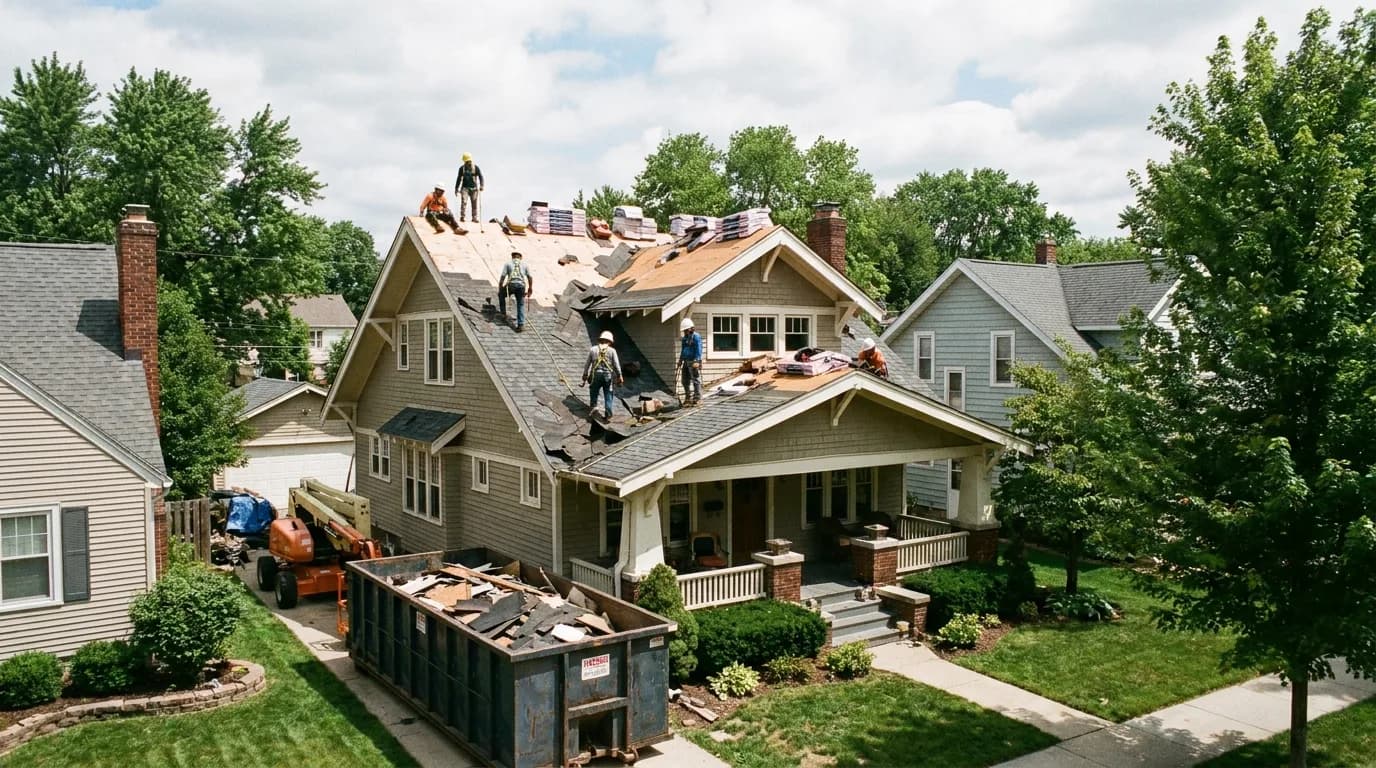
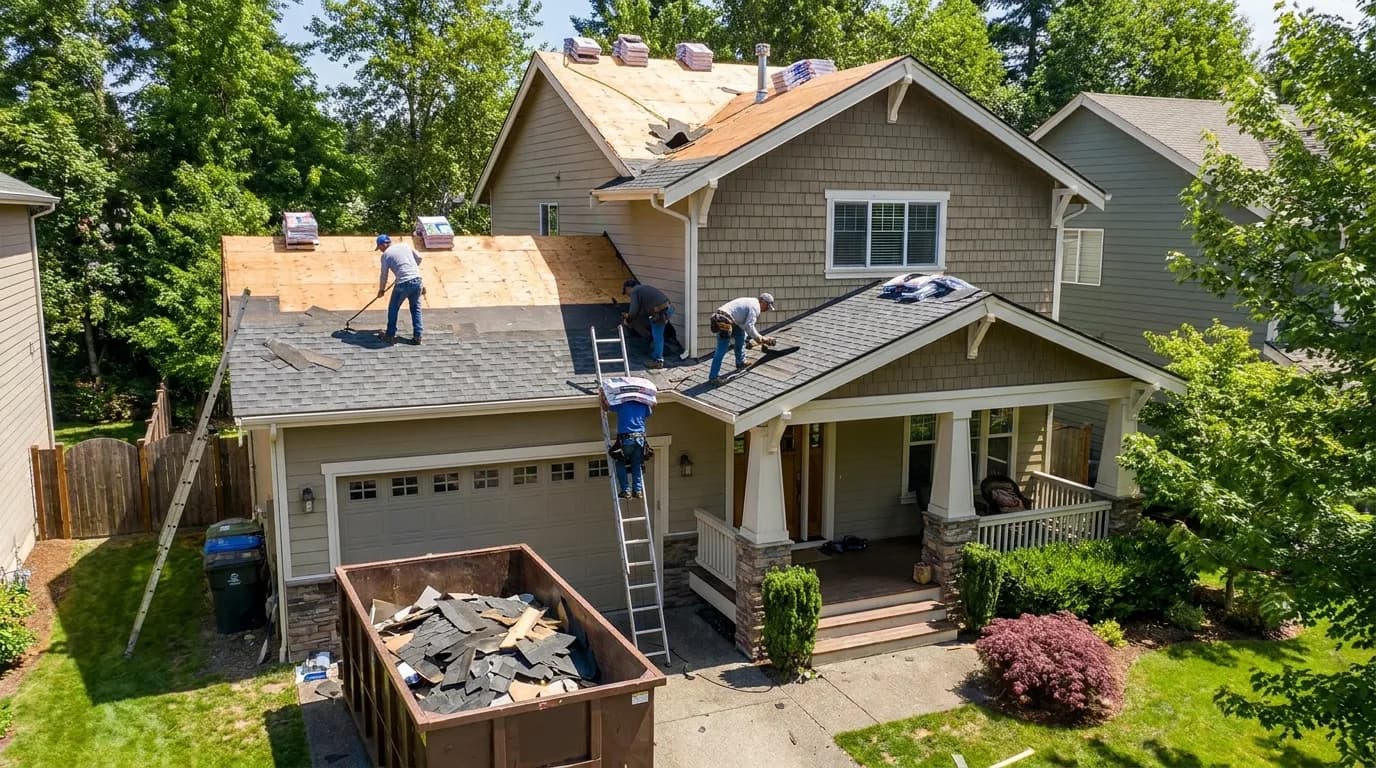
A metal roof vs shingles decision also changes what happens on install day. Both start with a full tear-off to bare deck, deck repairs, and ice-and-water shield at the eaves and valleys. From there, a shingle roof goes on quickly: an average Airdrie home is often finished in one to three days by a crew that does it every week.
Metal takes longer and needs different skills. Panels are measured and often cut to length for each run, trim and flashings are custom-bent on site, and standing seam requires clip spacing and expansion allowances that a shingle crew may never have done. Expect a metal install to take roughly twice as long, to need a permit check with the City in some cases, and to depend heavily on the installer's experience with that specific panel system. Ask to see metal roofs the crew has done locally, not just shingle jobs.
Which is right for your Airdrie home?
Choose metal if you plan to stay 20 years or more, you want to re-roof once and be done, and your budget can absorb the upfront cost. Choose Class 4 asphalt shingles if you want strong hail performance at a fraction of the cost, expect to sell within 10 to 15 years, or want repairs any local roofer can handle. Standard architectural shingles suit tighter budgets, but in Hailstorm Alley the Class 4 upgrade is worth it. Our pillar guide to the best shingles for Alberta's climate covers the asphalt grades in detail.
Apex Roofing Airdrie installs both, and we will quote whichever you ask for without steering you toward the pricier option. Book a free, no-obligation on-site estimate and we will inspect the deck, attic and ventilation, then give you an itemised written quote for roof replacement in asphalt, metal, or both, so you can compare real numbers side by side.
Written by the Apex Roofing Airdrie crew
Practical guidance from the local roofers who inspect, repair and replace roofs across Airdrie and Rocky View County every season. We review our guides against current Alberta practice and update them when materials, code or insurer behaviour changes. About our team.