In this guide
- 01What Are Class 4 Shingles?
- 02How the UL 2218 Impact Test Works
- 03Impact-Resistant Shingles Cost vs Regular Shingles
- 04Class 4 Shingles Insurance Discount in Alberta
- 05Impact Resistant Shingles vs Architectural: What Is Actually Different?
- 06Class 4 Shingle Brands Sold in Canada
- 07Do Class 4 Shingles Survive Airdrie Hail? The Honest Answer
- 08Is a Class 4 Roof Worth It? A Worked Payback
- 09Installation and Warranty: Getting the Full Benefit
- 10Get a Class 4 Roofing Quote in Airdrie
What Are Class 4 Shingles?
Class 4 shingles are asphalt roofing shingles that have earned the highest impact rating under UL 2218, the standard test used across North America to grade how well a roof covering resists hail. The rating does not describe a particular brand or style. It describes a test result, and any shingle, whether architectural, designer or three-tab, can carry it if the manufacturer submits it for testing and it passes.
In Airdrie the term comes up constantly because we sit in Alberta's Hailstorm Alley, the Calgary–Airdrie–Red Deer corridor that sees a major hail event nearly every summer. The Insurance Bureau of Canada has reported more than $11 billion in insured hail damage in Alberta over the past two decades, and roughly $6 billion in the last five years alone. Insurers have responded by tightening roof coverage and, at the same time, rewarding homeowners who put a hail resistant roof on the house.
This guide explains how the test works, what Class 4 shingles cost compared to regular ones, how the insurance discount works in Alberta, which brands qualify, and, honestly, where their limits are.
How the UL 2218 Impact Test Works
UL 2218 is a laboratory test developed by Underwriters Laboratories. A steel ball of a specified diameter is dropped from a height of 6 metres (20 feet) onto a shingle sample mounted on a deck, twice in the same location. The sample is then flipped over and inspected for cracks, splits or tears in the back of the mat. If the shingle survives with no opening through the back, it passes at that class. The ball size sets the class.
| UL 2218 class | Steel ball diameter | Roughly equivalent hail | Pass criteria |
|---|---|---|---|
| Class 1 | 31.8 mm (1.25 in) | Marble to dime | No crack on back after two hits |
| Class 2 | 38.1 mm (1.5 in) | Nickel to quarter | No crack on back after two hits |
| Class 3 | 44.5 mm (1.75 in) | Quarter to loonie | No crack on back after two hits |
| Class 4 | 50.8 mm (2 in) | Golf ball and larger | No crack on back after two hits |
Two caveats matter for Alberta. First, the test uses steel balls, which do not shatter the way hail does, so it is a conservative proxy rather than a simulation of a storm. A newer test from the Insurance Institute for Business and Home Safety (IBHS) uses manufactured ice and also grades granule loss and dents, and some shingles that pass UL 2218 do less well on it. Second, the test is done on new shingles at room temperature. A 15-year-old Class 4 shingle in a January Chinook is more brittle than the sample in the lab, though it still generally outperforms a standard shingle of the same age.
The rating also says nothing about wind. A separate standard covers wind resistance, and most Class 4 products carry a high wind rating as well, which matters in Airdrie for the reasons covered in our guide to Chinook wind damage and lifted shingles.
Impact-Resistant Shingles Cost vs Regular Shingles
The impact resistant shingles cost vs regular question has a fairly consistent answer in the Alberta market. As of 2026, standard architectural (laminate) asphalt shingles install for roughly $450 to $800 per square (100 square feet) on a typical Airdrie home, depending on pitch, complexity and tear-off. Class 4 versions of the same shingle style generally run 10 to 25 percent more on the material, which works out to about $550 to $950 per square installed.
| Roof size | Standard architectural (approx.) | Class 4 impact-resistant (approx.) | Typical upgrade cost |
|---|---|---|---|
| Bungalow, ~18 squares | $8,000–$12,000 | $9,500–$14,000 | $1,500–$2,500 |
| Two-storey, ~25 squares | $11,000–$16,000 | $13,000–$19,000 | $2,000–$3,500 |
| Large or steep, ~35 squares | $16,000–$24,000 | $19,000–$28,000 | $3,000–$4,500 |
These are rough market guides, not quotes. Labour is the same for either shingle because installation is identical, so the entire difference is material. That is also why the premium is smaller on complicated roofs, where labour dominates the price, and larger as a percentage on simple bungalows. Get a free on-site quote for an exact figure, and ask for both options priced side by side. For the full breakdown of what goes into a roofing quote, see our roof replacement cost guide for Airdrie.
Class 4 Shingles Insurance Discount in Alberta
The class 4 shingles insurance discount is what tips most Airdrie homeowners toward the upgrade. Insurers lose a great deal of money to hail in this corridor, and a roof that is less likely to need replacing after each storm is worth something to them. Many Alberta home insurers now offer a discount on the dwelling portion of the premium for a roof with a documented UL 2218 Class 4 shingle.
The size of the discount varies a great deal between companies, and it changes as insurers revise their hail models, so we will not quote a single figure. In practice we have seen homeowners report anything from a modest reduction to a significant one, and the discount usually applies to the building coverage rather than contents or liability. Ask your broker for the actual dollar amount on your policy before you sign a roofing contract, because it is the number that decides whether the upgrade pays back.
Insurers typically want proof: the manufacturer's product name, the UL 2218 classification, the installation date, and often a copy of the contractor's invoice or a certificate of completion. Keep all of these. A few insurers also require that the entire roof, not just some slopes, be covered with the rated product. Some insurers additionally treat a new Class 4 roof as a reason to keep a home on replacement cost coverage rather than moving the roof to an actual cash value schedule, which can be worth far more than the discount itself over the life of the policy. How that works is explained in our article on ACV vs RCV on a roof claim.
Impact Resistant Shingles vs Architectural: What Is Actually Different?
Impact resistant shingles vs architectural shingles is a slightly confusing comparison, because most Class 4 shingles are architectural shingles. The difference is in the construction, not the look. Manufacturers achieve the rating in one of two ways.
The first approach is polymer-modified asphalt, usually SBS (styrene-butadiene-styrene) rubberised asphalt. Adding SBS to the asphalt makes the shingle flexible, so it absorbs an impact and springs back rather than fracturing. SBS shingles also stay pliable in cold weather, which is a real advantage during Alberta winters when standard shingles become brittle and can crack from foot traffic or thermal shock. Malarkey pioneered this approach and several other manufacturers now use it.
The second approach is a reinforced backing: a woven polyester or fibreglass scrim laminated to the back of the shingle that holds it together under impact. Owens Corning's WeatherGuard-style products and GAF's AS lines use versions of this. Some manufacturers combine both methods. Either way, the shingle looks the same as its standard counterpart from the street and installs the same way.
The practical differences beyond hail: SBS-modified shingles tend to handle Chinook freeze-thaw cycling better and can carry longer warranties, and both types are usually a little heavier. For a broader comparison of what performs well in our climate, see the best shingles for Alberta's climate.
Class 4 Shingle Brands Sold in Canada
Most major manufacturers sell at least one Class 4 line in Alberta. Product names change frequently and some lines are regional, so treat this as a starting list and check current product names and UL listings with your contractor or the manufacturer before ordering.
- IKO (made in Canada): the Nordic line is IKO's polymer-modified Class 4 architectural shingle and is widely stocked in Alberta.
- BP (Canadian): BP has offered Class 4 versions of its Vangard and Everest lines, often labelled IR. Availability varies by region.
- Malarkey: Vista and Legacy are SBS-modified architectural shingles rated Class 4, and Malarkey's rubberised asphalt performs well in cold climates.
- Owens Corning: Duration FLEX (SBS-modified) and Duration Storm (reinforced backing) are the common Class 4 options.
- GAF: Timberline AS II is GAF's Class 4 architectural shingle, using a reinforced construction.
- CertainTeed: Landmark IR and NorthGate (SBS-modified) are Class 4 rated where available.
Choosing between them usually comes down to what your contractor installs regularly, what is stocked locally so repairs can be matched later, the colour range, and the warranty terms. We compare the big three Canadian-market brands in IKO vs GAF vs BP shingles in Canada. Whichever you choose, ask for the UL 2218 Class 4 documentation for that specific product and colour, because some colours or regional variants of a line are not rated.
Do Class 4 Shingles Survive Airdrie Hail? The Honest Answer
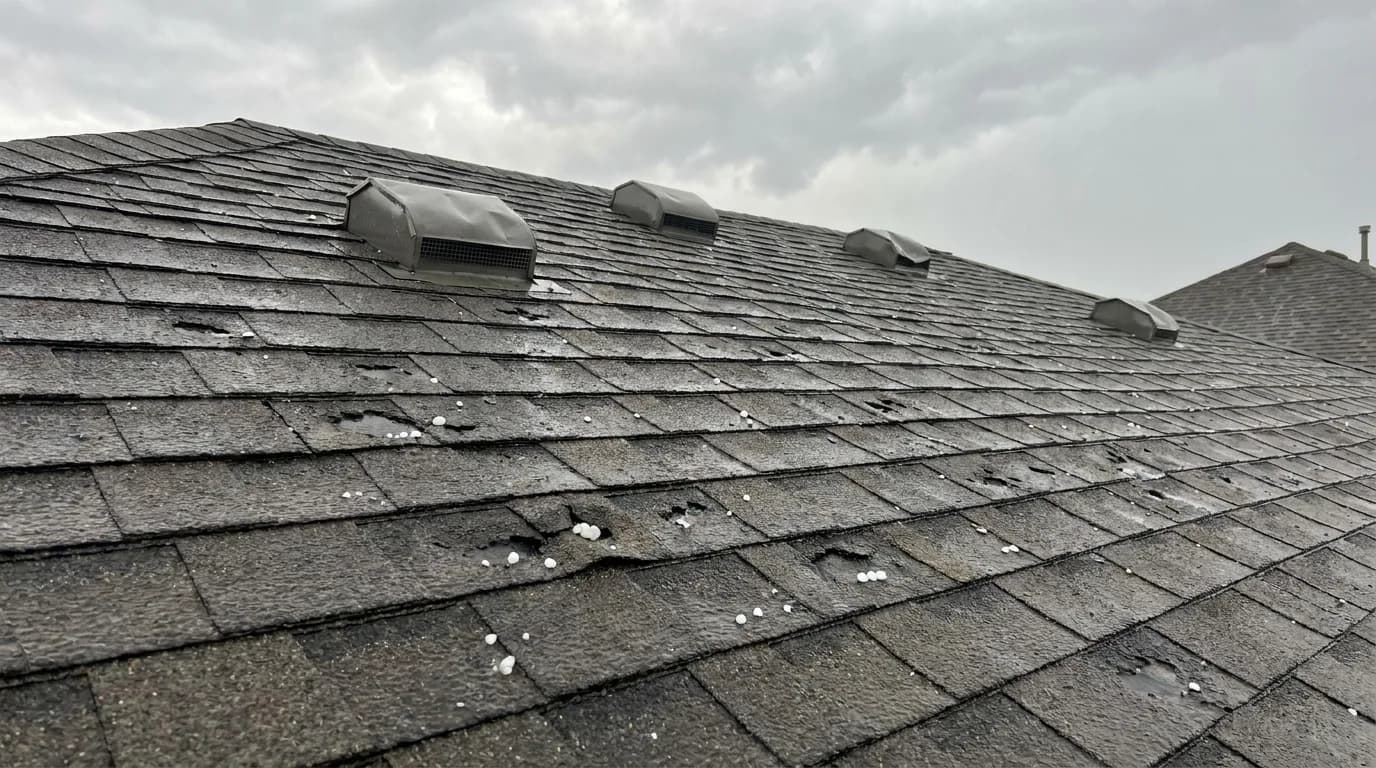
A hail resistant roof is not a hail-proof roof, and it is worth being clear about what Class 4 shingles do and do not do. What they do well is resist cracking and mat fracture, which is the damage that leads to leaks. After a quarter to loonie sized hail event of the kind that hit the Crossfield–Airdrie corridor on the evening of Aug 8, 2026, a Class 4 roof will typically show far fewer bruises and far fewer functional strikes per test square than a standard roof next door. In many cases it needs no work at all where the neighbour needs a full replacement.
What they do less well is resist cosmetic damage. Golf-ball hail driven by 100 km/h wind will still knock granules loose and may leave visible marks on any asphalt shingle. Those marks may not be functional damage, and that is the awkward part: some insurers exclude cosmetic damage, and an adjuster may count fewer strikes on a Class 4 roof precisely because the shingle did its job. Occasionally that leads to a homeowner with a marked-up roof and no approved claim. On balance that is still a better outcome than a fractured roof, but you should know it going in.
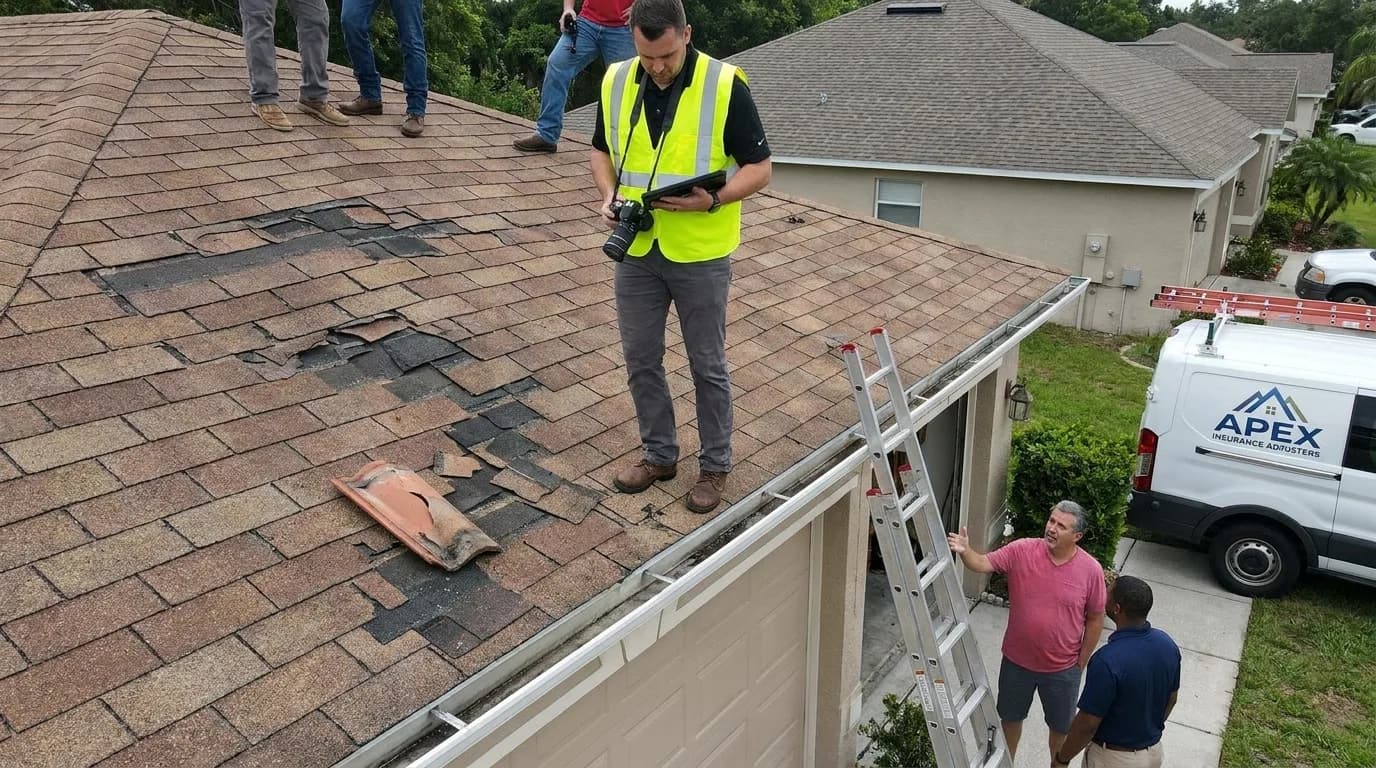
The other limit is age. All asphalt shingles get more brittle as the volatile oils in the asphalt evaporate over 10 to 20 years of Alberta UV. SBS-modified shingles hold their flexibility longer, but a 20-year-old Class 4 shingle will not perform like the lab sample. Expect the strongest protection in the first decade and gradually less after that. If you want to see what damage looks like on either type, our hail damage checklist covers the signs.
Is a Class 4 Roof Worth It? A Worked Payback
Take an average two-storey home in Cooper's Crossing with a 25-square roof. The Class 4 upgrade adds roughly $2,500 to the replacement cost as of 2026. Suppose the broker confirms an annual discount on the dwelling premium that works out to a plausible few hundred dollars a year, and the home policy carries a $2,000 hail deductible. Here is how the value stacks up over the life of the roof.
| Benefit | Rough value over 20 years | Notes |
|---|---|---|
| Insurance premium discount | Discount × 20 years | Confirm the actual figure with your broker; even $150/yr is $3,000 |
| Avoided deductibles | $2,000 per avoided claim | Airdrie roofs commonly see 1–3 hail claims in 20 years |
| Avoided premium impact from claims | Varies | Fewer claims can help at renewal |
| Staying on RCV rather than ACV roof schedule | Potentially thousands on one claim | Depends on insurer |
| Longer warranty and cold-weather flexibility | Hard to price | SBS products in particular |
The upgrade cost is paid once. The discount is paid every year, and every hail event you ride out without a claim saves the deductible and the disruption of a rebuild. On those numbers, a Class 4 roof in Hailstorm Alley usually recovers its extra cost well within its life, and often within the first significant storm. Where it makes less sense: a home you plan to sell within a couple of years, a roof with very low hail exposure such as one shielded by taller buildings, or a policy where the broker confirms no discount and no RCV benefit.
Installation and Warranty: Getting the Full Benefit
A Class 4 shingle only performs as rated when it is installed on a sound deck, with the manufacturer's specified underlayment, nailing pattern and ventilation. Impact resistance depends on the shingle being fully supported, so soft or delaminated decking, which is common under older Airdrie roofs, needs replacing rather than covering. Ice-and-water shield at the eaves and in valleys, a standard practice under the Alberta Building Code, and adequate attic ventilation (commonly cited at 1:300 net free area) are also part of most manufacturers' warranty conditions.
Warranty terms on Class 4 products are often better than standard lines, with longer non-prorated periods and, in some cases, enhanced wind coverage. Read the fine print though. Most warranties cover manufacturing defects, not hail damage itself, and some enhanced warranties only apply when the shingle is installed by a manufacturer-certified contractor with a full system of matching accessories. Our article on how roof warranties actually work unpacks the difference between the shingle warranty and the workmanship guarantee.
If you are replacing a roof under an insurance claim, the timing to upgrade is ideal: the insurer pays the approved replacement cost and you pay only the Class 4 difference. The pillar guide in this series, how a hail damage roof insurance claim works in Alberta, explains how to build that into the scope of loss.
Get a Class 4 Roofing Quote in Airdrie
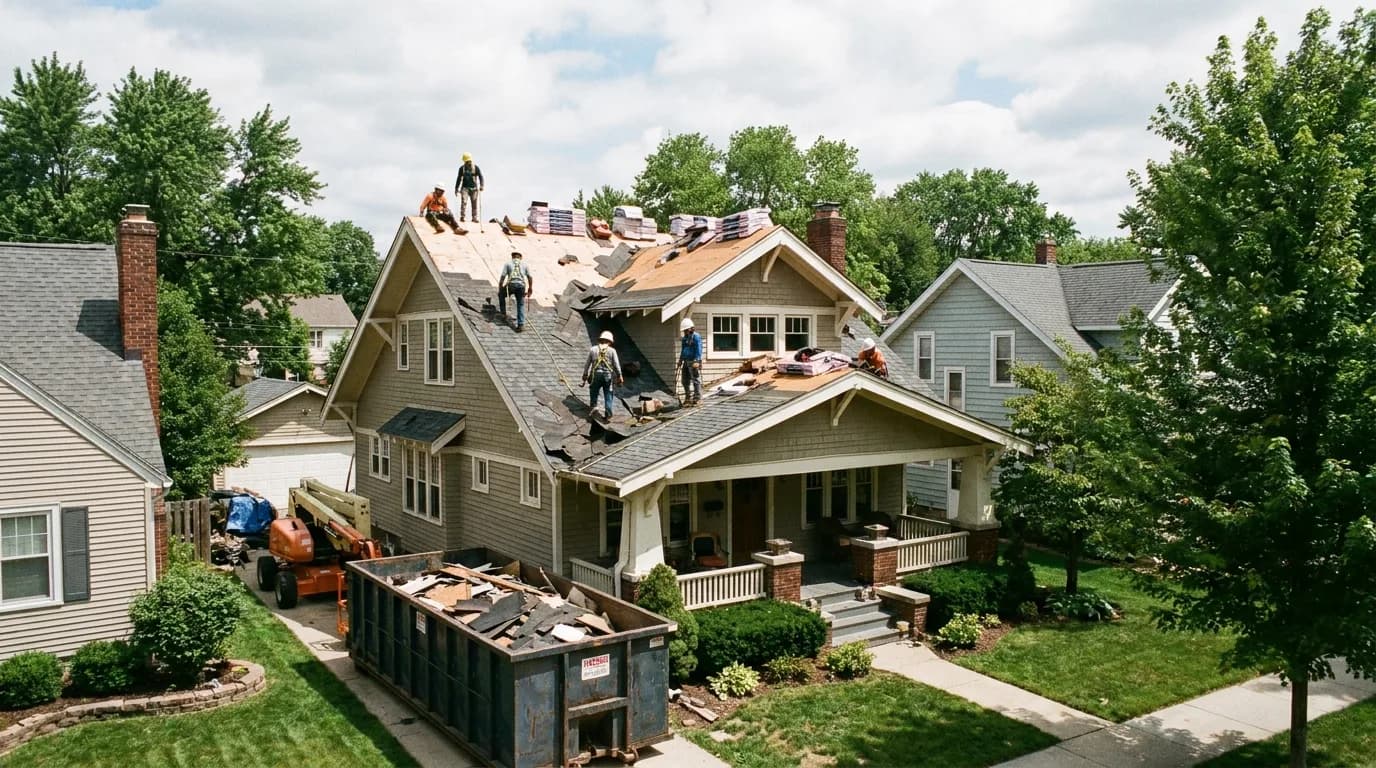
Apex Roofing Airdrie installs Class 4 impact-resistant shingles from the major Canadian-market manufacturers, using our own local crew rather than subcontractors. Every roof comes with a written workmanship guarantee on top of the manufacturer warranty, and we provide the UL 2218 documentation your insurer needs to apply the discount.
If you are weighing up the upgrade, ask for a free on-site estimate with standard and Class 4 options priced side by side, then take the numbers to your broker. See our roof replacement service for what a full replacement includes, and if you are dealing with damage from a recent storm, our hail damage roof repair page covers inspection and claim support. Same-week estimate bookings are available through the contact page.
Written by the Apex Roofing Airdrie crew
Practical guidance from the local roofers who inspect, repair and replace roofs across Airdrie and Rocky View County every season. We review our guides against current Alberta practice and update them when materials, code or insurer behaviour changes. About our team.