In this guide
- 01Shingles Lifted by Wind: Why It Happens So Often in Airdrie
- 02How Chinook Winds Damage a Roof
- 03Signs of Wind Damage on Your Roof
- 04Creased Shingles: The Damage You Cannot See From the Ground
- 05Roof Wind Ratings Explained
- 06How to Repair Roof Shingles Lifted by Wind
- 07Cost to Repair Wind-Damaged Shingles in Airdrie
- 08Is Wind Damage to a Roof Covered by Insurance?
- 09Preventing Wind Damage: Installation Is Everything
- 10Get Wind-Damaged Shingles Repaired in Airdrie
Shingles Lifted by Wind: Why It Happens So Often in Airdrie
Shingles lifted by wind are the most common roof repair call we get between November and March. Airdrie sits on open prairie north of Calgary with very little to break the wind coming off the mountains, and the Chinook, the warm, dry westerly that can raise the temperature 20 degrees in a few hours, arrives with gusts that regularly exceed 100 km/h. Those gusts hit the west and southwest slopes of every home in Reunion, Windsong, Bayside and Cooper's Crossing at roughly the same angle, year after year.
A shingle roof resists wind through the adhesive seal strip that bonds each course to the one below. When that seal is intact, wind flows over the roof surface. When it is weak, brittle or broken, wind gets under the tab edge, lifts it, and bends it back on itself. That bend is a crease, and a creased shingle is a damaged shingle no matter how flat it lies afterward.
This guide covers why Chinooks are so hard on roofs, how to spot wind damage roof problems from the ground, what a proper repair involves, what it costs, how roof wind ratings work, and how insurance treats it. None of it is insurance advice, so confirm coverage details with your insurer or broker.
How Chinook Winds Damage a Roof
Chinooks do three things to a roof that summer wind does not. First, they arrive in winter when the shingles are cold. Asphalt gets stiff below freezing, and the seal strip that keeps each tab down can be brittle enough to snap when the tab is flexed. Second, the temperature swing is violent. A roof surface at minus 25 in the morning can be at plus 8 by mid-afternoon, and the expansion and contraction across that range works at every seal and every nail. Third, the gusts are sudden and directional. A steady breeze lets a roof settle; a 110 km/h gust after a calm hour hits the windward eave like a hammer.
The damage usually starts at the edges and ridges: the eave course on the west side, rake edges where the roof meets the gable, and hip and ridge caps, which take wind from multiple directions and are the last thing installed, often with the least care. Once one tab lifts, the tab beside it loses its shelter and lifts next, so wind damage tends to spread across a slope in a line.
Older roofs suffer most. A shingle in its second decade has lost the oils that keep it flexible and the seal strip has weakened with age and UV, and many Airdrie roofs installed in the building boom of the mid-2000s are now in exactly that window. But new roofs are not immune. A roof installed in late autumn may not have had enough warm days for the seal strips to activate before the first Chinook, which is why installation season and technique matter, and why we cover it in our guide to roof replacement in winter in Alberta.
Signs of Wind Damage on Your Roof
Roof shingles lifted by wind are easier to spot than hail damage, but only if you know what to look for and when. The best time is during or immediately after a strong wind, from the ground, with binoculars.
- Tabs flapping or standing up in the wind. The clearest sign. Note which slope and roughly how many.
- Shingle pieces in the yard, on the deck or in the eavestroughs. Torn tabs and ridge caps travel a surprising distance.
- Missing tabs showing the darker shingle beneath, or bare patches where the underlayment or deck is visible.
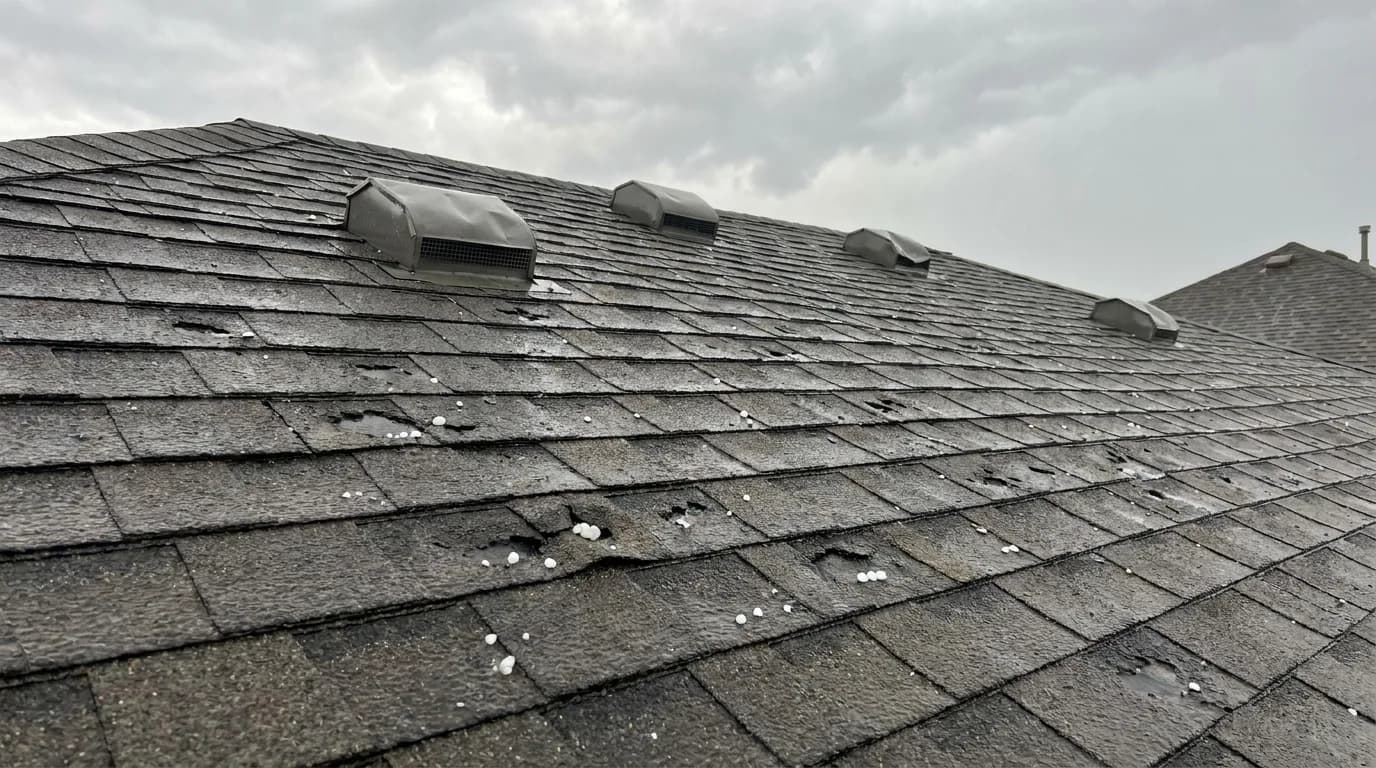
- Horizontal crease lines across tabs, often a lighter or darker band a few centimetres above the exposed edge. These are shingles that lifted, creased and lay back down.
- Lifted or missing ridge and hip caps, which sit highest and take the most wind.
- Exposed or raised nails where a tab has pulled through its fastener.
- Lifted flashing or drip edge at eaves, rakes and around vents and chimneys.
- Granules piled at downspouts after wind, from abrasion where tabs rubbed against each other.
- A new leak or ceiling stain after a windstorm, most often below a valley, a ridge, or the west-facing slope.
If you see any of the first five on the west or southwest side of the house after a Chinook, arrange an inspection. Hail leaves round bruises across a slope at random; wind leaves lines, edges and missing pieces on the exposed faces. Both can be present on the same roof after a summer thunderstorm, and our hail damage checklist will help you tell them apart.
Creased Shingles: The Damage You Cannot See From the Ground
Creased shingles are the reason wind damage gets underestimated. When a gust lifts a tab and bends it back, the fibreglass mat inside the shingle fractures along the fold. When the wind drops, the tab lies flat again and from the driveway the roof looks fine. But the crease is now a hinge. Every subsequent gust flexes it a little more, the fracture grows, the seal below it never re-bonds properly, and eventually the tab tears off or cracks through, usually in the next big wind or after a winter of freeze-thaw.
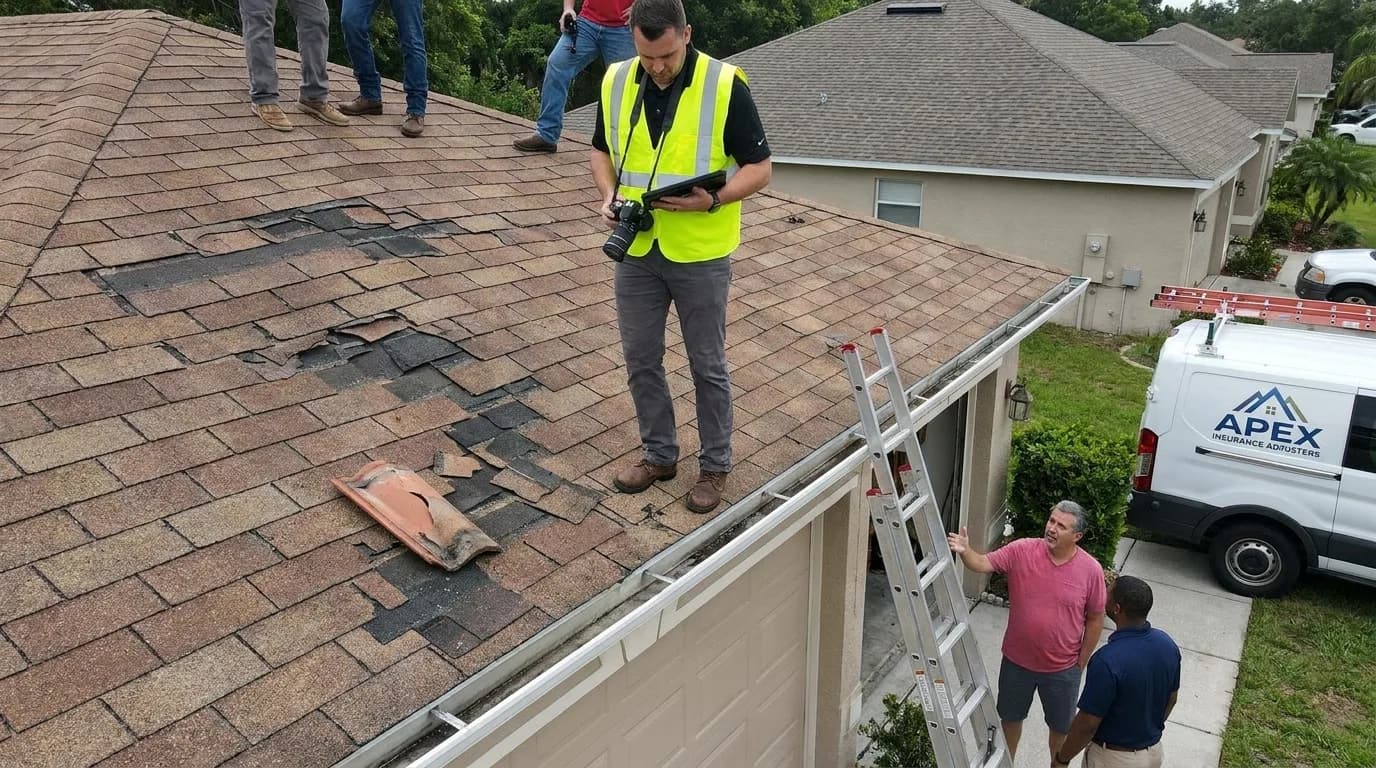
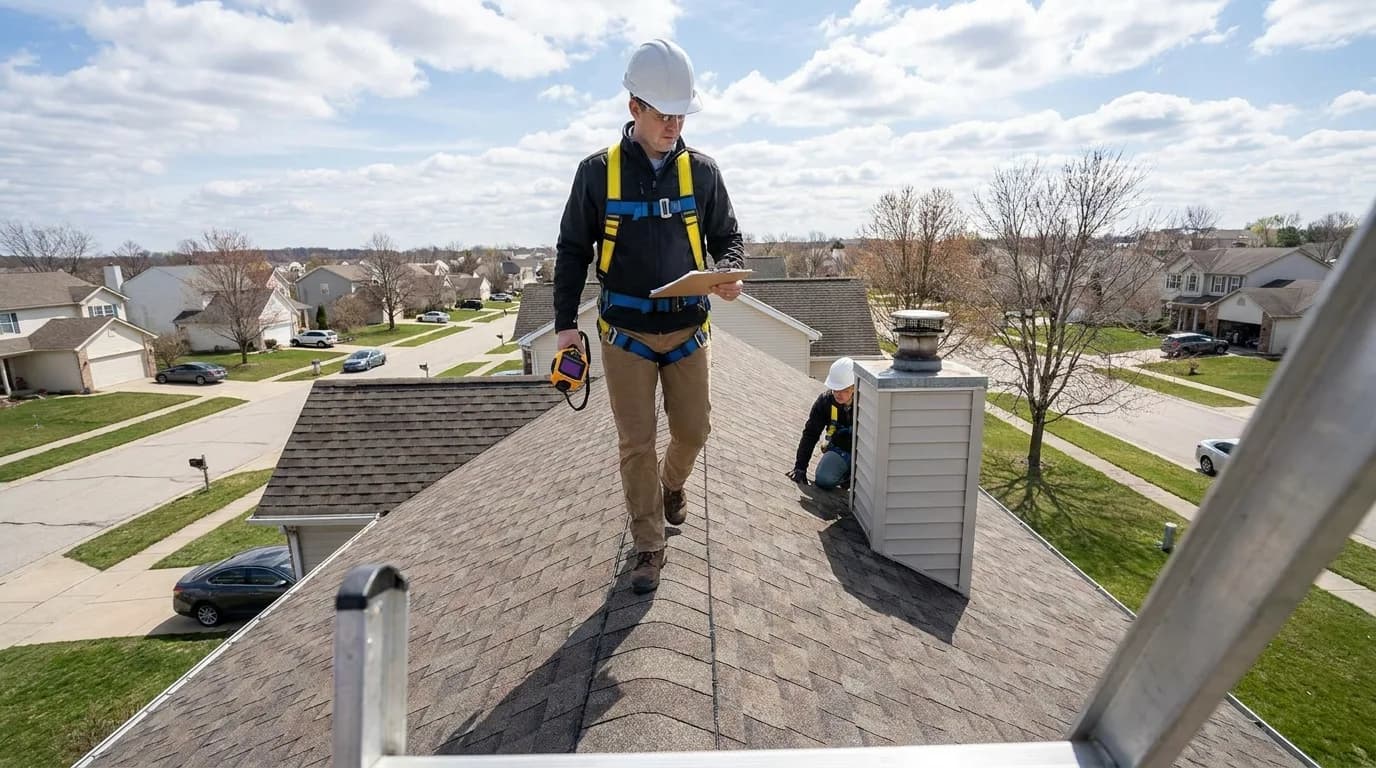
On an inspection, creased shingles are found by lifting each tab gently on the exposed slopes and looking for the fold line and for a broken seal. A single creased tab is a simple repair. A slope with dozens of creased tabs is a roof that will keep shedding shingles every Chinook until it is replaced, because the creasing is a symptom of seal strips that have failed everywhere, not just where the wind happened to catch.
Adjusters know this too, and a wind claim is often approved or denied on the count of creased and unsealed tabs per slope rather than on the number of missing pieces. A contractor inspection that documents creases with photos and a count per slope, done before the adjuster visits, is the evidence that gets a full slope replacement approved rather than a patch.
Roof Wind Ratings Explained
Every shingle sold in Canada carries a roof wind rating from one of two ASTM tests. ASTM D3161 uses a fan to blow across an installed sample and grades the shingle by the wind speed it survived. ASTM D7158 calculates uplift resistance and grades by class letter. Both appear on the shingle wrapper and the manufacturer's data sheet.
| Rating | Test | Approx. wind speed | Typical products |
|---|---|---|---|
| D3161 Class A | Fan test | 97 km/h (60 mph) | Older three-tab shingles |
| D3161 Class D | Fan test | 145 km/h (90 mph) | Basic architectural |
| D3161 Class F | Fan test | 177 km/h (110 mph) | Most architectural shingles |
| D7158 Class D | Uplift calc | 145 km/h (90 mph) | Basic architectural |
| D7158 Class G | Uplift calc | 193 km/h (120 mph) | Better architectural |
| D7158 Class H | Uplift calc | 241 km/h (150 mph) | Premium and Class 4 lines |
Two things to understand about these numbers. The rating is achieved only when the shingle is installed exactly as specified, usually with a six-nail pattern, the manufacturer's starter strip, and enough warm weather for the seal strip to bond. A Class H shingle installed with four nails and no starter strip in November performs like something far worse. And the rating reflects a new shingle in a lab. Airdrie Chinooks gust to 100 to 130 km/h, which is within the rating of any modern architectural shingle when new, but well beyond what a 15-year-old three-tab roof with failed seals can hold.
For a roof in Airdrie, a shingle rated D7158 Class H or D3161 Class F, installed with the enhanced nailing pattern, is the sensible baseline. Many Class 4 impact-resistant lines carry the top wind rating as well, so upgrading for hail usually improves wind resistance at the same time.
How to Repair Roof Shingles Lifted by Wind
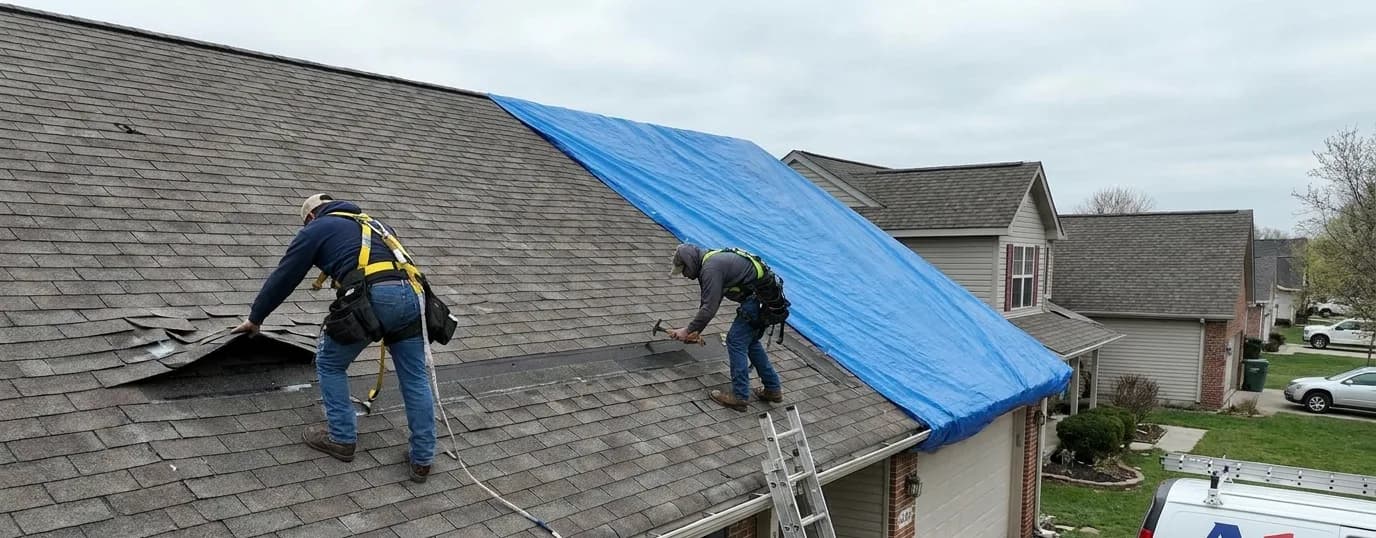
How to repair roof shingles lifted by wind depends on whether the shingle is creased. An intact tab whose seal has simply broken can be re-sealed: the tab is lifted, a dab of roofing cement is applied under it, and it is pressed down and weighted until it bonds. This is a legitimate repair for a handful of tabs on an otherwise healthy roof, and it is sometimes the right emergency measure before a windstorm.
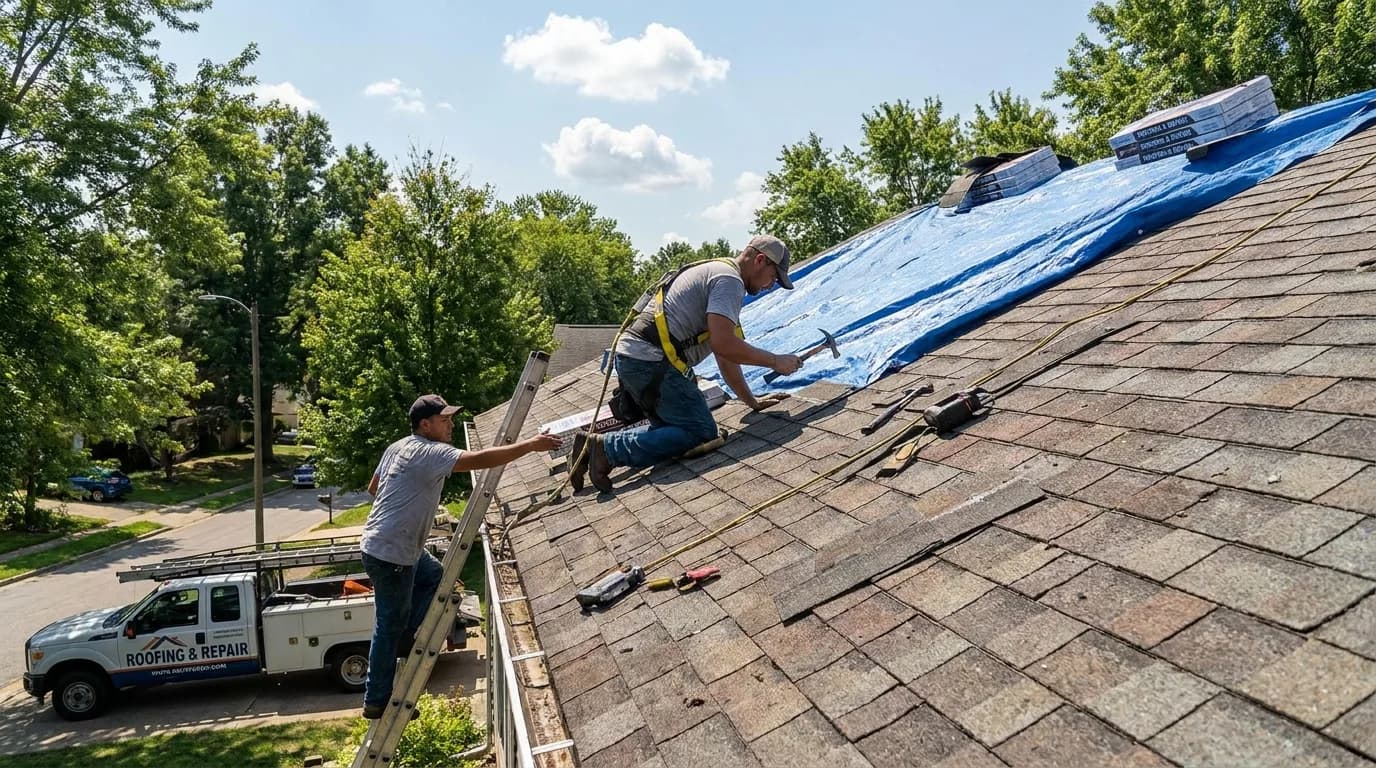
A creased or torn tab has to be replaced. The roofer lifts the tabs above, removes the nails holding the damaged shingle, slides it out, slides in a matching new shingle, nails it, and seals the tabs above back down. Done properly, with a matched shingle and sealed tabs, the repair is invisible and permanent. Done badly, with a mismatched shingle, exposed nail heads smeared with tar, and no re-sealing of the disturbed tabs, it will fail in the next Chinook.
Missing ridge and hip caps are replaced in the same way. Lifted flashing is re-fastened and sealed. If the underlayment is torn or the deck is exposed, the repair expands to include those layers. Then there is the judgment call: if more than roughly a quarter of a slope is creased or unsealed, or if the roof is over 15 years old and the seals have failed everywhere, patching becomes a losing game and replacement is the honest recommendation. Our article on roof repair vs replacement walks through that decision.
One more thing: this is not a DIY job in Alberta. Cold shingles crack when walked on, the west slope is exactly where the wind is, and one fall costs more than any roof. Call a roofer.
Cost to Repair Wind-Damaged Shingles in Airdrie
Wind repairs are among the more affordable roofing jobs when they are caught early. The figures below are rough 2026 market guides for the Airdrie area, not quotes. Access, pitch and how many tabs need replacing drive the price, and a free on-site quote will give you an exact figure.
| Repair | Typical cost (2026, CAD) | Notes |
|---|---|---|
| Re-seal a few lifted tabs | $300–$500 | Only for uncreased tabs with intact mat |
| Replace up to 10 creased or missing shingles | $400–$900 | Includes matching shingle and re-sealing |
| Replace ridge or hip caps, one run | $400–$1,000 | Often combined with tab replacement |
| Larger repair, 20–50 shingles plus flashing | $1,000–$2,500 | Approaches a partial slope re-roof |
| Full slope replacement | $1,500–$5,000 | Depends on slope size; matching becomes an issue |
| Emergency tarping after wind damage | $300–$1,000 | Usually covered by insurance as mitigation |
Repairs are usually below a typical home insurance deductible, which is why most homeowners pay small wind repairs directly and reserve claims for slope or whole-roof damage. If you are unsure which category you are in, our roof repair cost guide for Airdrie covers what drives the price across all repair types, and a free inspection will tell you what you actually need.
Is Wind Damage to a Roof Covered by Insurance?
Windstorm is a named peril on most Alberta home policies, so shingles torn off or creased by a specific wind event are generally covered, subject to your deductible. Where claims get complicated is the line between a sudden loss and gradual failure. If the adjuster finds that the seal strips had failed across the whole roof from age, and the wind simply removed shingles that were already loose, the insurer may call it wear and tear and decline, or cover only the missing tabs and not the slope.
A few details in your policy matter. Some insurers apply a separate, higher deductible to wind and hail, sometimes a percentage of the dwelling coverage. Some policies have roof age schedules that pay actual cash value on older roofs. And some limit coverage to the damaged shingles rather than a full slope, which raises the matching question if your shingle is discontinued. The same rules on documentation apply as for hail: photograph the damage from the ground during or right after the storm, note the date and the Environment Canada wind warning if there was one, tarp active leaks, and get an independent inspection before you call. The full process is in our step-by-step Alberta roof insurance claim guide.
If the claim is declined or only partly approved, you have the same options as with hail: request a re-inspection with your contractor present, appeal in writing, and escalate if necessary. Wind damage is often reconsidered when a contractor's crease count per slope is put alongside the adjuster's.
Preventing Wind Damage: Installation Is Everything
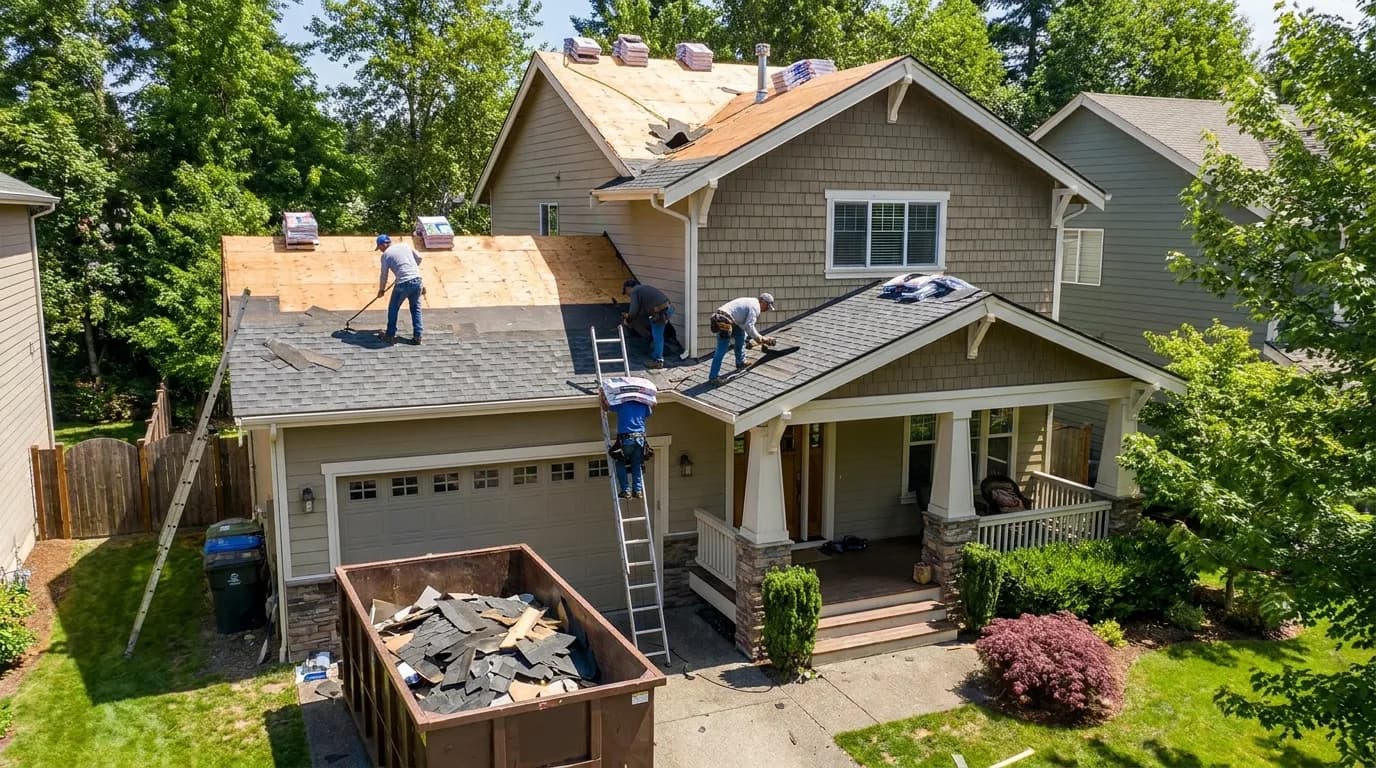
Most wind damage on roofs under 10 years old traces back to installation. The manufacturer's high-wind installation method typically specifies six nails per shingle instead of four, placed exactly on the nail line so they catch both layers of a laminated shingle. High nails miss the lower layer and let the tab lift. Low nails are exposed and let water in. A proper starter strip with its own seal strip along every eave and rake, rather than an upside-down shingle, is the difference between an edge that holds and one that peels.
Hip and ridge caps should be a purpose-made product with a factory seal, nailed and, in exposed locations, hand-sealed. Roofs installed in late autumn or winter should have every tab hand-sealed with roofing cement because the sun will not do it until spring. Ventilation matters too: a poorly vented attic in winter warms the deck from below, contributing to the freeze-thaw movement that works seals loose.
On an existing roof, the cheapest prevention is an inspection every autumn before Chinook season, to re-seal any loose tabs, replace the odd creased one, and refasten flashing. A roof maintenance visit that does this each fall typically costs a fraction of one emergency call in January.
Get Wind-Damaged Shingles Repaired in Airdrie
If a Chinook has lifted shingles on your roof, Apex Roofing Airdrie provides free, no-obligation inspections and itemised written quotes for roof repair in Airdrie, carried out by our own local crew. We match shingles wherever a match exists, re-seal every disturbed tab, and back the work with a written workmanship guarantee on top of the manufacturer warranty.
For an active leak after a windstorm, our emergency roof repair service includes tarping to stop the damage spreading, and if the damage justifies a claim we provide the documentation and can meet your adjuster on site. Same-week estimate bookings are available through the contact page.
Written by the Apex Roofing Airdrie crew
Practical guidance from the local roofers who inspect, repair and replace roofs across Airdrie and Rocky View County every season. We review our guides against current Alberta practice and update them when materials, code or insurer behaviour changes. About our team.