In this guide
- 01Roof repair vs replacement: the three questions that decide it
- 02Should I repair or replace my roof? Start with age
- 03Can a roof be repaired instead of replaced? It depends on how widespread the damage is
- 04The 30 percent rule and the age rule of thumb
- 05Roof repair or replace cost: 2026 Airdrie comparison
- 06Partial roof replacement: the middle option and its limits
- 07How hail and insurance change the repair or replace decision
- 08Patching a roof: when a quick fix is the right call
- 09A simple decision framework you can run yourself
- 10Get an honest read on repair versus replacement
Roof repair vs replacement: the three questions that decide it
Every roof repair vs replacement decision we walk through with Airdrie homeowners boils down to three questions. How old is the roof? How much of it is damaged? And how does the repair cost compare with a new roof?
Answer all three honestly and the decision usually makes itself. A 9 year old roof with one lifted flashing is a repair. A 23 year old roof with granule loss on every slope and a leak that has come back twice is a replacement. The hard cases are the ones in the middle, and that is where the rules of thumb below earn their keep.
What we would ask you not to do is decide from fear. A leak is stressful, and it is easy to assume the worst. Most leaks we see in Airdrie are flashing, vent boot or ice-dam problems on roofs that have years of life left.
Should I repair or replace my roof? Start with age
Age is the fastest filter. An asphalt roof in Alberta realistically lasts 18 to 25 years, with cheaper 3-tab shingles closer to 15. Our guide on how long a roof lasts in Alberta gives the full breakdown by material, but the short version is this:
- Under 10 years: repair, and check whether the problem is an installation defect or hail that should be a warranty or insurance matter.
- 10 to 15 years: repair in almost all cases. The roof has a decade left and a sound repair protects that investment.
- 15 to 20 years: the grey zone. Small repairs still make sense; large ones start to compete with replacement.
- 20 years and over: lean toward replacement unless the repair is minor and the rest of the roof genuinely looks good. Many insurers also become cautious about roofs past 20, which tips the balance further.
Age is a filter, not a verdict. We have replaced 12 year old roofs after a single hailstorm and repaired 22 year old roofs that were honestly still sound. Condition decides the close calls.
Can a roof be repaired instead of replaced? It depends on how widespread the damage is
Yes, a roof can be repaired instead of replaced far more often than people expect, provided the damage is localised. The question is what "localised" means.
A useful rule of thumb is the one-third line. If the damage is confined to one area, one slope, or a handful of specific components, it is a repair. If it affects more than about a third of the roof surface, or it is the same kind of wear showing up on every slope, that is a roof reaching the end of its life, and patching a roof in that state just spreads the cost out and adds a callout charge each time.
Problems that are usually a repair:
- A few missing or wind-lifted shingles after a Chinook
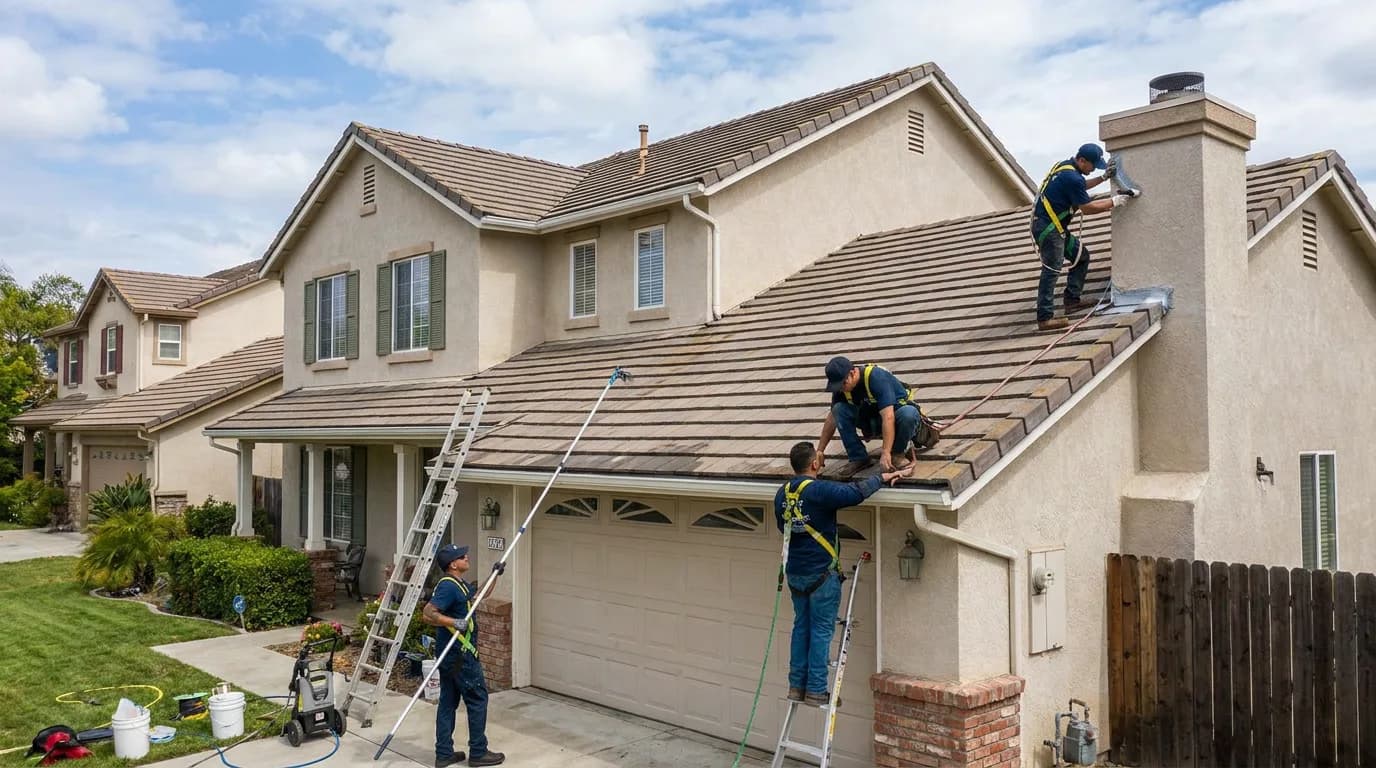
- Leaking flashing at a chimney, skylight, plumbing vent or wall
- A cracked vent boot or rusted-through box vent
- One ice-dam leak at the eaves with the shingles otherwise sound
- A small tree-branch puncture or a single soft spot in the deck
- Localised hail damage confined to one exposed slope
Problems that usually mean replacement:
- Curling, cupping or cracking shingles on every slope
- Heavy granule loss with the black mat showing through in multiple places
- Hail bruising across the whole roof, confirmed by dented soft metals
- Repeated leaks in different places over two or three seasons
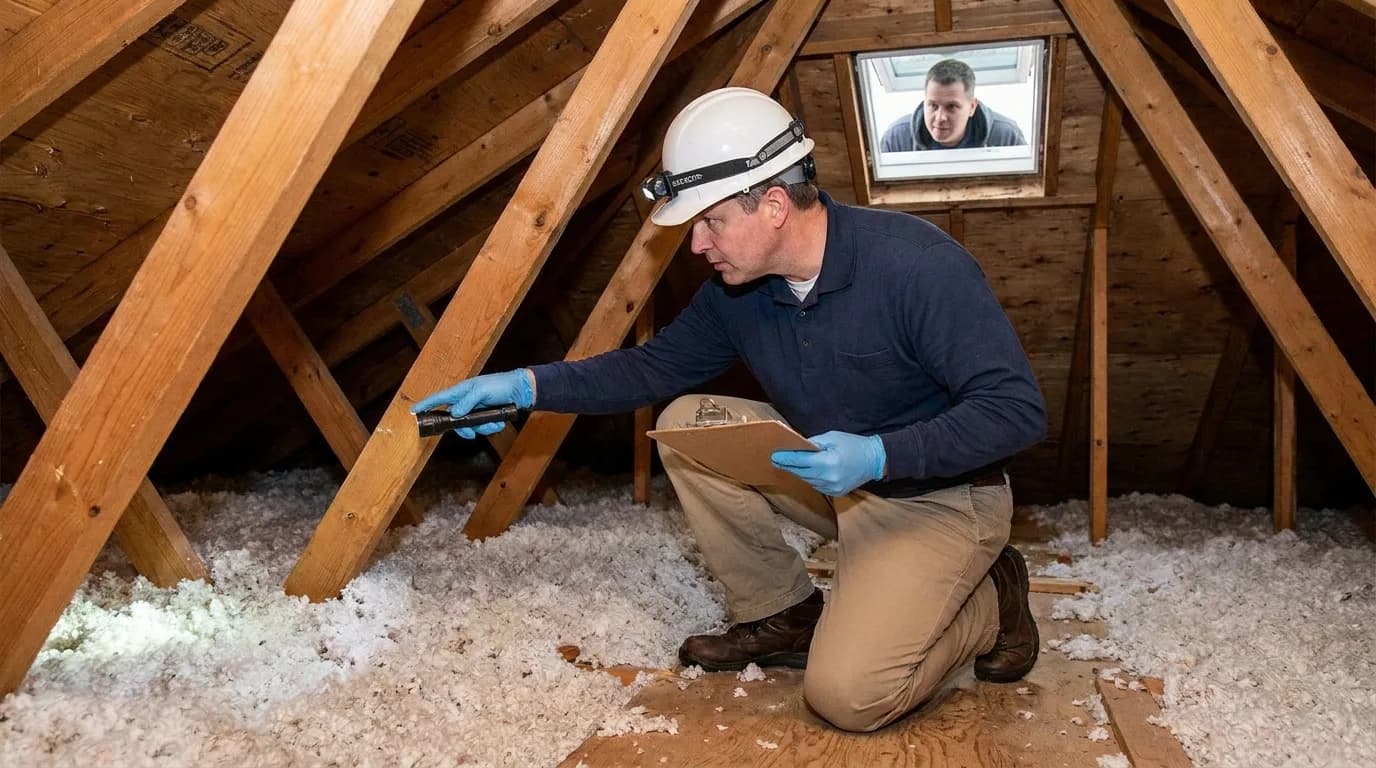
- Widespread deck staining or daylight visible from the attic
- A sagging roofline, which points to structural moisture damage
Our pillar guide to the signs you need a new roof walks through each of these in more detail, with what each one looks like from the ground.
The 30 percent rule and the age rule of thumb
Two rules of thumb do most of the work in the grey zone.
The 30 percent rule. If the cost of the repair reaches about 30 percent of the cost of a full replacement, replacement is usually the better value, especially on a roof past 15 years. The logic is simple: you would be spending nearly a third of a new roof's price on shingles that are already two-thirds through their life, and you will still face the full reroof bill within a few years.
The age rule. Compare the repair's likely life with the roof's remaining life. A $2,500 flashing and valley repair that will last 10 years on a roof with 10 years left is money well spent. The same repair on a roof with 3 years left buys you almost nothing, because you will tear it off with the rest.
A worked example. Say a two-storey home in Cooper's Crossing needs a new roof at roughly $13,000. A repair quote for storm damage on the west slope comes in at $4,200, and the roof is 19 years old. That is 32 percent of replacement on a roof with perhaps 3 to 5 years left. Replacement wins. Now change one variable: the roof is 8 years old. Repair wins comfortably, and you should also be asking whether the storm damage is an insurance claim.
Roof repair or replace cost: 2026 Airdrie comparison
The figures below are rough Alberta market guides as of 2026, not quotes. Every roof is different, and a free on-site quote gives you the exact number for yours.
| Job | Typical 2026 cost (CAD) | Typical life of the fix |
|---|---|---|
| Replace a few shingles or reseal a vent boot | $300–$700 | Life of the roof |
| Flashing repair (chimney, wall, skylight) | $500–$1,500 | 10–20 years |
| Ice-dam leak repair with eave membrane | $800–$2,000 | Life of the roof |
| Larger repair (valley rebuild, deck patch, one slope) | $1,500–$5,000 | 5–15 years depending on roof age |
| Partial roof replacement (one full slope) | $2,500–$7,000 | Until the rest of the roof fails |
| Full asphalt reroof, bungalow | $6,000–$10,000 | 18–25 years |
| Full asphalt reroof, typical two-storey | $10,000–$16,000 | 18–25 years |
| Full reroof, large or steep | $16,000+ | 18–25 years |
Notice the last column. The cost per year of a fix matters more than the sticker price. A $600 repair on a young roof is a bargain. A $4,000 repair that buys three years is not. Our Airdrie roof repair cost guide and roof replacement cost guide go deeper on what moves each number.
Partial roof replacement: the middle option and its limits
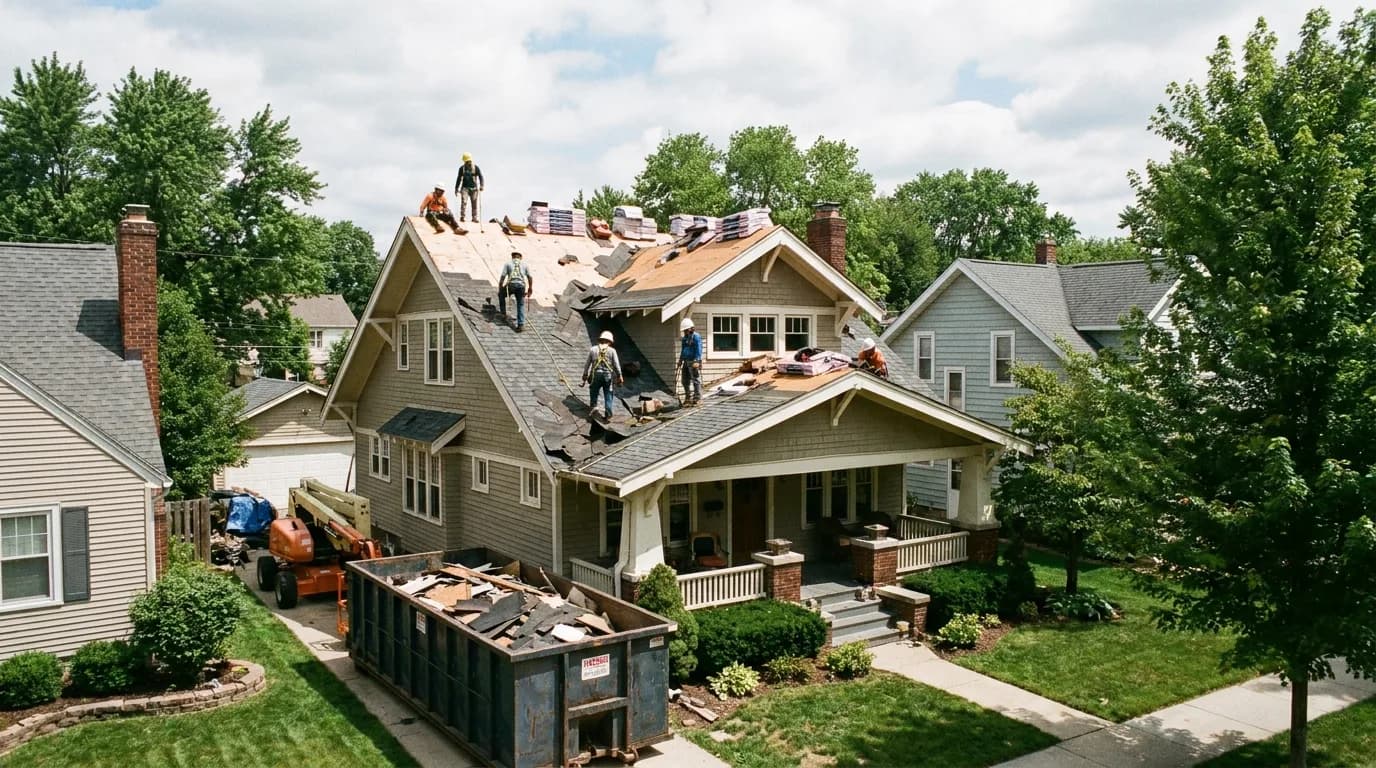
Sometimes one slope is wrecked and the rest is fine. A south-facing slope that took the brunt of a hailstorm, a west slope stripped by Chinook wind, or a low-slope section that has ponded for years. In those cases, partial roof replacement, meaning tearing off and reshingling one full slope or section, can be a sensible middle path.
It works best when the roof is under about 15 years old, when the section can be broken at a natural line such as a ridge, hip or valley, and when you can still source a close match for the existing shingle. It works poorly when the roof is already old, because you end up with a new slope bolted onto a tired roof that will need replacing in a few years anyway, and you pay the setup costs twice.
Two cautions. First, colour matching is never perfect; the old slopes have faded and the new one has not, and the difference is visible from the street. Second, some insurers will only pay to replace the damaged slope, not the whole roof, so if matching matters to you, raise it with your adjuster early. Confirm your policy's position with your insurer or broker.
How hail and insurance change the repair or replace decision
In most of Canada, roof repair vs replacement is purely a maintenance decision. In Hailstorm Alley it is often an insurance decision too, and that changes everything.
If a hailstorm caused the damage, and it is a sudden covered loss rather than long-term wear, your policy may pay for repair or replacement less your deductible. A roof that was going to cost you $4,000 to repair out of pocket may instead become a replacement with your only cost being the deductible and, on an older roof, any depreciation holdback. The August 8, 2026 storm that tracked down the Crossfield to Airdrie corridor with quarter-sized hail is a good example of the kind of event that turns a "should I repair" question into a "should I claim" question.
A few points worth knowing. Many insurers require hail claims to be filed within 12 months of the storm. Alberta homeowners choose their own contractor on a claim; the insurer cannot force you to use theirs. And older roofs may be settled at actual cash value rather than replacement cost, which is why it pays to understand ACV versus RCV on a roof claim before you decide. Our pillar guide on hail damage roof insurance claims in Alberta walks through the whole process.
None of this is insurance advice. Confirm the specifics with your insurer or broker. But if hail is in the picture, get the damage documented before you decide anything, because that documentation is what keeps the claim option open.
Patching a roof: when a quick fix is the right call
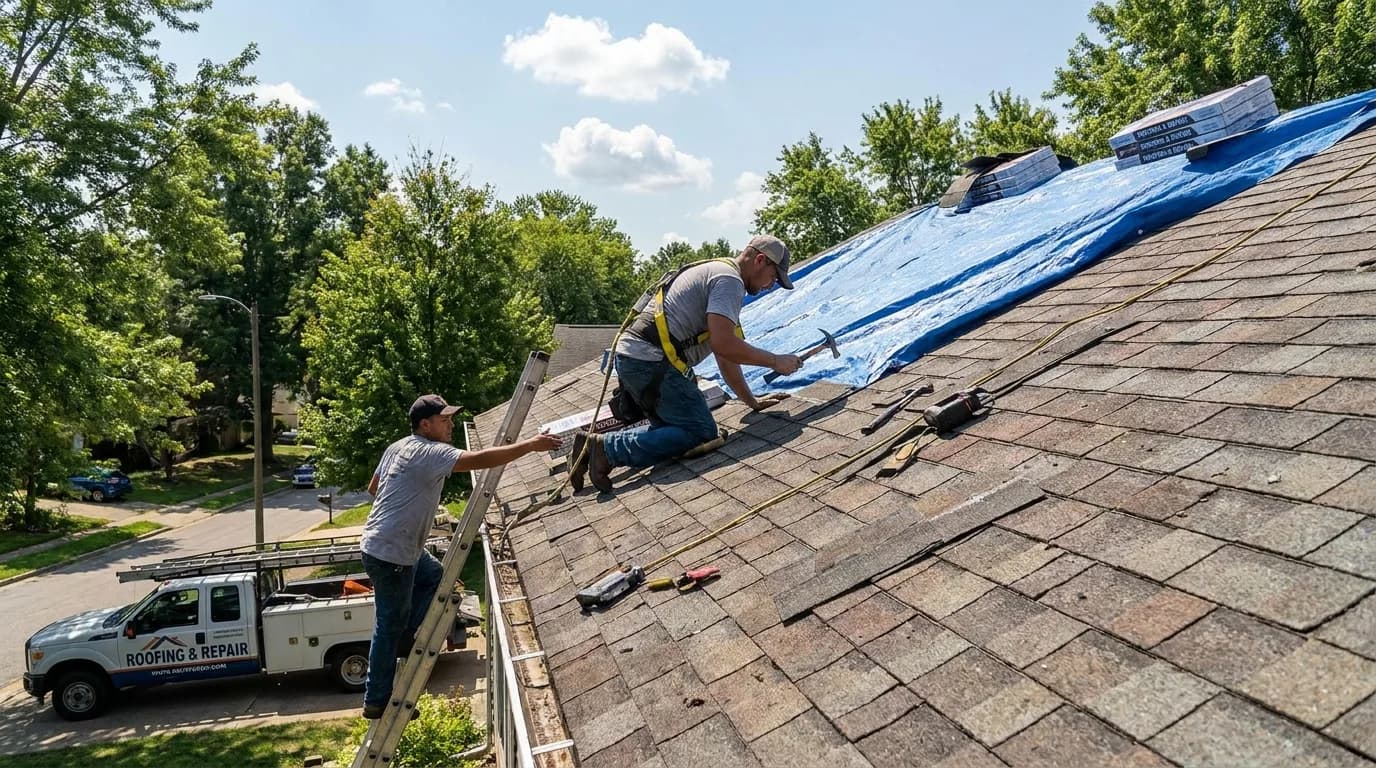
There is a place for patching a roof, and it is not always a sign of a homeowner putting off the inevitable. A patch makes sense when you need to stop water now, when a full repair or replacement is scheduled but weeks away, or when the roof is coming off next spring and you simply need to get through one more winter dry.
Emergency tarping after a storm is the clearest case. A tarp for $300 to $1,000 protects the deck, the insulation and the ceilings while the insurance process runs, and most policies expect you to take that kind of reasonable step to prevent further damage. Our emergency roof repair service covers tarping and fast leak response for exactly this situation.
Where patching goes wrong is when it becomes the plan. A roof that has been patched four times in three winters has told you what it needs. At that point the running total of patches plus the water damage they did not prevent usually exceeds what a proper repair or reroof would have cost in the first place.
A simple decision framework you can run yourself
Work through these in order. Stop at the first one that gives you a clear answer.
- Is the roof under 15 years old and the damage isolated? Repair.
- Is the roof over 20 with wear on every slope, or the same leak recurring? Replace.
- Did a hailstorm or windstorm cause it? Document it and talk to your insurer before deciding; the answer may be a claim.
- Would the repair cost 30 percent or more of a reroof? Replace, unless the roof is young.
- Is the damage confined to one slope on a roof under 15? Consider partial replacement.
- Is the roofline sagging or the deck soft in several places? Replace, and do it before winter.
- Still unsure? Get both a repair quote and a replacement quote, itemised, from the same roofer and compare cost per year of protection.
The last step matters. A contractor who will only quote one option is telling you what they want to sell. A contractor who quotes both and explains the trade-off is giving you what you need to decide.
Get an honest read on repair versus replacement
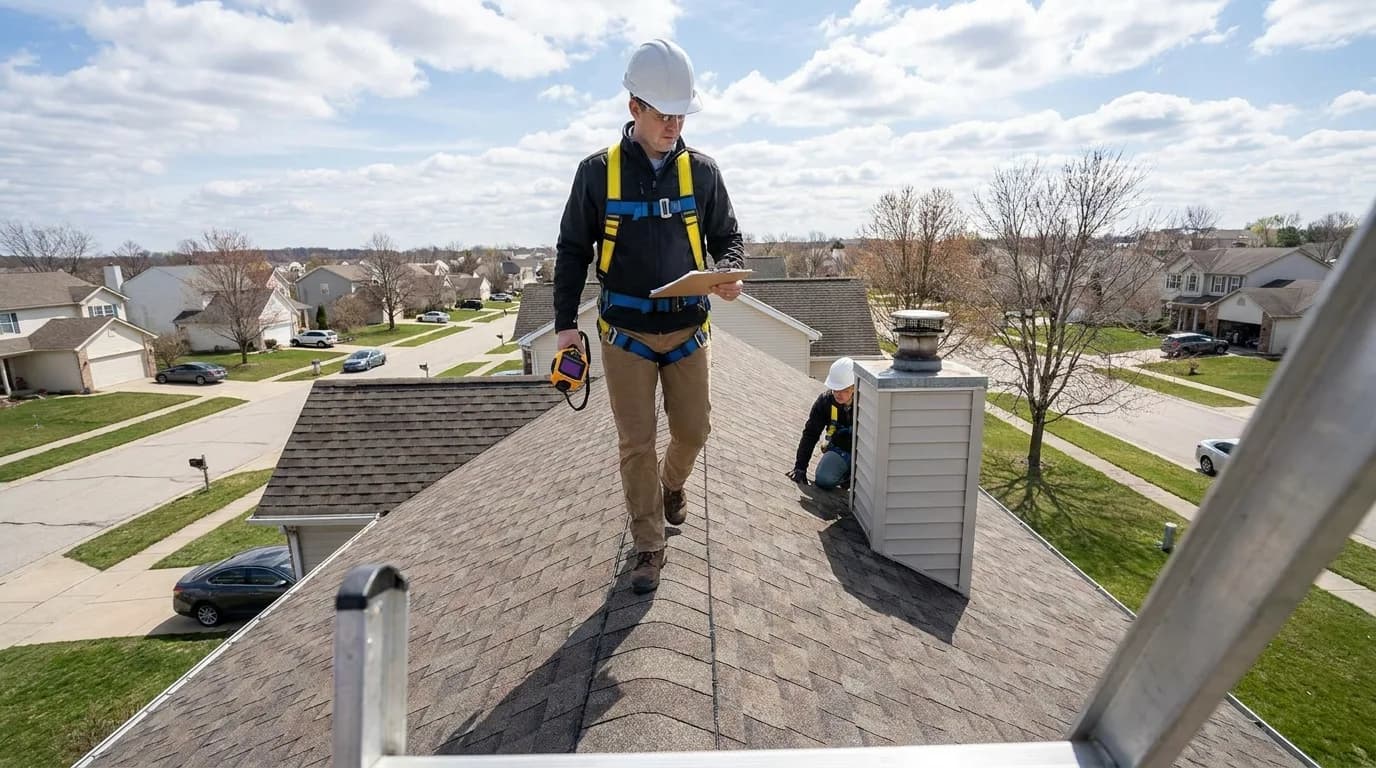
Apex Roofing Airdrie quotes repairs and replacements for the same roof, itemised in writing, and we will tell you plainly when a repair is the right call. A roof with years left should be repaired, not torn off, and we would rather earn a small repair job now and the reroof in eight years than sell you a roof you do not need.
Start with a free roof inspection. If it is a repair, our roof repair service in Airdrie handles flashing, wind damage, leaks and hail repairs with a written workmanship guarantee. If it is time for a new roof, our roof replacement service gives you an exact figure for your home rather than a range from a table.
Written by the Apex Roofing Airdrie crew
Practical guidance from the local roofers who inspect, repair and replace roofs across Airdrie and Rocky View County every season. We review our guides against current Alberta practice and update them when materials, code or insurer behaviour changes. About our team.