In this guide
- 01How long does a roof last in Alberta compared with the rest of Canada?
- 02Roof lifespan by material: Alberta reality versus the label
- 03How long does a 30 year roof really last?
- 04Why Alberta shortens asphalt shingle lifespan: hail
- 05UV, Chinooks, freeze-thaw and wind: the slow killers
- 06Installation and ventilation: the factors you control
- 07How to tell how old your roof is
- 08When to replace a roof: age versus condition
- 09Why roof age matters to your insurer
- 10What it costs to replace a roof that has reached the end
- 11Find out where your roof sits on its lifespan
How long does a roof last in Alberta compared with the rest of Canada?
Ask a shingle manufacturer and the answer sounds generous: 25, 30, even "limited lifetime". Ask a roofer who has worked through a few Airdrie hail seasons and you get a more sober number. In practice, an asphalt shingle roof in Alberta lasts about 15 to 25 years, and the roofs we see replaced most often are in the 18 to 22 year band.
That is shorter than the roof lifespan Canada averages you may see quoted for the Lower Mainland or southern Ontario, where roofs are not pounded by hail every summer. It is not that the shingles are worse here. It is that the climate asks more of them. Hail, UV, wind and freeze-thaw all take a few years off the label, and they stack.
The honest starting point is this: treat the manufacturer's rating as a ceiling, not a promise. Then look at material, installation quality, ventilation and, above all, what the weather has done to your particular roof since it went on.
Roof lifespan by material: Alberta reality versus the label
The table below sets the manufacturer's typical rating against what we see in the Airdrie and Calgary area. The Alberta column is a realistic range for a properly installed, adequately ventilated roof that has not been written off by a single catastrophic hailstorm.
| Roofing material | Manufacturer rating | Realistic Alberta lifespan | Notes |
|---|---|---|---|
| 3-tab asphalt shingles | 20–25 years | 12–18 years | Thin, light, poor wind and hail resistance; rarely installed new now |
| Architectural (laminate) asphalt | 30 years to "limited lifetime" | 18–25 years | The standard reroof choice in Airdrie |
| Class 4 impact-resistant asphalt | 30–50 years | 25–35 years | UL 2218 rated; often earns an insurer premium discount |
| Metal (standing seam or metal shingle) | 40–70 years | 40–60+ years | Handles hail and snow well; can dent cosmetically |
| Cedar shakes | 30–40 years | 20–30 years | Needs maintenance; dries and splits in low humidity and UV |
| Rubber / EPDM or TPO flat roof | 20–30 years | 15–25 years | Seams and ponding are the weak points |
Two things stand out. First, the gap between the label and reality is widest for cheap 3-tab shingles and narrowest for metal. Second, Class 4 shingles close most of the gap for a modest premium, which is why we talk about them so often. Our guide to the best shingles for Alberta's climate goes deeper on brands and grades.
How long does a 30 year roof really last?
This is the question people actually type, and the answer is usually "not 30 years". A "30 year" architectural shingle carries a 30 year limited warranty, which is a warranty on manufacturing defects, prorated after an initial period. It is not a statement that the shingle will keep water out for 30 Alberta winters.
Manufacturers rate shingles under laboratory conditions and warm, stable climates. Real roofs face sun-baked south slopes, north slopes that hold snow into April, and the occasional stone the size of a toonie falling from the sky. Realistically, a 30 year shingle in Airdrie gives you 18 to 25 years of sound service, and the last few of those are usually the "watch it closely" years.
That said, a well-installed architectural roof with good attic ventilation and no direct hail hits can absolutely reach 25. The roofs that fail at 15 are usually the ones with a ventilation problem, a rushed installation, or a hailstorm nobody claimed.
Why Alberta shortens asphalt shingle lifespan: hail
Airdrie sits in the middle of Hailstorm Alley, the Calgary to Red Deer corridor that produces more damaging hail than almost anywhere else in Canada. According to the Insurance Bureau of Canada, Alberta has recorded a major hailstorm every year for two decades, with more than $11 billion in insured damage over that period.
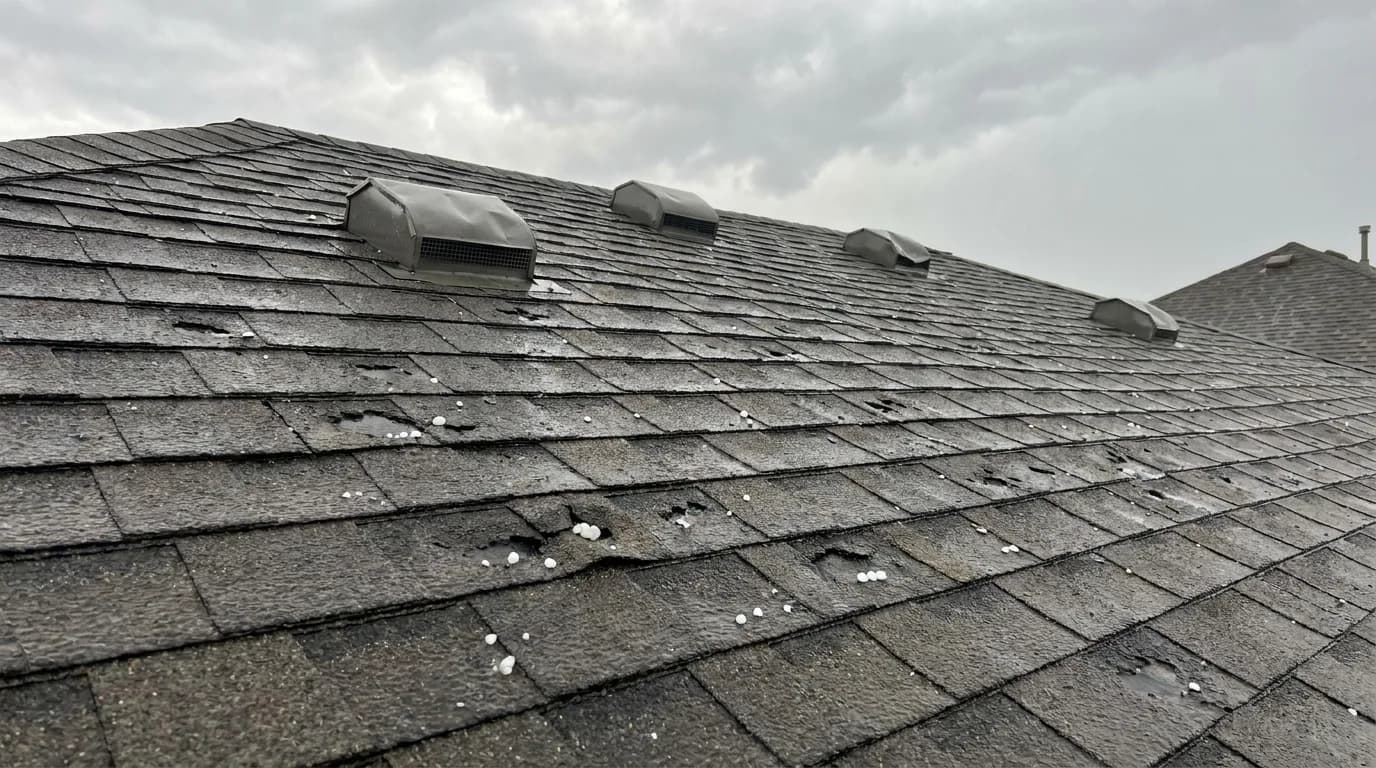
Hail shortens asphalt shingle lifespan in two ways. A direct hit knocks granules off and bruises the fibreglass mat, which then cracks and lets water through within a season or two. Less obvious is the cumulative wear: repeated small-hail events strip granules a little at a time, exposing the asphalt to UV and ageing the shingle years ahead of schedule.
This is why a 12 year old roof in Kings Heights can look worse than a 20 year old roof in a sheltered valley elsewhere in the province. If a storm has hit your area, our guide on how to tell if your roof has hail damage explains what to look for, and why a claim can matter for the lifespan question as much as for the repair bill.
UV, Chinooks, freeze-thaw and wind: the slow killers
Hail gets the headlines, but the day-to-day climate does most of the ageing. Airdrie gets long, bright summers at a high elevation, and UV is what bakes the oils out of asphalt. Once the shingle loses flexibility it starts to curl, crack and shed granules, and the south and west slopes always go first.
Chinooks add a stress few other regions face. A Chinook can swing the temperature from minus 20 to plus 10 in a few hours, then back again. Shingles expand and contract with every swing, nail heads work loose, sealant strips fatigue, and meltwater refreezes at the eaves as ice. Over 20 winters, that is thousands of cycles.
Then there is wind. Airdrie is open prairie, and gusts out of the west regularly lift the tabs of older shingles whose seal strip has dried out. Once a tab lifts, wind-driven rain and snow get under it. Our post on wind damage and lifted shingles after a Chinook covers what that looks like and what to do about it.
Snow load rounds out the list. A heavy snow winter keeps the north slope wet for months, feeds ice dams, and stresses the deck. None of these alone ends a roof, but together they explain why Alberta sits at the low end of every lifespan range.
Installation and ventilation: the factors you control
Weather is outside your control. Installation and ventilation are not, and they account for a surprising share of early roof failures.
- Nailing: shingles nailed too high, too few, or overdriven by a rushed crew will blow off years early. Manufacturers void warranties over this, and it is invisible once the next course goes on.
- Underlayment and ice-and-water shield: standard practice under the Alberta Building Code is ice-and-water membrane at the eaves and valleys. A roof without it will show ice-dam leaks long before the shingles are worn out.
- Attic ventilation: a hot, poorly vented attic cooks shingles from underneath and feeds winter ice dams. Our guide to attic ventilation requirements in Alberta explains the ratios and the warning signs.
- Flashing: chimney, skylight and wall flashings are where most leaks start, and a roof that "lasts" 25 years often needs a flashing repair at year 12.
- Layering: a second layer of shingles over an old one traps heat and hides deck problems. Alberta homes that were layered rather than torn off tend to fail sooner.
If you are choosing a contractor for a reroof, these are the details worth asking about. Our guide on how to choose a roofing contractor in Airdrie lists the questions that expose a cut-corner install.
How to tell how old your roof is
Many Airdrie homeowners simply do not know. The house was bought with the roof already on, the previous owner did not leave paperwork, and the shingles all look roughly the same from the driveway. Here is how to narrow it down.
- Check the City of Airdrie permit history. Reroofs often required a permit, and the city can usually tell you when one was pulled for your address.
- Ask your insurer or broker. Roof age is on your policy file, and they may have a date from the last renewal questionnaire.
- Look at the home inspection report from when you bought. It usually estimates roof age and remaining life.
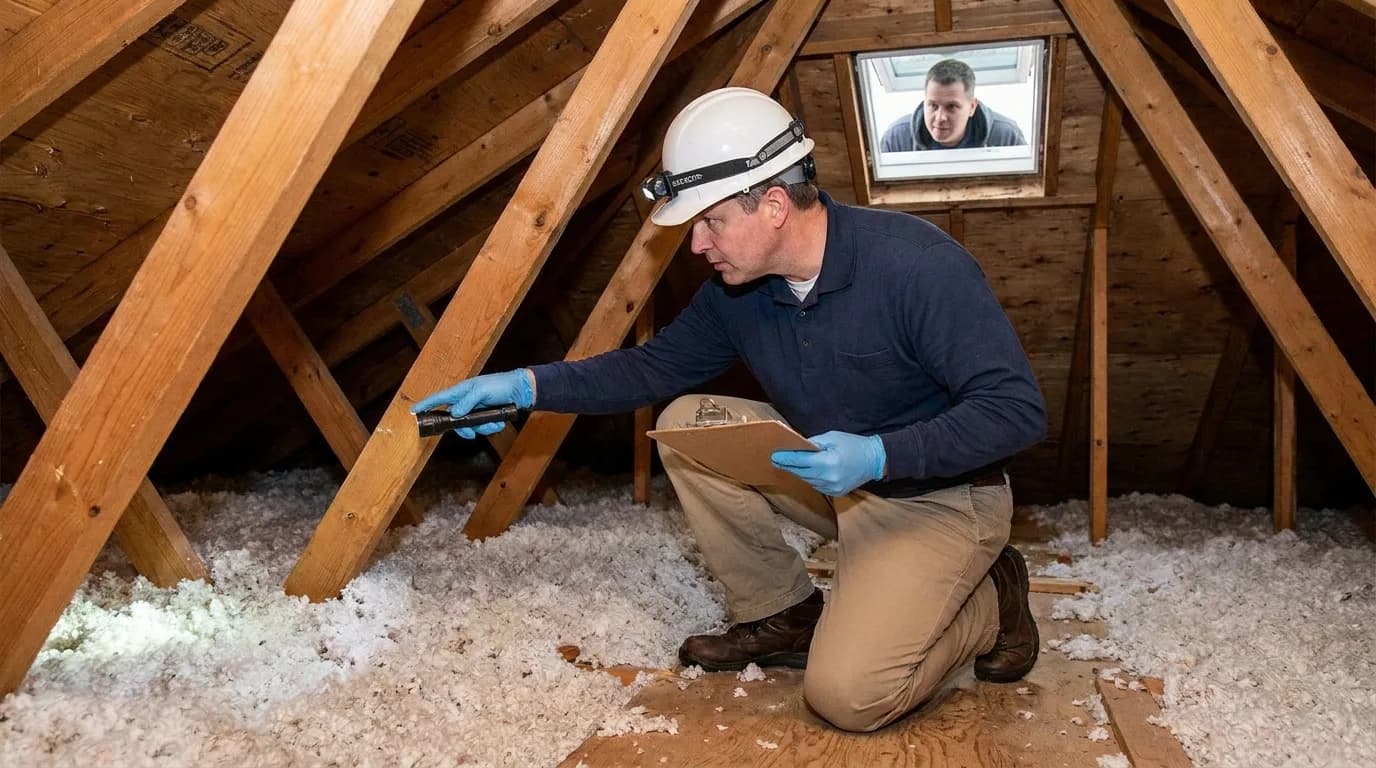
- Check the attic. Newer decking (bright OSB rather than grey plywood), new nail tips poking through, or fresh underlayment visible at the eaves all point to a recent reroof.
- Look for a date on the vents or in the attic. Some roofers write the install date on a rafter or the inside of a vent hood.
- Compare with the neighbourhood. In subdivisions like Bayside, Sagewood or Luxstone, most homes were built within a few years of each other, and most original roofs were replaced in the same one or two hail years.
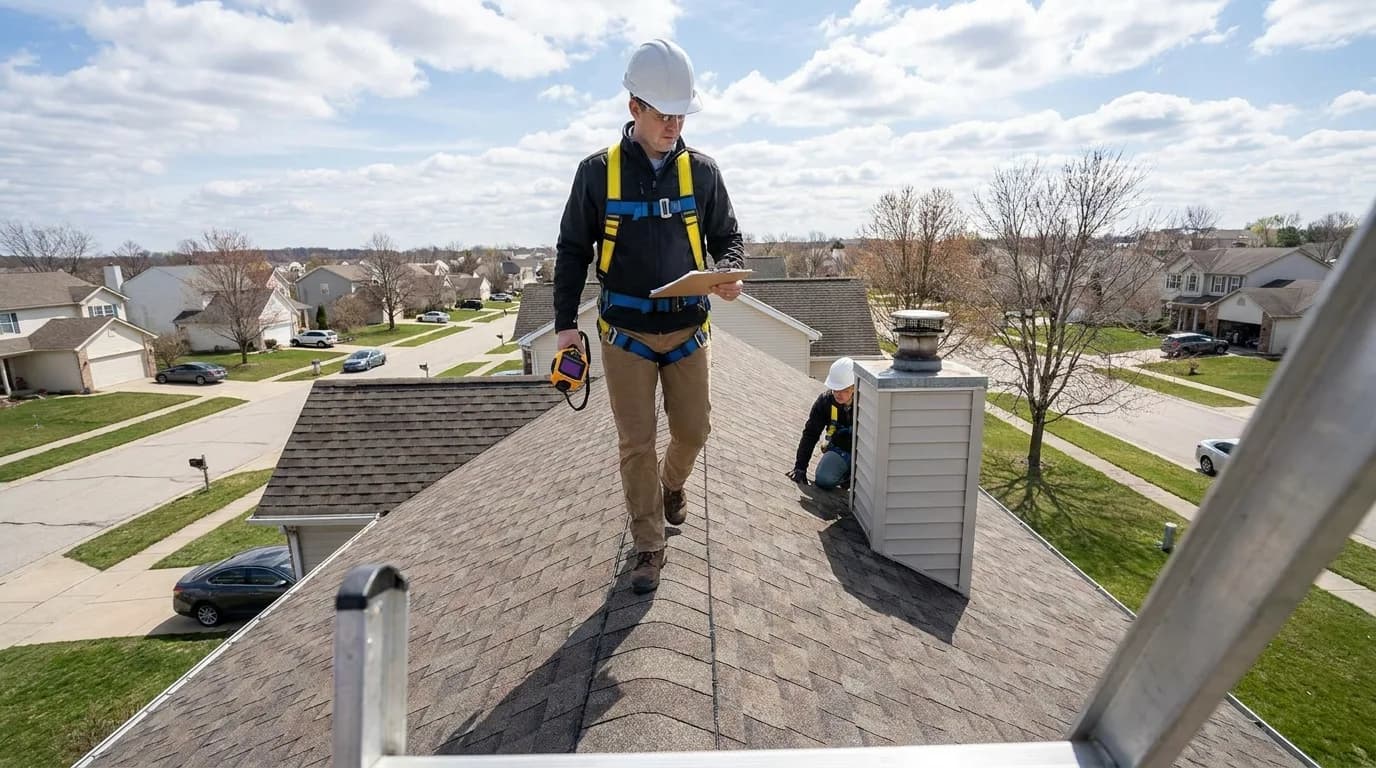
If none of that works, a roofer can estimate age from the shingle style, the amount of granule loss, the flexibility of the tabs and the condition of the sealant strip. It is not exact, but it is usually within a few years, and it is free with an on-site inspection.
When to replace a roof: age versus condition
Age alone does not decide it. We have seen 22 year old roofs that were sound and 11 year old roofs that were finished after one storm. The useful approach is to combine age with condition, because the two together tell you where you sit on the lifespan curve.
| Roof age | Condition looks good | Condition shows wear |
|---|---|---|
| Under 10 years | Nothing to do; inspect after any hail | Suspect hail or an install defect; repair and check warranty |
| 10–17 years | Maintain, inspect every spring and fall | Targeted repairs are usually still worth it |
| 18–25 years | Budget for replacement within a few years | Replacement is usually the better spend |
| 25+ years | Insurers may balk; plan the reroof | Replace before winter, not after a leak |
If your roof is in the 18 to 25 window and you are seeing curling, granule loss or the same leak twice, read our pillar guide to the signs you need a new roof. If the damage is more isolated, our roof repair versus replacement guide works through the decision with numbers.
Why roof age matters to your insurer
Roof age is not just a maintenance question in Alberta. Many insurers ask for it at every renewal, and many become cautious once a roof passes about 20 years. Some move older roofs to actual cash value (ACV) settlements rather than full replacement cost, which means a hail claim on a 22 year old roof pays out far less than the same claim on a 5 year old roof.
That changes the maths on when to replace roof coverings. A roof you might have nursed along for three more years could cost you thousands in reduced claim value if a storm hits in the meantime. Confirm the specifics with your insurer or broker, because policies vary, but it is worth knowing before you decide to wait. Our post on ACV versus RCV on a roof insurance claim explains how depreciation is calculated.
Class 4 shingles cut the other way. Many Alberta insurers offer a premium discount for UL 2218 Class 4 impact-resistant roofing, which over 25 years can offset a meaningful chunk of the upgrade cost. Ask your broker what discount, if any, your policy offers before you choose a shingle.
What it costs to replace a roof that has reached the end
As of 2026, a full asphalt reroof on an average Airdrie home runs roughly $6,000 to $18,000: around $6,000 to $10,000 for a bungalow, $10,000 to $16,000 for a typical two-storey, and $16,000 or more for a large or steep roof. Class 4 shingles add a premium, and metal roofing runs about two to three times the cost of asphalt. These are rough market guides, not quotes, and your roof's size, pitch and deck condition move the number.
Set against a 20 to 25 year service life, a $12,000 architectural roof works out to roughly $500 to $600 a year. A Class 4 roof that costs a few thousand more but lasts longer and earns an insurance discount often ends up cheaper per year. Our Airdrie roof replacement cost guide breaks the figures down by roof type and material.
Find out where your roof sits on its lifespan
The calendar gives you a rough idea. A close look at the shingles, the flashings, the soft metals and the attic gives you the real answer. If your roof is past 15 years, or you are not sure how old it is, a free roof inspection in Airdrie from Apex Roofing Airdrie will tell you honestly whether you have years left, a repair to make, or a reroof to plan.
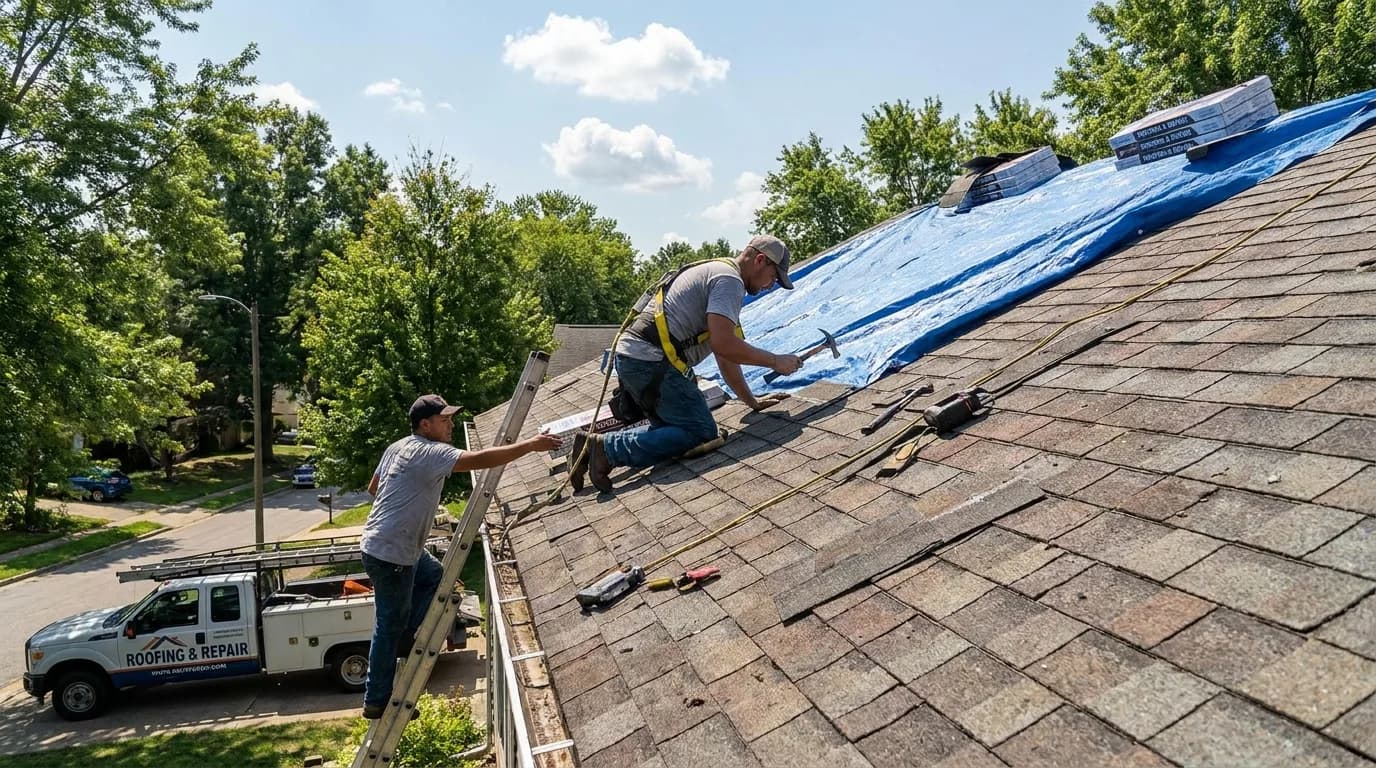
If it is time, our roof replacement service comes with an itemised written quote, a written workmanship guarantee on top of the manufacturer warranty, and a local Airdrie crew rather than subcontractors. And if a storm has cut your roof's life short, we document the damage and support the insurance claim so the timing is not entirely on your dime.
Written by the Apex Roofing Airdrie crew
Practical guidance from the local roofers who inspect, repair and replace roofs across Airdrie and Rocky View County every season. We review our guides against current Alberta practice and update them when materials, code or insurer behaviour changes. About our team.