In this guide
- 01What attic frost is and why Alberta winters cause it
- 02Where the moisture comes from: the usual sources in an Airdrie home
- 03Why it drips during a Chinook and looks like a roof leak
- 04How to tell attic frost melt from a real roof leak
- 05How to check your attic for frost safely
- 06Fix one: seal the attic floor
- 07Fix two and three: control humidity and duct every fan outside
- 08Fix four: ventilation, last not first
- 09Mould, delaminated sheathing and when frost becomes a roofing problem
- 10Is attic frost an insurance matter?
What attic frost is and why Alberta winters cause it
Attic frost is exactly what it sounds like: a coating of ice crystals on the underside of the roof sheathing, on the rafters or trusses, and most visibly on the tips of the roofing nails poking through the deck. It forms when air from the living space, which is warm and carries moisture, finds its way into the attic and meets surfaces that are at outdoor temperature. The water vapour in that air condenses and, at -20 °C, freezes on contact.
Alberta makes this worse in two ways. Our cold snaps are long and deep, so the sheathing stays far below freezing for days and the frost keeps building layer on layer. Then a Chinook arrives, the attic warms by 20 degrees in a few hours, and all of that ice melts at once. The water has to go somewhere, and it drips onto the insulation and through the ceiling below.
That is why attic frost is so often mistaken for a leaking roof. The roof is usually fine. The problem is the amount of house air and moisture reaching the attic in the first place, and no amount of shingle work changes that. If you have already had someone up there, our guide to why your roof is leaking helps separate the two, and the rest of this post explains how to fix the frost.
Where the moisture comes from: the usual sources in an Airdrie home
A family of four produces 10 to 15 litres of water vapour a day from breathing, cooking, showering and laundry. In summer it leaves through open windows. In January, with the house sealed, it either goes out through a ventilation system or it goes up. The paths up are almost always the same handful.
- Bathroom fans venting into the attic instead of through the roof or wall, or a duct that has fallen off the roof cap. This is the single most common cause we find.
- Unsealed pot lights, especially older non-airtight cans, which act as chimneys straight into the attic.
- The attic hatch, uninsulated and unweatherstripped, often in a closet or hallway.
- Plumbing stacks, wiring holes and duct chases where the vapour barrier was cut and never sealed.
- Interior wall top plates with gaps into the attic, common in 1970s to 1990s construction.
- Whole-house humidifiers set too high for the outdoor temperature.
- New-build moisture: a newly built home in Bayside or Chinook Winds releases hundreds of litres from framing, concrete and drywall mud in its first winter.
- Dryer ducts leaking or, occasionally, vented into the attic.
Notice that none of these are roofing defects. A perfectly installed roof over a leaky ceiling will frost every January. That said, the roof ventilation does matter later in the sequence, and a badly vented attic will hold the moisture longer.
Why it drips during a Chinook and looks like a roof leak
The timing is the tell. Frost accumulates silently through a cold week, and nobody goes into the attic to look. Then the wind swings to the southwest, the temperature climbs from -25 °C to +5 °C overnight, and by lunchtime there are wet spots on the ceiling of the upstairs bathroom or a stain spreading around a pot light. The sun is out and it has not rained in a fortnight, which is the clue that this is not a shingle problem, and not the same thing as a genuine roof leaking in winter from ice damming or storm damage.
The drips land where the frost was thickest, which is usually directly above the moisture source (the bathroom, the hatch, the kitchen) and along the coldest sheathing, typically the north slope and the eaves. Nail tips act as ice nuclei, so in a heavy case each nail carries a small icicle and the melt produces a grid of drips that matches the nail pattern on the deck.
Attic frost melt also soaks the insulation, which then loses much of its R-value and stays damp until spring, which lowers the ceiling temperature and worsens the cycle. Wet attic insulation flattened in a band along the eaves is often the first physical evidence a homeowner finds. Ice dams frequently occur on the same houses for the same reason; our guide to preventing ice dams in Airdrie covers that side of the problem.
How to tell attic frost melt from a real roof leak
Before you pay for a roof repair, run through the comparison below. Most cases can be sorted from the ground with a calendar and a flashlight, and a proper look in the attic settles the rest.
| Sign | Points to attic frost | Points to a roof leak |
|---|---|---|
| When it drips | During a thaw after a cold spell, dry weather | During or just after rain, or during snowmelt on the roof |
| Where it drips | Above bathrooms, kitchen, hatch; a grid of drips at nail tips | Below a valley, chimney, vent, skylight or damaged shingles |
| What you see in the attic | Frost or wet spots on nail tips and sheathing over a wide area | A single wet track down a rafter or a stained patch under one spot |
| Insulation | Damp in a broad band, often near the eaves | Soaked in one localised area |
| Indoor humidity | Over 40 percent in winter, condensation on windows | Normal |
| Season | Mid-winter and Chinook cycles | Any season, especially spring and summer storms |
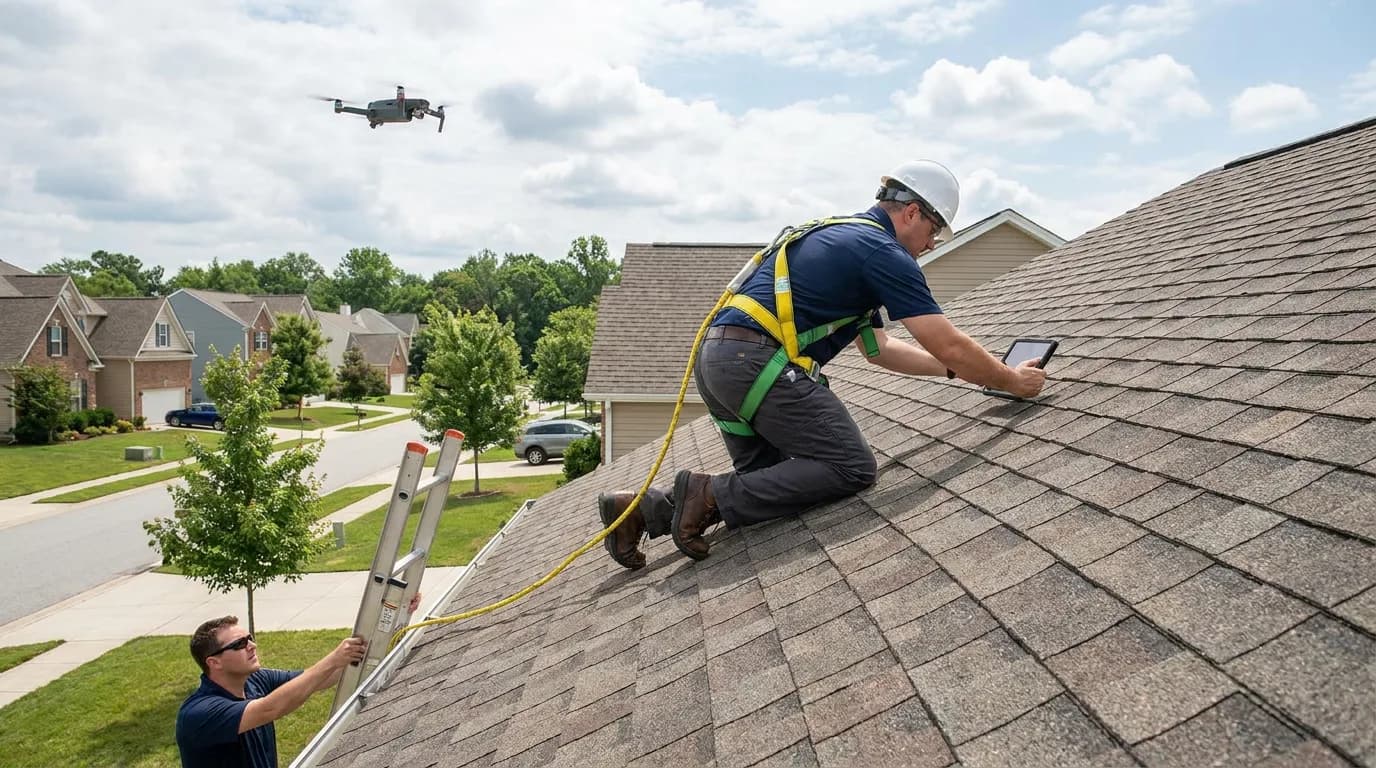
If the evidence still splits both ways, a combined roof and attic inspection resolves it. Our roof inspection service in Airdrie looks at the shingles, flashings and vents from above and the sheathing, insulation and fan ducting from below in the same visit, and it is free, so you are not paying to be told the roof is fine.
How to check your attic for frost safely
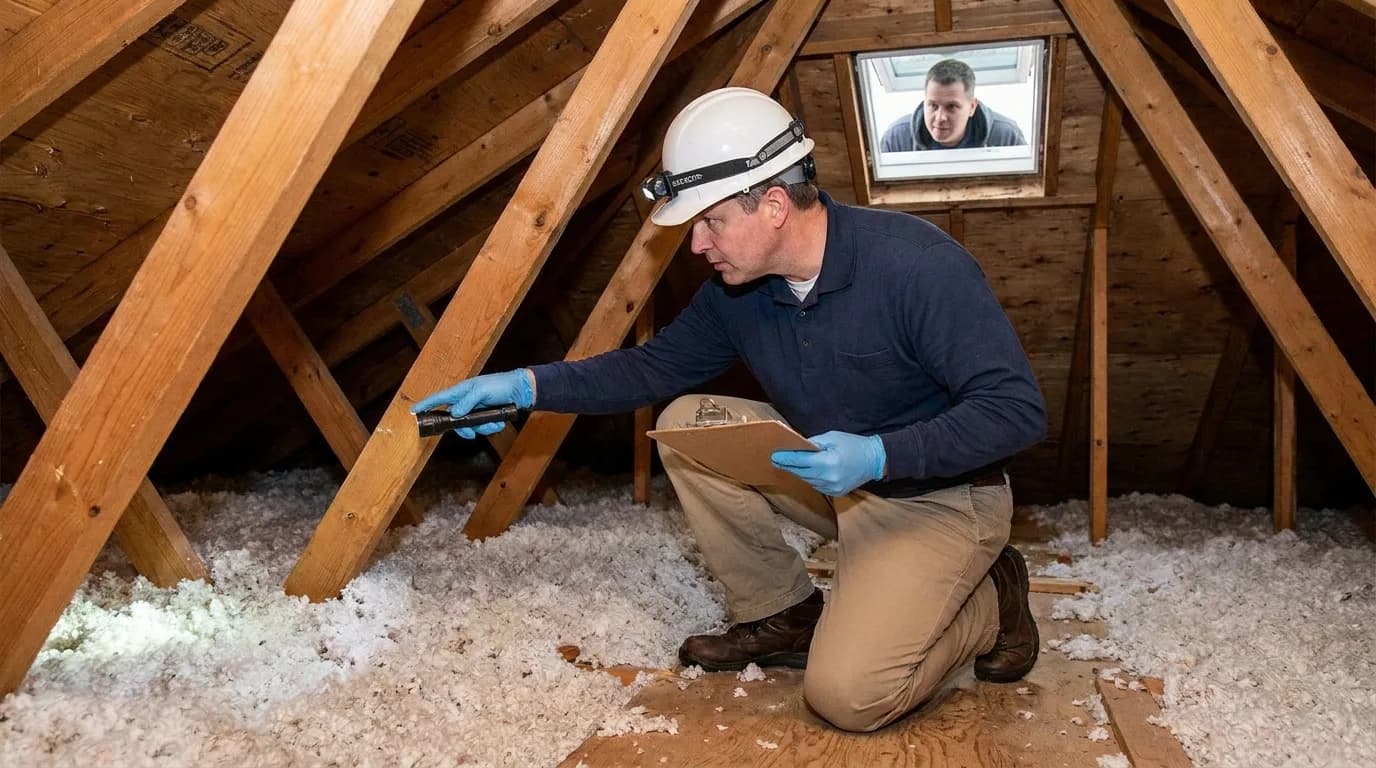
Pick a cold, clear day at the end of a cold spell, before a Chinook, so the frost is at its peak. Take a bright flashlight and a hygrometer if you have one. Go in through the hatch and stay on the truss bottom chords or lay a board across them; never step on the drywall between them. In a cramped attic, look from the hatch rather than crawling.
Look at the nail tips first. A light dusting of frost on nails near the eaves is common and not serious. Frost on the sheathing itself, icicles on nails, dark staining on the underside of the deck, or a fuzzy grey or black bloom on the wood mean the problem has been running for a while. Then trace the sources: find the bathroom fan ducts and follow them to see whether they actually leave the building, look for daylight or heat around pot lights, and check whether the vapour barrier is continuous.
Note the indoor relative humidity at the same time. Anything above about 40 percent at -20 °C is feeding the attic. Condensation or frost on the inside of double-glazed windows is the simple indicator that the house is too humid for the outdoor temperature.
Fix one: seal the attic floor
Air sealing is the fix that matters most and the one most often skipped, because it is fiddly and invisible. The goal is to stop house air moving into the attic. Every hole in the ceiling plane, from the wire through the top plate to the gap around the plumbing stack, gets sealed with spray foam, acoustic sealant or foil tape, working from the attic side with the insulation pulled back.
Pot lights are the big one. Older non-IC cans should be replaced with airtight, IC-rated LED fixtures or covered with a fire-rated airtight box sealed to the vapour barrier. The attic hatch gets weatherstripping and a rigid foam lid. On a typical Airdrie two-storey this is a day of work for an insulation contractor and a few hundred dollars in materials, and it does more to stop attic frost than any number of new roof vents.
Once sealed, the insulation goes back, and if it was flattened or wet it is the moment to top it up. Alberta homes are commonly insulated to about R-50 or more in the attic now, and the extra depth lowers the ceiling's heat loss, which keeps the sheathing colder but the attic drier once the moisture source is cut. Our attic insulation service in Airdrie handles the top-up, and our attic insulation cost guide gives the 2026 numbers.
Fix two and three: control humidity and duct every fan outside
Indoor humidity in an Alberta winter should sit around 30 to 40 percent, and closer to 30 when the outdoor temperature drops below -20 °C. Turn the furnace humidifier down, run bathroom fans for 20 to 30 minutes after every shower (a timer switch makes this automatic), use the range hood when cooking, and do not dry laundry indoors. If the house has an HRV, make sure it is actually running and its filters are clean.
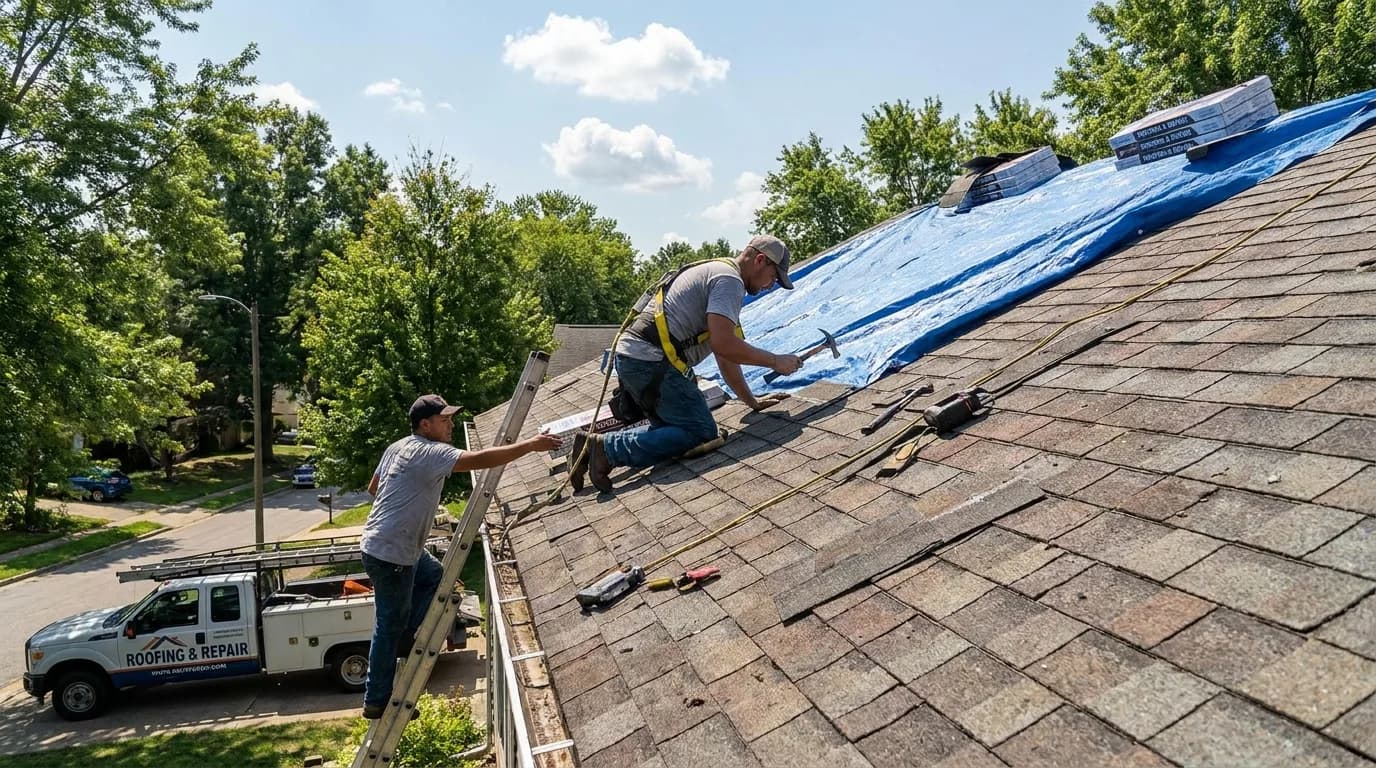
Then follow every exhaust duct to daylight. Bathroom and dryer ducts must terminate through a roof cap or a wall hood with a damper, in insulated duct, with a continuous rise so condensation drains back to the fan rather than pooling and freezing. A duct that ends in the insulation, or one that has slipped off its roof cap, dumps a bathroom's worth of steam into the attic every morning. Re-connecting it is a roofing-side job if the cap needs replacing, and one we handle as part of roof repair in Airdrie.
In a new build, run the HRV on high and keep humidity low through the first winter. The moisture from construction tapers off after a year, and the frost usually goes with it, provided the fans and vapour barrier are correct.
Fix four: ventilation, last not first
Roof ventilation is where most people start, and where most roofing companies are happy to sell a solution. It belongs at the end of the list. Ventilation removes moisture that has already reached the attic, which is useful, but adding exhaust vents to an attic with a leaky ceiling increases the stack effect and pulls more warm, wet house air up through the gaps. We have seen attic frost get worse after a row of new vents went in.
Once the ceiling is sealed and the humidity is under control, check the vent balance. The commonly cited guide is about 1 square foot of net free vent area for every 300 square feet of attic floor with a vapour barrier, split roughly half at the soffits and half high on the roof. Blocked soffit vents are the usual failure: insulation pushed into the eaves, painted-over soffit panels, or no baffles. Our guide to attic ventilation and roof vents in Alberta goes through the vent types and how to balance them.
Powered attic fans are rarely the answer in this climate. They depressurise the attic and draw even more conditioned air out of the house, and in a cold snap they can pull frost-laden air across the insulation. Passive, balanced ventilation with clear soffits does the job on nearly every Airdrie roof.
Mould, delaminated sheathing and when frost becomes a roofing problem
A winter or two of light attic frost does little lasting harm; the wood dries in spring. Several winters of heavy frost is different. Repeated wetting grows mould on the underside of the sheathing, which is a health and resale issue, and it delaminates OSB, which swells, loses its nail-holding strength and eventually sags between the trusses. Truss plates can also rust.
At that stage the fix moves from the attic floor to the roof deck. Delaminated or mould-blackened sheathing generally has to be replaced from above during a reroof, which adds sheet-by-sheet cost to the job and is one of the more common surprises when a 20-year-old Airdrie roof comes off. Our pillar guide to the signs you need a new roof includes soft or sagging decking for that reason.
If you catch it early, the sequence above stops it. If the deck already flexes underfoot or the attic has a musty smell in spring, get the roof and attic inspected together before the next winter so the reroof, if one is coming, includes the deck repair and the ventilation fixes in a single job.
Is attic frost an insurance matter?
Usually not. Attic condensation and frost are treated by most insurers as a maintenance and building-envelope issue rather than a sudden, accidental loss, so the resulting mould, wet insulation and delaminated sheathing are typically excluded. Damage from a burst pipe or a storm that opened the roof is a different matter. Policies vary, so confirm with your insurer or broker before assuming either way, and do not let a claim question delay the fix.
What you can do is get a clear, honest diagnosis. Apex Roofing Airdrie offers free, no-obligation roof and attic inspections with a written, itemised report, and if the answer is that the roof is fine and the fix is a bathroom fan duct and some sealant, that is what we will tell you. If the sheathing or vents do need work, the quote is in writing and you decide what to do with it.
Written by the Apex Roofing Airdrie crew
Practical guidance from the local roofers who inspect, repair and replace roofs across Airdrie and Rocky View County every season. We review our guides against current Alberta practice and update them when materials, code or insurer behaviour changes. About our team.