In this guide
- 01Roof leaking in winter: quick answer for the three most likely causes
- 02Ice dams: why the Chinook freeze-thaw cycle makes them worse in Alberta
- 03Attic frost and condensation: the winter leak that is not actually a hole in your roof
- 04A real leak in winter: flashing, valleys, vents, nail pops and hail-damaged shingles
- 05The homeowner test: telling ice dam, attic frost and a real leak apart
- 06What to do the moment you see a stain, drip or damp spot
- 07Can a roof actually be repaired in an Alberta winter?
- 08Preventing winter roof leaks: insulation, ventilation, eavestroughs and raking
- 09Does home insurance cover a winter roof leak in Alberta?
- 10What winter leak repair costs in Airdrie and Calgary: a 2026 guide
- 11When to call a professional instead of climbing up yourself
Roof leaking in winter: quick answer for the three most likely causes
A roof leaking in winter in Alberta comes down to one of three causes almost every time: an ice dam pushing meltwater back under the shingles, attic frost condensing and dripping once the attic warms above freezing, or an actual opening in the roof, most often at flashing, a nail pop, or a shingle cracked by hail. Telling them apart matters because the right response is different for each one.
Ice dams and attic frost both appear and disappear with the weather, which is what confuses homeowners into thinking the problem has "gone away" when it has only paused. A real leak keeps a consistent relationship to rain or melt and tends to worsen rather than improve, which is the fastest way to separate it from the other two causes of a roof leaking in winter. The rest of this guide covers each cause, a homeowner test to sort them out, and what to do next.
Ice dams: why the Chinook freeze-thaw cycle makes them worse in Alberta
An ice dam forms when heat escaping from the living space into the attic warms the underside of the roof deck enough to melt the snow sitting on it. That meltwater runs down the slope to the cold overhang past the exterior wall, where there is no heat underneath to keep it liquid, and refreezes into a ridge of ice. Water arriving behind that ridge has nowhere to go but sideways and up, under the shingle edge. This is roof leaking when snow melts in its purest form: a real leak with no hole anywhere in the roof.
Alberta's Chinook winds make this cycle unusually aggressive. A Chinook can push temperatures from well below freezing to above zero within hours, then a cold snap a day or two later refreezes whatever water is still sitting at the eaves. Airdrie can see this swing several times in a single winter, each cycle adding to the ice ridge and testing the flashing at the eaves a little more.
The telltale sign of an ice dam leak is location and timing together: a stain near an exterior wall, close to where the roof overhangs, that shows up or worsens during or right after a thaw and then seems to stop when it turns cold again. If you can see a visible ridge of ice hanging off the eaves or icicles thicker than a finger, that is strong confirmation. Our companion guide on how to prevent ice dams in Airdrie covers the attic fixes that stop the cycle at the source.
Attic frost and condensation: the winter leak that is not actually a hole in your roof
Attic frost happens when warm, moist air from inside the house, from showers, cooking, laundry or simply people breathing, finds its way into the attic through gaps around pot lights, bathroom fan housings, plumbing stacks or the attic hatch. Once that humid air hits the cold underside of the roof deck and the nail tips poking through it, the moisture in it condenses and freezes, coating the sheathing and nails in a layer of frost.
This attic condensation leak only appears once conditions change. A Chinook or a warmer stretch raises the attic temperature above freezing, the frost melts all at once, and water drips onto the insulation and through the ceiling drywall. Homeowners often see the stain during a mild spell and assume it is an ice dam, when the actual cause sits a metre or more back from the eaves, in the middle of the attic rather than at the edge.
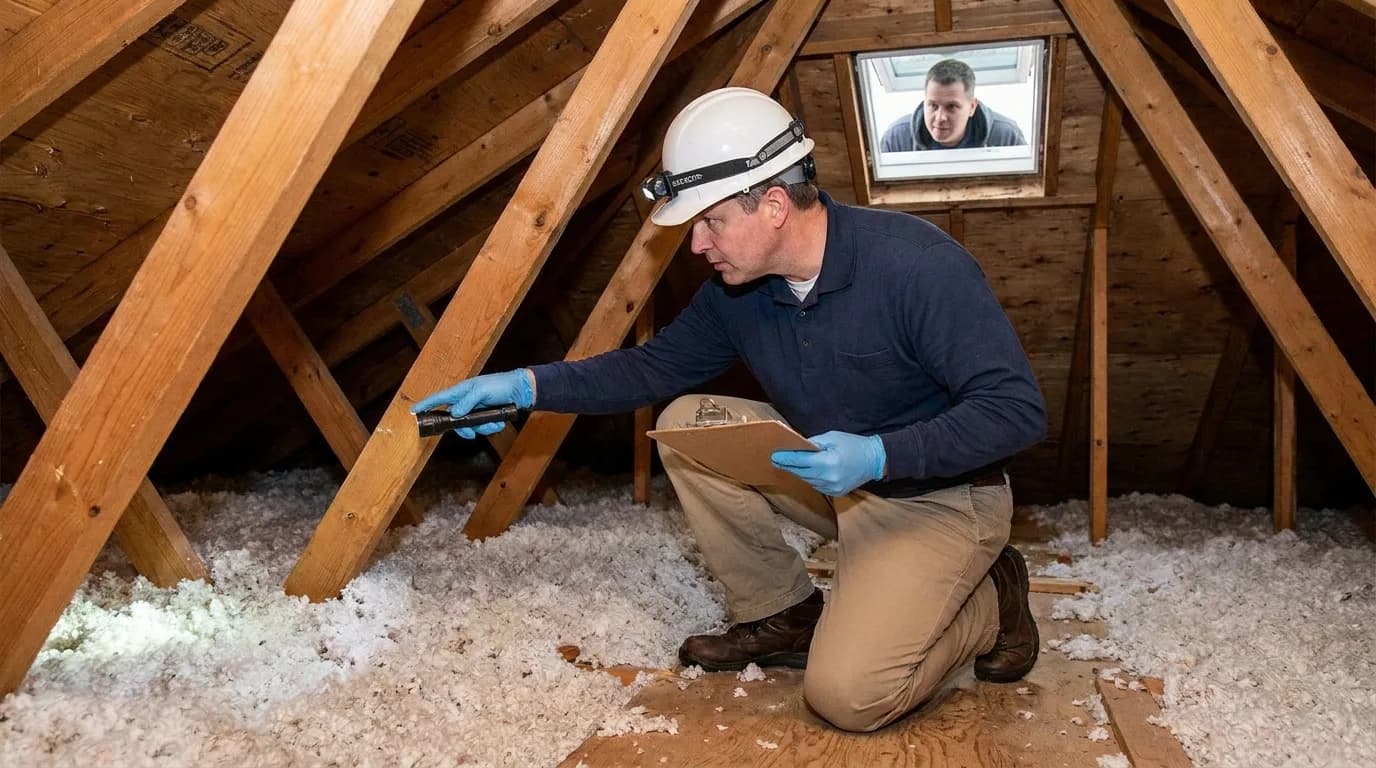
The giveaway is what the attic looks like on a cold day: white or grey frost coating the nail tips and sheathing, sometimes thick enough to look like a light dusting of snow. If you see that, the roof deck and shingles are very likely fine, and the real problem is moist air leaking into the attic with inadequate ventilation to carry it back out. Our guide on attic frost causes and fixes covers the air sealing and ventilation work that solves this permanently.
A real leak in winter: flashing, valleys, vents, nail pops and hail-damaged shingles
Sometimes a roof leaking in winter is exactly what it sounds like: an actual gap in the roof's weatherproofing, unrelated to ice dams or attic condensation. The most common entry points are flashing around chimneys, walls and roof vents that has cracked, lifted or pulled away from years of freeze-thaw movement, valleys where two roof slopes meet and where water concentrates, and nail pops, where a fastener has worked its way up through the shingle over time and left a small hole.
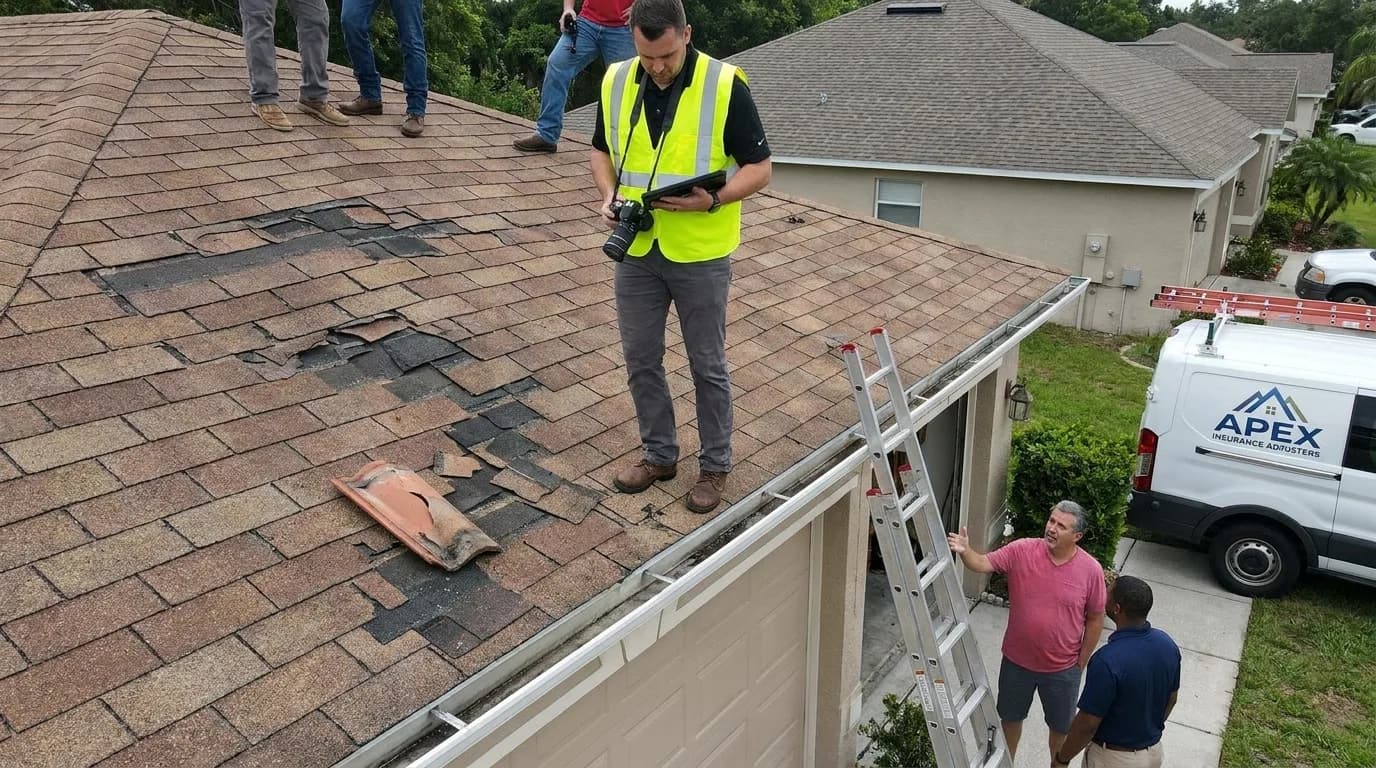
Hail damage deserves its own mention here because it is easy to overlook. Storms like the Aug 8, 2026 Crossfield-Airdrie hailstorm, which brought quarter-sized hail and strong wind, can crack, split or bruise shingles without causing an immediate leak. The shingle looks intact from the ground for months, but the crack is a weak point, and once snow sits on it and freeze-thaw cycling works at that crack over a winter, water finally finds its way through. This is why a roof that leaks for the first time in December or January sometimes traces back to a summer hailstorm nobody thought to have checked.
A real leak from any of these causes behaves differently from ice dam or frost leaks: it can appear during a cold snap with no melt happening, particularly if wind-driven snow works into a gap, and it tends to worsen steadily rather than pausing when temperatures drop. If your stain keeps growing regardless of the weather, an actual hole is the likely explanation, and our general guide on why your roof is leaking covers how these entry points are found and fixed. Old, worn shingles are prone to every entry point here, and our pillar guide to the signs you need a new roof explains when repairs stop making sense.
The homeowner test: telling ice dam, attic frost and a real leak apart
You do not need to climb on the roof to narrow down which of the three you are dealing with. Work through these checks in order, ideally comparing what you see on a cold day against what happens after a thaw or a rain.
- Where is the stain? Near an exterior wall or eave line points to an ice dam; further from the eaves, often mid-ceiling, points to attic frost; anywhere, including mid-roof or around a chimney or vent, can indicate a real leak.
- When does it appear or worsen? During or right after a thaw or Chinook suggests an ice dam or frost melting; during cold weather with no melt happening suggests a real leak.
- Check the attic on a cold day. Frost coating the nail tips and sheathing means condensation is the cause; clean, dry sheathing with no frost points away from attic condensation.
- Look at the eaves from outside. A visible ice ridge or icicles confirm an ice dam is active.
- Check your ventilation and bath fans. Fans that vent into the attic instead of outside, or blocked soffit vents, support an attic frost diagnosis.
- Consider your roof's recent history. A hailstorm in the last year or two, or shingles already past 15 to 18 years old, raises the odds of a real leak rather than ice or frost.
A roof leaking in winter with more than one of these signs pointing in different directions is common on older roofs with both aging shingles and inadequate attic ventilation, and that combination is a good reason to have a professional look rather than guessing.
What to do the moment you see a stain, drip or damp spot
When you first spot a roof leaking in winter, the priority is limiting damage to the house, not diagnosing the roof. Place a bucket or towels under an active drip, and if the ceiling is bulging or sagging with trapped water, carefully puncture it from below into a bucket to relieve the pressure before it lets go on its own, which causes far more mess and can happen without warning.
Move anything valuable out from under the affected area, and if you can safely access the attic, look for the source with a flashlight. A ceiling stain in winter is worth photographing along with the date and any attic frost or ice you can see, since this record matters later whether you file an insurance claim or just track whether the problem is worsening.
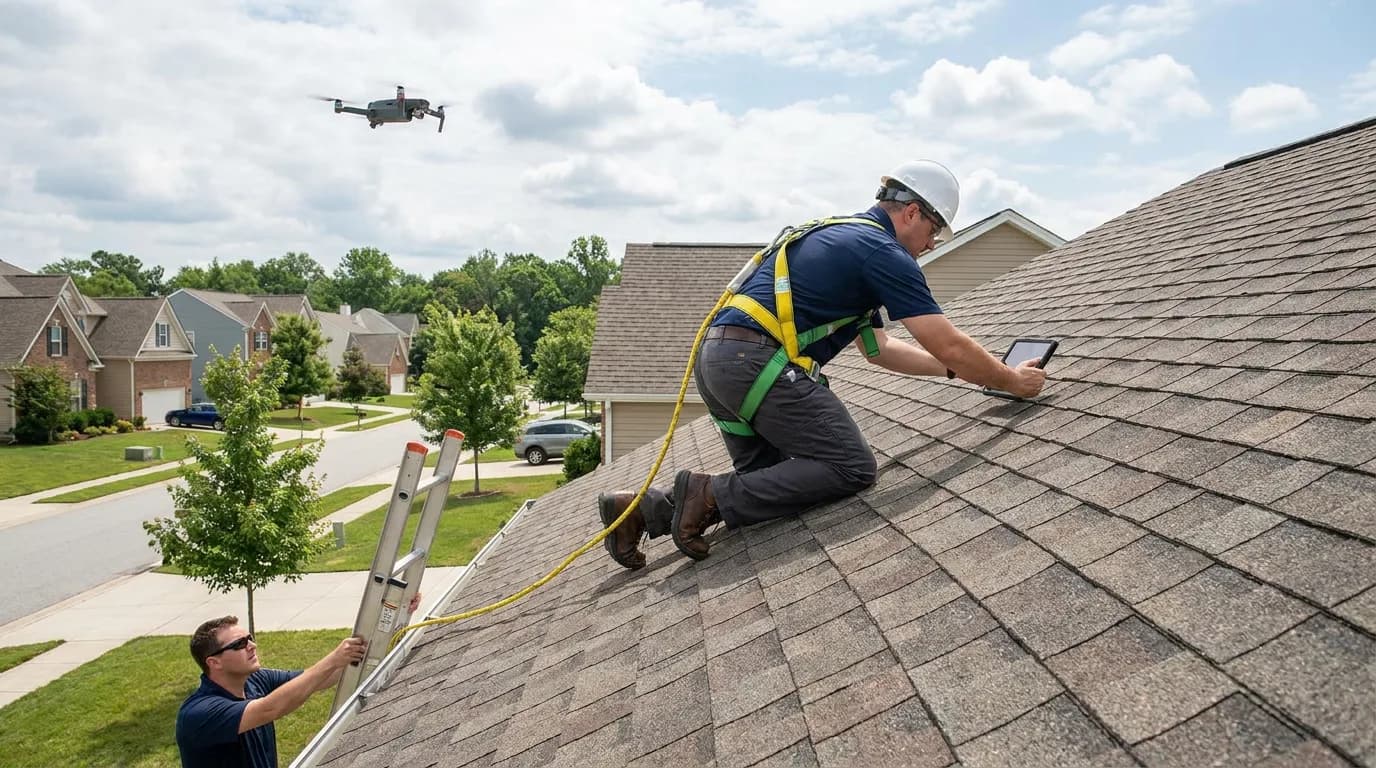
Resist the urge to go up on an icy or snow-covered roof yourself; footing is unreliable and a fall from roof height is serious. If the leak is active and significant, call for emergency roof repair in Airdrie rather than waiting to see if it stops.
Can a roof actually be repaired in an Alberta winter?
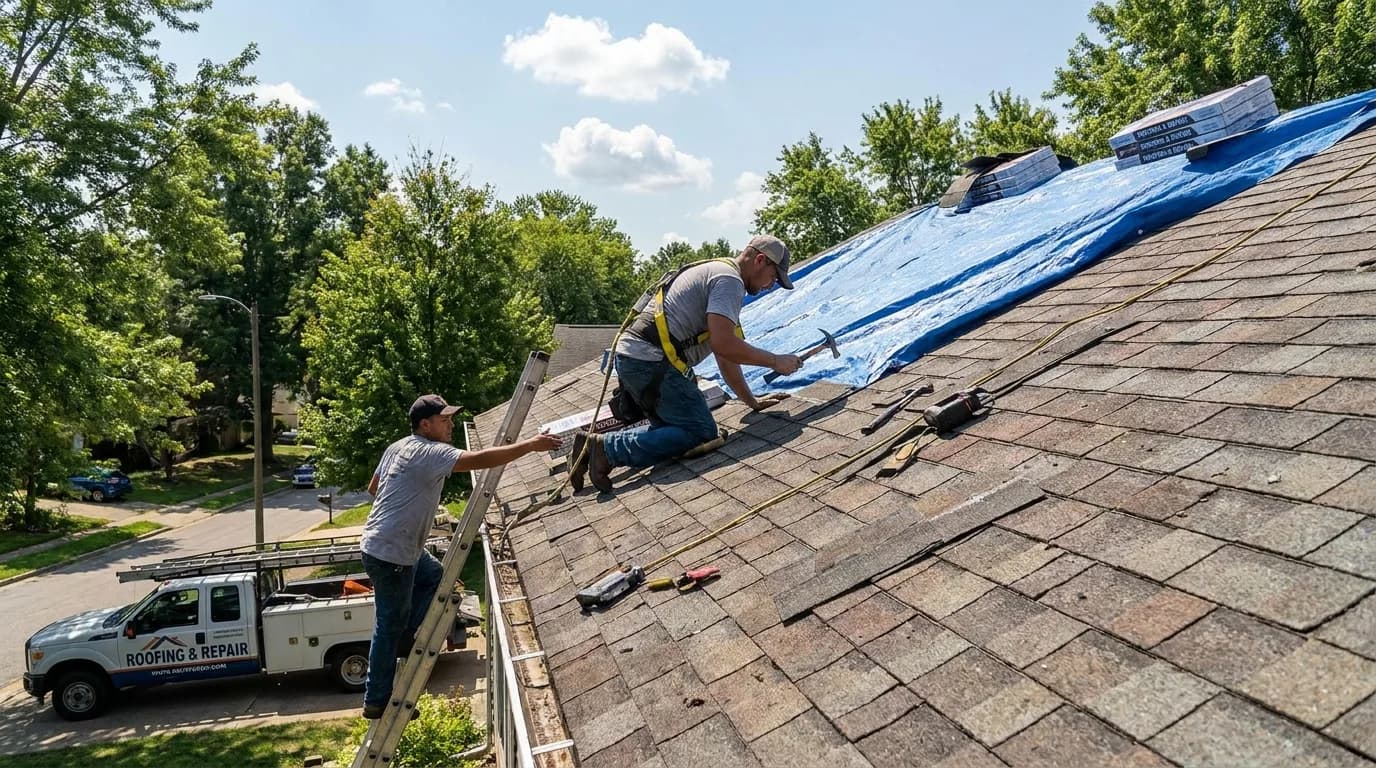
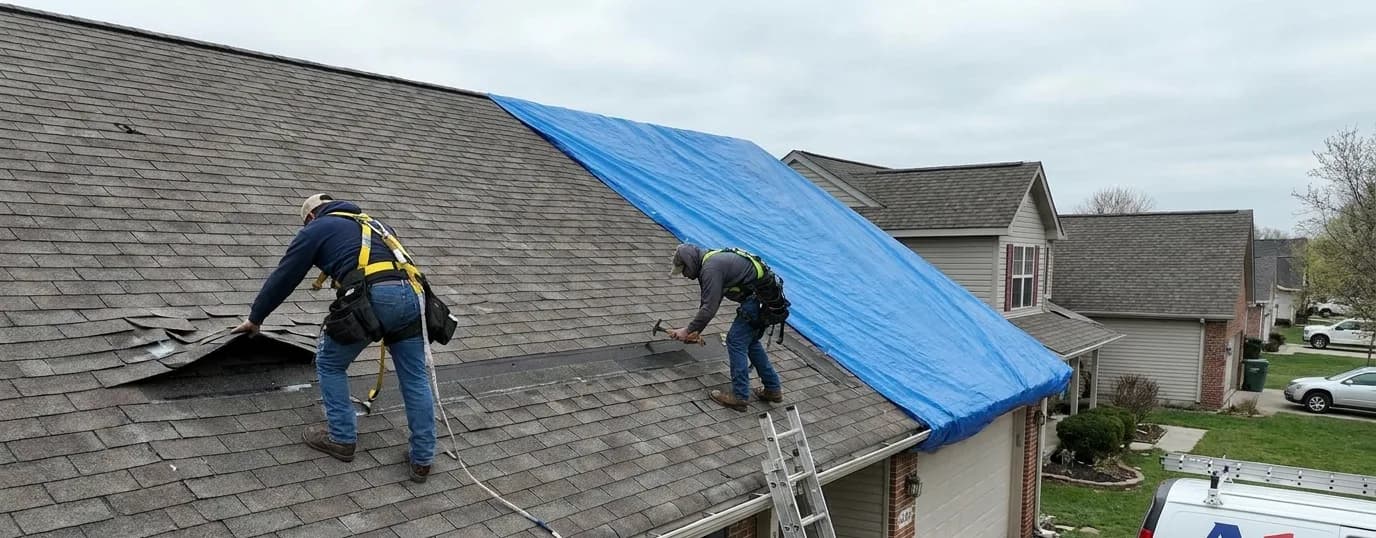
Yes, though what is realistic changes with temperature. Emergency work, tarping a section, steaming an ice dam, or sealing an obvious gap, can be done safely in winter conditions with the right equipment, and this is routine work for a professional crew even in cold weather.
Shingle work is more temperature-sensitive. Asphalt shingles rely on a self-sealing strip that needs warmth to bond, and they become brittle and prone to cracking when handled in extreme cold. Below roughly minus 10 to minus 15 Celsius, many roofers limit shingle replacement to what is strictly necessary and plan a full repair for a milder stretch, using hand-sealing or cold-weather adhesive for anything urgent in the meantime.
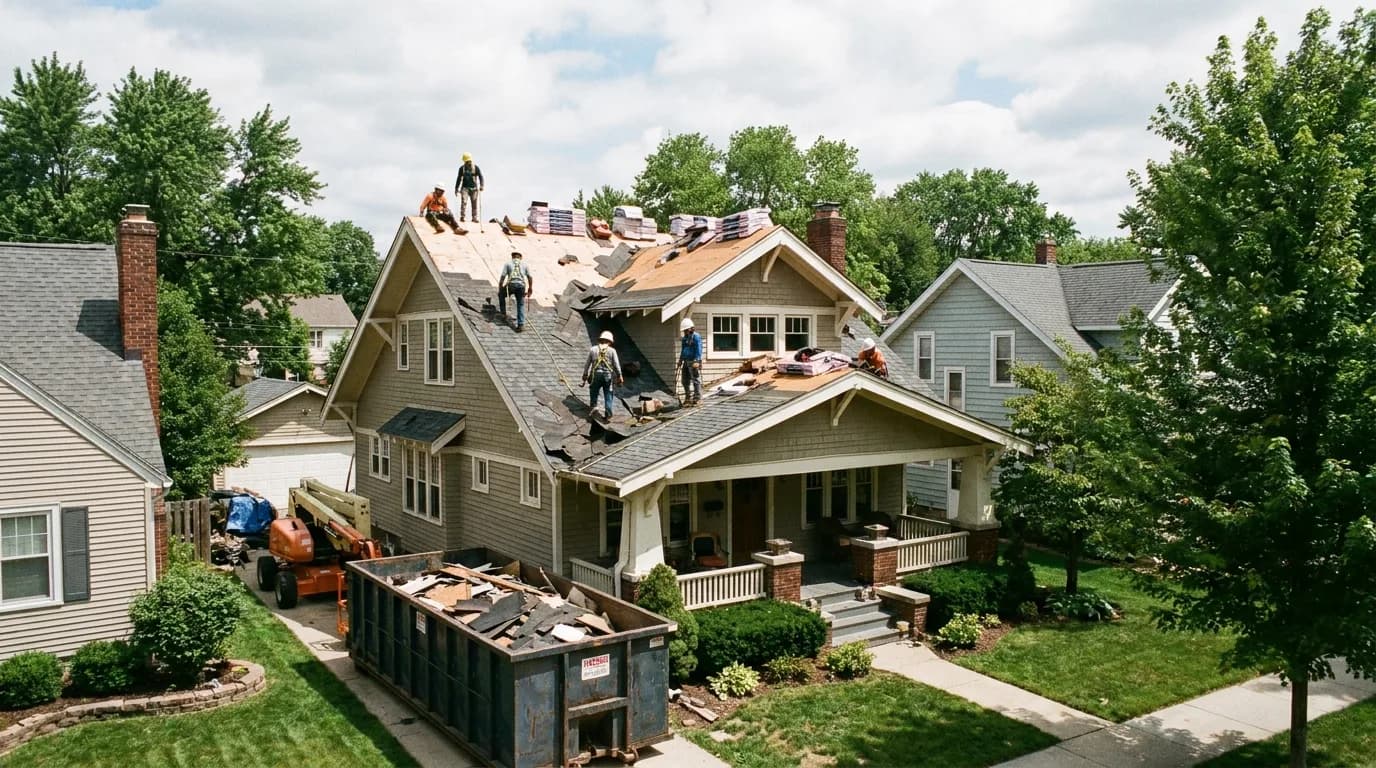
A winter leak almost never has to wait until spring to be stopped. It may need a temporary or partial fix now, with a more complete repair scheduled for warmer weather. If you are weighing a full reroof against a winter repair, our guide on roof replacement in winter in Alberta covers what full replacements look like in cold weather.
Preventing winter roof leaks: insulation, ventilation, eavestroughs and raking
Most winter leaks trace back to preventable conditions, and fixing them before the next cold season is cheaper than repairing the damage after. Attic insulation and air sealing are the biggest lever for stopping snow on roof causing leak problems in the first place, since both ice dams and attic frost are driven by heat and moisture escaping into the attic from the living space below.
Ventilation works alongside insulation: soffit intake and a ridge or roof exhaust vent need to move air freely so heat or moisture reaching the attic gets carried back outside instead of sitting against the deck. Clear eavestroughs before freeze-up so meltwater has somewhere to drain, and consider roof raking after significant snowfalls to remove snow that would otherwise melt and refreeze at the eaves; confirm structural or code specifics with your municipality if unsure.
A metal roof leaking in winter is less common than an asphalt shingle roof leaking, since metal sheds snow readily and has fewer seams for water to find, but flashing at valleys and eave transitions can still fail the same way. If you are considering a switch, our metal roofing service in Airdrie team can explain how metal performs against Alberta winters compared with asphalt.
Does home insurance cover a winter roof leak in Alberta?
Whether a winter roof leak is covered depends on the cause, and this should always be confirmed with your insurer or broker rather than assumed from a general rule. Sudden and accidental damage, such as a hailstorm cracking shingles that then leak once winter arrives, is the kind of event home insurance is generally designed to respond to, provided the damage is documented and reported appropriately.
Damage from gradual wear or a condition like inadequate attic ventilation is typically treated differently, and many policies exclude it as a maintenance issue rather than a sudden event. Ice dams sit in a grey area that varies by insurer: some cover the resulting interior water damage even if the dam itself was preventable, while others do not, which is worth asking your broker before you need the answer.
Even on a covered loss, your deductible sits between you and any payout, so a modest flashing or shingle fix can sometimes cost less out of pocket to handle directly than to claim; ask your broker how your deductible compares to a typical repair. The usual sequence on a larger loss is to stop the water and document the damage first, then call your insurer or broker, who assigns an adjuster to inspect the roof and confirm what is covered.
If you believe hail or a windstorm caused or contributed to your winter leak, our roof insurance claim service in Airdrie helps document the damage and its likely cause for your adjuster. Our guide on whether home insurance covers roof leaks goes deeper into the sudden-and-accidental versus wear-and-tear distinction that most Alberta policies use.
What winter leak repair costs in Airdrie and Calgary: a 2026 guide
What a roof leaking in winter costs to fix varies widely with the cause and how urgent the work is, so treat the figures below as a rough 2026 Alberta market guide in CAD rather than a quote. The same underlying repair, rushed as an emergency call versus done on a scheduled visit, can carry a meaningfully different price simply because of timing and access.
| Situation | What is typically involved | Rough 2026 cost (guide) |
|---|---|---|
| Emergency winter tarping | Same-day tarp to stop an active leak, temporary | $300-$800 |
| Ice dam steam removal | Melting a dam with steam equipment to relieve pressure and stop the backup | $400-$1,200 |
| Flashing or nail pop repair | Re-sealing or replacing failed flashing, fixing exposed fasteners | $300-$900 |
| Hail-damaged shingle repair (winter) | Replacing cracked or missing shingles found to be leaking | $500-$1,800+ |
| Attic air sealing and ventilation fix | Sealing bypasses, adding insulation, correcting vents | $800-$2,500+ |
Waiting until spring to address an active leak generally costs more in the end, since ongoing water intrusion damages insulation, drywall and sometimes framing the whole time it sits unaddressed. A same-week estimate that identifies the actual cause lets you choose between an immediate fix and a planned repair once the weather cooperates.
When to call a professional instead of climbing up yourself
Some situations call for professional help without hesitation. Any active leak with water visibly coming through the ceiling, any roof covered in ice or hard-packed snow that would be hazardous to walk on, and any situation where you cannot identify the source from the attic or ground all fall into that category. Waiting to see if a winter leak resolves on its own rarely goes well; by the time it is obvious, the damage underneath is usually more extensive than the visible stain suggests.
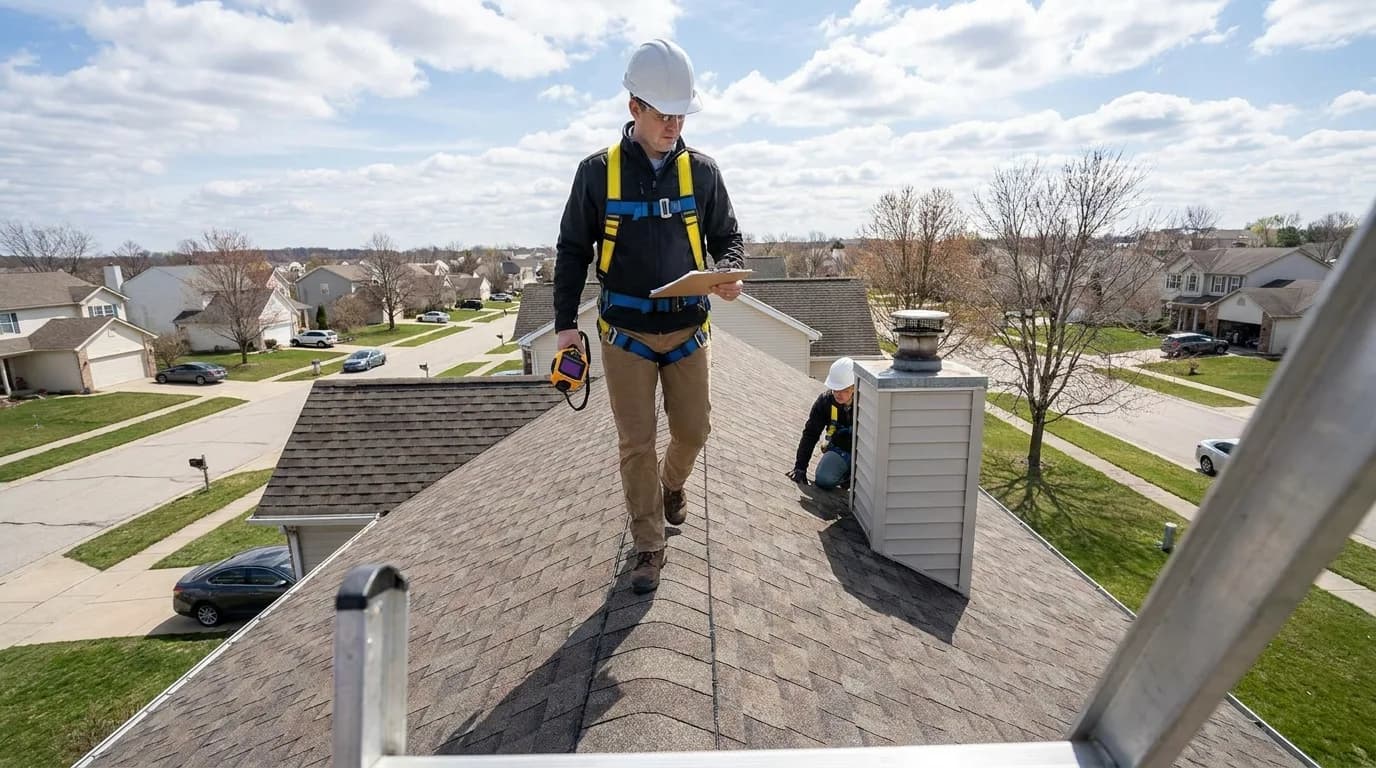
Apex Roofing Airdrie provides a free, no-obligation on-site estimate with an itemised written quote, and our team can generally book a same-week visit to look at a winter leak, an ice dam, or suspected attic condensation and tell you plainly which of the three you are dealing with, whether the home is in Airdrie, Crossfield, Cochrane or north Calgary. Our emergency roof repair service in Airdrie is there for active leaks that cannot wait, and our roof repair service in Airdrie handles the flashing, shingle and venting fixes once the immediate water is stopped. If ice dams have already formed, our guide on safe ice dam removal methods and their cost explains what a professional visit typically involves.
Written by the Apex Roofing Airdrie crew
Practical guidance from the local roofers who inspect, repair and replace roofs across Airdrie and Rocky View County every season. We review our guides against current Alberta practice and update them when materials, code or insurer behaviour changes. About our team.