In this guide
- 01Roof replacement in winter in Alberta: can it be done?
- 02How shingle seal strips work, and why temperature matters
- 03Manufacturer temperature guidance and hand-sealing
- 04What a good crew does differently in the cold
- 05Chinook windows: Airdrie's winter roofing advantage
- 06The real risks of winter roofing
- 07The best time to replace a roof in Alberta
- 08Scheduling advantages of an off-season roof
- 09Winter roofing and your insurance claim
- 10Emergency winter roof repairs and tarping
- 11Wait for spring, or go now?
Roof replacement in winter in Alberta: can it be done?
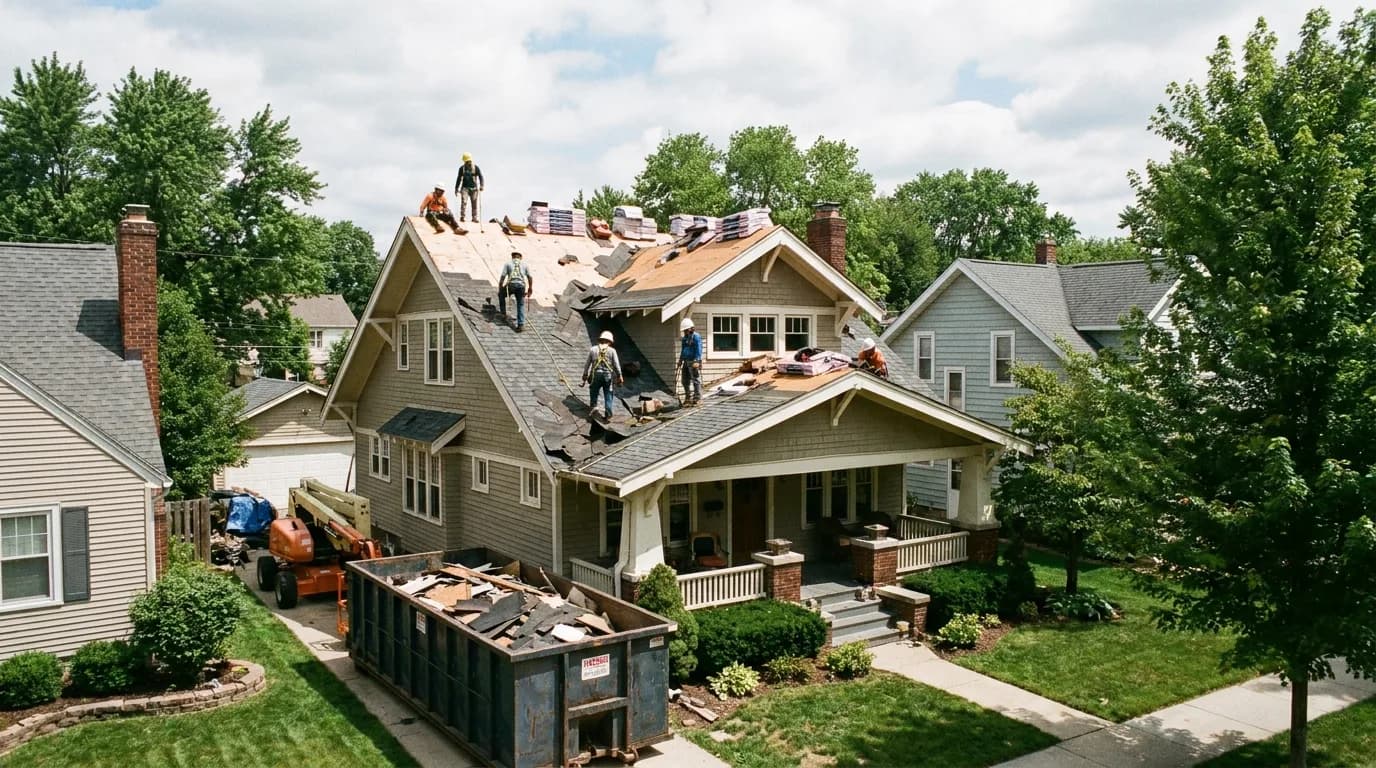
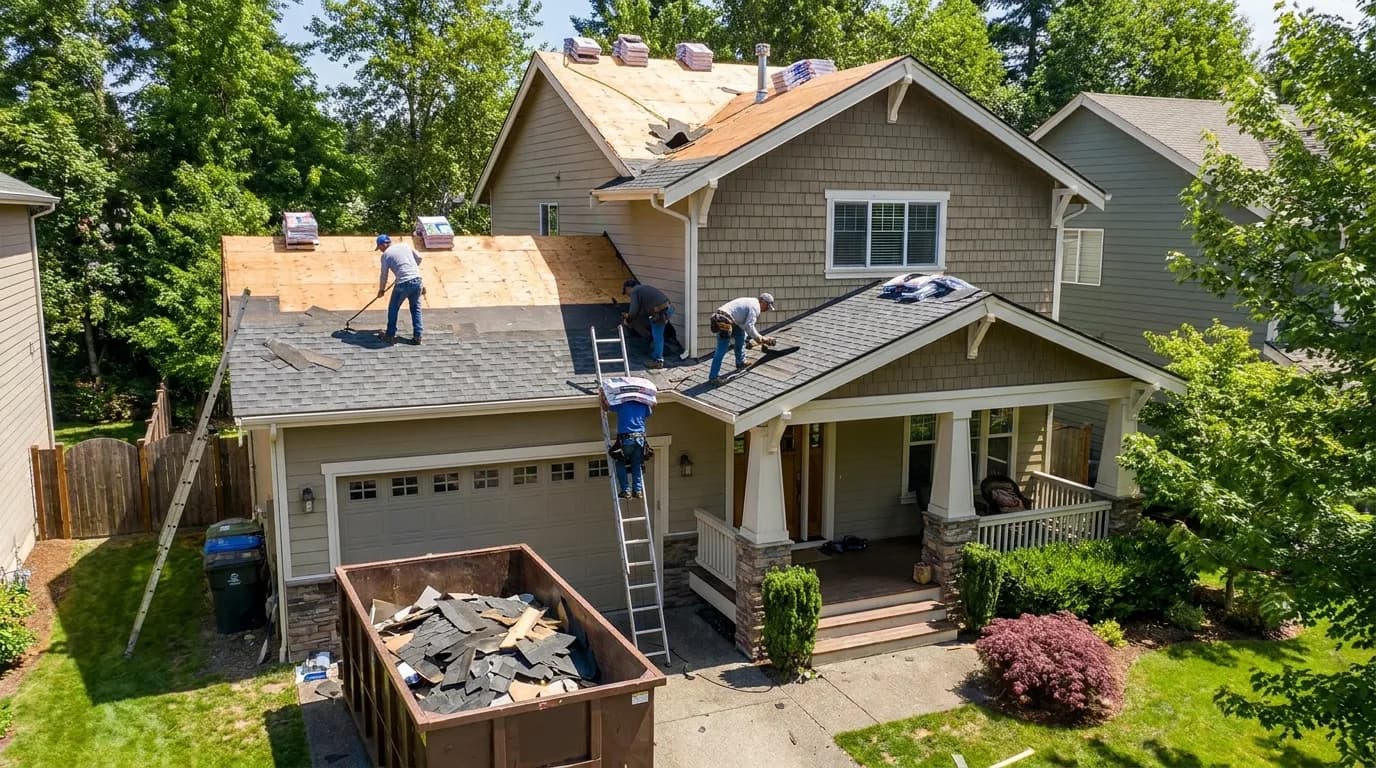
Yes. Roof replacement in winter is done every year across Alberta, from Airdrie to Edmonton, and the results are just as durable as a summer roof when the crew does it properly. The question is not whether it can be done but whether your roofer knows how to adapt the installation to the cold, and whether your particular roof can wait for better conditions.
This guide explains what changes when the temperature drops, what the shingle manufacturers actually say, why Chinook weather gives Airdrie an edge, when it is smarter to wait for spring, and what to do if you have a leak that cannot wait. If you are also choosing a product, our pillar guide to the best shingles for Alberta's climate covers which shingles handle cold installation best.
How shingle seal strips work, and why temperature matters
Every asphalt shingle has a strip of thermally activated adhesive on its face. When the next course is nailed over it, sun and warmth soften that strip and bond the two shingles together, which is what gives the roof its wind resistance. On a summer afternoon that bond forms within days. In January, with the roof surface below freezing and short days, the strip may not activate for weeks or months.
Until the strip seals, the shingles are held down only by nails, and the tabs can lift in a Chinook gust. That is the core issue with roofing in cold weather, and it is entirely manageable. It also explains why a roof installed in November sometimes looks fine until a February windstorm: the seal never formed and nobody hand-sealed it.
Manufacturer temperature guidance and hand-sealing
Many manufacturers advise installing above about 4 to 10°C or hand-sealing when it is colder, and the exact shingle sealing temperature and wording vary by brand and product, so check the installation instructions for the specific shingle on your quote. Cold weather does not void the warranty on its own; failing to follow the cold-weather instructions can.
Hand-sealing is the single most important step in a roof replacement in winter. It means applying dabs of roofing cement (asphalt plastic cement, at the manufacturer's spacing) under each tab so the shingle is bonded immediately rather than waiting for the sun. It adds labour and material, which is why some low quotes skip it, and why you should ask specifically whether the crew hand-seals in winter. Ask, too, how shingles are stored: bundles kept in a warm trailer or garage until they go up stay flexible and are far less likely to crack when bent over ridges and hips.
What a good crew does differently in the cold
- Keeps shingle bundles warm and brings them onto the roof in small batches
- Hand-seals tabs, rakes and ridge caps with roofing cement to the manufacturer's spec
- Adjusts nail gun pressure so nails seat flush without cutting through cold, brittle shingles
- Uses ridge and hip caps that flex in the cold; SBS-modified shingles bend far better below zero
- Clears snow and frost from the deck before laying ice-and-water shield, which needs a clean, dry surface to stick
- Works the sunny side first and stages the tear-off so no more deck is opened than can be dried-in that day
- Plans for shorter days and icy footing, since daylight and traction are the real winter safety issues
Class 4 polymer-modified shingles, the same ones we recommend for hail, are also the most cold-tolerant to install, because the SBS rubber in the asphalt keeps them flexible at low temperatures. If you are already planning a Class 4 roof, a winter install is a smaller compromise than it would be with a standard shingle.
Shingles get the attention, but the layers under them are where winter installs most often go wrong. Ice-and-water shield is a self-adhering membrane, and its adhesive, like the shingle seal strip, is temperature sensitive. Most products have a minimum application temperature, and below it the membrane will not bond to the deck, which defeats the purpose at the eaves where ice dams push water uphill. A good crew clears frost, uses a primer where the manufacturer calls for it, and lays membrane only on deck that is genuinely dry.
Synthetic underlayment is more forgiving in the cold than old felt, which is one reason it has become standard in Alberta. Ventilation is the other winter detail. A roof replacement in winter is the perfect time to fix a starved attic, because the crew can see frost on the underside of the sheathing, a sure sign of warm, moist air leaking up from the house. Adding intake at the soffits and exhaust at the ridge during the reroof costs little and protects the new shingles from being cooked from below next summer.
Chinook windows: Airdrie's winter roofing advantage
Airdrie sits in Chinook country. A few times most winters, warm westerly winds push daytime temperatures from well below zero to above freezing, sometimes to 10°C or more, for anything from a day to a week. Roofers watch the forecast for these windows because they deliver the conditions that make winter installation straightforward: dry decks, flexible shingles, and enough sun to start activating seal strips.
The flip side is the wind itself. Chinooks gust hard, and an open deck or freshly laid, unsealed shingles are vulnerable. A good crew works the calm days inside a warm stretch and secures everything before a gust front arrives. The same Chinook cycle that helps installers also drives ice dams on poorly vented roofs, so a winter reroof is a good moment to fix ventilation; our guide on preventing ice dams in Airdrie explains the fixes.
The real risks of winter roofing
Cold shingles crack if bent or overdriven; that is the most common winter defect and it shows up as split caps and torn tabs. Ice-and-water shield and synthetic underlayment adhere poorly to frosty decking. Snow on the roof has to be removed before tear-off, which adds hours, and daylight in December is barely eight hours in Airdrie, so productive time is limited. Delays from storms are more likely, and an open roof in a snowstorm is a serious problem.
None of these are reasons to refuse a winter roof, but they are reasons to hire carefully. The crew needs experience roofing in cold weather, a plan for staging the tear-off so the house is never left open overnight, and the honesty to postpone a day when the forecast turns. Ask how they handle each of these before you book.
Think about the house as well as the roof. During tear-off in January the attic is briefly open to the weather, so the crew should stage the work so insulation is never exposed to falling snow, and heating costs may tick up for a day or two. Landscaping is dormant and the ground is frozen, which is actually gentler on lawns and beds than a wet spring tear-off, but ice on driveways and walkways needs managing so nobody, roofer or homeowner, takes a fall.
The best time to replace a roof in Alberta
| Season | Typical conditions | Pros | Cons |
|---|---|---|---|
| Spring (April to May) | Cool, wet, windy, thaw | Good temperatures, ahead of hail season | Wet decks, busy schedules after winter |
| Summer (June to August) | Warm, long days, hail season | Ideal for sealing, long work days | Peak demand, hail can hit a new roof, heat softens shingles |
| Fall (September to October) | Mild, dry, stable | Often the best window in Alberta | Books up fast, first snow can arrive early |
| Winter (November to March) | Cold, snow, Chinook windows | Availability, flexibility, damage fixed now | Hand-sealing needed, weather delays, short days |
Fall is often the best single answer in Alberta: mild, dry and after hail season. But the best time to replace a roof is before it fails, and a roof that is leaking in January should not wait for October. Our guide on how long a roof replacement takes explains how weather affects the schedule in each season.
Scheduling advantages of an off-season roof
Roofers are busiest from late spring through fall, and after a hailstorm the queue in Airdrie can stretch for months. Winter is different. A crew that keeps working through the cold can often start within days rather than weeks, has more flexibility on dates, and can give your job undivided attention. Some homeowners with insurance claims approved in the fall choose a winter install for exactly this reason rather than waiting through the spring backlog. For a roof replacement in winter, that shorter queue is often the deciding factor.
Pricing is a rough guide only, but as of 2026 an asphalt reroof on an average Airdrie home runs about $6,000 to $18,000. Winter is not automatically cheaper, but suppliers and crews sometimes have more room to work with you on timing in the off-season. Get a free on-site quote for an exact figure, and ask whether a winter start changes the price or the schedule.
Winter roofing and your insurance claim
Many winter reroofs in Airdrie follow a summer hailstorm. If your claim was approved in the fall and the queue pushed your install into December, you have a few things to check. Some insurers hold back part of the payment (the recoverable depreciation on a replacement-cost policy) until the work is complete, so finishing in winter rather than spring can release that money sooner. Others set a deadline for completing repairs. Confirm both points with your insurer or broker, and keep the approval in writing.
A local crew that works year-round can also document the work as it happens, which adjusters appreciate, and can coordinate directly with the adjuster on any deck damage found during tear-off. Our roof insurance claim page explains how we support the paperwork side. If the claim is still open, our guide to hail damage roof insurance claims in Alberta covers the full process.
Emergency winter roof repairs and tarping
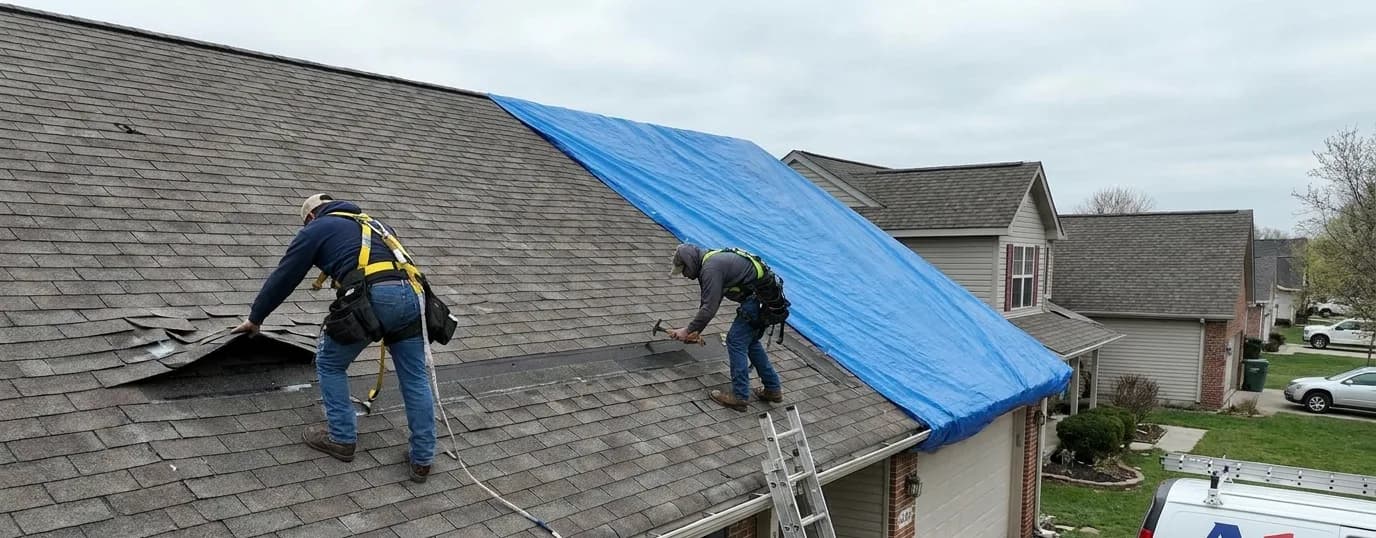
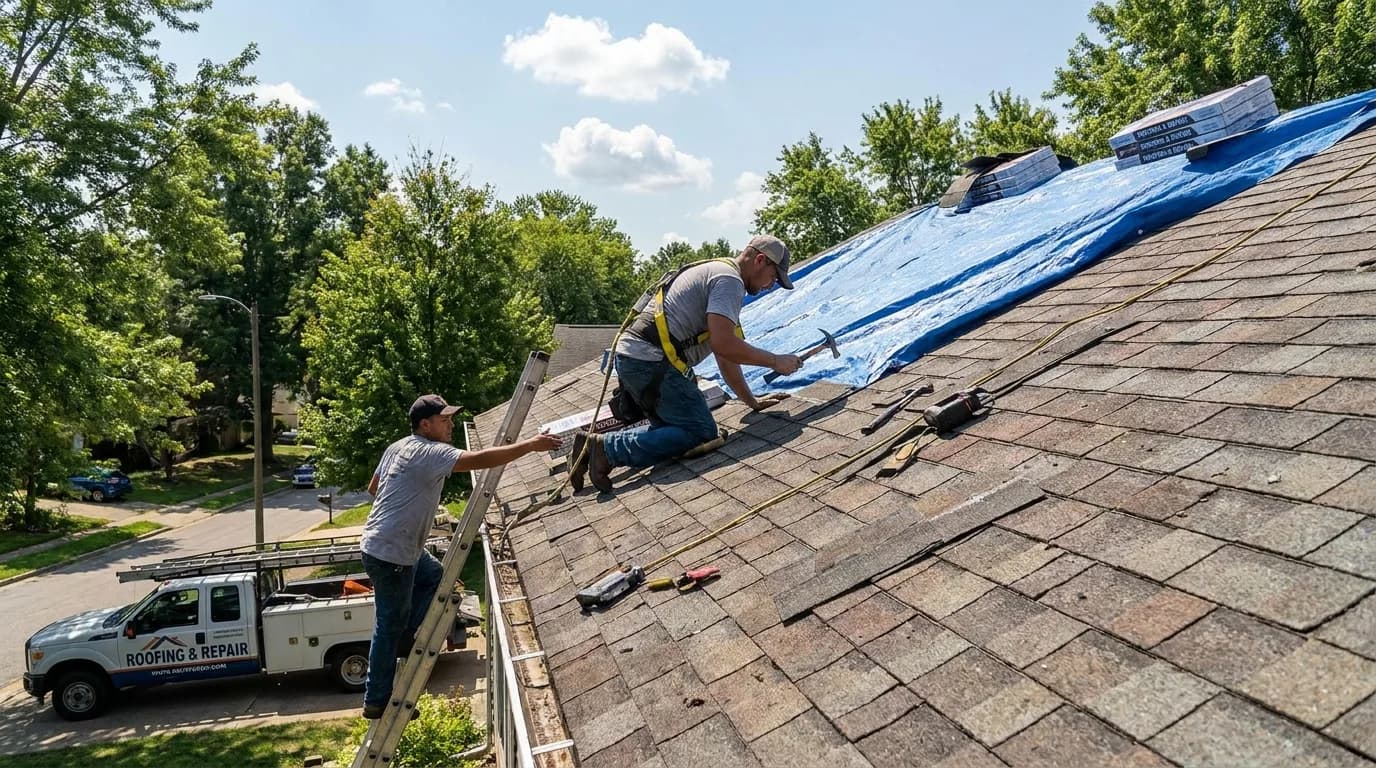
Some roof work cannot wait for spring. A tree limb through the deck, shingles peeled off in a Chinook, a leak dripping into a bedroom during a thaw, or ice dam damage all need attention now. Winter roof repair is routine for a local crew: we can tarp an active leak in any weather, then do a proper repair on the next workable day. Our emergency roof repair service covers exactly this.
For smaller issues, a targeted roof repair in winter is usually straightforward: replacing lifted or missing shingles with hand-sealed new ones, resealing flashings, and clearing ice dams with steam rather than tools that damage shingles. As a rough guide as of 2026, small repairs run about $300 to $1,500 and emergency tarping about $300 to $1,000.
Wait for spring, or go now?
If your roof is worn but sound, with no active leaks, missing shingles or exposed deck, waiting for a spring or fall install is reasonable and gives you the easiest conditions. If the roof is leaking, has storm damage, has an approved insurance claim you would rather close, or you simply want it done before the next hail season, a roof replacement in winter by an experienced crew is a sound choice.
Apex Roofing Airdrie's local crew works through the winter and adapts the installation to the conditions, including hand-sealing and warm storage. Book a free, no-obligation on-site estimate and we will tell you honestly whether your roof can wait, what a winter roof replacement would involve, and put it all in an itemised written quote backed by our written workmanship guarantee.
Written by the Apex Roofing Airdrie crew
Practical guidance from the local roofers who inspect, repair and replace roofs across Airdrie and Rocky View County every season. We review our guides against current Alberta practice and update them when materials, code or insurer behaviour changes. About our team.