In this guide
- 01How long does roof replacement take on a typical Alberta home
- 02What is included in a roof replacement
- 03Before the crew arrives: estimate, materials, permit and scheduling
- 04Day one: tear-off, deck inspection and dry-in
- 05Day two: shingles, flashing, ventilation and cleanup
- 06What can stretch the timeline
- 07Alberta weather: wind, rain, hail and cold-weather installs
- 08How to prepare your home and family
- 09After the job: walkthrough, warranty paperwork and the final invoice
How long does roof replacement take on a typical Alberta home
How long does roof replacement take is usually the second question after cost, and the answer is shorter than most people expect. A local crew of four to six roofers can tear off and reshingle a simple bungalow in a single long day. A typical two-storey Airdrie home with an attached garage and a couple of dormers usually takes two days. Large, steep or cut-up roofs with multiple peaks, skylights and chimneys take three days or more.
Those are on-site days. The whole roof replacement process from first call to final invoice is longer, typically two to five weeks, because it includes the estimate, material ordering, permit checks where needed and scheduling around weather and other jobs. After a major hail event, that lead time can stretch to a couple of months as every roofer in the Calgary to Red Deer corridor fills up.
This guide walks through the full timeline for a standard asphalt shingle reroof. For what it costs, see our pillar guide on roof replacement cost in Airdrie. For the service itself, including free on-site estimates, see our roof replacement page.
What is included in a roof replacement
What is included in roof replacement should be spelled out on your quote, but a complete job in Alberta generally covers the following. If any of these is missing from a quote, ask why.
- Protection of the property: tarps over landscaping, plywood over windows and AC units where needed, and a bin placed on the driveway.
- Full roof tear-off: removal of all old shingles, underlayment and old flashing down to the wood deck.
- Deck inspection: checking every sheet of plywood or board for rot, delamination and loose fastening, and renailing where needed.
- Decking replacement: swapping any damaged sheets, usually priced per sheet on the quote.
- Ice-and-water shield: a self-adhered membrane at the eaves, in valleys and around penetrations. Standard practice in Alberta for ice dam protection.
- Synthetic underlayment over the rest of the deck.
- Drip edge at eaves and rakes.
- New flashing at walls, chimneys, skylights and pipe penetrations.
- Starter strip, the shingles you chose, and ridge cap shingles.
- Ventilation: replacing or adding roof vents and confirming intake at the soffits.
- Cleanup: magnet sweep of the yard and driveway for nails, removal of all debris, and a final walkthrough.
- Paperwork: the manufacturer warranty registration and the contractor's written workmanship guarantee.
Items that are sometimes included and sometimes extra include new eavestroughs, skylight replacement, satellite dish removal and remounting, and attic insulation top-ups. Ask for them as separate lines so you can see the cost of each.
Before the crew arrives: estimate, materials, permit and scheduling
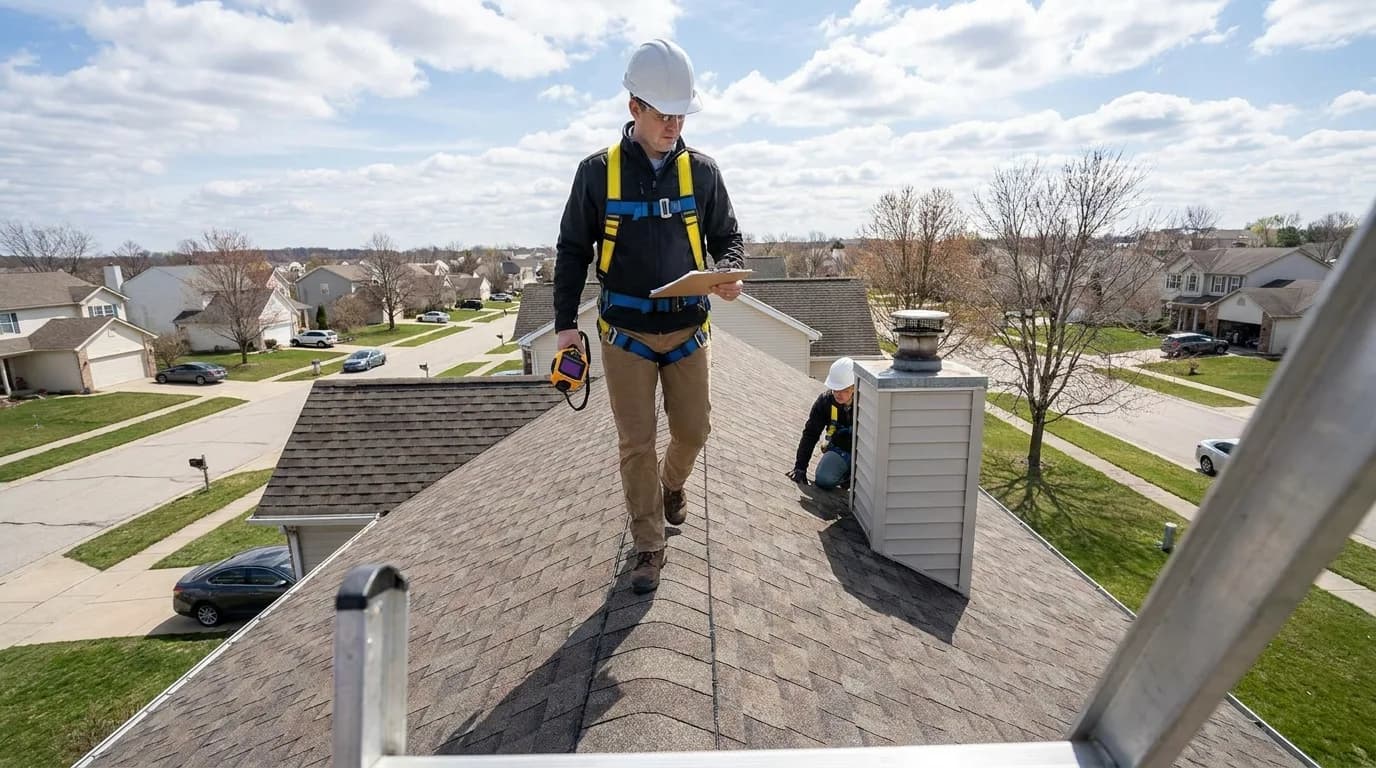
The roof replacement steps start with an on-site estimate. A roofer measures the roof, checks the attic and ventilation, looks for hail or wind damage and writes an itemised quote. At Apex Roofing Airdrie that visit is free and usually booked within the same week. If storm damage is involved, the insurance process runs in parallel and can add a few weeks for the adjuster's visit and approval.
Once you sign, materials are ordered. Standard colours from IKO, BP, GAF, Owens Corning or Malarkey are usually available within days from Calgary-area suppliers; specialty colours and Class 4 products can take one to two weeks. The contractor also checks whether a permit is needed. In Airdrie, a like-for-like shingle replacement often does not require a building permit, but structural repairs or changes to the deck may. Confirm with the City of Airdrie, and read our guide on roofing permits in Airdrie and Alberta for the details.
Scheduling then depends on the weather window and the crew's queue. A good contractor will give you a start date a few days out and confirm the day before based on the forecast. Materials are typically delivered to your driveway or lifted onto the roof the day before or the morning of the job.
Day one: tear-off, deck inspection and dry-in
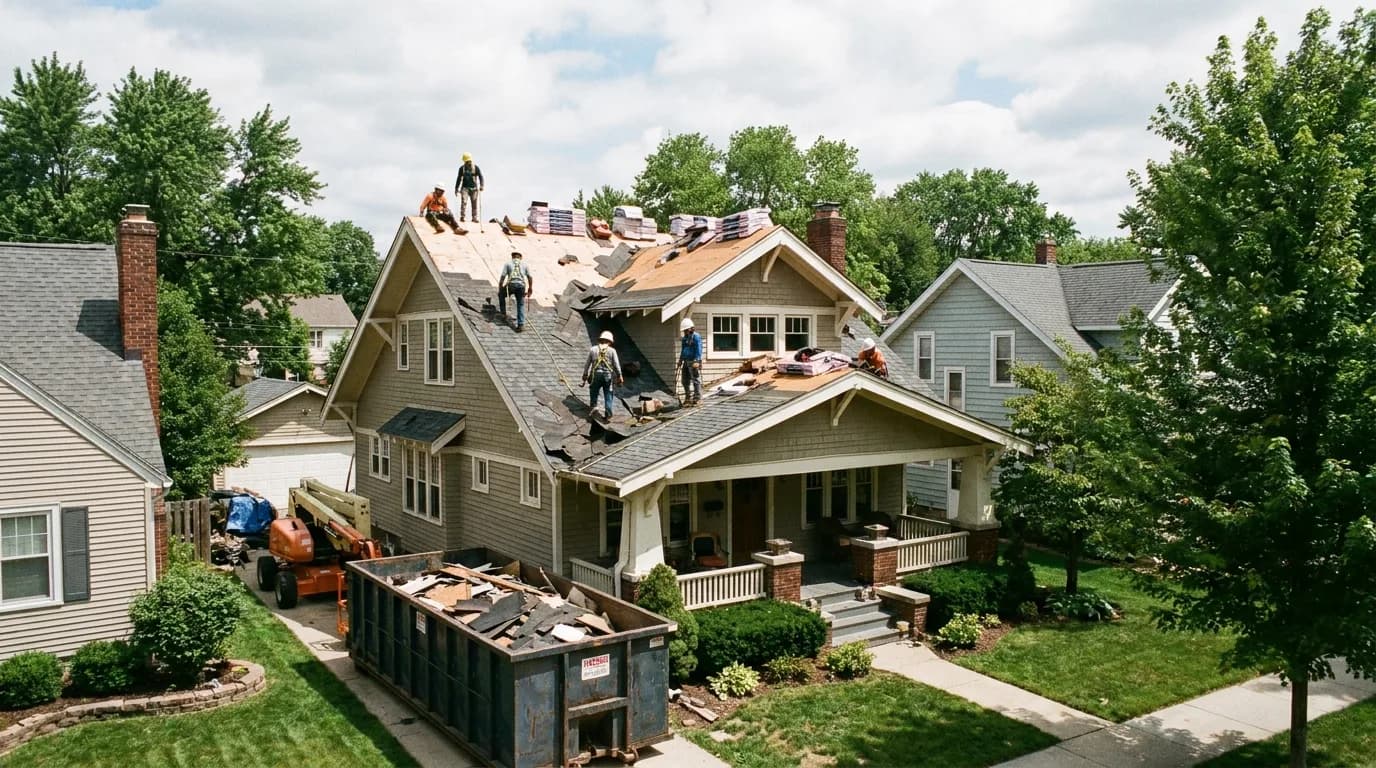
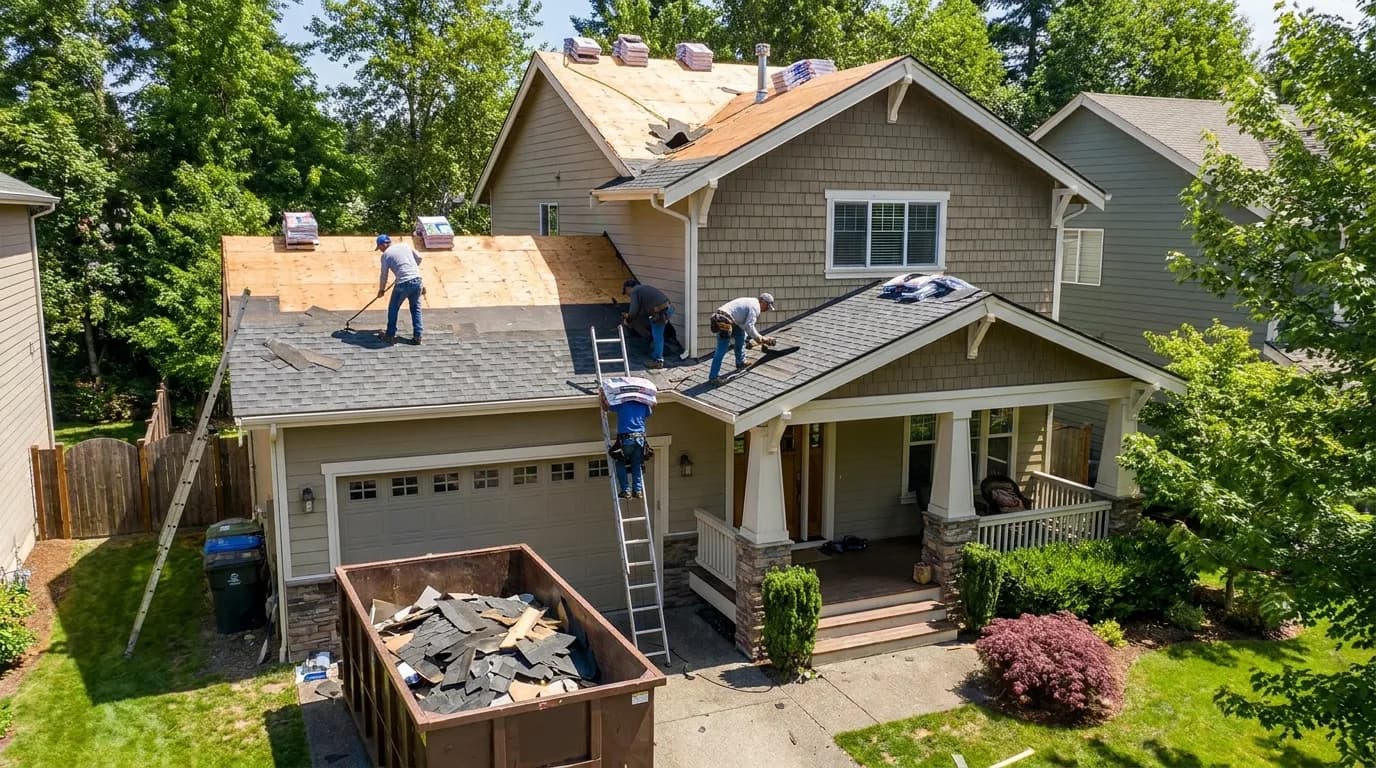
Day one starts early, often around 7 or 8 a.m., with setup: tarps over gardens and decks, protection over windows, the bin positioned and ladders secured. Roof tear-off follows immediately. The crew strips old shingles, underlayment and flashing with shovels and forks, dropping the debris straight into the bin. On an average two-storey this takes most of the morning and is the loudest part of the job.
With the deck exposed, the crew inspects it. Soft spots, rot around old leaks and delaminated sheets are marked and replaced, and loose sheathing is renailed. This is the stage where surprises show up, particularly on older homes in Big Springs, Summerhill or Thorburn that have had decades of ice dams and a hail claim or two. A fair quote states the per-sheet price for decking in advance so there is no negotiation on the roof.
The rest of day one is dry-in: ice-and-water shield at the eaves, in the valleys and around penetrations, then synthetic underlayment over the remaining deck, then drip edge. The goal is that by the end of the day the roof is watertight even if the shingles are not on yet. A crew should never leave a bare deck open overnight in Alberta, where an evening storm can arrive with an hour's notice.
Day two: shingles, flashing, ventilation and cleanup
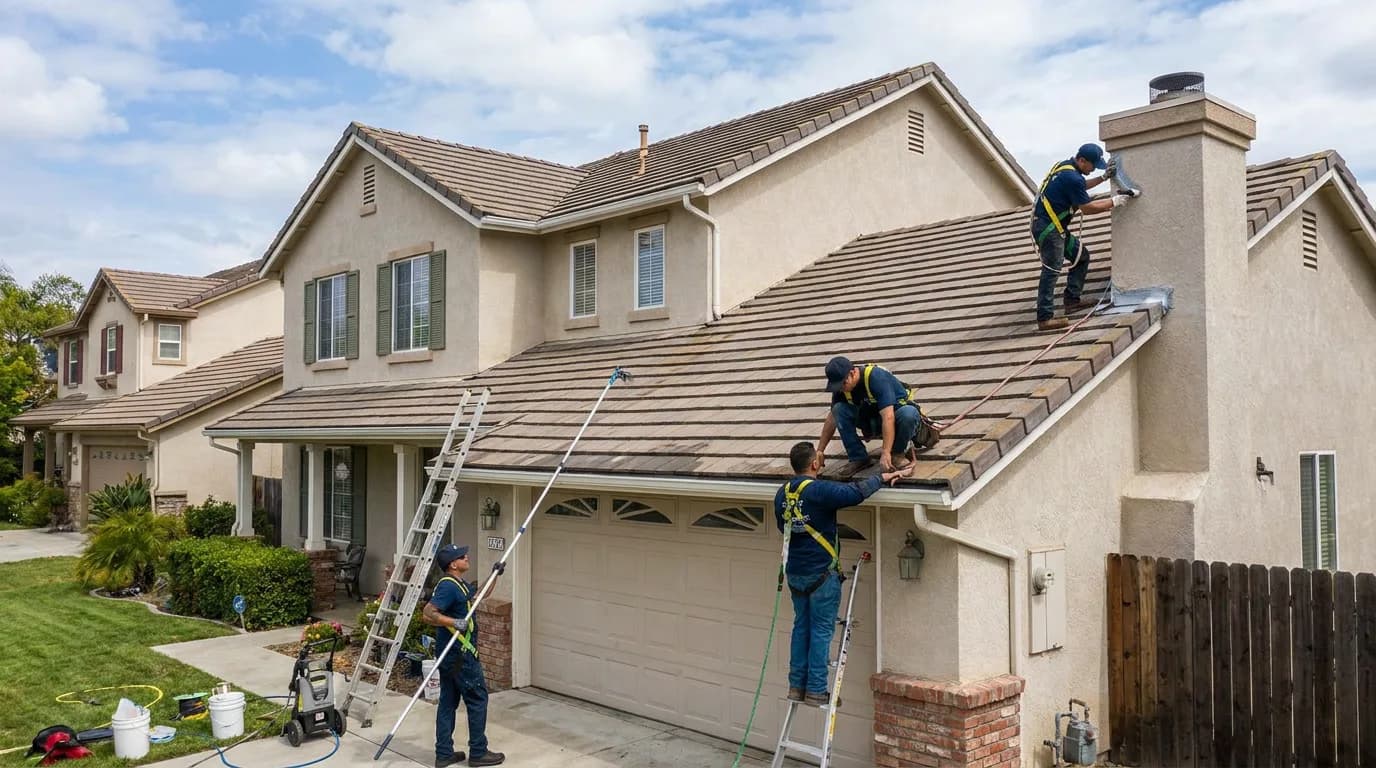
Day two is shingling. Starter strip goes on at the eaves and rakes, then the field shingles run up each slope in courses, nailed to the manufacturer's pattern. Valleys are woven or cut and metal-lined depending on the system. As the crew reaches walls, chimneys, skylights and vents, the new step flashing, counter flashing and pipe boots go in, integrated into the shingle courses rather than surface-sealed on top of them.
Ventilation is handled near the end of the field work. Old turtle vents or a ridge vent are replaced or added to meet the commonly cited 1:300 ratio of net free vent area to attic floor space, or 1:150 without a vapour barrier, with roughly half at the soffits for intake and half at or near the ridge for exhaust. Then the ridge caps go on, and the roof is complete.
Cleanup takes the last hour or two. The crew pulls tarps, blows off the roof and eavestroughs, sweeps the yard and driveway with a rolling magnet for nails, and loads the bin for pickup. A walkthrough with you follows, either on the roof or with photos, and you should receive the warranty paperwork within a few days. On a bungalow, all of this can compress into a single long day; on a large or complex roof, shingling itself may take two days.
What can stretch the timeline
Roof size is the obvious factor, but pitch and complexity matter just as much. A steep roof means harnesses, roof jacks and slower movement. Every dormer, valley, chimney and skylight adds flashing work that cannot be rushed. A cut-up roof with 30 squares can take longer than a simple roof with 40.
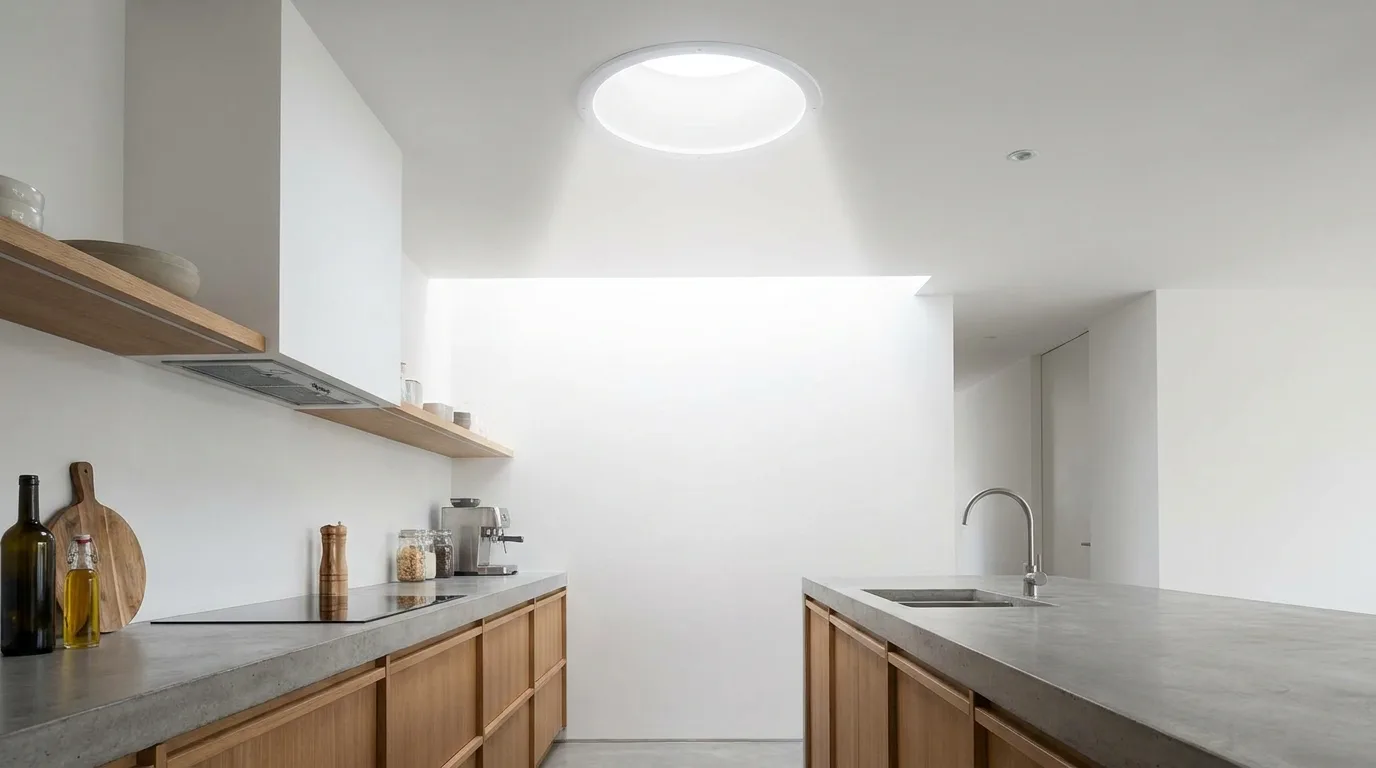
Decking is the common surprise. If the crew finds a dozen rotten sheets rather than two, that is an extra half day of carpentry. If you are replacing a skylight at the same time, add a couple of hours for the curb and flashing; our skylight replacement service is usually scheduled into the same job. Access adds time too: a narrow lot, no room for a bin or a long carry from the street all slow the work.
Crew size is the other variable. A four-person crew and a seven-person crew will finish the same roof on very different schedules. When you compare quotes, ask how many people will be on site and how many days they expect. A contractor who says "one day" for a large two-storey is either bringing a big crew or planning to cut corners on the details.
Alberta weather: wind, rain, hail and cold-weather installs
Weather is the main reason a roofing date moves in Alberta. Rain stops the work because a wet deck cannot be shingled and wet underlayment is dangerous to walk on. High wind is the more common problem here. Chinook gusts can lift and tear underlayment and make handling shingles on a two-storey roof unsafe, so crews will pause or postpone when sustained winds pick up. Summer thunderstorms with hail are the third issue, and a good crew watches the radar and dries the roof in before a cell arrives.
Cold is the seasonal factor. Asphalt shingles need warmth to activate the self-seal strip, and they become brittle and can crack when nailed below about minus 5 to minus 10 degrees. Winter installs are possible in Alberta with hand-sealing, careful handling and the right products, but they take longer and depend on a mild spell. Our article on roof replacement in winter in Alberta covers what changes.
The practical takeaway is to expect a date, not a promise. If the forecast turns, a good contractor will call you, secure the roof if they have already started, and pick the job up on the next clear day. A partially finished but dried-in roof is perfectly safe to leave for a day or two; a stripped deck under a tarp in a windstorm is not, which is why tear-off is planned around the weather.
How to prepare your home and family
A little preparation makes install days smoother and protects your belongings. The job is loud, the house vibrates with every hammer strike, and there will be a bin, a trailer and a lot of foot traffic on the driveway. Here is what to do the evening before.
- Move cars out of the driveway and off the street directly in front of the house so the bin and material delivery have room.
- Take down or secure fragile items on walls and shelves, especially on upper floors, since the vibration can shake them loose.
- Clear the area around the house: patio furniture, barbecues, planters and anything you do not want under a tarp.
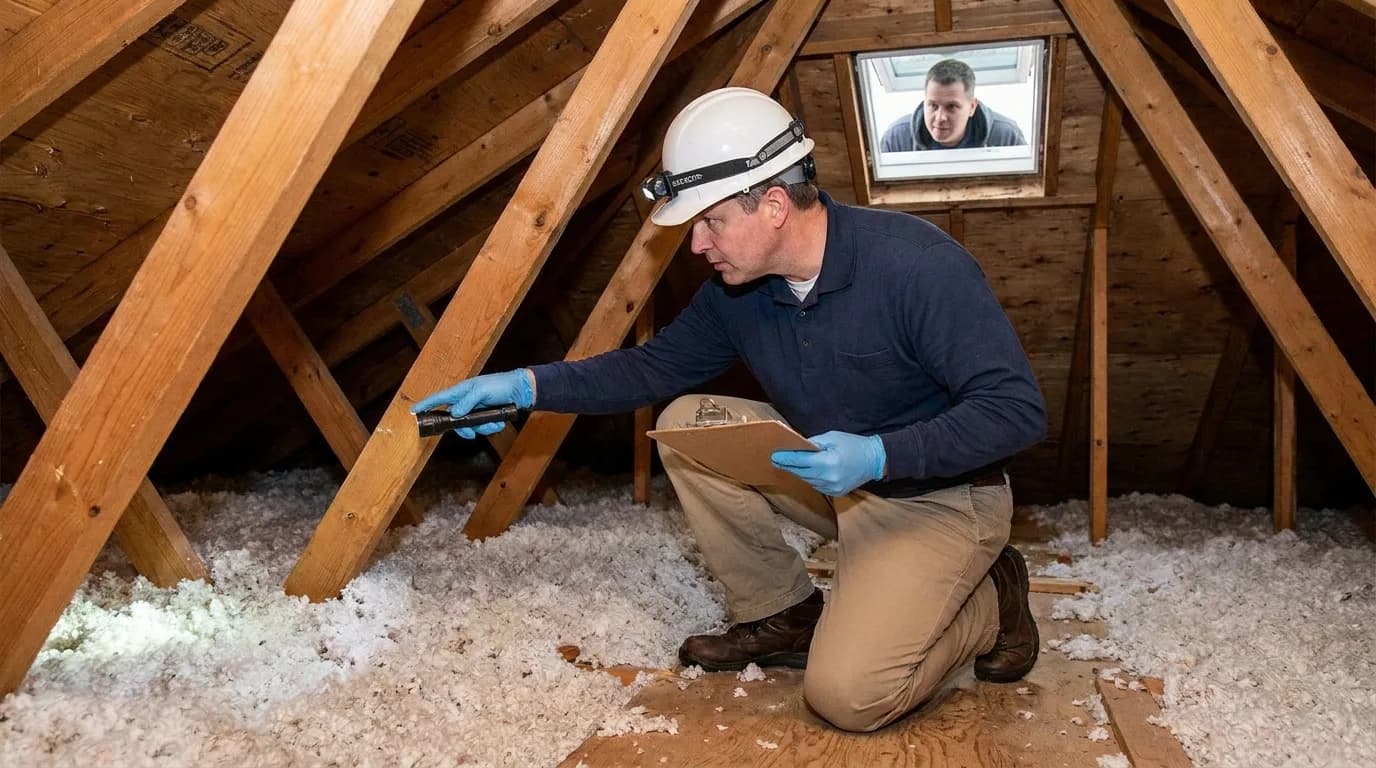
- Cover items in the attic with old sheets, because tear-off knocks dust and debris through the deck boards.
- Keep pets inside or away from the house; the noise stresses them and the yard is unsafe until the nail sweep is done.
- Tell your neighbours the dates so they can move vehicles and know to expect the noise.
- Mark sprinkler heads, outdoor lights and anything hidden in the grass near the house.
- Plan for the kids, and for anyone who works from home, to be elsewhere if the noise will be a problem.
You do not need to be home during the work, but be reachable by phone in case the crew finds something in the decking that changes the plan. Make sure they know how to reach you and how to get power for their tools, usually an exterior outlet.
After the job: walkthrough, warranty paperwork and the final invoice
When the shingles are on and the yard is clean, walk the property with the crew lead. Look at the flashing details around chimneys and walls from the ground, check the eavestroughs are clear and reattached, and ask for photos of the finished roof, the valleys and any decking that was replaced. If eavestroughs were part of the job, our eavestrough service page explains what to look for.
Within a few days you should receive the final itemised invoice, the manufacturer warranty registration and the contractor's written workmanship guarantee. Keep all three together with the before-and-after photos. If the roof was replaced on an insurance claim, the invoice and photos are also what the insurer needs to release any recoverable depreciation. Our guide to roof warranties explained covers what each document actually protects.
Apex Roofing Airdrie uses an in-house local crew, provides free on-site estimates with itemised written quotes, and backs every replacement with a written workmanship guarantee on top of the manufacturer warranty. If you want a realistic start date and an honest timeline for your roof, the first step is a free estimate, usually booked within the same week.
Written by the Apex Roofing Airdrie crew
Practical guidance from the local roofers who inspect, repair and replace roofs across Airdrie and Rocky View County every season. We review our guides against current Alberta practice and update them when materials, code or insurer behaviour changes. About our team.