In this guide
- 01What Are Solar Shingles? How They Differ From Rack-Mounted Panels
- 02How Solar Shingles Work: The Building-Integrated Photovoltaic Concept
- 03Solar Shingles vs Solar Panels: Which Fits an Alberta Roof
- 04Solar Shingle Brands and Products Actually Available in Canada
- 05Solar Shingle Cost in Canada: A Rough 2026 Alberta Market Guide
- 06Output and Efficiency: What Solar Shingles Generate Through an Alberta Winter
- 07Durability in Hailstorm Alley: Impact, Chinook Wind and Freeze-Thaw
- 08Installation and Timing: Pairing the Job With a Roof Replacement
- 09Who Installs a Solar Shingle Roof: Roofer vs Licensed Electrician
- 10Warranties and Insurance Once Generation Is Part of the Roof
- 11Permits and Microgeneration: What to Confirm With the City and Your Utility
- 12Pros, Cons and the Bottom Line for an Airdrie or Calgary Home
What Are Solar Shingles? How They Differ From Rack-Mounted Panels
Solar shingles are individual roofing shingles or tiles with photovoltaic cells built directly into them, so each shingle both sheds water like a conventional shingle and generates electricity like a solar panel. They are also called solar roof tiles or, in the industry, building-integrated photovoltaics, because the solar generation is integrated into the building envelope itself rather than bolted on top of it.
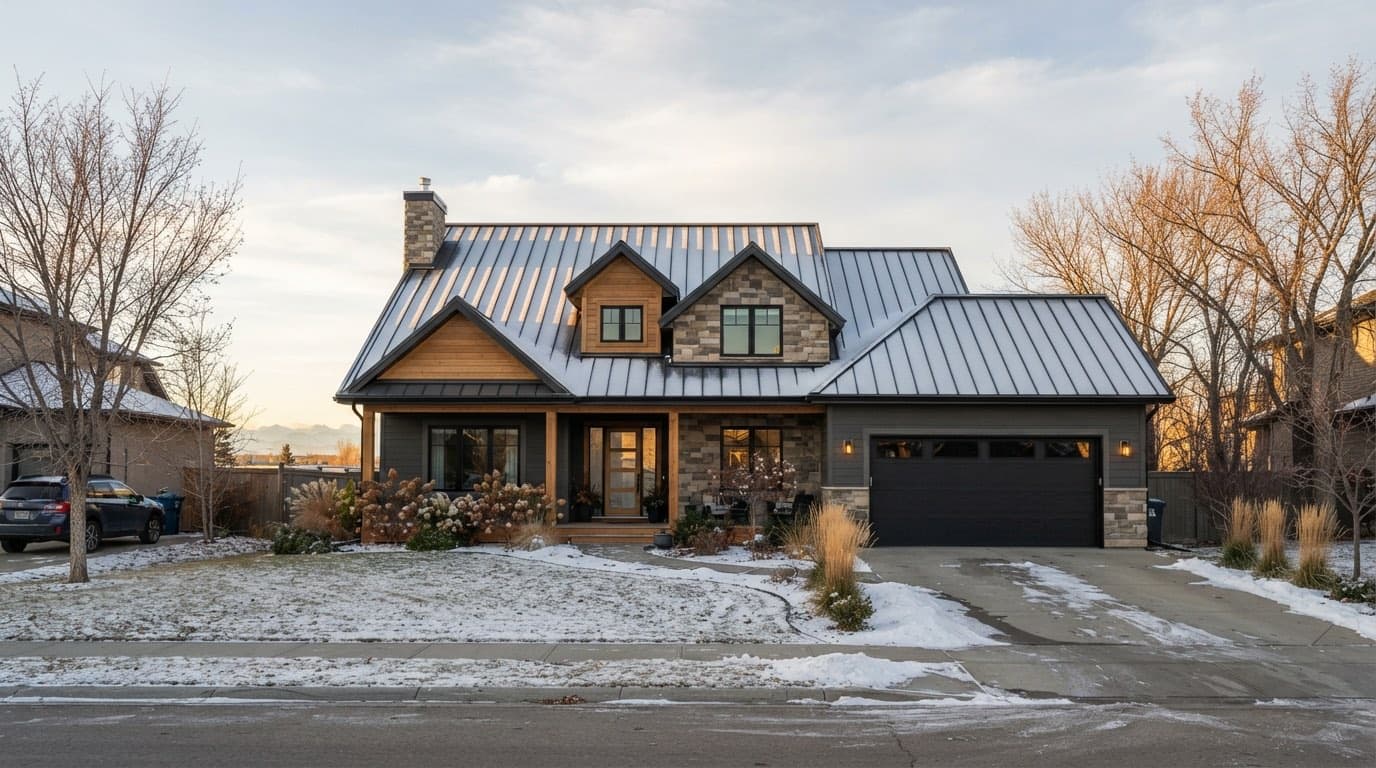
A conventional solar installation is a separate system: asphalt shingles or another roofing material underneath, and rack-mounted solar panels raised a few centimetres above the surface on metal rails. Solar shingles remove that second layer entirely. There is no rack, no raised panel edge for wind to catch, and from the street the roof can look close to a normal shingle roof rather than an obvious solar installation.
That single difference, generation built into the weatherproofing layer instead of sitting on top of it, drives almost every tradeoff in this guide: cost, output, installation complexity, warranty coordination and how a hail claim gets handled. Solar roofing Alberta options remain narrower than the marketing suggests, and only a handful of solar shingle products are actually sold and supported in this province today.
How Solar Shingles Work: The Building-Integrated Photovoltaic Concept
Each solar shingle contains a small photovoltaic laminate, either thin-film or monocrystalline silicon depending on the product, sealed under a weatherproof surface that is nailed or clipped down in overlapping rows exactly like a conventional shingle course. Wiring runs beneath the shingles between courses, connecting into a string that feeds a central inverter, the same way a rack-mounted array would.
The inverter converts the direct current the shingles produce into the alternating current a home's electrical panel uses, and in a grid-tied system, any surplus power flows back to the utility under Alberta's microgeneration rules. Non-photovoltaic shingles fill in areas that get too much shade, face the wrong direction, or simply do not need generation capacity, since a full roof of active shingles usually produces more power than a typical Alberta home needs.
Because every shingle in the active field is both structural and electrical, a damaged one is not a simple patch-in-a-spare-tile fix the way a cracked rack-mounted panel sometimes is. Replacing a shingle usually means shutting down that string, working with a qualified electrician, and sourcing a replacement from a product line the manufacturer still supports, which circles back to the availability question later in this guide.
Solar Shingles vs Solar Panels: Which Fits an Alberta Roof
The solar shingles vs panels question comes up early with almost every homeowner who looks into rooftop solar, and for most Alberta homes the honest answer favours rack-mounted panels. Panels are a mature, widely available technology with dozens of installers across Calgary and Airdrie, established output figures, and a straightforward repair path: a damaged panel unbolts and a new one bolts on.
Solar shingles win on appearance, particularly on a highly visible street-facing slope where a homeowner wants generation without the look of an obvious solar array, and on a new build or full reroof where installing shingles and generation capacity in one pass avoids two separate projects. They lose on cost per watt, on repair simplicity, and on the number of installers who can actually service them in Alberta.
Our companion guide to solar panels and your roof in Alberta covers the rack-mounted side of this decision in detail, including roof age, weight and hail exposure for a conventional array. For most homeowners chasing the lowest cost per kilowatt of generation, that remains the more practical starting point; solar shingles are worth considering mainly when the roof needs replacing anyway and visual integration matters enough to pay a premium for it.
Solar Shingle Brands and Products Actually Available in Canada
Marketing content about solar shingles is dominated by a handful of American brand names, and it is worth being clear about which of them a Canadian homeowner can actually buy and have installed. Tesla's Solar Roof, GAF's Timberline Solar, and CertainTeed's Solstice system are the three names that come up most often in searches, but availability and installer networks for each vary significantly north of the border.
The solar shingles Canada market is far smaller than its US counterpart. Tesla's Solar Roof has had a limited and inconsistent Canadian rollout, with availability shifting over time and installer coverage concentrated in a small number of regions; confirm current availability and installer coverage directly with the manufacturer before assuming a product sold in the US is sold here. CertainTeed, a manufacturer with an established Canadian distribution network for conventional shingles, has broader potential reach through its existing dealer base, though solar shingle installers specifically remain a small subset of that network.
Smaller and newer entrants, sometimes marketed under names like Luma or similar building-integrated systems, surface periodically in the Canadian market as well. Given how quickly product availability changes in this category, the practical first step for any Alberta homeowner is confirming directly with a manufacturer or dealer which products they currently sell and warranty in this province, rather than relying on a product's US marketing page. Our pillar guide to the best shingles for Alberta's climate covers the conventional asphalt shingle brands reliably stocked here, for comparison.
Solar Shingle Cost in Canada: A Rough 2026 Alberta Market Guide
Solar shingles cost significantly more than a conventional reroof plus a separate rack-mounted solar system, and the premium is one of the biggest reasons adoption remains limited in Alberta. As a rough 2026 Alberta market guide, expect a full solar shingle roof to run well into five figures for an average home, with the exact number driven by roof size, the proportion of active versus inactive shingles, and which product and installer you use; treat every figure in this section as a starting point for a conversation, not a quote.
| Option (rough 2026 Alberta market guide) | Typical installed cost | What drives the number |
|---|---|---|
| Conventional asphalt reroof | Use the range in our Canadian shingle price guide | Roof size, pitch, tear-off layers, waste disposal |
| Asphalt reroof plus a rack-mounted solar array | Reroof cost plus a separate quoted solar system | Array size in kilowatts, inverter, electrical work, interconnection |
| Full solar shingle roof | Commonly two to three times a comparable asphalt reroof plus panel array of similar capacity | Product availability, proportion of active versus inactive shingles, electrician time |
For context, a conventional asphalt reroof on the same home, covered in our Canadian roof shingle prices for 2026 guide, typically costs a fraction of a comparable solar shingle installation, and a rack-mounted solar array added afterward usually costs less again than the incremental premium solar shingles charge for equivalent generation capacity. The gap has narrowed as products have matured, but solar shingles remain a premium option rather than a cost-competitive one against panels.
Financing and incentive programs shift the math somewhat. Some Alberta and municipal programs have offered support for resilient roofing or renewable generation upgrades in the past; our guide to Calgary's resilient roofing rebate program covers one such example, though program availability and eligibility change from year to year and should always be confirmed directly with the current program administrator before you count on a rebate in your budget.
Output and Efficiency: What Solar Shingles Generate Through an Alberta Winter
Manufacturer output figures for a solar shingle roof are almost always generated for a sunnier US market, and applying them directly to an Alberta roof overstates real-world performance. Alberta's winter days are short, the sun sits low on the horizon for months at a time, and a roof with any significant snow cover, which describes most Alberta roofs from November through March, generates close to nothing until it clears.
Alberta's summers partly compensate, since long daylight hours and generally clear skies through much of the growing season push output well above winter levels, and cooler ambient temperatures than a hot southern climate actually help photovoltaic efficiency, since panels and shingles lose some efficiency as they heat up. The net effect is a strongly seasonal generation curve rather than the more even output a milder, sunnier climate produces.
Roof orientation, pitch and any shading from trees or neighbouring homes matter as much for a solar shingle roof as they do for rack-mounted panels, and a shallow-pitch roof common on many newer Airdrie builds sheds snow more slowly than a steep one, extending the winter output gap further. Our guide to roof types in Alberta covers how pitch and shape affect a roof's overall performance, solar generation included.
Durability in Hailstorm Alley: Impact, Chinook Wind and Freeze-Thaw
Airdrie sits in Alberta's Hailstorm Alley, and the region has seen genuinely large hail events, including the August 8, 2026 Crossfield-Airdrie hailstorm and the August 5, 2024 Calgary hailstorm, the costliest hail event in Canadian history at an estimated $2.8 to $3.25 billion insured according to the Insurance Bureau of Canada. Almost none of the marketing material for these products is written with that kind of hail exposure in mind, since most of it originates from milder US markets.
A solar shingle combines a photovoltaic laminate with a glass or polymer cover layer, and how that layer performs under a direct hail hit is a genuinely open question compared with the decades of real-world impact data available for Class 4 asphalt shingles. Ask any manufacturer or installer directly for their product's impact rating and hail test data before committing, and do not assume a solar shingle automatically matches the impact resistance of a purpose-built impact-resistant asphalt shingle.
Freeze-thaw cycling, rapid swings from well below freezing to above zero and back within a day or two, stresses the seals, adhesives and electrical connections between shingles more than a steady cold climate would. The same freeze-thaw action that opens hairline cracks in conventional roofing details can work at the joints between an active photovoltaic shingle and its neighbours, and at the flashing details around any roof penetration for wiring or an inverter mount, over years of repeated cycling.
Wind uplift is the other half of the Chinook question. Alberta Chinooks drive sustained gusts across a roof, and uplift pressure concentrates at the eaves, rakes and ridge, exactly where a solar shingle course also carries its wiring runs and flashing details. Ask an installer what wind rating the specific product carries, how the active shingles are fastened along those edges, and how the flashing around any conduit penetration is detailed, since a lifted edge on a solar shingle is both a water problem and an electrical one.
Installation and Timing: Pairing the Job With a Roof Replacement
A solar shingle roof almost always makes more sense as part of a full reroof than as a retrofit onto an existing roof, since the entire roof deck, underlayment and flashing details need to be set up correctly for the electrical wiring runs beneath the shingle courses. Trying to add solar shingle coverage to only part of an existing asphalt roof, leaving the rest in place, is rarely offered by installers for exactly that reason.
If your roof is already due for replacement, whether from age, a hail claim, or simply reaching the end of its service life, that is the natural point to evaluate a solar shingle roof alongside a conventional roof replacement, since the tear-off, deck inspection and underlayment work happen either way. Timing the decision around a scheduled reroof avoids paying for two separate tear-offs a few years apart.
Installation itself typically runs longer than a standard reroof because of the added electrical work: wiring each active shingle course, running conduit to the inverter location, and commissioning the system before it can be switched on. Expect an installer to walk through a realistic project timeline before work starts, including how weather, particularly an Alberta winter, might affect the schedule if the project runs late in the season.
Who Installs a Solar Shingle Roof: Roofer vs Licensed Electrician
Installing a solar shingle roof genuinely spans two trades, and it is worth understanding the honest division of labour before you sign a contract. A roofing contractor handles the parts of the job that are still fundamentally a roof: tearing off the old surface, inspecting and repairing the deck, installing underlayment and ice-and-water shield at the eaves and valleys, and detailing the flashing around chimneys, vents and any roof penetrations.
A licensed electrician, separately, has to run the wiring between shingle courses, connect the string to an inverter, tie the system into the home's electrical panel, and commission the system so it actually generates and, where applicable, exports power under Alberta's microgeneration rules. Neither trade alone is qualified to do the other's part of the job safely or to code.
In practice, this usually means either a single company that employs or subcontracts both trades directly, or two separate companies coordinating closely on one project, and it is worth asking upfront exactly how that coordination works, who is responsible for the workmanship warranty on the roofing side versus the electrical side, and who you call first if something goes wrong after installation.
Warranties and Insurance Once Generation Is Part of the Roof
A conventional roof carries a manufacturer's material warranty and, from a company like Apex Roofing Airdrie, a written workmanship guarantee on top of it. A solar shingle roof typically carries a separate warranty structure again, often a shorter, more limited warranty on the electrical generation performance layered on top of whatever warranty exists for the shingle as a weatherproofing product, and the two do not always line up cleanly if a problem shows up years into ownership.
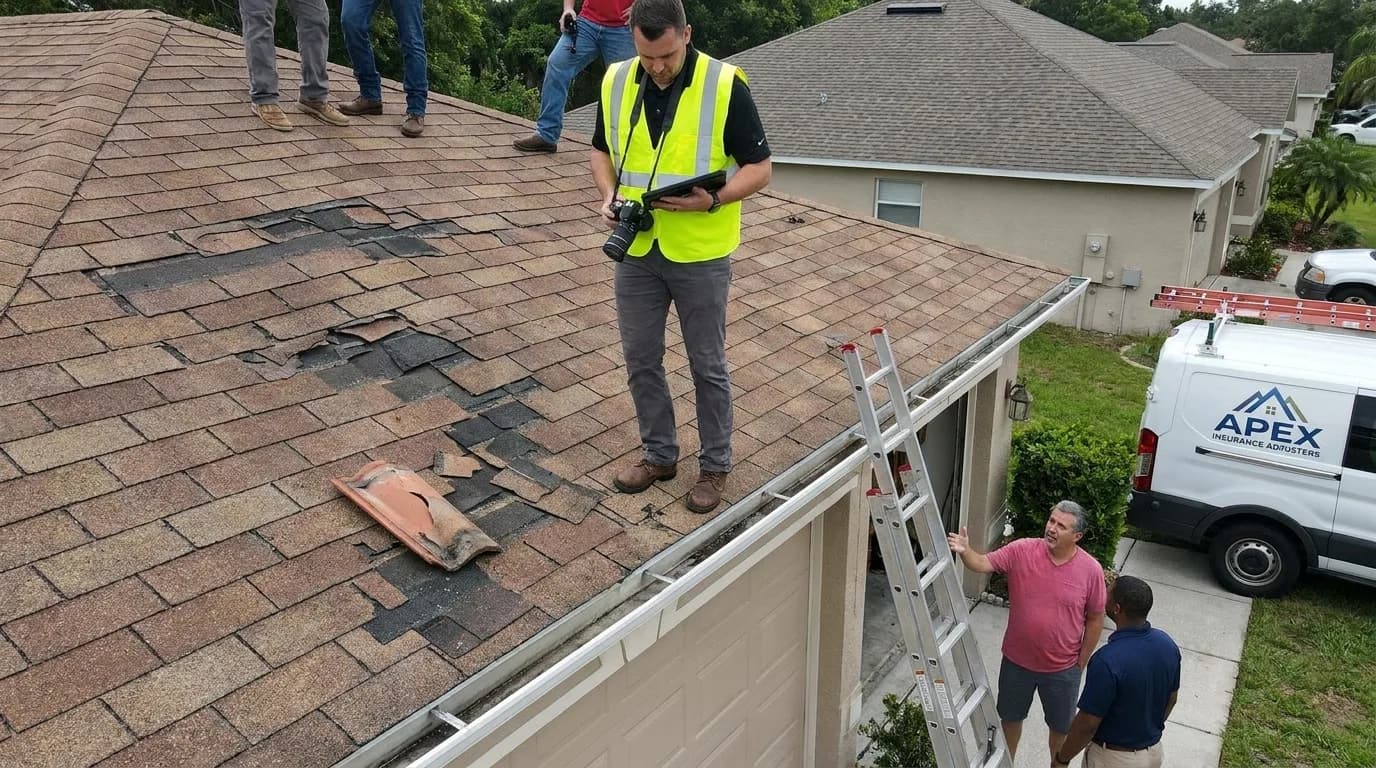
Insurance gets more complicated too. A hail or wind claim on a conventional roof is a roofing claim your insurer and adjuster understand well; documenting hail damage to a photovoltaic-integrated shingle, and getting an adjuster to correctly scope both the roofing and electrical-generation components of the loss, is a newer and less standardized process. If you already have a system installed, confirm with your insurer or broker exactly how a claim would be assessed and paid out before you need to file one, not after.
Our roof insurance claim service in Airdrie handles the documentation side of a standard hail or wind claim, and while solar-integrated roofing adds a layer most conventional claims do not have, the same principle applies: thorough photo documentation immediately after a storm, before any cleanup, gives you and your insurer the clearest picture of what actually happened.
Permits and Microgeneration: What to Confirm With the City and Your Utility
A solar shingle installation typically needs both a building permit for the roofing work and an electrical permit for the generation and grid-tie components, and in some cases a separate microgeneration application with your utility to legally export surplus power back to the grid. Requirements and processes vary by municipality and utility, so confirm the specific permit and application requirements with the City of Airdrie or your municipality, and with your utility, before signing a contract.
Alberta's microgeneration regulation governs how small-scale generation systems, solar shingle roofs and rack-mounted solar panels alike, connect to and interact with the grid, including how any surplus power you generate is credited. Rules and rates have changed over time and can change again, so confirm the current terms with your utility provider directly rather than relying on figures from an older article or a different jurisdiction.
A reputable installer will normally handle the permit applications and utility paperwork as part of the project, but it remains worth asking who is responsible for each step, what happens if an application is delayed, and whether the quoted price already includes permit and application fees or adds them separately.
Pros, Cons and the Bottom Line for an Airdrie or Calgary Home
A solar shingle roof suits a specific kind of homeowner: someone already planning a full reroof, who cares enough about visual integration to pay a real premium over rack-mounted panels, and who has confirmed a specific product and installer are genuinely available and supported in Alberta before committing. For most other homeowners chasing the lowest cost per watt of solar generation, a conventional roof paired with a separate rack-mounted array remains the more practical and better-supported path.
- Cost per watt: rack-mounted panels remain cheaper for the same generating capacity, so solar shingles carry a real premium you are paying largely for appearance.
- Availability: only a handful of solar shingle products are sold and warrantied in Alberta, against dozens of panel installers across Calgary and Airdrie.
- Repairs: a damaged panel unbolts and a new one bolts on; a damaged solar shingle usually means shutting down a string and sourcing a matching part from a line the manufacturer still supports.
- Appearance: solar shingles sit flush with the roof surface, which is the one category where they clearly beat a rack-mounted array.
- Hail data: decades of impact testing back Class 4 asphalt shingles in Hailstorm Alley conditions, while equivalent long-term data for solar shingle laminates is still thin.
- Timing: the economics only work when the roof is due for replacement anyway, since the tear-off, deck inspection and underlayment work happen either way.
The honest cons are real: a smaller pool of available products and qualified installers in Canada, a cost premium over comparable panel-based systems, output that drops sharply through an Alberta winter, and durability data for Hailstorm Alley conditions that is thinner than the decades of testing behind a standard impact-resistant asphalt shingle. A homeowner considering a solar shingle roof alongside more established alternatives, including a durable metal roof that pairs well with a separate rack-mounted solar array, should weigh all of these factors together rather than focusing on the appeal of an integrated look alone.
If you are planning a reroof and want an honest, no-pressure conversation about what actually fits your roof, your budget and Alberta's climate, whether that ends up being a solar shingle roof, a conventional asphalt reroof, or a metal roof with panels added later, a free on-site estimate from Apex Roofing Airdrie starts with an itemised written quote for the roofing work itself, with no obligation attached.
Written by the Apex Roofing Airdrie crew
Practical guidance from the local roofers who inspect, repair and replace roofs across Airdrie and Rocky View County every season. We review our guides against current Alberta practice and update them when materials, code or insurer behaviour changes. About our team.