In this guide
- 01What Are Fibreglass Shingles? How They Differ From Old Organic-Mat Shingles
- 02Asphalt Shingle Construction: Mat, Asphalt Coating and Ceramic Granules Explained
- 03Fibreglass Mat vs Organic Felt Mat: Weight, Water Absorption, Stability and Fire Rating
- 04SBS-Modified Fibreglass Shingles: What the Rubberized Asphalt Adds
- 05Fire Rating and Code Notes: Class A Fibreglass Mat vs Class C Organic Mat
- 06Cold Weather Performance: Fibreglass Shingles in Alberta's Chinook Freeze-Thaw Cycles
- 07Hail and Wind Resistance: Fibreglass Mat as the Base for Class 4 Impact-Resistant Shingles
- 08Lifespan and Durability: How Long Fibreglass Shingles Actually Last on an Airdrie Roof
- 09Cost: 2026 Alberta Price Ranges for Fibreglass Shingles and What Moves the Price
- 10Pros and Cons: Where Fibreglass Shingles Fall Short
- 11What to Buy: Reading a Fibreglass Shingle Spec Sheet and Comparing Brands
- 12Installation and Maintenance Notes Specific to Fibreglass Shingles
What Are Fibreglass Shingles? How They Differ From Old Organic-Mat Shingles
Fibreglass shingles are the standard asphalt shingle sold in Canada today, built around a fibreglass mat base instead of the felt paper mat used in older organic shingles. Organic shingles, sometimes still found on roofs installed decades ago, use a cellulose paper mat saturated with asphalt, which absorbs water, adds weight and burns more readily than fibreglass. Almost every shingle sold by IKO, Owens Corning, GAF and Malarkey through Alberta distributors today is a fibreglass shingle, and organic shingles have largely disappeared from new construction.
The switch happened for good reason: they are lighter, more dimensionally stable, and carry a better fire rating than organic shingles, covered in detail later in this guide. If you are weighing fiberglass vs organic shingles, as the American spelling has it, for a specific reroof, the short answer for almost any Alberta home built or reroofed in the last twenty years is that fibreglass is already what is on the roof, and any new shingle installed today will be fibreglass regardless of brand.
Asphalt Shingle Construction: Mat, Asphalt Coating and Ceramic Granules Explained
Every asphalt shingle, fibreglass or organic, is built the same way in principle: a base mat coated on both sides with asphalt, then covered with mineral or ceramic-coated granules on the weather-facing side for UV protection and colour. The mat is the structural backbone that holds the shingle together and gives it tear strength; the asphalt coating waterproofs it and holds the granules in place; the granules protect the asphalt from sun degradation and give the shingle its colour and fire resistance.
What changes between a fibreglass and an organic shingle is the mat material, and that single difference cascades into almost every performance characteristic covered in this guide: weight, water absorption, fire rating, dimensional stability and how the shingle behaves in Alberta's freeze-thaw cycles. Understanding asphalt shingle construction at this level is the key to reading any manufacturer spec sheet without relying on marketing language alone.
Fibreglass Mat vs Organic Felt Mat: Weight, Water Absorption, Stability and Fire Rating
A fibreglass shingle mat is a thin, non-woven glass fibre mat, typically far lighter per square than the felt paper mat used in organic shingles. Because glass fibre does not absorb water, the mat itself stays dimensionally stable through Alberta's wet spring melts and dry summer stretches, which reduces the curling and buckling that plagued organic shingles as their felt mat swelled and shrank with moisture over decades.
Organic felt mats, by contrast, soak up moisture readily, which made them heavier when wet, slower to dry, and prone to warping as the paper fibres expanded and contracted. That same water absorption made older organic shingles noticeably more flammable, which is the main reason building codes shifted toward requiring the higher fire rating that fibreglass mats make possible. The table below summarizes the practical differences.
| Property | Fibreglass mat | Organic felt mat |
|---|---|---|
| Weight | Lighter per square | Heavier per square |
| Water absorption | Minimal | High |
| Dimensional stability | Stable through wet and dry cycles | Prone to curling and buckling |
| Fire rating | Typically Class A | Typically Class C |
| Availability today | Standard on nearly all shingles sold | Largely discontinued |
SBS-Modified Fibreglass Shingles: What the Rubberized Asphalt Adds
SBS modified shingles take a standard fibreglass shingle and blend styrene-butadiene-styrene, a synthetic rubber polymer, into the asphalt coating itself rather than leaving it as plain asphalt. The rubber content gives the coating more flexibility across a wider temperature range and lets it absorb impact energy instead of cracking outright, which is why SBS-modified fibreglass shingles show up so often in Class 4 impact-resistant product lines.
For Alberta specifically, the practical benefit is twofold: better resistance to cracking under hail impact, and better flexibility during the rapid Chinook freeze-thaw swings that make plain asphalt brittle over time. Not every fibreglass shingle uses SBS modification, since it adds cost, so if cold-weather flexibility and hail performance matter for your roof, check the spec sheet for SBS or polymer-modified asphalt specifically rather than assuming every fibreglass shingle includes it.
Fire Rating and Code Notes: Class A Fibreglass Mat vs Class C Organic Mat
Most fibreglass shingles sold today carry a Class A fire rating, the highest rating under the ASTM E108 fire test standard, largely because the glass fibre mat itself does not burn. Organic shingles typically achieved only a Class C rating, the lowest of the three classes, because the felt mat's paper content contributed fuel to a fire rather than resisting it.
Building codes and insurers increasingly favour or require Class A roof coverings on new construction and major reroofs, which is part of why organic shingles have effectively disappeared from the Canadian market. Alberta's building code references these fire classifications, and specific requirements can vary by municipality and by the type of structure, so confirm current fire rating requirements with the City of Airdrie or your municipality before assuming any particular class is automatically compliant.
Cold Weather Performance: Fibreglass Shingles in Alberta's Chinook Freeze-Thaw Cycles
Cold weather shingles Canada wide have to handle a stress that milder climates rarely see: Chinook winds that can swing Airdrie's temperature from well below freezing to above zero within hours, sometimes multiple times in a single week through winter. Fibreglass mats handle this reasonably well because they do not absorb moisture that then freezes and expands inside the mat itself, unlike the old organic felt construction.
The asphalt coating is the more temperature-sensitive part of any fibreglass shingle, standard or SBS-modified. Cold asphalt becomes stiff and more prone to cracking if flexed, which is why installation guidelines call for careful handling in cold weather and why the self-sealing strip needs a period of sustained warmth to bond courses together. A shingle installed in late fall may sit with an unsealed strip through winter and only fully seal once spring brings consistent warm days. Late spring through early fall is the reliable window for an Alberta reroof, and a shingle installed outside it can be hand-sealed with dabs of roofing cement at each tab to hold it down through winter, which adds labour and is worth agreeing with the contractor in advance rather than discovering it after the crew has already started.
Hail and Wind Resistance: Fibreglass Mat as the Base for Class 4 Impact-Resistant Shingles
Every Class 4 impact-resistant shingle sold in Canada today is built on a fibreglass mat, since the mat's tear strength and dimensional stability are what allow the asphalt coating above it to absorb a hail strike without the shingle cracking through to the mat. Airdrie's exposure to Hailstorm Alley, including storms like the August 8, 2026 Crossfield-Airdrie hailstorm and the August 5, 2024 Calgary hailstorm, one of the costliest hail events in Canadian history, is exactly the kind of environment where mat quality and asphalt modification matter most.
Not all of them are Class 4, however; the base mat is necessary but not sufficient, and the asphalt formulation, coating thickness and lamination design all factor into the final impact rating. Wind resistance follows a similar pattern: a stable fibreglass mat holds a nailing strip's reinforcement more reliably than an organic mat did, which is part of why modern wind ratings on premium shingles are meaningfully higher than what organic-era shingles carried.
Some Alberta insurers offer a premium discount for a UL 2218 Class 4 roof, and the fibreglass mat is what makes that rating achievable in the first place since an organic mat could not support the reinforced construction Class 4 testing demands. Mat type itself is not what an adjuster looks at when assessing a hail claim, though; cracked shingles, bruised mat and exposed asphalt are what get documented regardless of whether the mat underneath is fibreglass or, on an older roof, still organic. Confirm with your insurer or broker whether your specific shingle qualifies for a Class 4 discount before assuming it does, and see our guide to Class 4 impact-resistant shingles in Alberta for how that discount math works.
Lifespan and Durability: How Long Fibreglass Shingles Actually Last on an Airdrie Roof
Fibreglass shingles sold today commonly carry warranty terms of 25 to 50 years or a limited lifetime warranty, but real-world lifespan in Alberta typically runs 20 to 30 years for a standard shingle, depending heavily on installation quality, attic ventilation and sun exposure. The fibreglass mat itself rarely fails outright; what ages a shingle is the asphalt coating drying out and the granules wearing away, which happens faster under direct summer sun and in a poorly ventilated attic that overheats the underside of the roof deck.
Premium SBS-modified versions generally hold their flexibility longer than standard fibreglass shingles because the rubber content resists the asphalt embrittlement that comes with age and UV exposure. That is one reason a shingle marketed as SBS-modified or polymer-modified, while more expensive up front, can be worth the premium on an Alberta roof that sees decades of freeze-thaw cycling.
Cost: 2026 Alberta Price Ranges for Fibreglass Shingles and What Moves the Price
As a rough 2026 Alberta market guide, standard fibreglass shingles run from roughly $90 to $130 per square (100 square feet) for material at the basic 3-tab end, up to $150 to $220 per square for premium laminate lines with SBS modification or Class 4 ratings from brands like IKO, Owens Corning or Malarkey. Fully installed, including tear-off, underlayment and flashing, expect $450 to $850 per square depending on the shingle tier and roof complexity.
For a typical Airdrie home at 25 to 35 squares, a full roof replacement in Airdrie using a standard fibreglass shingle roof lands well into five figures, and stepping up to an SBS-modified or Class 4 fibreglass shingle typically adds a modest percentage rather than doubling the cost. These are market guides, not quotes, and getting an itemised written estimate on your specific roof is the only way to know the real number.
Pros and Cons: Where Fibreglass Shingles Fall Short
Fibreglass shingles are the right choice for nearly every Alberta roof today, but they are not without limitations worth knowing before you buy.
- Pro: lighter weight than organic shingles, easier on the roof structure and easier to install.
- Pro: minimal water absorption, which limits curling and buckling over the shingle's life.
- Pro: Class A fire rating on nearly all of them, versus Class C on old organic shingles.
- Pro: the mat is the foundation for every Class 4 impact-resistant shingle on the market.
- Con: the asphalt coating, not the mat, is still the part that ages, cracks and loses granules over time.
- Con: standard, non-SBS versions can be more brittle in extreme cold than a modified formulation.
- Con: organic shingles, while largely discontinued, were historically considered more tear-resistant during installation in very hot weather.
- Con: a cracked fibreglass shingle can let water through even when the mat underneath is intact, so hail damage needs prompt inspection rather than a wait-and-see approach.
What to Buy: Reading a Fibreglass Shingle Spec Sheet and Comparing Brands
Almost any shingle you buy in Alberta today, from a basic 3-tab to a premium architectural product, will be a fibreglass shingle, so the real decision is which brand, tier and coating formulation suits your roof rather than fibreglass versus organic; not every fibreglass shingles vs asphalt shingles comparison online gets this right, since fibreglass is a type of asphalt shingle, not a separate category from it. Look for the fire rating, Class A is standard, the wind and impact class under UL 2218, and whether the asphalt coating is described as SBS-modified or polymer-modified if hail resistance and cold flexibility matter for your roof.
If you want brand-specific detail rather than the general construction covered here, our IKO vs GAF vs BP shingles comparison, our Malarkey shingles review covering Malarkey's SBS-modified Vista and Legacy lines, and our guide to Class 4 impact-resistant shingles in Alberta go into the specific products built on the fibreglass mat construction explained here. Our wider look at types of roof shingles places fibreglass laminate shingles alongside metal, cedar and other roofing materials, and our pillar guide to the best shingles for Alberta's climate ties this together into buying recommendations for Airdrie specifically.
Installation and Maintenance Notes Specific to Fibreglass Shingles
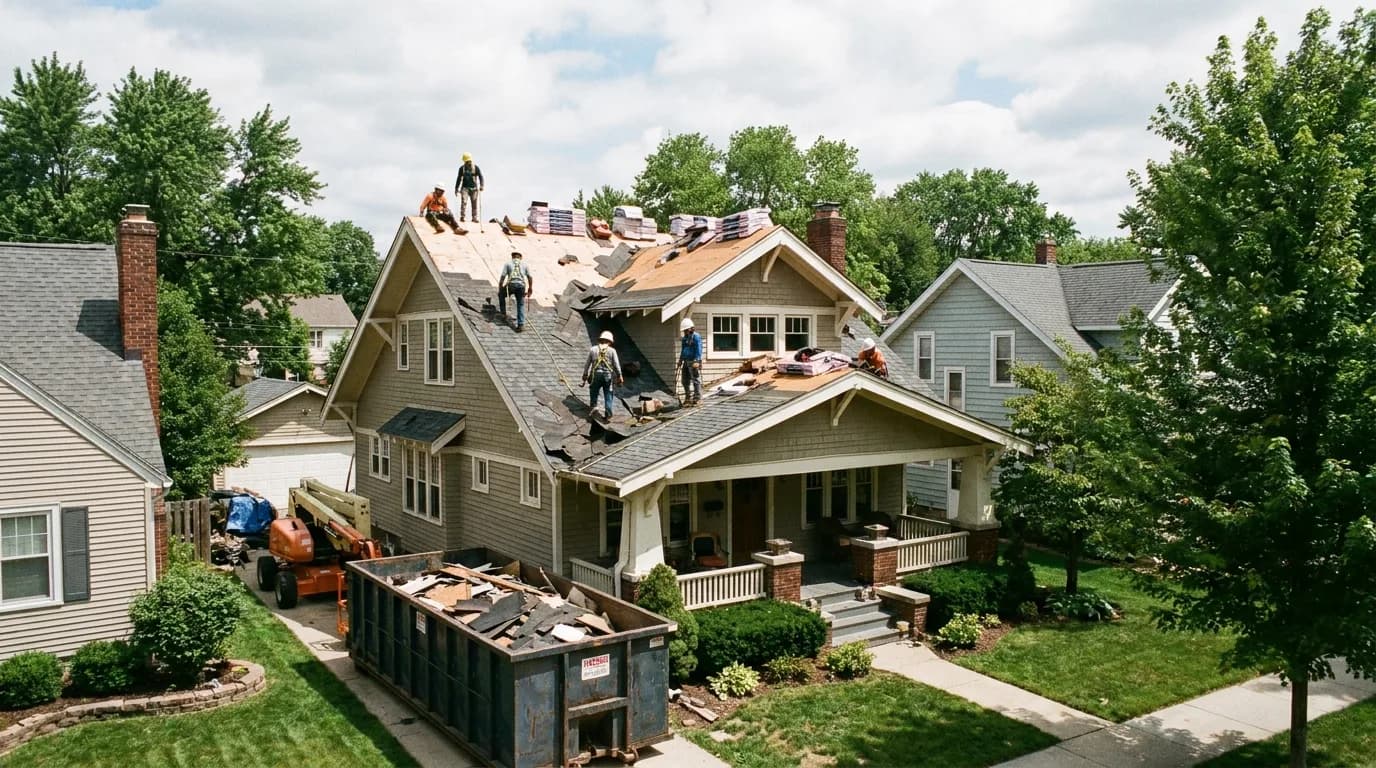
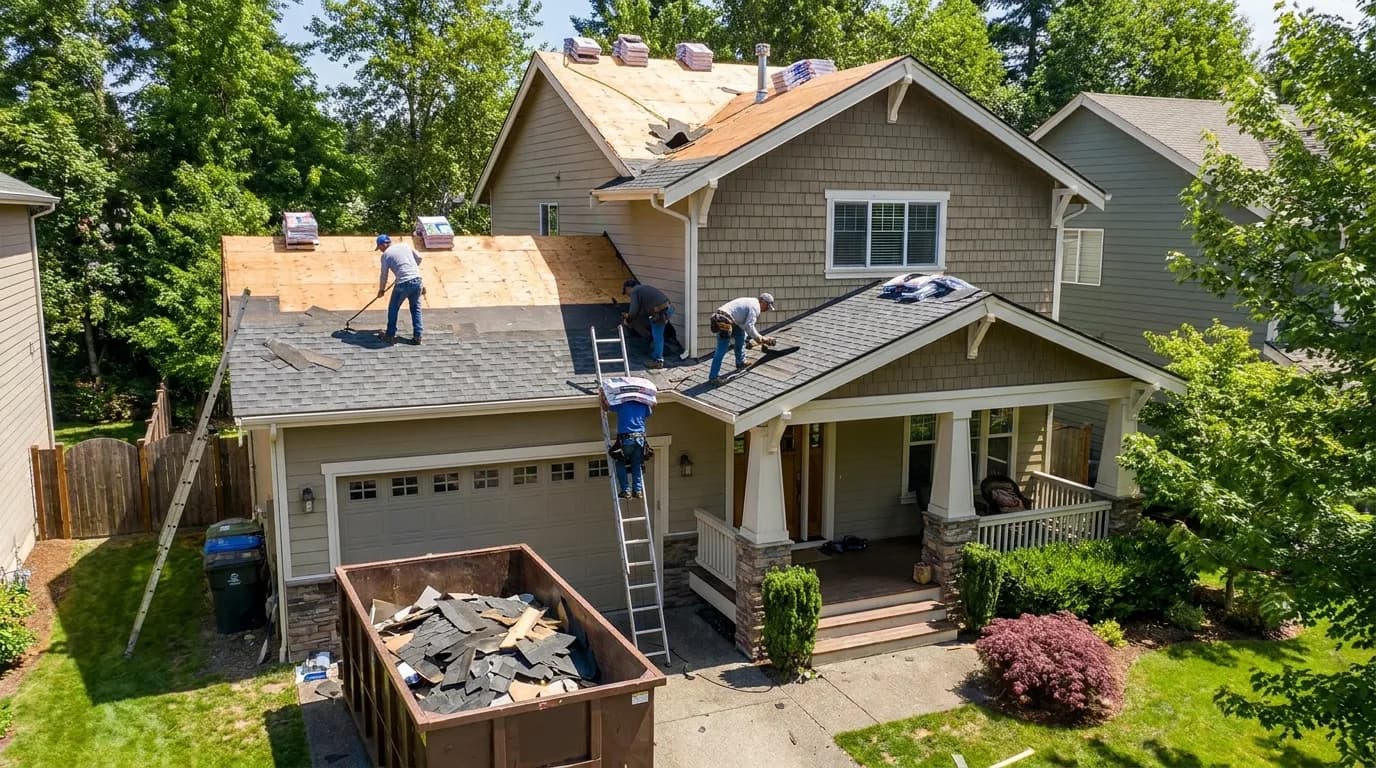
Fibreglass shingles install the same way as any laminate or 3-tab asphalt shingle: nailed through the manufacturer's marked nailing zone, with the self-sealing strip needing warm weather to bond courses together. Because the mat itself does not absorb water, they are somewhat more forgiving of a brief rain delay mid-install than organic shingles were, though standing water on an exposed deck is still a problem regardless of shingle type.
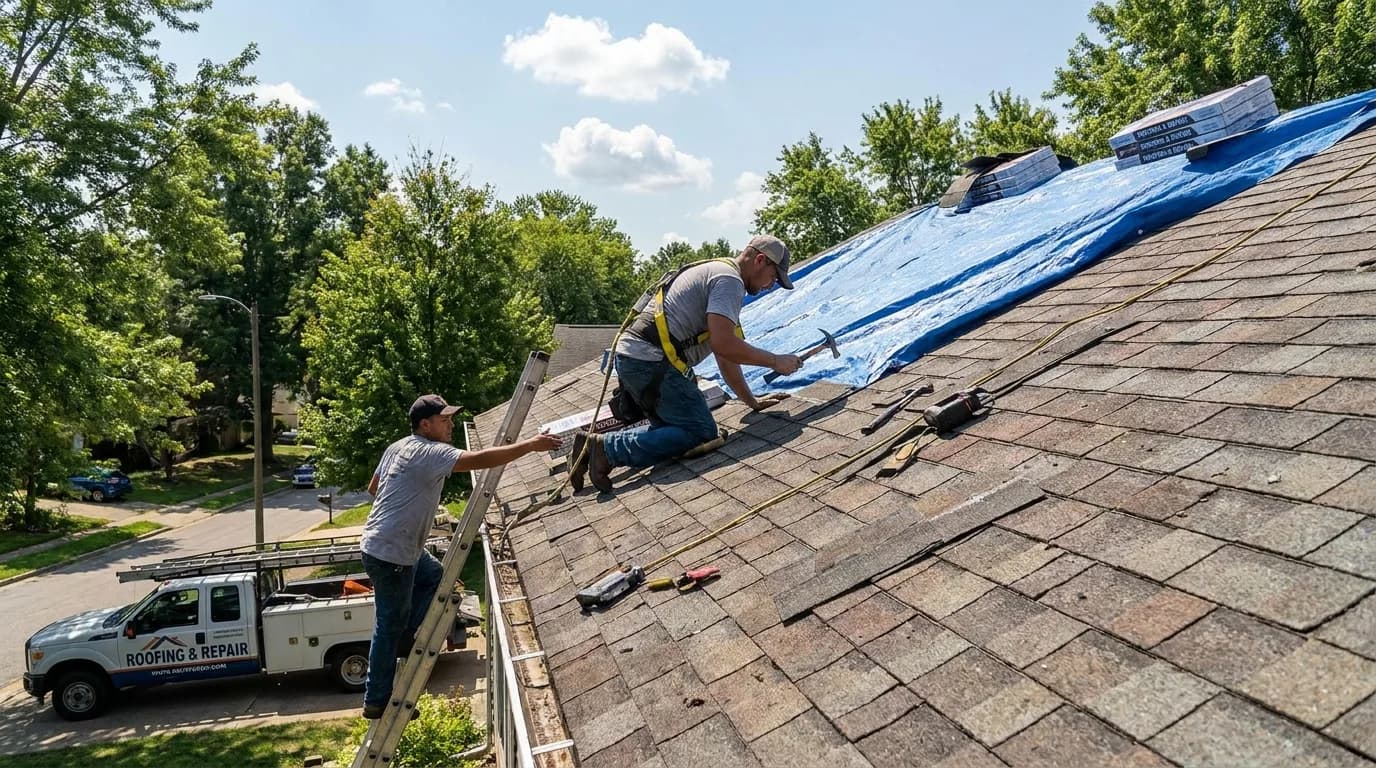
Maintenance is straightforward: keep granule buildup out of eavestroughs, watch for cracking or curling as the asphalt coating ages rather than mat failure, and have hail damage inspected promptly after a storm since a cracked fibreglass shingle can let water through even when the mat underneath is intact. If a section already shows cracking or granule loss, our roof repair service in Airdrie can assess whether individual shingles need replacing or the roof has reached the point where a full reroof makes sense, and if asphalt is not the direction you want at all, our metal roofing service in Airdrie covers the alternative in more detail.
Written by the Apex Roofing Airdrie crew
Practical guidance from the local roofers who inspect, repair and replace roofs across Airdrie and Rocky View County every season. We review our guides against current Alberta practice and update them when materials, code or insurer behaviour changes. About our team.