In this guide
- 01Does Home Insurance Cover Roof Leaks? The Short Answer
- 02Sudden and Accidental vs Wear and Tear: Where the Line Sits
- 03Which Roof Leak Causes Are Usually Covered in Alberta
- 04What Home Insurance Does Not Cover on a Roof
- 05Interior Water Damage vs the Roof Itself
- 06Roof Age and Insurance in Alberta: The 15 to 20 Year Question
- 07How to Document a Roof Leak for an Insurance Claim
- 08Should You File a Roof Leak Insurance Claim? The Deductible Decision
- 09How a Roofer's Report Strengthens Your Claim
- 10Get a Free Leak Inspection and a Report You Can Send Your Insurer
Does Home Insurance Cover Roof Leaks? The Short Answer
Does home insurance cover roof leaks? Sometimes, and the deciding factor is not the leak but what caused it. Standard Alberta home insurance is built around the idea of sudden and accidental loss. If a hailstorm, a windstorm, a falling branch or a heavy snow load damaged your roof and water got in as a result, you have a roof leak insurance claim worth looking at. If the roof simply got old and started letting water through, you almost certainly do not.
That distinction surprises a lot of homeowners, because from inside the house a leak is a leak. The stain on the ceiling looks the same whether a 40 mm hailstone cracked a shingle last Tuesday or the shingles have been slowly curling for five years. The insurer, though, will ask exactly that question and will send an adjuster or ask for a contractor's report to answer it.
This guide walks through where the line sits, which perils Alberta policies commonly cover and exclude, how interior damage is treated separately from the roof, how roof age affects your payout, and how to decide whether a claim is worth your deductible. It is general information, not legal or insurance advice; policy wordings vary, so confirm anything that matters with your insurer or broker. For the full claim process from first call to payment, our pillar guide to hail damage roof insurance claims in Alberta is the companion piece.
Sudden and Accidental vs Wear and Tear: Where the Line Sits
Nearly every home policy sold in Canada contains a wear and tear exclusion. The wording differs, but the idea is the same: insurance is there for unexpected events, not for the predictable cost of things wearing out. A roof is a wearing part of a house. Shingles lose granules, dry out, curl and crack over 20 to 30 years, and your insurer expects you to replace them before they fail, the same way you would replace a furnace or a hot water tank.
Sudden and accidental damage is the opposite. It is a specific event on a specific date that damaged an otherwise serviceable roof. Hail on August 8, wind on a Chinook night in January, a spruce branch through the deck in a spring storm. The damage can be traced to the event, and the leak followed from it.
The grey zone is where most disputes happen. Common examples in Airdrie:
- An old roof hit by hail: the hail is covered, but the insurer may argue that a 22-year-old shingle would have leaked anyway and pay only actual cash value, or pay for the hail damage while excluding pre-existing wear.
- Wind lifts shingles whose seal strips had already failed: the wind is the event, but if the adjuster finds the adhesive had degraded from age, the claim can be reduced or denied as wear and tear.
- A slow leak discovered months later: if water has been getting in for a season, the insurer may treat it as gradual seepage, which many policies exclude, rather than sudden damage.
- Flashing that separated over years of freeze-thaw: usually classed as deterioration, not an event, even though the leak appeared suddenly.
- A leak after a storm on a roof with a known problem: if you had a contractor's note recommending repair two years ago and did nothing, the insurer may cite lack of maintenance.
The practical takeaway is that the strength of your claim depends on being able to point to a date and an event, and on the roof having been in reasonable condition before it. That is why timing, photographs and a professional assessment matter so much.
Which Roof Leak Causes Are Usually Covered in Alberta
Most Alberta homeowners carry a comprehensive or all-perils policy, which covers any cause of loss that is not specifically excluded. Some carry broad or named-perils policies that list what is covered. Either way, the perils below are covered on the great majority of policies, subject to the deductible and the roof-age rules discussed later.
| Cause of roof leak | Typically covered? | Notes for Alberta policies |
|---|---|---|
| Hail | Yes | The most common roof claim in Hailstorm Alley; often subject to a separate hail deductible |
| Wind (including Chinook gusts) | Yes | Lifted, creased or torn shingles; insurer checks that seal strips were intact before the storm |
| Falling objects (trees, branches, debris) | Yes | Includes damage from a neighbour's tree in most wordings |
| Weight of ice and snow | Usually | Covered on many policies for structural damage; check wording on whether resulting leaks are included |
| Ice damming | Varies | Some policies cover resulting water damage, others exclude it as gradual or as a maintenance issue; check your policy wording |
| Vandalism or accidental damage by a third party | Usually | For example a satellite installer or another trade damaging the roof |
| Fire, lightning, explosion | Yes | Rare as roof leak causes but always covered |
| Wear, age, deterioration | No | Standard exclusion on all policies |
| Poor installation or faulty workmanship | No | Excluded; pursue the contractor's warranty instead |
| Rot, mould, insects, rodents | No | Excluded as gradual or as maintenance |
| Flood, surface water, sewer backup | Separate endorsement | Not roof-related but often confused with water damage coverage |
Ice damming deserves its own note because it is the most common winter leak in Airdrie and the most inconsistent in coverage. Some insurers treat water entering the home from an ice dam as sudden water damage and pay for the interior, while excluding the roof because ice dams are viewed as a ventilation and insulation problem. Others exclude ice dam damage entirely unless an endorsement is added. Read the water damage section of your policy or ask your broker directly, and read our guide on how to prevent ice dams in Airdrie so you are not relying on coverage that may not exist.
What Home Insurance Does Not Cover on a Roof
The exclusions matter as much as the coverage, because they are where claims get denied. Beyond the wear and tear exclusion, watch for these in your policy wording.
Gradual seepage or repeated leakage is excluded on most policies. If water has been finding its way in over weeks or months, even from an originally covered cause, the insurer can argue that the ongoing damage was preventable once the leak was discoverable. This is why acting quickly on a stain matters.
Lack of maintenance is a related exclusion. Blocked eavestroughs that caused water to back up under the shingles, moss that lifted the tabs, a cracked pipe boot that had clearly been leaking for years: all of these are maintenance items, and an adjuster will look for them.
Faulty workmanship and defective materials are excluded. If your roof was installed badly and leaks as a result, the claim belongs with the contractor's workmanship guarantee or the shingle manufacturer's warranty, not your insurer. Our post on roof warranties explained covers what those actually promise.
Cosmetic damage exclusions are increasingly common, especially on metal roofing and siding. If hail dented a metal roof without breaking the surface, some policies pay nothing. And some insurers now apply matching limitations, meaning they will pay to replace the damaged slope but not the undamaged slopes even if the shingles no longer match.
Finally, most policies exclude damage you cause by neglecting to protect the property after a loss. If a storm opens a hole and you leave it uncovered for a month, the additional water damage may be on you. Emergency tarping is cheap by comparison, and insurers generally reimburse reasonable mitigation costs. Our emergency roof repair page explains what that involves.
Interior Water Damage vs the Roof Itself
A roof leak insurance claim usually has two parts, and they are handled differently. The first part is the roof: the shingles, underlayment, decking and flashing that the event damaged. The second is everything the water touched on its way down: attic insulation, drywall, paint, flooring, cabinets and belongings.
Interior water damage from a covered event is generally the easier part of the claim. If hail cracked a shingle and water stained the ceiling below, the insurer pays to dry, repair and repaint the ceiling and replace any wet insulation, less the deductible. Damage to contents, such as a soaked mattress or a ruined laptop, falls under the contents portion of the policy.
The roof portion is where the wear and tear question gets applied. The insurer pays to repair the specific damage the event caused. If that is a handful of cracked shingles, expect a repair, not a new roof. If the hail count in the adjuster's test square meets the insurer's threshold, expect a slope or full replacement. If the roof was already at the end of its life, expect the payout to be reduced to actual cash value or, in some cases, the roof portion to be denied while the interior is still paid.
One odd but common outcome: the insurer pays $4,000 for interior repairs from a leak but only $600 for the roof repair itself, because the covered damage to the roof was small. That is not a mistake. It is the policy working as written, and it is a reason to have your own roof repair estimate in hand so you can see whether the roof figure is fair.
Roof Age and Insurance in Alberta: The 15 to 20 Year Question
Roof age has become one of the most important underwriting factors on Alberta home insurance, largely because of the hail losses of the last decade. Insurers in Hailstorm Alley have paid out billions for roofs that were already old when the storm hit, and they have responded with roof-age rules.
The rules differ by company, but the patterns are consistent. Many insurers now ask for the roof's age at every renewal, and some request proof such as an invoice or a dated photo. Once a roof passes about 15 years, several insurers switch the roof from replacement cost to actual cash value settlement, which means depreciation is deducted from any payout. Past 20 years, some will decline to write a new policy on the home, or exclude roof coverage entirely, until the roof is replaced. A few apply a sliding depreciation schedule tied to the shingle type, so a 3-tab roof loses value faster than an architectural or Class 4 roof.
In dollar terms, the difference is large. On a $14,000 replacement of a 20-year-old architectural roof with an assumed 25-year life, a straight-line ACV calculation might pay around $2,800 before the deductible. A replacement-cost policy would pay the full $14,000, usually as ACV first and the balance (the recoverable depreciation) once the work is complete. Our guide to ACV vs RCV on a roof insurance claim works through the arithmetic with real examples.
Practical steps: know your roof's age and keep the paperwork, tell your broker when you replace it (premiums often drop), and if you install Class 4 impact-resistant shingles, send the product documentation, because many Alberta insurers offer a discount and treat a Class 4 roof more favourably at claim time. If your roof is 15 years or older and you are unsure of its condition, a free inspection with a written report gives you something to show your insurer before a storm rather than after.
How to Document a Roof Leak for an Insurance Claim
Because the cause of the leak decides the claim, documentation is where claims are won or lost. Start the moment you notice water and keep going until the file closes.
- Photograph the interior damage immediately: the stain, the drip, the wet insulation, any damaged belongings. Take wide shots that show the location and close-ups that show the extent.
- Note the date and what the weather did: if a storm came through, write down the date and time and screenshot the Environment Canada warning or a local news report. Dented soft metal and hail on the lawn are worth photographing too.
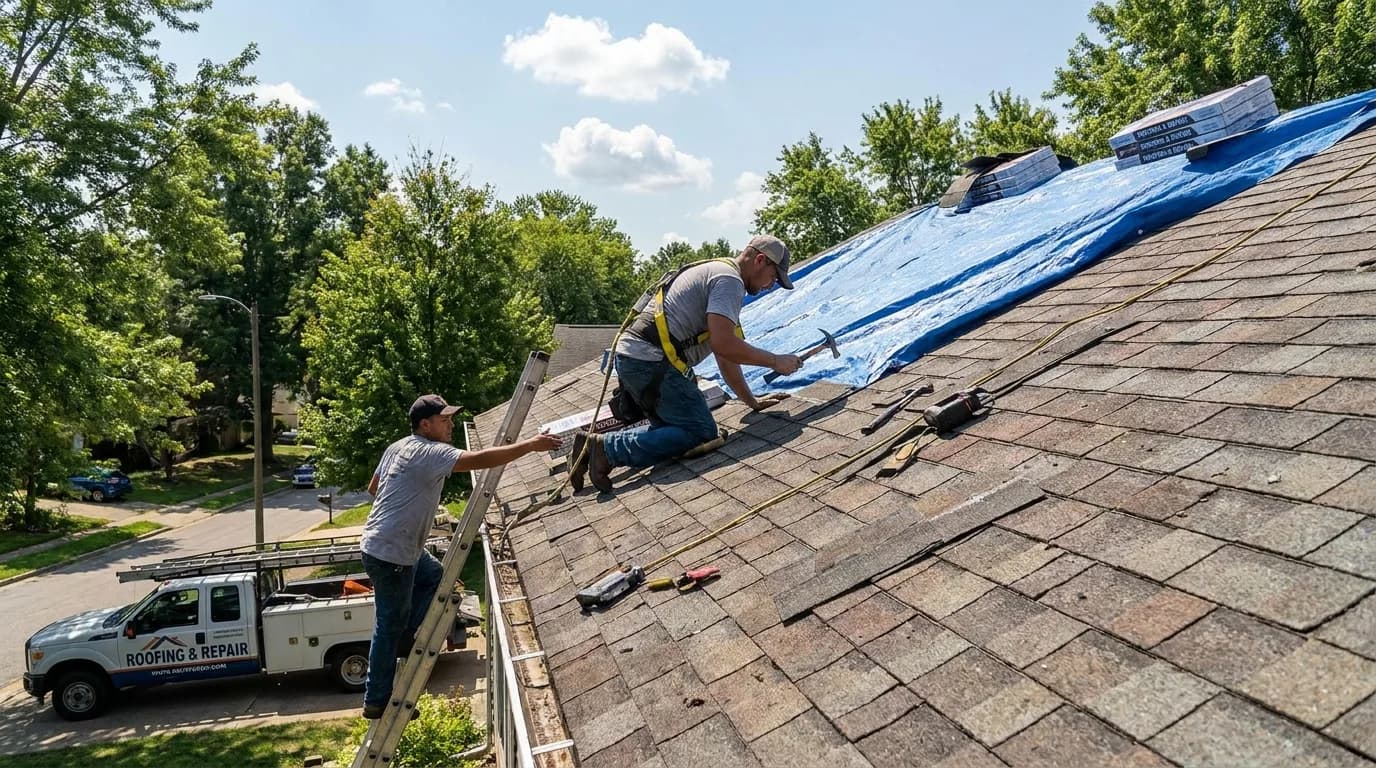
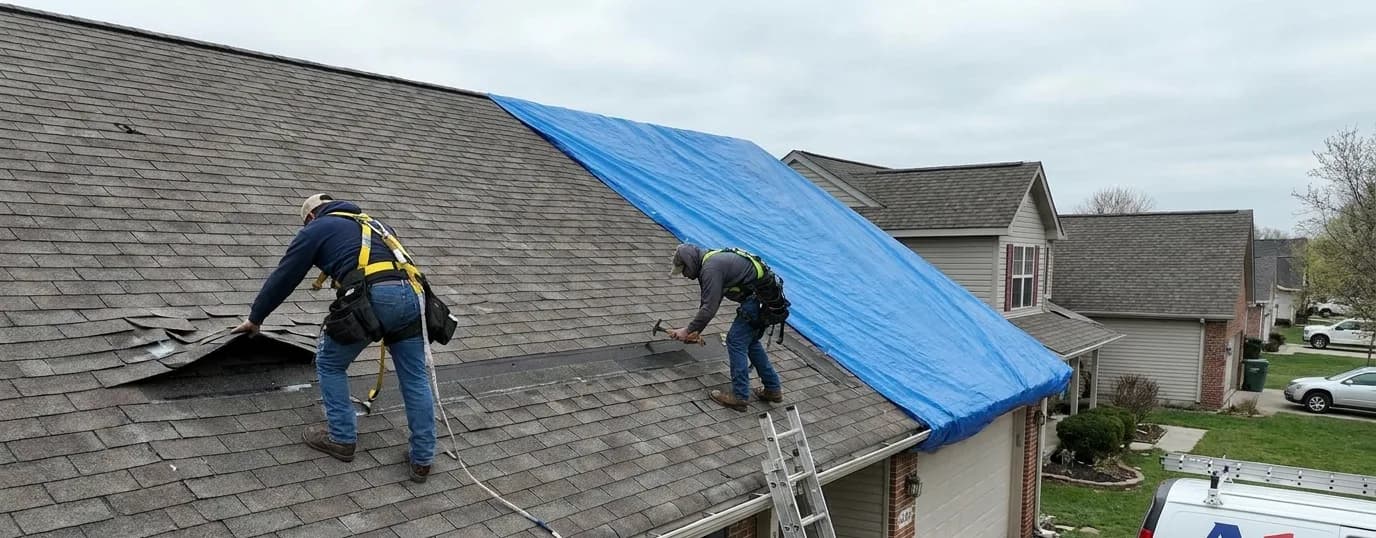
- Protect the property: put a bucket down, move belongings, and get the roof tarped if water is actively coming in. Keep receipts for tarping and any emergency drying.
- Do not start permanent repairs before the adjuster sees it: mitigation is fine, but replacing the roof before the insurer inspects it can void the claim. Keep the damaged shingles if a roofer removes any.
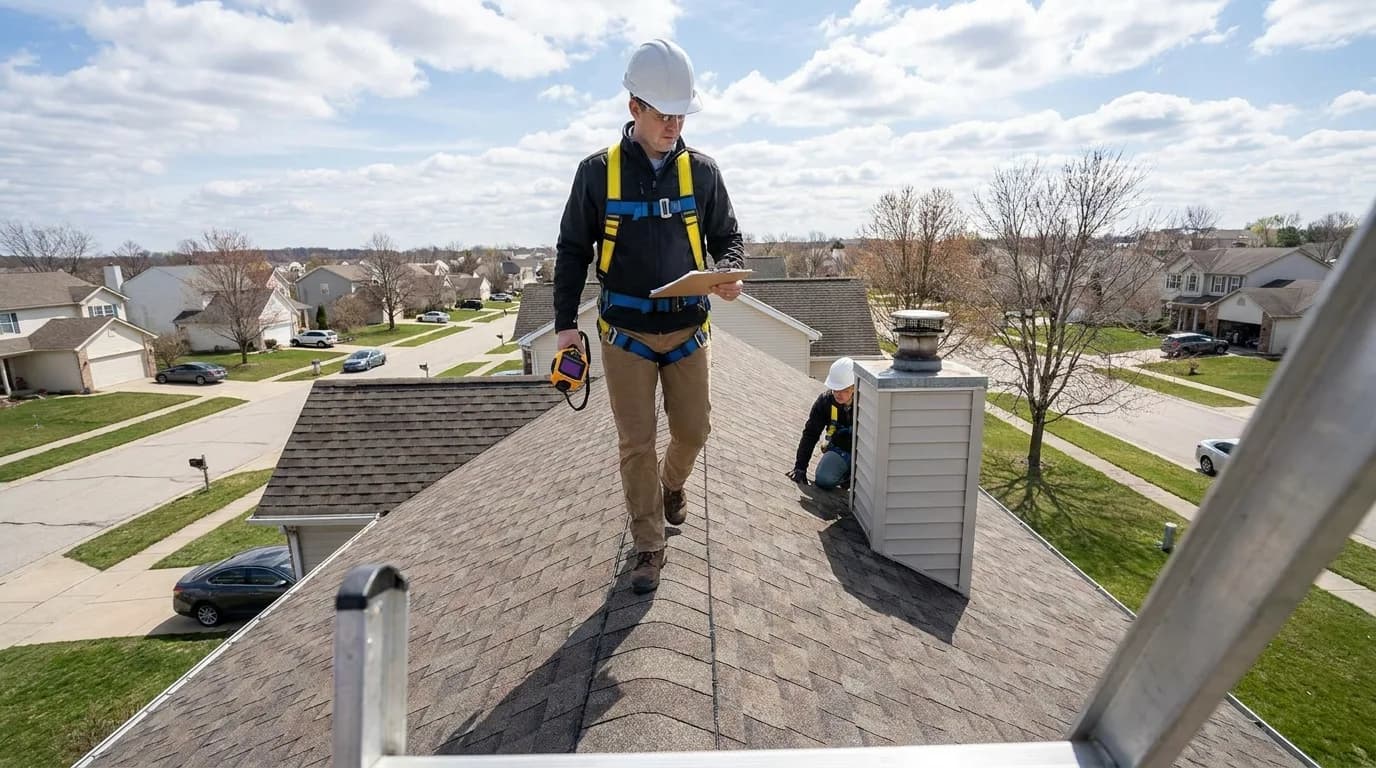
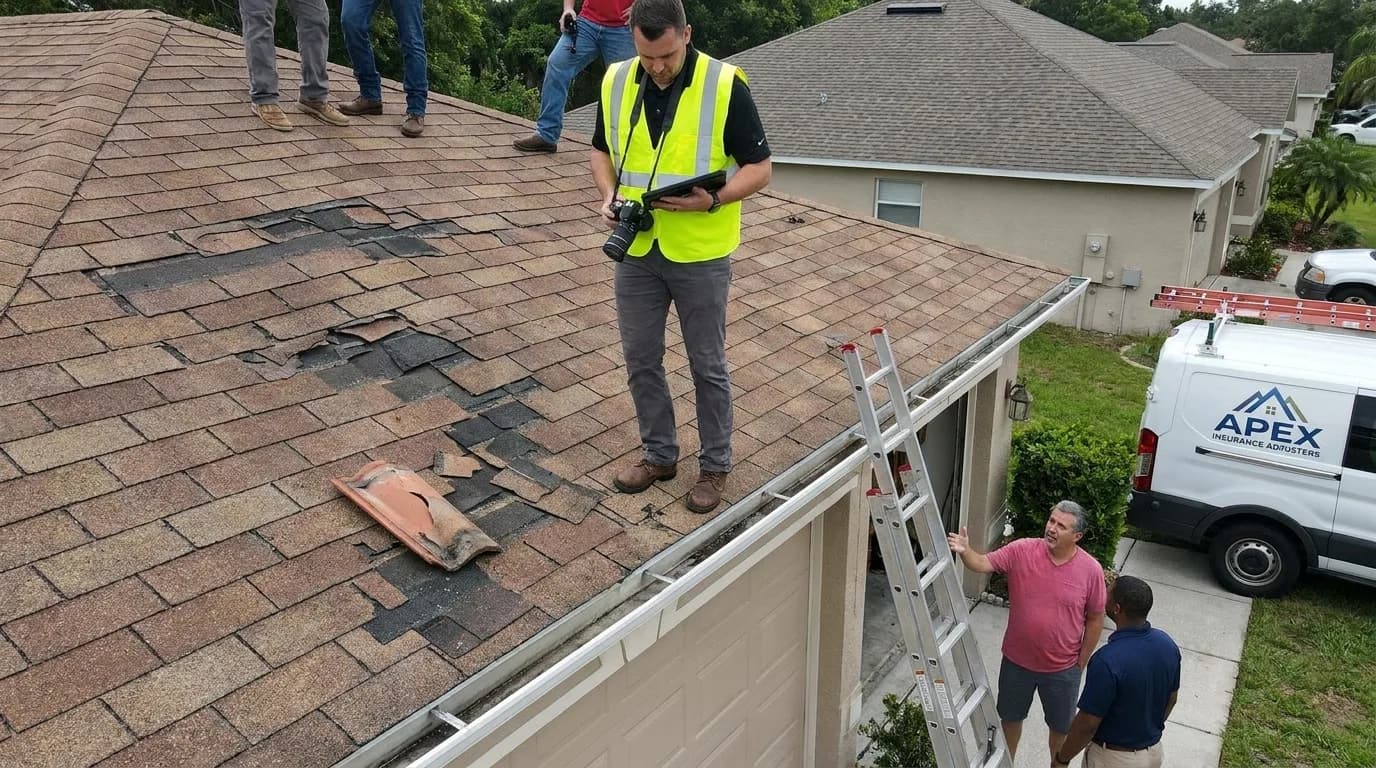
- Get a roofer's inspection report: a dated written report with photos identifying the cause of the leak (hail strike, wind-lifted tabs, branch puncture) and the extent of the damage.
- Gather your roof history: installation invoice, warranty documents, any previous inspection reports. These show the roof was maintained and give its age.
- Keep a log of every call and email with the insurer: date, name, what was said, claim number.
If the leak appeared without an obvious storm, the inspection report matters even more, because it will either identify a covered cause you did not know about (a wind-creased shingle from a Chinook a month ago, for example) or tell you honestly that the roof has simply reached the end of its life. Our post on why your roof is leaking walks through the common causes and what each one looks like.
Should You File a Roof Leak Insurance Claim? The Deductible Decision
Not every covered leak is worth claiming. Deductibles on Alberta home policies have risen, and many insurers now apply a separate, higher deductible to hail and wind claims, sometimes $2,500 to $5,000 or a percentage of the dwelling value. Claims also stay on your record and can affect renewal pricing or eligibility, and some insurers count even a denied claim as a claim.
A simple way to think about it:
- Total the likely covered damage: roof repair plus interior repair plus damaged contents, using real estimates rather than guesses.
- Subtract your deductible: if you have a separate hail or wind deductible, use that figure.
- Consider the roof-age effect: if your roof is over 15 years and your policy pays ACV, the roof portion of the payout may be a fraction of the repair cost.
- Weigh the record: a claim of $1,500 net may not be worth a rate increase at renewal, while a $12,000 net claim almost always is.
- Ask your broker hypothetically: a good broker can tell you how a claim of a given size would affect your policy without opening a file.
As a rough 2026 guide, small roof repairs in Airdrie run about $300 to $1,500 and larger repairs $1,500 to $5,000, so a leak that needs a few shingles and a patch of drywall often lands close to or below a hail deductible. A leak from a storm that damaged a whole slope, or interior damage that reaches flooring and cabinets, is a different matter. Get the estimate first, then decide. Our guide to roof repair costs in Airdrie gives realistic ranges for the common repairs.
How a Roofer's Report Strengthens Your Claim
An adjuster's job is to determine cause and extent of loss, and they rely heavily on what they can see on the day. A roofer's report done before the adjuster visits gives you an independent, dated record from someone who works on roofs every day, and it does three things for you.
First, it establishes cause. A report that shows a wind-creased shingle with a fresh fracture line, or a hail bruise with a soft centre and matching dents on the vent beside it, ties the leak to an event. That is the difference between sudden damage and wear and tear in the insurer's eyes.
Second, it establishes extent. Adjusters mark a test square and count strikes, and their count decides repair versus replacement. Having your own count, done from the same slopes with photos, gives you a basis to ask for a re-inspection if the numbers differ. It also catches damage the adjuster may miss, such as cracked pipe boots or lifted ridge caps.
Third, it prices the repair properly. Insurers work from standardised pricing software, and the first offer sometimes omits items such as ice-and-water shield, drip edge, disposal or the cost of matching a discontinued shingle. An itemised roofer's estimate lets you or your broker point to what is missing. If a claim is refused or lowballed, our post on what to do when a roof insurance claim is denied in Alberta covers the review and appeal options.
Remember that in Alberta you choose your own contractor for insurance work. The insurer can suggest a preferred vendor, but you are not obliged to use them, and you should not sign an assignment of benefits or a contract with anyone who knocks on your door promising to handle the claim for you.
Get a Free Leak Inspection and a Report You Can Send Your Insurer
Whether or not home insurance covers your roof leak, the first step is the same: find out what caused it. Apex Roofing Airdrie provides free, no-obligation leak inspections across Airdrie, Crossfield, Balzac and Cochrane, carried out by our own in-house crew. You get dated photos, a plain-language written report on the cause and extent of the damage, and an itemised repair estimate you can hand to your adjuster or broker.
If the leak is storm-related, we prepare the documentation your insurer needs and can meet the adjuster on site. If it is wear and tear, we will tell you that honestly and quote the repair or replacement so you can plan without a claim. Either way, the work carries a written workmanship guarantee on top of the manufacturer warranty, and emergency tarping is available for active leaks.
Start with our roof insurance claim support in Airdrie page if you think a claim is likely, or roof repair in Airdrie if you just want the leak fixed. Same-week inspection bookings are available through the contact page.
Written by the Apex Roofing Airdrie crew
Practical guidance from the local roofers who inspect, repair and replace roofs across Airdrie and Rocky View County every season. We review our guides against current Alberta practice and update them when materials, code or insurer behaviour changes. About our team.