In this guide
- 01How to Tell If Your Roof Has Hail Damage Without Climbing a Ladder
- 02The Ground-Level Hail Damage Checklist
- 03What Does Hail Damage Look Like on a Roof?
- 04Soft Metal Dents: The Most Reliable Tell
- 05Hail Size vs Roof Damage: What to Expect
- 06Hail Damage vs Blistering, Wear and Foot Traffic
- 07What Insurance Adjusters Look For: The Test Square
- 08Why Hail Damage Gets Worse Over an Alberta Winter
- 09When to Call a Roofer, and Why You Should Not Climb Up Yourself
- 10Get a Free Hail Damage Roof Inspection in Airdrie
How to Tell If Your Roof Has Hail Damage Without Climbing a Ladder
Knowing how to tell if your roof has hail damage is a useful skill in Airdrie, because the question comes up most summers. Hail in Alberta's Hailstorm Alley does not always announce itself with shattered windows. Most hail-damaged roofs look perfectly normal from the driveway, and the homeowner only finds out when a neighbour's roof is being replaced or a leak shows up two winters later.
The good news is that hail leaves fingerprints all over your property, not just on the shingles. Metal dents, granule piles, and marks on the garage door tell you a great deal before anyone sets foot on the roof. This checklist walks through those clues in the order you should check them, then explains what an inspector and an insurance adjuster will look for once they are up there.
None of this replaces a proper hail damage roof inspection. It is meant to help you decide whether one is worth booking, and to give you the vocabulary to understand what the inspector tells you afterwards.
The Ground-Level Hail Damage Checklist
Work through these in daylight, ideally within a week of the storm while the evidence is fresh. You do not need to leave the ground for any of them.
- Eavestroughs and downspouts: look for small round dents along the top lip and on the downspout faces. Check inside the eavestrough for a layer of black or brown grit, which is shingle granules washed off by hail.
- Downspout splash pads and the ground below: a pile of granules on the splash block or a dark stain in the gravel is a strong sign of granule loss.
- Aluminium fascia and soffit: hail dents fascia easily. Sight along its length in low sun and dents will jump out.
- Roof vents and flashing (from the ground with binoculars): static vents, plumbing stacks with rubber boots, and turbine vents dent and split readily.
- Air conditioner condenser: the thin aluminium fins on top of the unit flatten under hail. Bent fins in a random pattern are a textbook indicator.
- Garage door, siding and window trim: chipped paint, dents in metal doors, and cracked vinyl siding on the side of the house that faced the storm.
- Window screens and beads: torn screens and dented aluminium screen frames.
- Deck, fence and painted surfaces: fresh splits or chipped paint showing bare wood.
- Cars, patio furniture and the barbecue lid: if the truck in the driveway is dimpled, the roof was hit at least as hard.
If you tick three or more of these, the odds that your shingles took damage are high. If you see nothing at all on any metal surface, the storm may have been mostly wind and rain at your address, even if a neighbourhood a few streets over was hammered. Hail cells are narrow, and in Airdrie it is common for Kings Heights to be hit hard while Luxstone sees only rain.
What Does Hail Damage Look Like on a Roof?
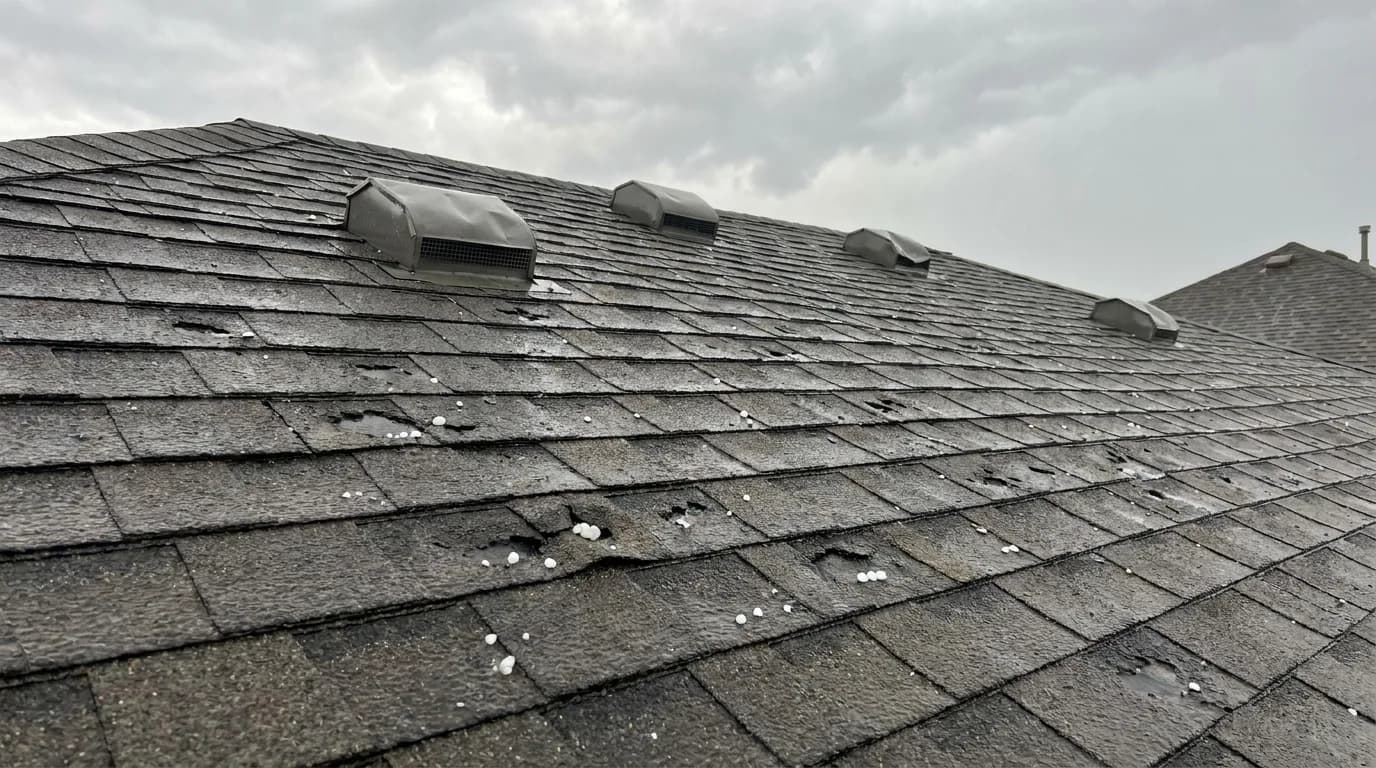
On asphalt shingles, hail damage shows up as bruises. A bruise is a roughly circular spot, usually 1 to 4 cm across, where the granules have been knocked loose and the asphalt mat underneath is exposed. Fresh bruises look darker than the surrounding shingle because the black asphalt is showing. If you press one, it feels soft or spongy, like a bruise on an apple, because the impact fractured the fibreglass mat beneath.
The pattern matters as much as the individual marks. Hail falls randomly, so hail damage shingles show strikes scattered across the slope with no rhythm, and the damage is heaviest on the slopes that faced the storm. Damage that lines up in neat rows, or that appears only along one edge, is usually something else, such as a mechanical scrape or wear from a tree branch.
Larger hail can also crack shingles outright, tear the edge of a tab, or punch clean through on an older, brittle roof. On ridge caps, which take hits from every direction, you will often see the worst damage. On a metal roof, hail leaves dents rather than granule loss, and the question becomes whether the paint finish cracked, which can lead to corrosion over time.
Granule loss on its own is not proof of hail. All shingles shed granules slowly as they age, and a roof at year 18 will have bald patches from UV alone. What separates hail from age is the shape (round spots with defined edges), the feel (soft centre), and the timing (sudden, right after a storm).
Soft Metal Dents: The Most Reliable Tell
Ask any experienced inspector how to tell if a roof has hail damage, and the first thing they check is the soft metal. Roof vents, plumbing boots, valley flashing, chimney caps, eavestroughs, and fascia are made from thin aluminium or galvanized steel. They dent at a lower impact energy than the point at which shingles bruise, so they act as a witness that records the storm even when the shingle damage is subtle.
Soft metal dents also help establish hail size. A small dimple you can barely feel points to pea to marble sized hail. A dent you can rest a fingertip in, roughly 25 mm across, indicates quarter-sized stones, which is the size where shingles start to suffer. Deep, sharp-edged craters mean toonie-sized or larger, and at that point the shingle damage is usually obvious.
Insurance adjusters rely on the same logic. If the soft metal on your roof is dented on the storm-facing slopes and the neighbour's roof shows the same pattern, that is strong collateral evidence that ties the damage to a specific date. It is one reason to leave dented vents in place until after the adjuster's visit, and to photograph them from the ground straight away.
Hail Size vs Roof Damage: What to Expect
Hail size is the single biggest predictor of shingle damage, though wind speed, shingle age, and roof pitch all shift the outcome. The table below is a general guide that reflects what we typically see on Airdrie roofs, not a rule your insurer follows.
| Hail size | Approx. diameter | Typical effect on asphalt shingles | Soft metal |
|---|---|---|---|
| Pea | 6 mm | No functional damage on healthy shingles | Rarely marked |
| Marble / dime | 12–18 mm | Light granule loss on older or brittle roofs | Faint dimples on vents |
| Quarter | 25 mm | Bruising begins, especially with wind; claims often start here | Clear dents in eavestroughs, fascia |
| Loonie / toonie | 27–28 mm | Widespread bruising, exposed mat, cracked tabs | Deep dents, split vent hoods |
| Golf ball | 43 mm | Severe damage to any shingle, punctures on older roofs | Crushed vents, torn screens |
| Tennis ball and up | 65 mm+ | Punctures, broken decking possible, skylights shattered | Holes in metal |
Two variables push damage up the scale. First, wind: a quarter-sized stone driven sideways at 90 km/h hits with far more energy than one falling straight down, which is why the Aug 8, 2026 storm along the Crossfield–Airdrie corridor caused so much damage despite hail that was mostly quarter-sized. Second, age: a 4-year-old architectural shingle flexes and shrugs off a hit that shatters a 20-year-old three-tab.
If your roof already has Class 4 impact-resistant shingles, expect it to sit one or two rows lower on this table for the same storm. We cover how they perform, and what they cost, in our guide to Class 4 impact-resistant shingles in Alberta.
Hail Damage vs Blistering, Wear and Foot Traffic
Several things look like hail damage from a distance and are not, and adjusters are trained to tell them apart. Knowing the difference saves you from filing a claim that gets denied, which can count against you.
Blistering happens when moisture trapped in the shingle during manufacture, or from poor attic ventilation, expands in summer heat and pops the surface. Blisters are small, often have a raised rim, and tend to appear across the whole roof including slopes that faced away from any storm. Open blisters lose granules but the mat underneath is not fractured, so they do not feel soft.
Normal wear shows as thinning granules concentrated where water runs, such as below valleys and at the eaves, and it develops slowly. Foot traffic damage, typically from a satellite installer or a previous roofer, appears as scuffs and crescent-shaped scrapes in walking lines. Nail pops and thermal cracking look like lines and splits, not round bruises.
Then there is manufacturing defect and mechanical damage, which some contractors have been known to mislabel as hail. A reputable inspector will tell you plainly when what you have is wear rather than storm damage. If a stranger knocks on your door after a storm and finds hail on every roof on the street, read our guide to spotting roofing scams and storm chasers in Alberta before you sign anything.
What Insurance Adjusters Look For: The Test Square
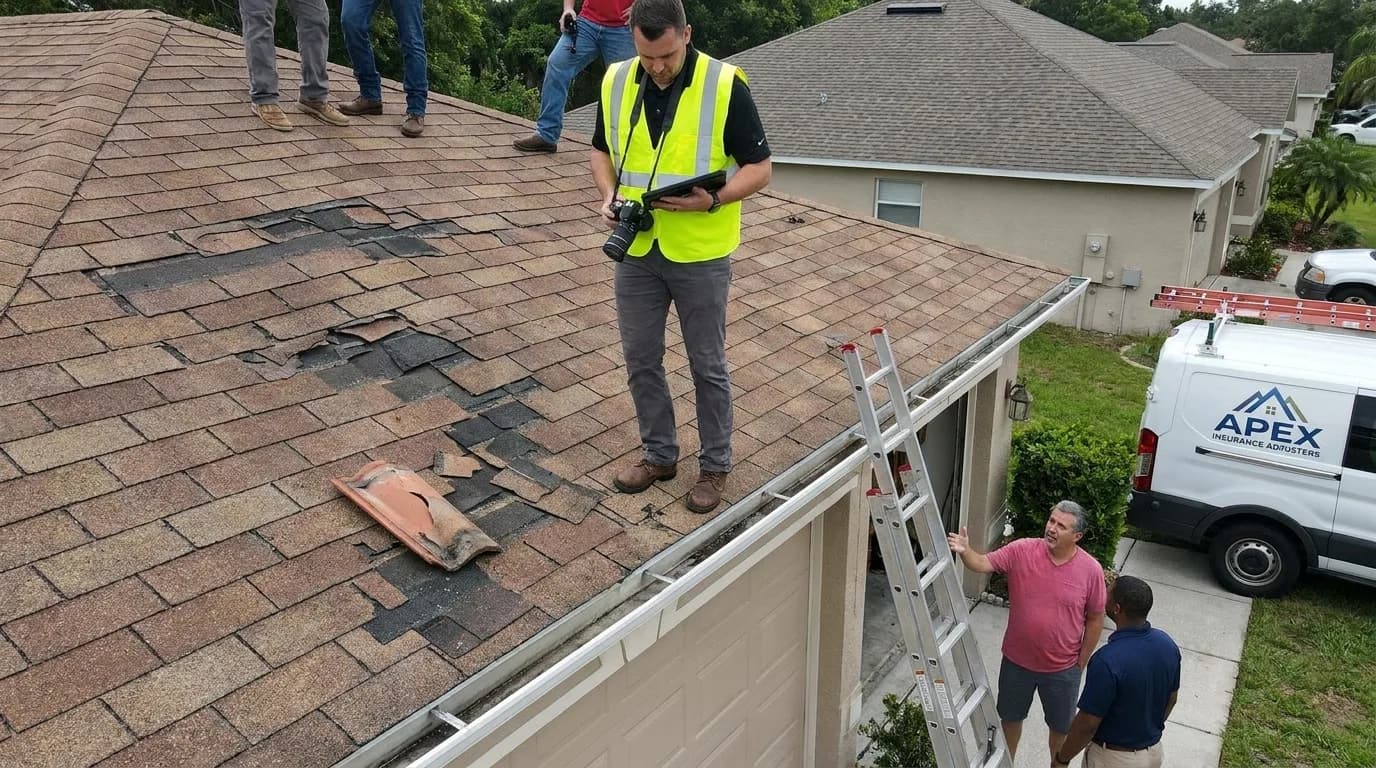
When an adjuster does a hail damage roof inspection, they do not count every bruise on the roof. They mark out a test square, a 10 by 10 foot area (100 square feet, one roofing square) on each slope, usually with chalk, and count the number of hail strikes inside it. They repeat this on each directional slope because the storm-facing side is always hit hardest.
The threshold that triggers a full slope or full roof replacement varies by insurer and adjuster, but a common working number is around 8 to 10 confirmed hail strikes per test square. Below that, the insurer may approve a repair rather than replacement, or decline the slope entirely. Some insurers use different counts, and some weigh the age of the roof and the availability of matching shingles as well, so treat the number as a guide and confirm with your adjuster.
The adjuster is also checking whether each mark is actually hail. They look for the soft centre, the random distribution, and the matching dents on nearby soft metal. Marks that fail those tests get excluded from the count. This is why a contractor's own documented test square, done before the adjuster arrives, is so valuable: it gives you a second count to compare and a set of dated photos if there is a dispute. We walk through how that fits into the whole process in our step-by-step Alberta hail roof insurance claim guide.
Why Hail Damage Gets Worse Over an Alberta Winter
A bruised shingle is not leaking yet, which is why some homeowners are tempted to leave it. The problem is what the bruise does over time. Granules exist to protect the asphalt from UV. Once they are gone, the exposed asphalt dries out and cracks within a couple of summers. The fractured mat under the bruise also lets water in, and in Airdrie that water freezes and thaws dozens of times between November and March, prying the crack open a little wider each cycle.
Chinook winds accelerate the process. A warm Chinook in January can take the roof surface from minus 20 to plus 10 in a few hours, and shingles that have lost their flexibility at the bruise sites crack under that thermal shock. By spring, a roof that had cosmetic bruising in August can have dozens of small leak points, often showing up first as staining on the ceiling below a valley or around a vent.
There is a claims angle too. Many Alberta insurers expect hail claims to be filed within roughly 12 months of the storm, and after a winter the evidence is harder to tie to a single event. If you are unsure whether your policy actually covers hail damage, confirm that before the window closes. The practical advice is simple: if you suspect hail damage, get it inspected in the same season, and read our post-storm checklist for Airdrie hail storms so you know what to do in the first 48 hours.
When to Call a Roofer, and Why You Should Not Climb Up Yourself
Call for an inspection if any of these apply: you ticked several items on the ground-level checklist, hail at your address was quarter-sized or larger, neighbours on your street are getting roofs replaced, or you have found granules in the eavestroughs after a storm. It is also worth an inspection if a storm hit and your roof is more than 10 years old, because older shingles take damage from smaller hail.
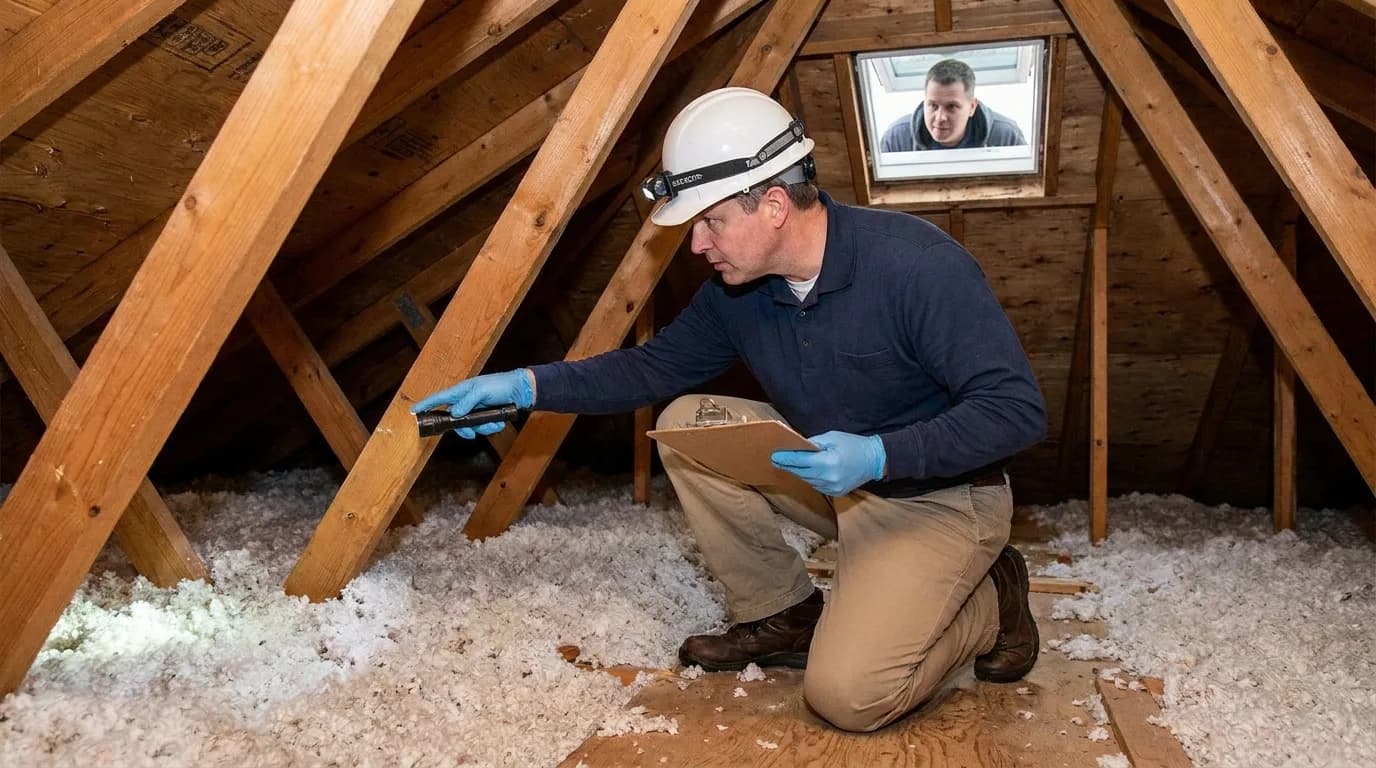
Please do not go up yourself. Steep, granule-covered slopes are dangerous even for people who work on them daily, and walking a hail-damaged roof can add scuffs that muddy the evidence. Binoculars and a phone camera from the ground get you most of the information you need, and a professional inspector carries the harness, the chalk, and the training to do the rest.
A proper roof inspection in Airdrie should produce dated photos of bruises and soft metal dents, a marked test square with a strike count per slope, and a plain-language opinion on whether the damage justifies a claim. If the honest answer is that the roof has light cosmetic marks and no functional damage, you want to hear that too, because a denied claim can still sit on your record.
Get a Free Hail Damage Roof Inspection in Airdrie
If you have worked through this checklist and suspect your roof took a hit, the next step is straightforward. Apex Roofing Airdrie provides free, no-obligation hail damage inspections across Airdrie, Crossfield, Balzac and Cochrane, carried out by our own local crew rather than subcontractors. We photograph everything, mark a test square on each slope, and give you a written opinion you can use whether or not you decide to file.
If the damage does warrant a claim, we handle the documentation for your insurer and can meet the adjuster on site so both counts are done from the same evidence. Learn more about our hail damage roof repair service and our roof insurance claim support, or book a same-week inspection through the contact page. Every repair and replacement we do comes with a written workmanship guarantee on top of the manufacturer warranty.
Written by the Apex Roofing Airdrie crew
Practical guidance from the local roofers who inspect, repair and replace roofs across Airdrie and Rocky View County every season. We review our guides against current Alberta practice and update them when materials, code or insurer behaviour changes. About our team.