In this guide
- 01Does Insurance Cover Hail Damage to a Roof? The Short Answer
- 02Why Airdrie and Alberta See So Much Hail (Hailstorm Alley)
- 03What Hail Damage to a Roof Actually Looks Like
- 04How Home Insurance Treats Hail: Peril Coverage vs Exclusions
- 05Your Hail or Wind Deductible in Alberta, and Why It Differs From a Regular Deductible
- 06Roof Age and Insurance: How an Older Roof Can Reduce Your Payout
- 07ACV vs RCV: What You're Actually Paid for a Hail-Damaged Roof
- 08Steps to Take Right After a Hailstorm, Before You Call Your Insurer
- 09How to Document Hail Damage So Your Claim Holds Up
- 10Filing a Hail Damage Roof Claim: What Happens Step by Step
- 11Will Filing a Hail Claim Raise Your Premium, and Is It Worth It
- 12What If Your Claim Is Denied or Underpaid
Does Insurance Cover Hail Damage to a Roof? The Short Answer
Does insurance cover hail damage to a roof in Alberta? In almost every standard homeowner or condo policy sold in the province, the answer is yes: hail is one of the named perils covered under an all-perils or comprehensive policy, alongside wind, fire and several other sudden events. So, does insurance cover hail damage in Alberta specifically, given how often it happens here? Coverage is close to universal, because hail is one of the most common and costly perils insurers face in this province.
Yes does not mean automatic, and it does not mean full replacement at no cost to you. What you actually receive depends on several things this guide covers in detail: your policy's hail or wind deductible, which is often higher than your standard deductible, your roof's age and condition at the time of the storm, whether your policy pays actual cash value or replacement cost, and how well the damage is documented before repairs start. Treat what follows as a hail damage roof insurance Alberta primer, working through each of those factors in turn.
This guide walks through Alberta's hail risk, what hail damage on a roof actually looks like, how coverage and deductibles work, what an older roof means for your payout, and the steps to take from the moment a storm passes through to the moment a claim is settled. If your roof already has visible storm damage, our hail damage roof repair service in Airdrie handles the repair side while this guide focuses on the insurance side. Every point involving your specific policy is a starting point for a conversation with your insurer or broker, not a substitute for reading your own policy wording.
Why Airdrie and Alberta See So Much Hail (Hailstorm Alley)
Airdrie and the wider Calgary region sit inside what insurers and meteorologists call Hailstorm Alley, a corridor running roughly from central Alberta through Calgary and into southern Alberta where the collision of moist air and mountain-driven upslope conditions produces some of the most severe hailstorms in Canada. Large hail here is not a rare event; it is closer to a seasonal certainty from late spring through summer.
The scale shows up clearly in the insurance data. The August 5, 2024 Calgary hailstorm caused an estimated $2.8 to $3.25 billion in insured damage according to the Insurance Bureau of Canada, making it the costliest hail event in Canadian history. The June 13, 2020 Calgary hailstorm caused roughly $1.2 billion in insured losses, and the August 7, 2014 Airdrie hailstorm caused an estimated $450 million. More recently, the August 8, 2026 Crossfield-Airdrie hailstorm brought quarter-sized hail and damaging wind through the immediate service area.
This history matters for two reasons beyond the obvious one that hail happens here often. First, insurers price Alberta hail risk into premiums and deductibles specifically because of this loss history, which is part of why hail or wind deductibles here are commonly structured differently from a standard deductible. Second, Chinook winds that arrive before, during or immediately after a hailstorm frequently add wind-lifted or creased shingles to the same event, so a Calgary or Airdrie roof often needs to be assessed for both perils at once, not hail in isolation. For the practical, storm-day checklist beyond insurance mechanics, see our guide on what to do after an Airdrie hailstorm.
Insurers have responded to this loss history with more frequent aerial and satellite damage assessments across the Calgary and Airdrie corridor after major storms, alongside the higher, percentage-based hail deductibles covered later in this guide. None of that changes the basic answer to whether hail is covered; it changes how closely an individual claim gets scrutinized, which is exactly why documentation from your own inspection matters as much as whatever the insurer's own tools pick up from above.
What Hail Damage to a Roof Actually Looks Like
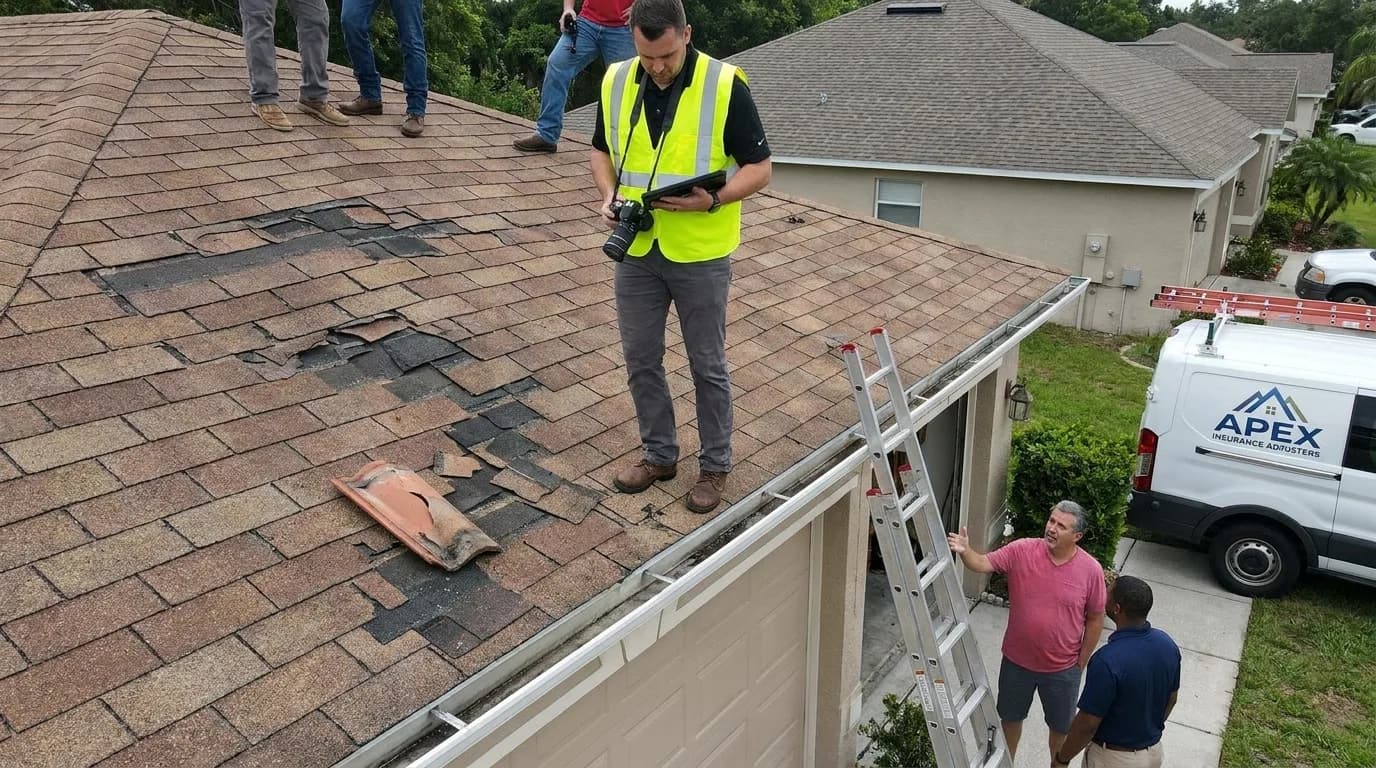
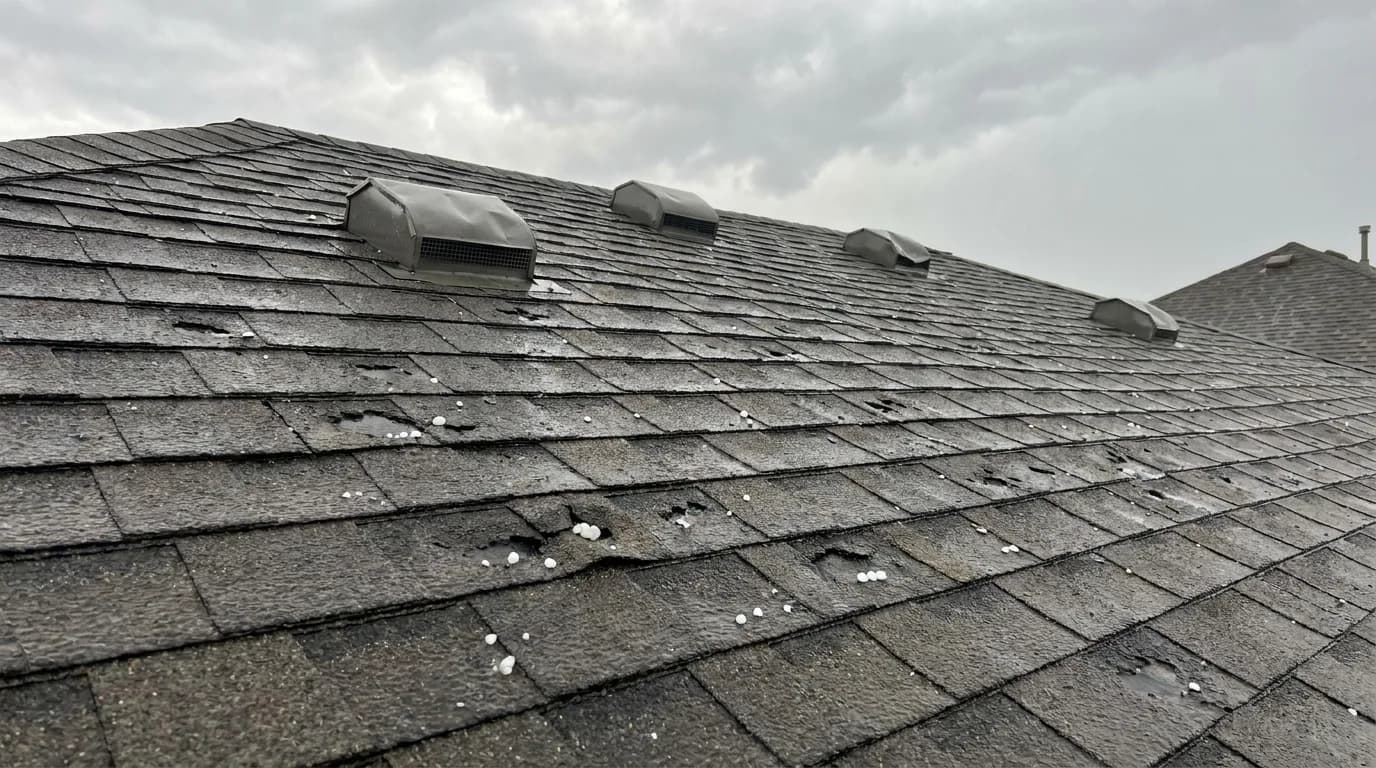
Hail damage on an asphalt shingle roof rarely looks dramatic from the ground, which is part of why it goes unclaimed. The most common sign is granule loss: hail impacts knock the protective mineral granules off the shingle surface, exposing the black asphalt mat underneath in small, roughly circular bruises.
Other signs include cracked or fractured shingle mat, which can be felt as a soft spot when pressed, dents or dings on soft metal like flashing, vents, eavestroughs and downspouts, and displaced granules collecting in the eavestrough. Skylights, roof vents and any exposed caulking or sealant are also worth checking, since a hail impact can crack a seal that then leaks weeks or months later rather than immediately.
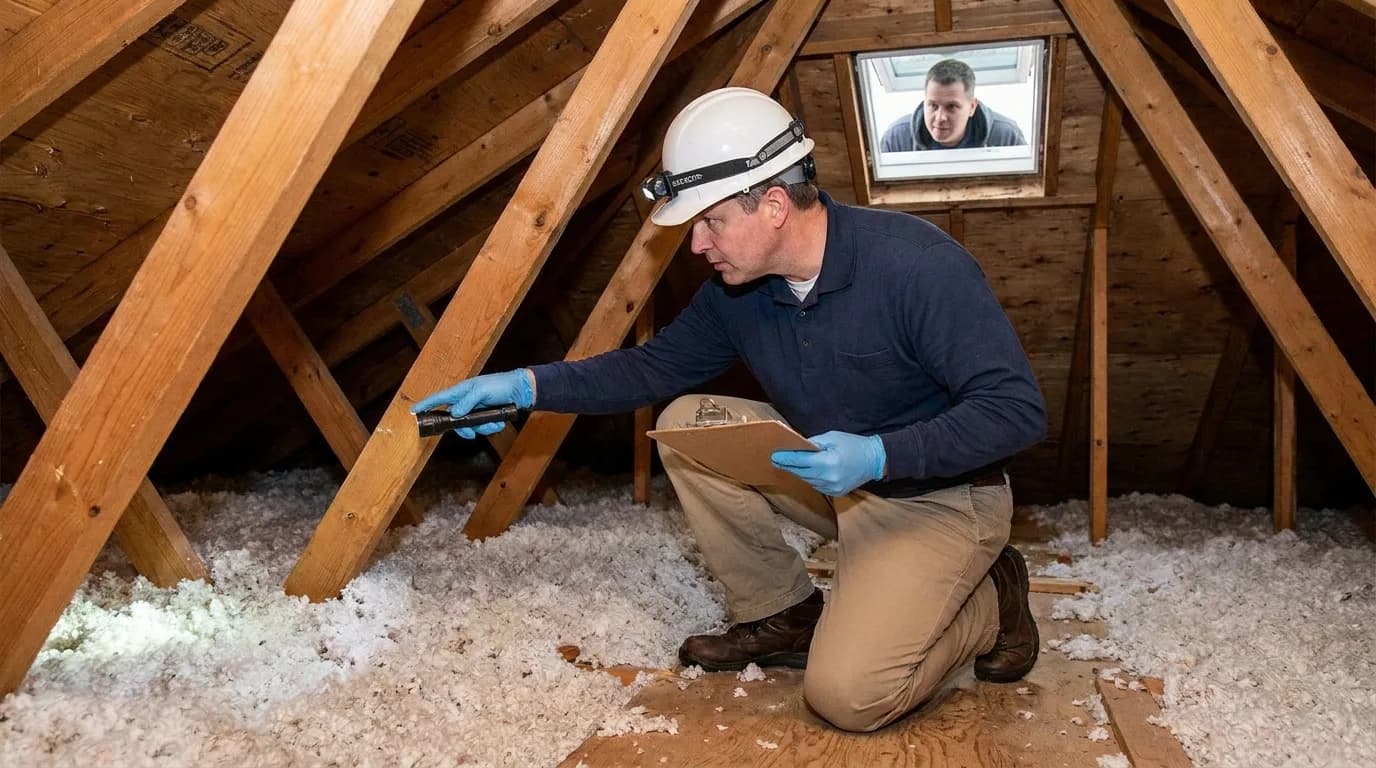
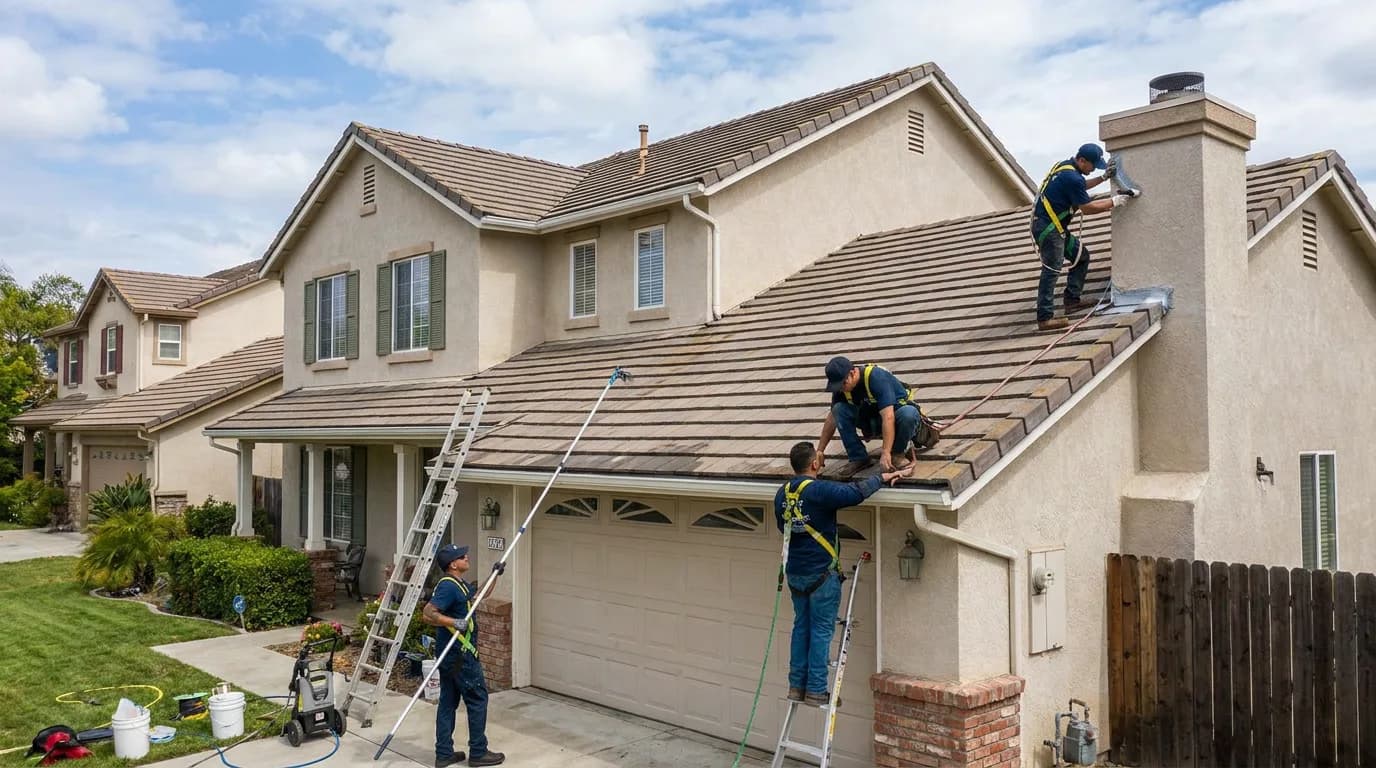
Because most of this damage is only clearly visible up close or from the roof surface itself, a ground-level look after a storm is not enough to rule out hail damage. A professional roof inspection documents the extent and pattern of impacts in a way that supports an insurance claim, which matters because adjusters are trained to distinguish genuine hail bruising from normal shingle wear.
Left unrepaired, this kind of damage compounds over an Alberta winter. Cracked shingle mat and lost granules give freeze-thaw cycles and Chinook-driven ice a foothold: water gets under a cracked seal, freezes, expands and works the crack wider, and by spring a repair that would have cost a few hundred dollars in the fall can become a leak requiring interior repair as well. This is one of the practical reasons to document and act on hail damage in the same season it happens rather than waiting.
How Home Insurance Treats Hail: Peril Coverage vs Exclusions
Does insurance cover hail damage under Alberta's peril-based home policies? Yes: home insurance works on a peril basis, meaning your policy lists the specific events, called perils, that trigger coverage, and hail is almost always one of them under a standard homeowner policy, whether that policy is written as named-perils or broad all-perils coverage. This is different from car insurance, where hail coverage typically requires optional comprehensive coverage; on a home policy, hail is usually built in.
Exclusions are where coverage can get narrower than homeowners expect. The most common one relevant to roofs is wear and tear or gradual deterioration: an insurer can deny or reduce a claim if the damage is found to be the result of an aging, already-failing roof rather than the storm itself. Is hail damage covered if it arrived alongside wind-driven debris in the same storm? Generally yes, since a single storm event covers both perils under the applicable deductible, but a roof that was already failing before the storm complicates that picture.
This exclusion matters a great deal in Airdrie's housing stock, where a large share of homes were built through the 1990s to 2010s and many original roofs are now well into or past their expected service life. A 22-year-old roof with curling shingles and thin granule coverage across the whole surface, not just where hail hit, can trigger a dispute over how much of the damage is storm-related versus pre-existing wear. This does not mean an older roof has no coverage; it means the distinction between hail-caused damage and age-related deterioration becomes the central question an adjuster is trying to answer, and it is where good documentation earns its keep.
Condo and townhouse coverage adds another layer worth checking. In many Alberta condo corporations, the shared roof is insured under the corporation's master policy rather than an individual owner's homeowner policy, so if you own a condo unit, confirm with your condo board or property manager whether hail damage to the building envelope, including the roof, is handled under that master policy or your own; your personal policy typically only covers interior contents and improvements in that situation.
Your Hail or Wind Deductible in Alberta, and Why It Differs From a Regular Deductible
Most Alberta home insurance policies apply a separate hail or wind deductible that is higher than the flat deductible you pay for something like a burst pipe or a break-in. This deductible is commonly structured as a percentage of your dwelling coverage amount, often somewhere in a range of 1 to 5 percent depending on the insurer and the policy, rather than a flat dollar figure. This hail deductible Alberta structure catches many homeowners by surprise at claim time, since it is easy to assume the same $500 or $1,000 figure applies to every kind of loss.
On a home insured for $500,000, a 2 percent hail deductible works out to $10,000 before insurance pays anything, a very different number from a flat deductible many homeowners assume applies to every claim. This is one of the most misunderstood parts of Alberta home insurance, and it is worth pulling out your actual policy declarations page to see the number in writing rather than guessing.
As a rough 2026 Alberta market guide rather than a quoted figure, a flat deductible for a non-storm loss like a burst pipe commonly runs $1,000 to $2,500, while a percentage-based hail or wind deductible on the same policy often lands much higher once it is applied to a typical Airdrie or Calgary dwelling coverage amount, commonly somewhere in a $4,000 to $25,000 range depending on the coverage amount and percentage. The table below illustrates how that percentage structure plays out at a few common dwelling coverage levels; confirm your own deductible type and amount with your insurer or broker rather than assuming one of these figures applies to your policy.
| Dwelling coverage amount | 1 percent hail/wind deductible | 2 percent | 5 percent |
|---|---|---|---|
| $400,000 | $4,000 | $8,000 | $20,000 |
| $500,000 | $5,000 | $10,000 | $25,000 |
| $700,000 | $7,000 | $14,000 | $35,000 |
| $900,000 | $9,000 | $18,000 | $45,000 |
Deductible structures also vary by insurer and by how recently the policy was written, since some companies adjusted their hail deductible approach after the string of major Alberta hailstorms in the past decade. Confirm your specific deductible type and amount with your insurer or broker before you assume what a claim will cost you out of pocket; this single number often decides whether filing a claim makes financial sense at all.
Roof Age and Insurance: How an Older Roof Can Reduce Your Payout
Does insurance cover hail damage the same way on a 3-year-old roof as a 22-year-old one? Not exactly. Your roof's age at the time of the storm is one of the biggest factors in what an Alberta hail claim actually pays. Asphalt shingle roofs have an expected service life, commonly cited in a range of roughly 15 to 25 years depending on the product and installation quality, and many policies scale your payout down as a roof approaches or passes that range. How a policy treats roof age insurance hail claims is one of the least understood parts of an Alberta settlement until a homeowner sees it applied to their own.
A roof in year 3 with hail damage is more likely to be paid out at or near full replacement cost. A roof in year 22 with the same storm event may be assessed at actual cash value, which factors in depreciation for the years of service already used, sometimes reducing the payout by a meaningful percentage of the replacement cost.
Some policies also apply a scheduled depreciation table specifically for roofing, separate from the general contents depreciation used elsewhere in a claim, so two homeowners with similar-age roofs on different insurers can see different outcomes. This is another area where the exact numbers live in your policy wording, and it is worth asking your insurer or broker directly how your policy treats roof age before you assume a figure.
Routine maintenance can matter here too, even though it does not reset a roof's age on paper. A roof with documented annual or biannual maintenance, cleared eavestroughs, resealed flashing, and no history of ignored leaks is easier for a homeowner to defend as being in above-average condition for its age if an adjuster tries to attribute damage to neglect rather than the storm. Keeping receipts and reports from past maintenance visits is worth doing for this reason alone, well before any storm hits.
ACV vs RCV: What You're Actually Paid for a Hail-Damaged Roof
Actual cash value (ACV) pays the depreciated value of your roof at the time of loss, factoring in its age and condition. Replacement cost value (RCV) pays what it actually costs to replace the roof with new materials of similar kind and quality, without a deduction for age, though many RCV policies still hold back a depreciation amount until the repair is actually completed and proof is submitted, known as recoverable depreciation.
The gap between ACV and RCV on an older roof can be substantial, often thousands of dollars, which is why it is worth knowing which type of coverage your policy provides before a storm hits rather than after. Some policies apply a roof-specific ACV schedule even when the rest of the home is insured on an RCV basis, which is a detail easy to miss on a first read of a policy summary.
This is a large enough topic that it deserves its own deep dive rather than a summary here. Our companion guide on ACV versus RCV for a roof insurance claim walks through the calculations, the recoverable depreciation process, and the questions worth asking your adjuster directly.
Steps to Take Right After a Hailstorm, Before You Call Your Insurer
The hours and days right after a hailstorm matter more than most homeowners realize. Start by documenting the storm itself: note the date and approximate time, and if possible photograph hail on the ground, since hail size is one of the details an adjuster will ask about and it is easiest to capture before it melts.
Walk the property from the ground and photograph obvious damage: dented siding, damaged screens, broken vents or downspouts, and any debris. Do not climb onto the roof yourself, especially on a steep pitch or if the roof is wet, since a fall is a far more serious risk than waiting a day or two for a professional look.
- Photograph hail on the ground the same day, with something for scale like a coin or ruler.
- Check for interior signs: water stains on ceilings, especially near vents, skylights or chimneys.
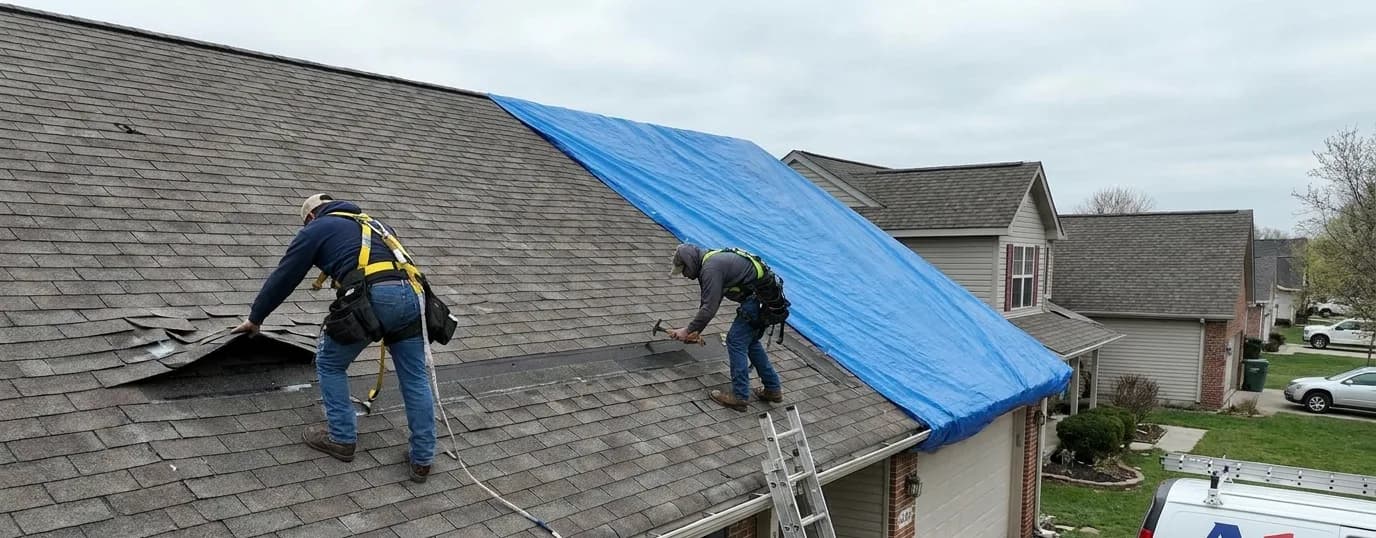
- Cover any active leak temporarily with a tarp if it is safe to do so, since insurers expect reasonable steps to prevent further damage.
- Avoid signing anything with a door-to-door contractor before you have your own inspection.
- Do not authorize permanent repairs until damage is documented, unless there is an active leak requiring an emergency fix.
Keep receipts for any reasonable emergency measure you pay for yourself, such as a tarp or temporary board-up, since most policies reimburse the cost of reasonable steps taken to prevent further damage after a covered loss. Confirm with your insurer or broker what counts as reasonable before you spend a large amount, but a modest emergency tarping cost is rarely a point of dispute.
How to Document Hail Damage So Your Claim Holds Up
A hail damage claim lives or dies on documentation. Adjusters are trained to distinguish fresh hail impact from pre-existing wear, and the burden is effectively on the homeowner to show clear, dated evidence of storm-caused damage rather than gradual deterioration.
Useful documentation includes close-up, well-lit photographs of granule loss and mat fractures on multiple slopes of the roof, photos of soft-metal damage on vents, flashing and eavestroughs that corroborates the hail event, a written inspection report from a roofing contractor describing the pattern and extent of damage, and, where available, local weather service or news reports confirming a hailstorm on the date in question.
This is exactly where a professional inspection earns its cost even before a claim is filed. A roof inspection that produces a dated, photographed report gives an adjuster something concrete to work from, and it gives you a record independent of the insurance company's own assessment if there is ever a disagreement about scope or cause.
Keep every piece of correspondence with your insurer too: the claim number, the adjuster's name and direct contact information, dates of calls, and copies of any scope of loss or settlement letter. A simple email summary sent to yourself after each phone call, noting what was discussed and agreed, creates a written record that is far more useful months later than memory alone if a dispute over scope or timing comes up.
Filing a Hail Damage Roof Claim: What Happens Step by Step
Filing a hail damage roof claim follows a fairly consistent sequence across Alberta insurers, though the exact order and timing varies by company. The sequence below is the short version; our pillar guide on filing a hail damage roof insurance claim in Alberta walks each step in detail.
- Report the claim to your insurer or broker as soon as reasonably possible after the storm.
- An adjuster is assigned and typically schedules an inspection, either in person or, increasingly, using aerial or satellite imagery combined with a homeowner-submitted report.
- The adjuster produces a scope of loss, an itemized estimate of what is damaged and what it costs to repair.
- You compare the adjuster's scope against your own contractor's assessment, since these can differ, especially on borderline damage.
- Any disagreement is negotiated, sometimes with additional photos or a second inspection, before the claim is finalized.
- Payment is issued, either as a lump sum or, on an RCV policy, an initial payment with recoverable depreciation released after repairs are completed and invoiced.
Throughout this process, a roofing contractor experienced with Alberta hail claims can meet the adjuster on-site, point out damage that might otherwise be missed on a quick pass, and help make sure the written scope of loss actually matches what the roof needs. Our roof insurance claim service in Airdrie handles exactly this coordination, and our pillar guide on filing a hail damage roof insurance claim in Alberta walks through the entire process in more depth than fits here.
Timelines vary widely depending on the insurer, the season and how backed up adjusters are after a major regional storm. A straightforward claim after a smaller, localized hailstorm can move from report to payment in a few weeks; a claim filed in the weeks immediately following a widescale event like the August 2024 Calgary hailstorm, when thousands of homes file at once, can take considerably longer simply due to adjuster volume. Ask your insurer for a realistic timeline for your specific claim rather than assuming either extreme.
Will Filing a Hail Claim Raise Your Premium, and Is It Worth It
Whether insurance covers hail damage is only half the question; the other half is what filing does to your premium at renewal. Filing a hail damage claim can affect your premium at renewal, though the effect in Alberta is complicated by the fact that hail is a regional, weather-driven peril rather than a personal at-fault claim like a car accident. Many insurers treat a single hail claim differently from a pattern of frequent claims, but individual underwriting decisions vary by company and are not something this guide can promise for your specific policy.
The more useful question for most homeowners is a simple one: is a hail damage claim worth it once you subtract the deductible? If your hail or wind deductible is $8,000 and the estimated repair cost is $9,000, filing nets very little after the deductible and may not be worth the premium risk. If the estimated replacement cost is $16,000 against the same deductible, the math looks very different.
A written, itemized estimate from a professional inspection is the tool that makes this comparison possible before you decide to file. Rather than guessing at scope and cost, get the number in writing, compare it against your deductible, and make the call on a claim with real figures rather than an assumption either way.
One thing worth asking about regardless of whether you file this particular claim: some insurers offer a premium discount for installing Class 4 impact-resistant shingles at your next reroof, since these shingles are rated to withstand hail impact better than standard architectural shingles. Our guide to Class 4 impact-resistant shingles in Alberta covers how the rating is tested and what the upgrade typically costs, and the Calgary resilient roofing rebate is worth checking before you commit to a reroof. Ask your insurer or broker whether an impact-resistant discount applies to your policy and by how much, since programs and amounts vary by company.
What If Your Claim Is Denied or Underpaid
A denial does not settle the does insurance cover hail damage question for good; it just means the insurer disagreed with how that question applies to a specific claim. Common reasons for denial or a low payout include the insurer attributing damage to wear and tear rather than the storm, a dispute over whether the hail size in your area actually reached a damaging threshold, or a scope of loss that misses damage a homeowner's own contractor identified.
If you disagree with an adjuster's assessment, you can request a re-inspection, submit additional documentation such as a second contractor's written report, or escalate through your insurer's internal appeals process. Alberta homeowners also have the option of engaging a public adjuster or, in a genuine dispute, pursuing the matter further, though most disagreements are resolved well before that point with better documentation.
This topic deserves more detail than fits here, including exactly what to say to an adjuster and how appraisal clauses work in Alberta policies. Our guide on what to do when a roof insurance claim is denied in Alberta walks through the appeal process step by step, and our guide on how to tell if your roof has hail damage helps you build the documentation case before you even get to a dispute.
The overall pattern worth remembering is that does insurance cover hail damage answers differently depending on when you ask it: before the storm it is a policy design question about perils, deductibles and ACV versus RCV; right after the storm it is a documentation question; and once a claim is underway it becomes a negotiation over scope. Approaching each stage with the right preparation, rather than treating the whole process as one event, is what separates a smooth settlement from a drawn-out dispute.
Written by the Apex Roofing Airdrie crew
Practical guidance from the local roofers who inspect, repair and replace roofs across Airdrie and Rocky View County every season. We review our guides against current Alberta practice and update them when materials, code or insurer behaviour changes. About our team.