In this guide
- 01Calgary Hail Storm History: The Worst Years at a Glance
- 02Why Hailstorm Alley Exists: The Meteorology
- 03When Is Hail Season in Alberta?
- 04June 13, 2020: The Northeast Calgary Hail Storm
- 05August 5, 2024: The Costliest Hail Storm in Canadian History
- 062010, 2012, 2014 and 2021: The Storms That Set the Pattern
- 072025 and 2026: Recent Storms in the Calgary–Airdrie Corridor
- 08Why Northeast Calgary and the Airdrie Corridor Get Hit So Often
- 09What the Big Storms Changed for Roofs and Insurance
- 10Post-Storm Checklist for Calgary and Airdrie Homeowners
- 11Free Hail Inspections Across the Calgary–Airdrie Corridor
Calgary Hail Storm History: The Worst Years at a Glance
Ask anyone who has lived in the Calgary area for more than a few summers and they will have a Calgary hail storm story. Dented cars, shredded siding, a roof that needed replacing twice in a decade. The stories are not exaggerated. The Calgary to Airdrie to Red Deer corridor is the most hail-prone place in Canada, and the storms that hit it account for a large share of the country's insured weather losses.
The table below lists the major Calgary area hail events since 2010, with insured-loss figures reported by the Insurance Bureau of Canada (IBC) and catastrophe-tracking firms. Figures are rounded and represent first estimates unless noted, since totals typically climb for a year or more as claims close.
| Date | Where it hit | Hail size | Insured damage (approx.) | Notes |
|---|---|---|---|---|
| July 12, 2010 | Calgary | Golf ball | About $400 million | Among the costliest Canadian hail events at the time |
| August 12, 2012 | Calgary | Golf ball | Roughly $150 million (about $552 million combined with 2010) | Ten-minute storm |
| August 7, 2014 | Airdrie, Rocky View, Red Deer | Golf ball to tennis ball | About $450 million | Airdrie was the epicentre; declared a catastrophe event |
| June 13, 2020 | Northeast Calgary | Tennis ball, wind-driven | About $1.2 billion (later revised higher) | 70,000 homes and vehicles in about 20 minutes |
| July 2, 2021 | Calgary and area | Golf ball | About $700 million | Second billion-scale season in a row for Alberta |
| August 5, 2024 | North Calgary | Golf ball to chicken egg | About $2.8 billion, revised to about $3.25 billion | Costliest hail event in Canadian history; 130,000+ claims |
| July 13, 2025 | Calgary | Large hail with wind | About $92 million, revised to about $164 million | Vehicle damage more than half of claims |
| August 8, 2026 | Crossfield to Airdrie corridor | Quarter-sized, damaging wind | Not yet tallied | Power out to 2,100+ customers in northwest Airdrie |
Put those together and the pattern is clear. Alberta has had at least one major hail storm every year for two decades, with more than $11 billion in insured hail damage over that period and roughly $6 billion of it in the last five years alone, according to IBC. If you own a roof between Calgary and Red Deer, hail is not a question of if.
Why Hailstorm Alley Exists: The Meteorology
Hailstorm Alley is the informal name for the band of central Alberta running roughly from High River through Calgary, Airdrie, Olds and Red Deer. It earns the name because of a specific combination of geography and summer weather that lines up almost nowhere else in Canada.
It starts with the Rocky Mountains and foothills to the west. On a hot summer afternoon, the sun heats the high ground and the air rises, which gives thunderstorms a head start they would not get over flat prairie. Storms often form over the foothills in early afternoon and then drift east and north-east on the prevailing upper winds, arriving over Calgary, Airdrie and the corridor between late afternoon and early evening.
The second ingredient is moisture. Warm, humid air pulled north from the Gulf of Mexico and the American plains feeds the storms. Where that moist air meets the drier air coming off the mountains, a boundary called a dry line forms, and the contrast along that line is a powerful trigger for storm development. Calgary sits right where the two air masses meet on many summer days.
The third ingredient is altitude and cold air aloft. Calgary sits at about 1,050 metres, so the freezing level in the atmosphere is closer to the ground than it is over Winnipeg or Toronto. Hailstones that form high in a storm have less warm air to fall through before they land, so they arrive larger and harder. Add wind shear, which tilts a storm and lets it keep its updraft going for hours, and you get supercells capable of producing golf-ball and larger hail repeatedly along a track tens of kilometres long.
Environment Canada's storm prediction centre in Edmonton tracks these cells closely, and the Alberta Severe Weather Management Society has run a cloud-seeding program over the corridor since 1996 to try to reduce hail size. Seeding does not prevent storms. It aims to create more, smaller stones, and the research on how much it helps is still debated.
When Is Hail Season in Alberta?
Hail season in Alberta runs from late May through September, with the peak in June, July and August. Almost every major event in the table above falls between mid-June and mid-August, and the worst hours of the day are between about 2 pm and 9 pm, when surface heating is greatest.
A few practical points follow from that timing:
- June storms often catch people off guard: the 2020 disaster was June 13, before many homeowners think of summer weather as a risk. Have your roof and eavestroughs in good shape by the end of May.
- Late afternoon and evening are the danger hours: if Environment Canada has issued a severe thunderstorm watch for the Calgary or Airdrie area, move vehicles under cover before you leave work.
- Storms track east and north-east: a cell that forms over Cochrane or the foothills west of Calgary is often over Airdrie, Crossfield and Balzac within an hour or two.
- The claims season follows the storm season: roofers and adjusters are busiest from July through October, which is a reason to book an inspection promptly rather than waiting for the rush.
- Hail can fall in September: it is rarer and usually smaller, but a late-season storm on an already bruised roof can tip it from repair to replacement.
Environment Canada issues severe thunderstorm watches when conditions favour storms and warnings when a storm is imminent or already producing large hail, damaging wind or heavy rain. Their Alberta weather alerts page at https://weather.gc.ca is the authoritative source, and the free WeatherCAN app pushes alerts for your location.
June 13, 2020: The Northeast Calgary Hail Storm
The Calgary hail storm of 2020 remains the one people in the northeast of the city measure everything else against. On the evening of Saturday June 13, a supercell tracked across communities including Saddle Ridge, Taradale, Martindale, Falconridge and Skyview Ranch. In roughly 20 minutes it dropped hail up to tennis-ball size, driven by winds estimated at 80 to 100 km/h, across an area of only 10 to 15 square kilometres.
The damage was extraordinary for such a small footprint. IBC put the initial insured loss at $1.2 billion, at the time the fourth-costliest natural disaster in Canadian history, with about 70,000 homes and vehicles affected. Because the hail arrived almost sideways, it destroyed vinyl siding on the storm-facing walls of thousands of homes, punched through windows, and stripped shingles down to the mat on west- and north-facing slopes. Some streets had every house tarped for weeks, and crews doing siding repair and replacement in Calgary were booked solid for months on the west- and north-facing walls alone.
Two lessons from 2020 stuck. First, wind-driven hail is far more destructive than the same stones falling vertically, which is why adjusters now pay close attention to which slopes faced the storm. Second, the storm exposed how many roofs in the area were standard architectural or 3-tab shingles with no impact rating, and it pushed the City of Calgary to launch its resilient roofing rebate the following year. The Canadian Meteorological and Oceanographic Society later published a multi-part study of the storm, which is a good read if you want the science.
August 5, 2024: The Costliest Hail Storm in Canadian History
If 2020 was intense, the Calgary hail storm of 2024 was enormous. On the evening of Monday August 5, a long-lived supercell moved across the north of the city, hitting communities from Tuscany and Royal Oak in the northwest through Evanston, Sage Hill, Panorama Hills and Coventry Hills to Skyview, Saddle Ridge and Cornerstone in the northeast. Hail up to chicken-egg size fell for extended periods, and some neighbourhoods were struck by more than one core as the storm reorganised.
IBC's first tally in September 2024 was nearly $2.8 billion in insured damage, immediately making it the second-costliest insured disaster in Canadian history behind only the 2016 Fort McMurray wildfire and the most expensive hail event the country had ever seen. By early 2025 the estimate had been revised to about $3.25 billion, with more than 130,000 insurance claims. The summer of 2024 as a whole became the most destructive season for insured weather losses in Canadian history at more than $8 billion, and Calgary's storm was the largest single piece of it.
The roofing aftermath was felt across the region for more than a year. Shingle supply tightened, lead times stretched, out-of-province crews flooded into Calgary and Airdrie, and local demand for roof repair in Calgary outstripped what any one contractor could book. Many homeowners along the northern edge of the city and in Airdrie's southern neighbourhoods such as Windsong, Southwinds and Prairie Springs dealt with two rounds of damage within four years. Storm-chasing contractors and door-knock scams followed, which is why our guide to spotting roofing scams and storm chasers exists.
IBC has used the anniversary of the storm to press governments for a national hail resilience strategy, better building codes and incentives for impact-resistant roofing. Whatever happens at the policy level, the practical result for homeowners is already visible: Class 4 shingles went from an upgrade to an expectation.
2010, 2012, 2014 and 2021: The Storms That Set the Pattern
The two billion-dollar events get the headlines, but the storms before and between them are why insurers already treated the corridor as high risk before 2020.
On July 12, 2010, golf-ball hail hit Calgary and caused about $400 million in insured damage, then one of the costliest hail events the country had recorded. Two summers later, on August 12, 2012, a ten-minute storm with golf-ball stones did enough damage that IBC reported the two events together at about $552 million. Roofs that were replaced after 2010 were being replaced again after 2012 on some streets.
August 7, 2014 is the storm Airdrie residents remember. A slow-moving supercell hit Airdrie directly with golf-ball to tennis-ball hail and torrential rain, then carried on toward Rocky Mountain House and Red Deer. Early estimates for Airdrie alone ran to $100 million, and IBC's final tally for the storm across southern and central Alberta was about $450 million. It was declared a catastrophe event, and it is the reason a large share of Airdrie roofs date from 2014 and 2015. Many of those roofs are now 11 to 12 years old, which is exactly the age at which insurers start asking questions and hail does more damage per stone.
July 2, 2021 brought golf-ball hail to Calgary and the surrounding area again, with insured losses of about $700 million. Coming twelve months after the 2020 disaster, it confirmed that 2020 was not a one-off and prompted several insurers to raise hail deductibles and tighten roof-age underwriting across the corridor.
2025 and 2026: Recent Storms in the Calgary–Airdrie Corridor
The pattern has not let up. On July 13, 2025, a storm with high winds, heavy rain and large hail crossed Calgary. IBC's initial estimate of $92 million in insured damage was revised upward to about $164 million by September 2025, with vehicle claims making up more than half the total and commercial losses rising sharply in the revision. It was a mid-sized event by Calgary standards, which says something about the scale of the city's problem.
Then on the evening of August 8, 2026, a severe storm tracked down the Crossfield to Airdrie corridor with quarter-sized hail and damaging wind. It knocked out power to more than 2,100 customers in northwest Airdrie and left dented soft metal, torn screens and granule piles across neighbourhoods including Williamstown, Hillcrest, Reunion and Sagewood. Insured-loss figures had not been released at the time of writing. Quarter-sized hail is right at the threshold where shingles start taking functional damage, and with wind behind it, many roofs along the track will have been bruised without the homeowner noticing.
If your home was under that storm, our Airdrie hail storms post-storm guide covers the first 48 hours, and our checklist on how to tell if your roof has hail damage walks you through the ground-level signs to look for before you call anyone.
Why Northeast Calgary and the Airdrie Corridor Get Hit So Often
Look at the table again and a geographic pattern jumps out: north and northeast Calgary, Airdrie, Crossfield and Balzac take a disproportionate share of the worst hits. There are a few reasons.
Storm tracks are the biggest. Cells that form over the foothills west and northwest of Calgary tend to move east-northeast. By the time they have matured into a hail-producing supercell, they are often over the northern half of the city and continuing toward Airdrie and Crossfield along the Highway 2 corridor. The southern half of Calgary and points south see storms too, but the strongest afternoon cells more often pass to the north.
Housing stock matters as well. Northeast Calgary and Airdrie are among the fastest-growing areas in the region, with large tracts of homes built from the late 1990s onward. That means dense neighbourhoods of similar two-storey houses with steep, hail-exposed slopes, vinyl siding and a lot of vehicles parked outside. When a storm hits, there is simply more to damage per square kilometre than on an acreage or in an older inner-city area with mature trees.
And there is a degree of chance. Hail cores are narrow, often a few kilometres wide, and whether a given street takes the worst of it comes down to the exact track on the day. In Airdrie it is normal for Kings Heights to be hammered while Luxstone gets rain, or for Cooper's Crossing to escape a storm that flattens Bayside. That is why neighbours on the same street can have very different claim outcomes, and why a free, documented inspection of your specific roof matters more than any regional map. Our roofing services for north Calgary cover the communities that sit directly in the corridor.
What the Big Storms Changed for Roofs and Insurance
Every major Calgary hail storm has left a mark on how roofs are built and insured across the corridor. Some of these shifts are worth understanding before your next reroof or renewal.
- Class 4 became mainstream: after 2020 and again after 2024, demand for UL 2218 Class 4 impact-resistant shingles surged. Most quality reroofs in Airdrie now specify them, and the price premium over standard architectural shingles has narrowed to roughly $1,000 to $2,500 on an average home as of 2026.
- The Calgary Resilient Roofing Rebate: the City of Calgary launched a rebate program in 2021 offering money toward Class 4 roofs on eligible homes, later expanded to all eligible homeowners and recognised with an award from the Institute for Catastrophic Loss Reduction (ICLR). The program has opened and closed in windows, so check calgary.ca for current status. Airdrie has no equivalent municipal rebate, but insurer discounts apply anywhere; see our post on the Calgary resilient roofing rebate and what Airdrie homeowners can do.
- Hail and wind deductibles rose: many insurers moved from a flat $1,000 or $2,000 deductible to separate, higher hail and wind deductibles, sometimes calculated as a percentage of the dwelling value. Check your renewal.
- Roof-age rules tightened: it is now common for insurers to ask the age of the roof, apply actual cash value rather than replacement cost on roofs over 15 to 20 years, or decline to write a new policy on an old roof. Our guide to ACV vs RCV on a roof insurance claim explains the difference in dollars.
- Cosmetic damage exclusions appeared: some policies now exclude purely cosmetic hail damage to metal roofing and siding, paying only when function is affected.
- Twelve-month claim windows are enforced: many Alberta policies expect hail claims within about a year of the storm, and adjusters look harder at damage that cannot be tied to a dated event.
None of this is legal or insurance advice. Policies vary widely, so confirm the wording of yours with your insurer or broker. The general direction, though, is unmistakable: insurers are rewarding resilient roofs and penalising old, unrated ones, and that trend is unlikely to reverse in Hailstorm Alley.
Post-Storm Checklist for Calgary and Airdrie Homeowners
When the next Calgary hail storm passes over your neighbourhood, the first few days matter. Here is the sequence we recommend.
- Stay safe first: wait for the storm to clear, watch for downed lines, and do not go on the roof.
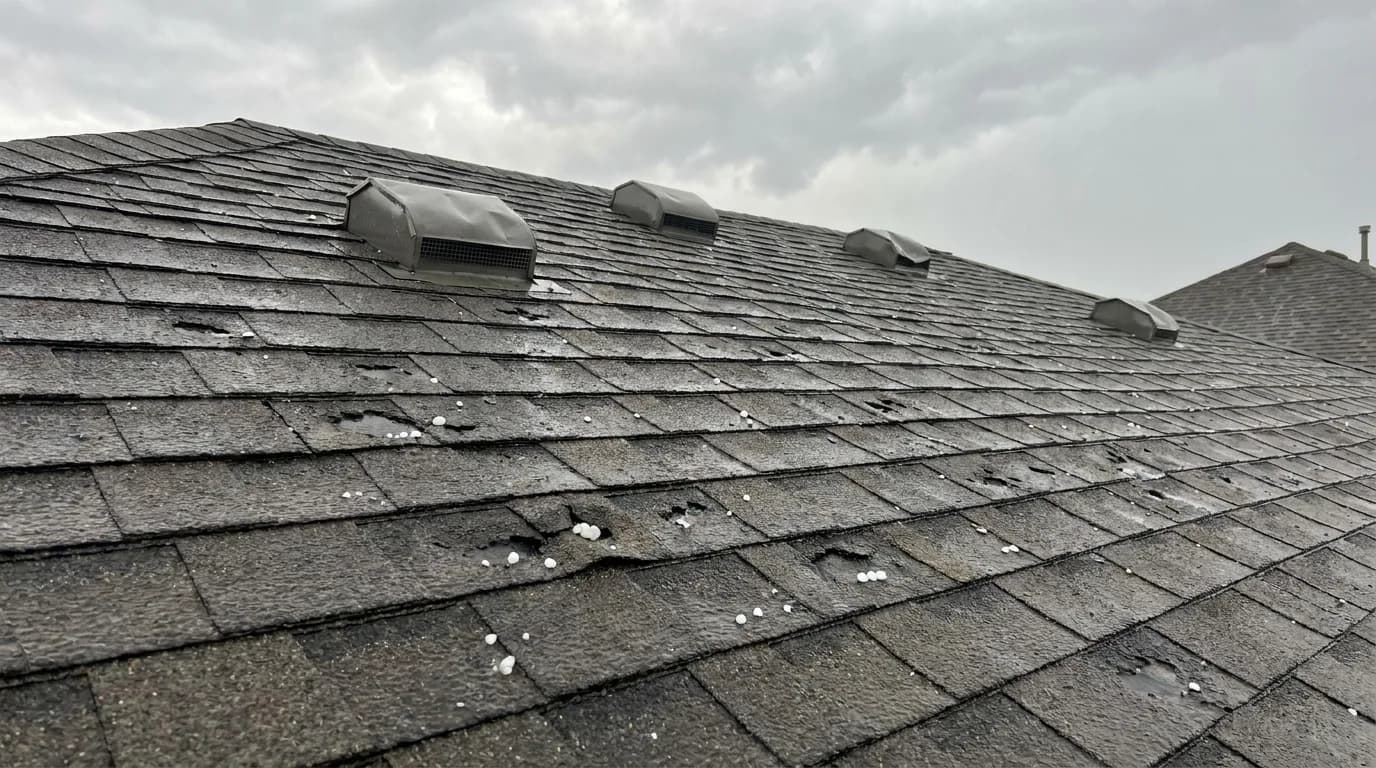
- Photograph everything the same day: hail on the ground beside a coin or ruler, dented vehicles, torn screens, damaged siding, dented eavestroughs and vents, and any interior leaks. Date-stamped phone photos are enough.
- Check the soft metal from the ground: dents in eavestroughs, fascia, vents and the AC unit are the most reliable sign the shingles were hit too.
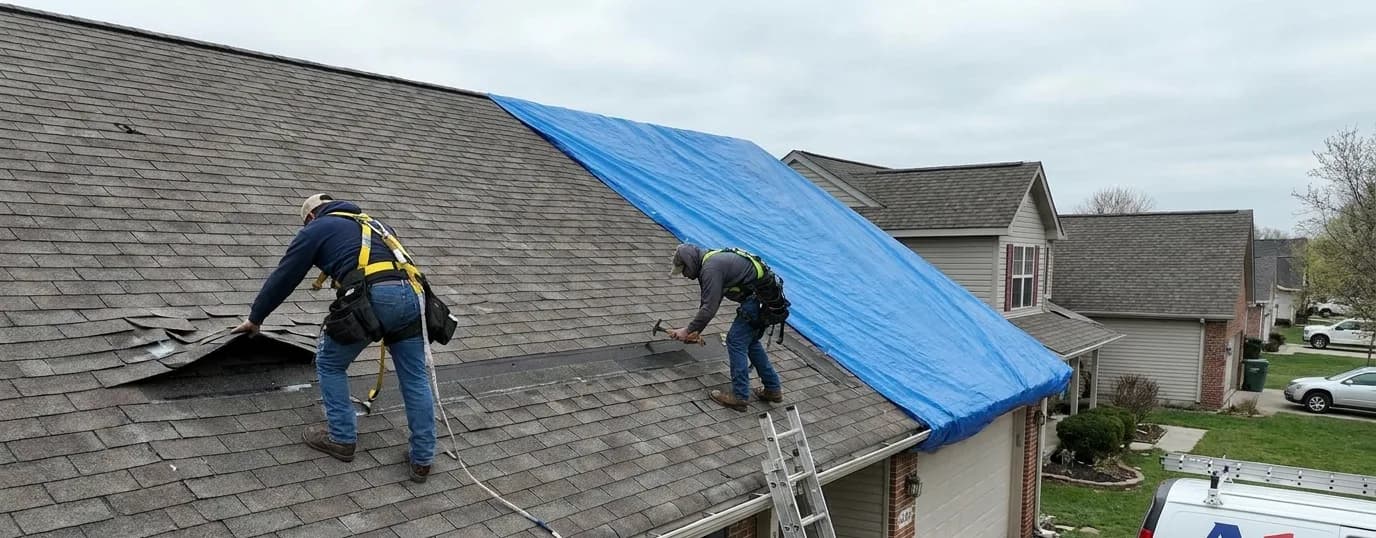
- Tarp active leaks: if water is coming in, get emergency tarping done and keep the receipt; insurers generally expect you to prevent further damage.
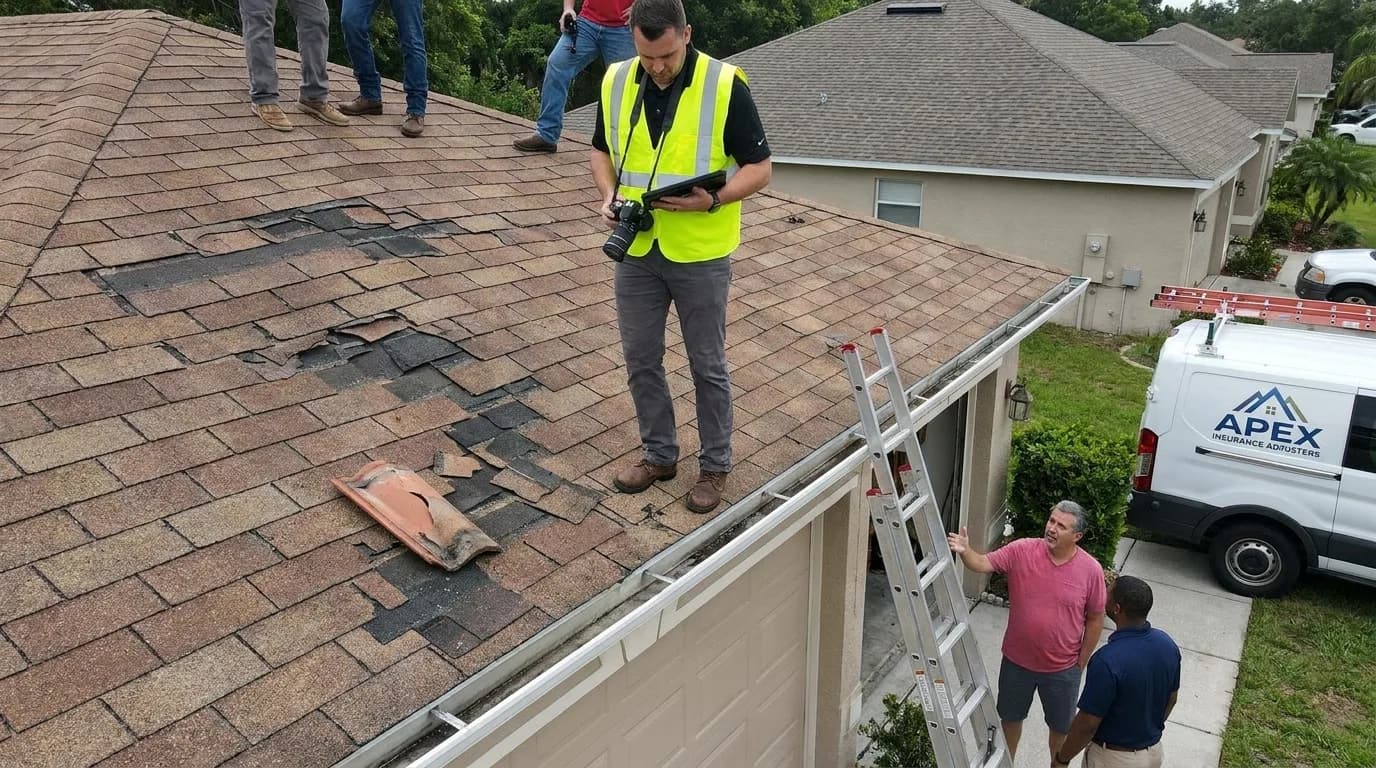
- Book a free roof inspection before you call your insurer: a documented inspection with photos and a marked test square tells you whether a claim is justified and gives you evidence if the adjuster's count differs.
- Report the claim within the policy window: note the storm date and time, and ask your broker about the deductible and whether the policy pays replacement cost or actual cash value.
- Choose your own contractor: in Alberta you pick who does the work, not the insurer. Be wary of anyone who knocks on the door offering to waive your deductible or asking you to sign an assignment of benefits.
- Keep every document: inspection reports, estimates, the adjuster's report and all correspondence, in one folder.
The full step-by-step process, from first call to final payment, is laid out in our pillar guide to hail damage roof insurance claims in Alberta.
Free Hail Inspections Across the Calgary–Airdrie Corridor
Living in Hailstorm Alley does not mean living with a damaged roof. It means knowing what to check after each storm and having someone local who will tell you honestly whether the damage is real. Apex Roofing Airdrie provides free, no-obligation hail inspections across Airdrie, Crossfield, Balzac, Cochrane and north Calgary, carried out by our own in-house crew rather than subcontractors.
We photograph every slope, mark a test square, and give you a written opinion you can use whether or not you decide to file. If the damage justifies a claim, we prepare the documentation your insurer needs, can meet the adjuster on site, and handle the repair or replacement with a written workmanship guarantee on top of the manufacturer warranty. If the honest answer is that your roof is fine, you will hear that too.
Start with our hail damage roof repair in Airdrie page or, if you already have a claim under way, our roof insurance claim support. Same-week inspection bookings are available through the contact page, and after a major storm we prioritise homes with active leaks.
Written by the Apex Roofing Airdrie crew
Practical guidance from the local roofers who inspect, repair and replace roofs across Airdrie and Rocky View County every season. We review our guides against current Alberta practice and update them when materials, code or insurer behaviour changes. About our team.