In this guide
- 01Hail Damage Siding: What It Looks Like
- 02How Hail Affects Each Type of Siding
- 03Hail Damage on Vinyl Siding: Cracks, Holes and Chalking
- 04James Hardie and Fibre Cement: How Hail Affects It
- 05Will Insurance Cover Hail Damage to Siding?
- 06The Matching Siding Problem
- 07How to Document a Siding Hail Claim
- 08Siding Repair vs Replacement After Hail: Costs in Airdrie
- 09What a Proper Siding Repair in Airdrie Involves
- 10Get a Free Siding and Roof Hail Inspection in Airdrie
Hail Damage Siding: What It Looks Like
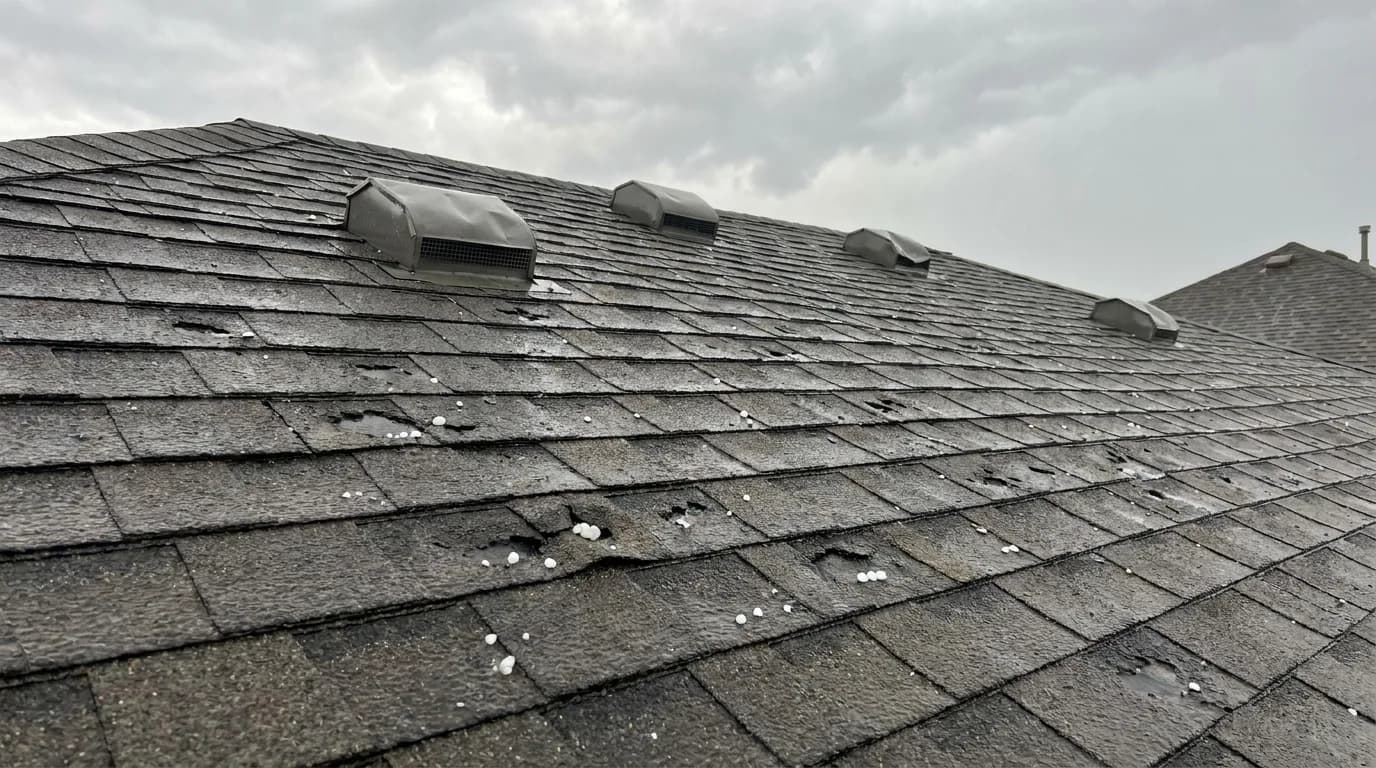
Hail damage siding is easy to miss because the roof gets all the attention after a storm. But hail does not fall straight down in Alberta. A cell that tracks across Airdrie with 80 or 100 km/h wind behind it drives stones sideways into the west and north walls of every house in its path, and the siding takes hits at the same energy the roof does. After the Aug 8, 2026 storm along the Crossfield–Airdrie corridor, many homes in northwest Airdrie had more visible damage on their siding than on their shingles.
The signature is directional. Damage appears on one or two elevations, the ones that faced the storm, and is far lighter or absent on the sheltered sides. It also tends to concentrate in a band, because wind-driven hail hits at a consistent angle and the eaves shelter the upper wall. Within that band you will see a random scatter of marks, not a pattern, and their size will match the hail that fell.
This guide covers how each common siding material reacts to hail, whether insurance covers it, the problem of matching discontinued siding, how to document a claim, and what repairs cost in the Airdrie area. It is general information, not insurance advice, so confirm your coverage with your insurer or broker.
How Hail Affects Each Type of Siding
Siding materials fail in very different ways, and the failure mode determines whether an insurer treats the damage as functional or cosmetic. The table gives the typical picture for the materials common on Airdrie homes.
| Siding type | What hail does | Functional or cosmetic? | Repair approach |
|---|---|---|---|
| Vinyl | Half-moon cracks, holes, broken bottom locks, chipped edges | Functional: cracks let water behind the wall | Replace damaged panels; whole elevation if matching fails |
| Aluminium | Dents, chipped paint, creased panels | Usually cosmetic unless paint is broken or panels creased | Replace dented panels; often full elevation for appearance |
| Steel | Dents, scratched finish | Cosmetic unless finish is broken (corrosion risk) | Replace or, rarely, repaint |
| Fibre cement (James Hardie, Allura) | Chips at edges and corners, spider cracks from large hail | Functional if the board is cracked through or the finish is breached | Replace boards, touch up factory finish |
| Engineered wood (LP SmartSide) | Dents, cracked finish, swelling if water enters | Functional if finish is breached | Replace boards, repaint |
| Wood | Dents, splits, chipped paint | Functional if bare wood is exposed | Fill, replace, repaint |
| Stucco | Chips, spalling, cracks | Functional if the base coat is exposed | Patch and refinish; matching texture is difficult |
Two notes. First, a cosmetic exclusion is a policy term, not a description of what the damage means for your home. Chipped paint on aluminium still leads to oxidation over time. Second, hail size matters: quarter-sized stones will crack older vinyl and dent aluminium but rarely damage fibre cement, while golf-ball hail damages almost everything.
Hail Damage on Vinyl Siding: Cracks, Holes and Chalking
Hail damage vinyl siding is the most common siding claim in Airdrie because vinyl is the most common siding, and because it gets brittle. Vinyl is flexible when new and in warm weather, but a decade of Alberta UV and a hundred freeze-thaw cycles leave it hard and prone to shattering. A stone that would bounce off new vinyl punches a half-moon crack or a clean hole through 12-year-old vinyl, especially on the sun-baked south and west walls.
Look for crescent-shaped cracks with the open side facing down (the stone hits, the panel flexes, the bottom edge of the impact breaks), round holes, broken bottom locks where a panel has been knocked loose from the one below, and chips along the edges of the panel where it meets J-channel or corner posts. Chalky white residue on the surface is UV degradation and not hail, but it does tell you the siding is brittle enough that hail will crack it.
Cracked vinyl matters because vinyl is a rain screen, not a waterproof barrier. Water that gets through a crack is supposed to drain down the house wrap behind it, but a hole above a window or at a panel lock lets water find the sheathing. Left through a winter, that leads to rot in the sheathing and framing, which is a much larger repair than the siding. Vinyl also cannot be patched invisibly; damaged panels are replaced, which brings up the matching problem covered below.
James Hardie and Fibre Cement: How Hail Affects It
James Hardie hail performance is one of the reasons the product has become popular in Hailstorm Alley. Fibre cement is a dense mix of cement, sand and cellulose fibre, and it shrugs off the quarter-sized hail that shatters brittle vinyl. In our experience most storms leave fibre cement siding with no functional damage at all, which is a real consideration when you are choosing what to put on a house in Airdrie.
It is not indestructible. Large hail, in the golf-ball range and up, can chip the edges and corners of boards, crack boards outright, and break the factory-applied colour finish. A breached finish is the thing to watch: fibre cement that has lost its coating absorbs water, and repeated freeze-thaw can delaminate the surface. Hardie's warranty covers manufacturing defects, not hail, so damage is an insurance matter rather than a warranty one.
Repairs are straightforward when the product is current. Individual boards can be removed and replaced, and the factory ColorPlus finish can be touched up with the manufacturer's matching kit for small chips. Where an older colour has been discontinued, replacing the whole affected elevation and repainting may be the cleanest outcome. Insurers generally accept fibre cement repair estimates without much argument because the damage, when it happens, is clearly functional.
Will Insurance Cover Hail Damage to Siding?
A hail damage siding insurance claim works the same way as a roof claim, and usually is the same claim. Hail is a named peril on most Alberta home policies, so damage to the siding, the eavestroughs, the window screens, the deck and the roof from one storm is one loss with one deductible. That is worth knowing, because homeowners sometimes assume the roof is the claim and pay for siding out of pocket when it should have been included.
The complications are the same ones that affect roofs, with one addition. First, the deductible: check for a separate hail or wind deductible, which may be a percentage of the dwelling coverage. Second, wear and tear: brittle, chalky vinyl that cracked in a storm is still a covered loss if the storm broke it, but expect the adjuster to look closely. Third, and specific to siding, cosmetic damage exclusions. Several Alberta insurers now exclude purely cosmetic damage to metal siding and metal roofing, meaning dents that do not affect function. If your policy has this exclusion, dented aluminium siding may not be covered even though it looks terrible. Read the wording or ask your broker.
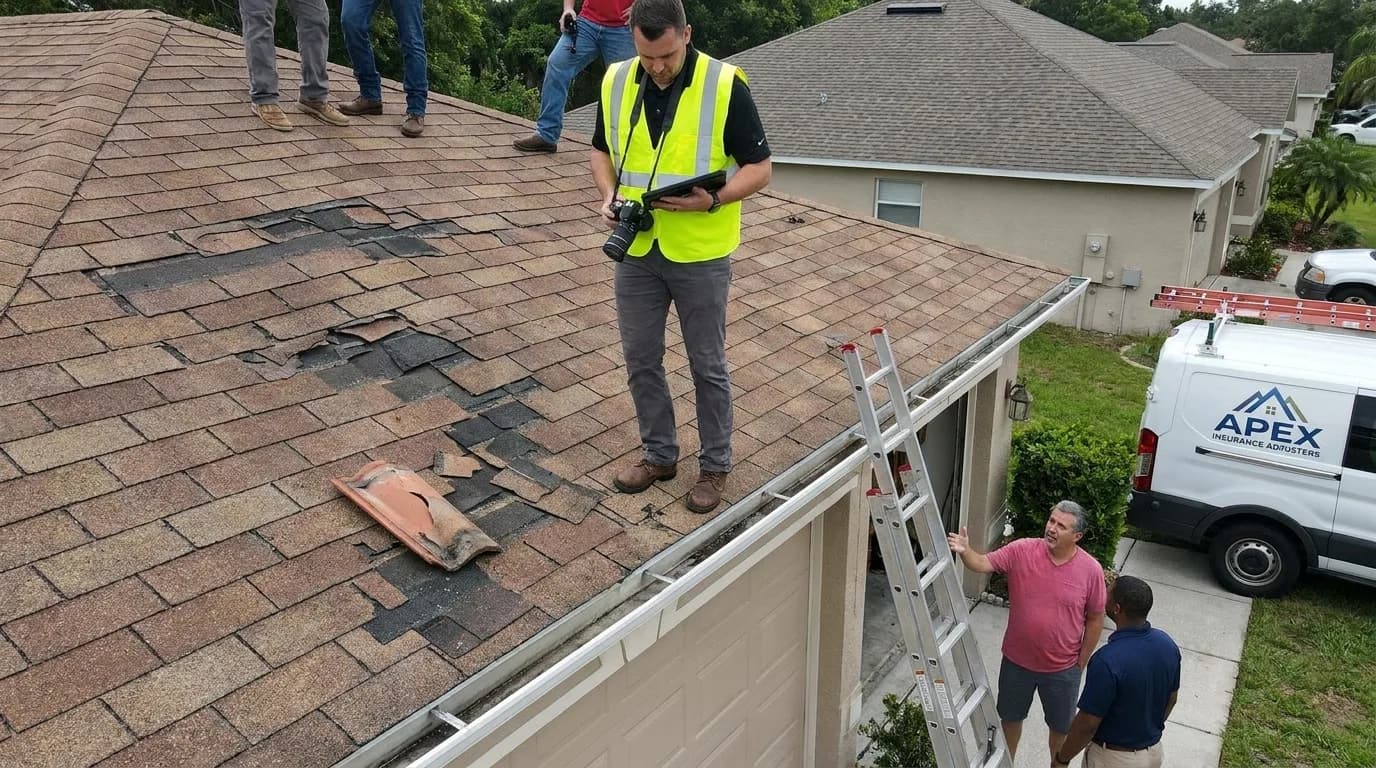
When the adjuster comes, walk them around the house. Adjusters are focused on the roof and can miss a wall of cracked vinyl on the north side. Point out every elevation with damage, the screens, the eavestroughs and any deck or fence damage, and make sure they are in the scope of loss. The pillar guide in this series, how a hail damage insurance claim works in Alberta, covers the scope of loss and how to add items it misses.
The Matching Siding Problem
Matching siding is where siding claims get contentious. Siding is replaced by the panel, and if your vinyl profile and colour are still made, the repair is invisible. But manufacturers change colour lines every few years, and a home in Big Springs or Thorburn with 20-year-old siding will very likely find its exact product discontinued. Even a current colour will have faded on the wall, so a new panel in the original colour stands out against the old.
Insurers handle this differently. Some policies include a matching provision that pays to replace undamaged siding on the same elevation, or on adjoining elevations, so the house looks uniform. Some pay only for the damaged panels and offer a small allowance for the mismatch. Others take the position that they owe only the damaged material, and the mismatch is your problem. Alberta does not have a rule that forces a particular approach, so it comes down to your policy wording and negotiation.
Practical steps: have your contractor document that the product is discontinued (a letter from the supplier helps), get a written estimate for the reasonable matching solution, and put the request in writing to the adjuster with photos of what a partial repair would look like. Where a wall is mostly damaged anyway, replacing the whole elevation is often approved because the difference in cost is small. If the insurer refuses a reasonable match, our guide to what to do when an insurance claim is denied or underpaid in Alberta covers the appeal routes.
How to Document a Siding Hail Claim
Siding is easier to document than a roof because it is at eye level, so do it thoroughly and do it early.
- Photograph each elevation as a whole, then in overlapping sections at about 2 metres, then close-ups of individual cracks and dents with a coin or tape measure for scale.
- Mark the damage. A small piece of painter's tape beside each crack makes the density obvious in wide photos and helps the adjuster count.
- Note the storm date and direction. Write down which walls faced the storm; the damage pattern should agree.
- Photograph the collateral evidence: dented eavestroughs and downspouts, torn screens, chipped paint on the deck, dents in the AC unit and the garage door.
- Photograph the hailstones if you can, next to something for scale, with the phone's timestamp on.
- Keep a sample. If a panel has already fallen off, keep it. It shows the product, the age and the brittleness.
- Get a contractor's inspection report covering the roof, siding and eavestroughs together so the scope of loss is complete the first time.
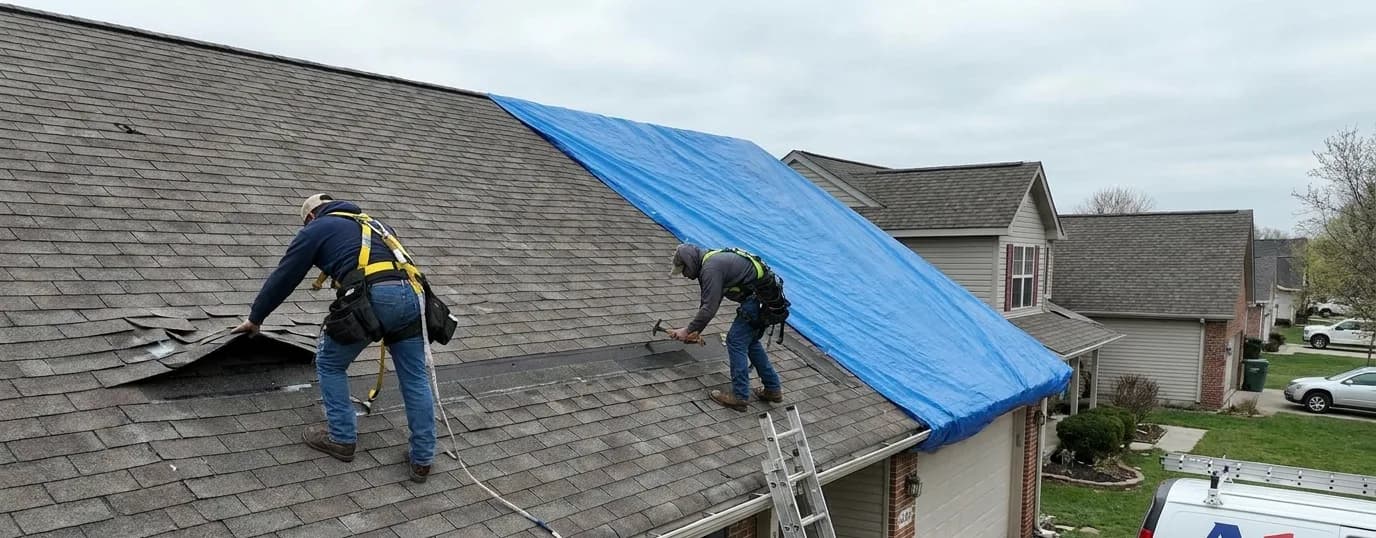
- Do not start repairs beyond covering holes, until the adjuster has seen the damage.
If you are working through the whole house after a storm, our 48-hour post-storm checklist for Airdrie puts the roof, siding and everything else in order.
Siding Repair vs Replacement After Hail: Costs in Airdrie
Whether hail damage is a repair or a replacement depends on the extent, the material and matching. The figures below are rough 2026 market guides for the Airdrie area, not quotes, and a free on-site estimate will give you an exact number.
| Job | Typical cost (2026, CAD) | Notes |
|---|---|---|
| Replace a few vinyl panels | $300–$800 | Only where the product is still available |
| Replace 10–30 vinyl panels on one wall | $800–$2,500 | Matching becomes the issue |
| Re-side one elevation in vinyl | $3,000–$7,000 | Typical two-storey side wall |
| Re-side one elevation in James Hardie | $6,000–$14,000 | Higher material and labour cost |
| Full house vinyl replacement | $12,000–$25,000+ | Rarely a hail claim unless all elevations are hit |
| Full house James Hardie | $25,000–$50,000+ | Long-term hail resistance and value |
| Fibre cement board replacement and touch-up | $400–$1,500 | Small chips on a current colour |
Insurers pay for like kind and quality, so if hail takes out two elevations of vinyl and you want to upgrade to fibre cement, you pay the difference. That upgrade is worth considering in Hailstorm Alley for the same reason a Class 4 roof is: it means the next storm does not become the next claim.
What a Proper Siding Repair in Airdrie Involves
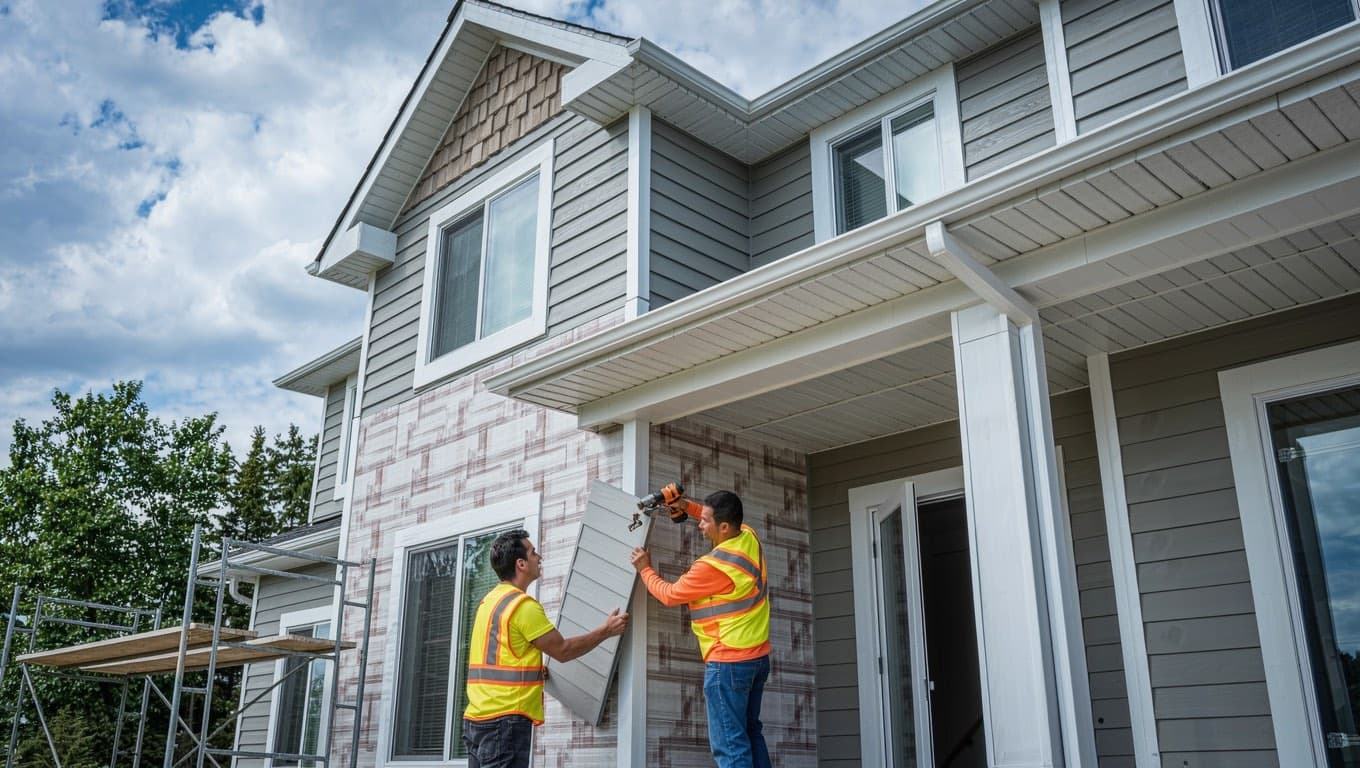
A good siding repair Airdrie contractor does more than snap in new panels. The damaged panels are unlocked and removed without cracking the neighbours, which takes a zip tool and patience in cold weather. The house wrap behind is inspected for tears and repaired with the correct tape. Any wet or soft sheathing is opened up and replaced. The new panels are hung with the right fastener gap so they can expand in summer and contract in a January Chinook without buckling or cracking, and the J-channel and corners are checked and replaced if they were hit too.
Matching is handled honestly: the contractor tells you whether an exact match exists, sources the closest current profile and colour if not, and shows you a sample on the wall before ordering. Where a full elevation is being replaced, the transition at the corners is planned so the new and old meet where the eye does not linger.
Eavestroughs, downspouts, fascia and soffit are usually damaged in the same storm, and it makes sense to do them in one visit. Our eavestrough repair and replacement service covers that work, and it can go on the same claim.
Get a Free Siding and Roof Hail Inspection in Airdrie
If a storm has left cracks in your vinyl or dents in your aluminium, Apex Roofing Airdrie will inspect the siding, roof and eavestroughs together, document everything with dated photos, and give you an itemised written quote you can put in front of your insurer. Our own local crew handles the work, and it comes with a written workmanship guarantee on top of the manufacturer warranty.
See our siding repair and replacement service in Airdrie for vinyl and James Hardie work including hail-damaged siding, our hail damage roof repair service, and our roof insurance claim support if you would like help with the paperwork. Same-week estimate bookings are available through the contact page.
Written by the Apex Roofing Airdrie crew
Practical guidance from the local roofers who inspect, repair and replace roofs across Airdrie and Rocky View County every season. We review our guides against current Alberta practice and update them when materials, code or insurer behaviour changes. About our team.