In this guide
- 01What is Euroshield roofing?
- 02The Euroshield lineup: slate and shake profiles
- 03How Euroshield handles Alberta hail vs Class 4 asphalt vs metal
- 04Weight, installation and what it means for your roof structure
- 05Euroshield cost in Alberta
- 06Lifespan and warranty: the headline terms
- 07Finding an installer in Airdrie and Calgary
- 08Honest cons: cost, colour range, installers and resale
- 09Euroshield vs asphalt: when rubber roofing makes sense
- 10Should you go rubber after the next hailstorm?
What is Euroshield roofing?
Euroshield roofing is a line of rubber roof shingles and panels made by G.E.M. Inc. (Global Environmental Manufacturing) in Calgary, Alberta. The material is mostly crumb rubber from recycled tires, blended with binders and pigments and moulded into pieces that mimic slate and cedar shake. As of 2026 the manufacturer states the products are around 95 per cent recycled content and that a typical roof diverts several hundred tires from landfill; check the current specifications for exact figures.
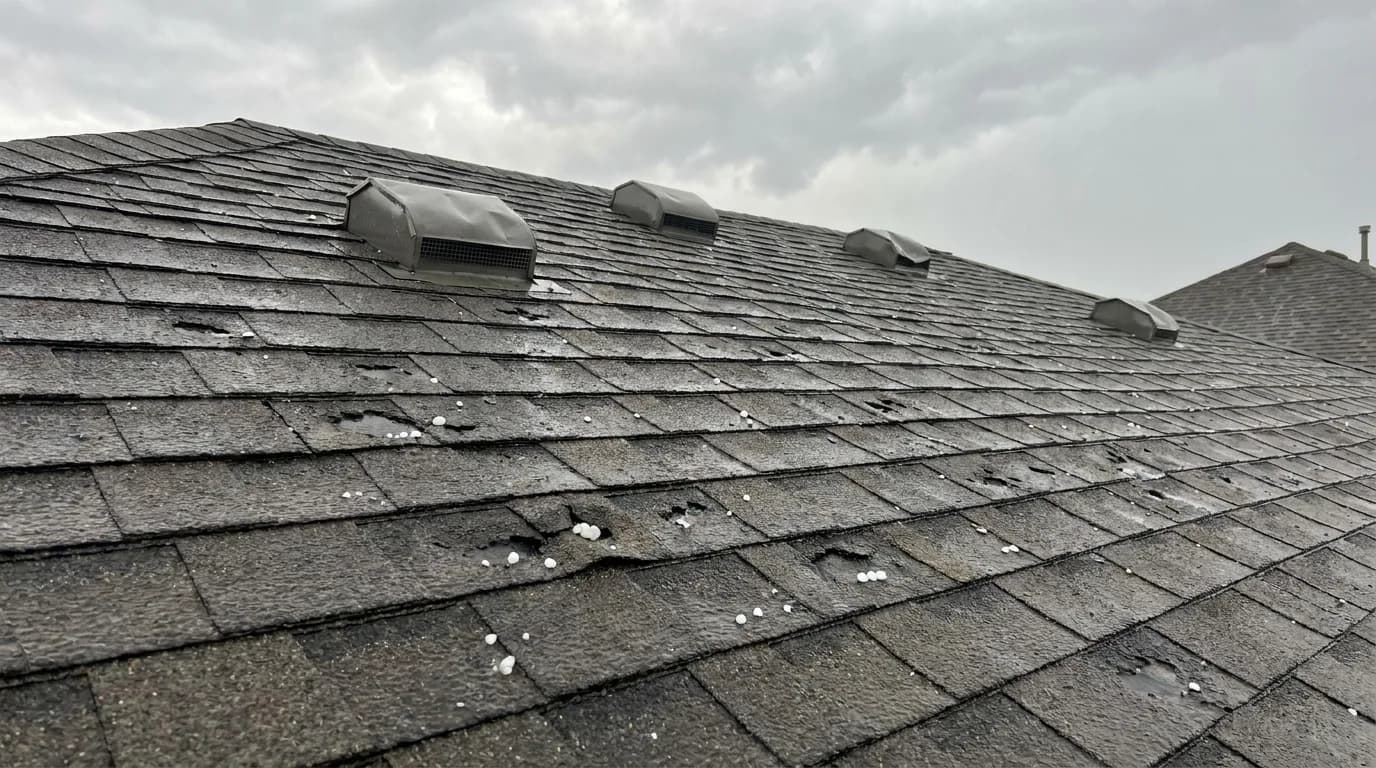
Euroshield roofing exists because of hail. Alberta sits in the corridor the insurance industry calls Hailstorm Alley, and the Insurance Bureau of Canada (IBC) reports the province has seen a major hailstorm every year for two decades, with more than $11 billion in insured damage over that period. Rubber does not crack, bruise or shed granules when a hailstone hits it. It flexes and returns to shape, which is why Euroshield is marketed on impact resistance first and appearance second.
This guide is a neutral look at the product: the lineup, how it handles hail compared with Class 4 asphalt and metal, weight, cost, warranty, installer availability, and the downsides the brochure will not lead with. We do not have independent test data beyond the published ratings, so where a figure comes from the manufacturer we say so. Note that Euroshield is a sloped-roof shingle product, not the same thing as EPDM rubber roofing or torch-on roofing, which are the membranes used on flat garage roofs and additions.
The Euroshield lineup: slate and shake profiles
Euroshield roofing comes in a handful of profiles, all in the same rubber compound, that differ in look, thickness, weight and price. The lineup changes over time, so treat the table below as a snapshot and check the current product list before you decide.
| Product | Look | Format | Notes (check current lineup) |
|---|---|---|---|
| Vermont Slate | Thick, textured slate | Individual tiles | The original and heaviest profile; strongest slate appearance |
| Beaumont Shake | Hand-split cedar shake | Individual shakes | Rustic look popular on acreages and heritage-style homes |
| Rundle Slate | Slate with a flatter, more uniform face | Individual tiles | Lighter than Vermont Slate; named for the Rocky Mountain peak |
| Eurolite Slate and Eurolite Shake | Slate or shake | Multi-piece panels | Lighter, faster to install, lower cost; the most common residential choice |
Colours are mostly earth tones: black, charcoal, brown, grey and a few slate greens and blues. The pigment runs through the rubber, so scratches and chips do not show a different colour underneath. If you want the wide colour palette of asphalt or the bright finishes of metal, this is not the product, and it is better to know that up front.
How Euroshield handles Alberta hail vs Class 4 asphalt vs metal
Hail proof roofing does not exist, but some products get much closer than others. Euroshield, Class 4 asphalt and metal all pass the UL 2218 Class 4 test, which drops a 50 mm (2 in) steel ball on the product from about 6 metres. Passing the test is a floor, not a ceiling, and the three materials fail differently when the hail gets bigger or the roof gets older.
| Factor | Euroshield rubber | Class 4 asphalt shingle | Metal (steel standing seam or panel) |
|---|---|---|---|
| UL 2218 impact rating | Class 4 | Class 4 | Class 4 (most products) |
| What large hail does | Rubber flexes and recovers; cosmetic marks are rare | Polymer-modified asphalt resists bruising but can still crack or lose granules in severe storms, more so as it ages | Dents that are usually cosmetic, but visible on flat panels and rarely covered by insurance |
| Ageing in hail | Compound stays flexible; performance changes little with age (manufacturer claim) | Impact resistance declines as the asphalt hardens over 10 to 15 years | Dent resistance is stable; paint chalks over time |
| Hail warranty | Manufacturer markets a hail-specific warranty; confirm current terms | Hail is excluded from nearly every asphalt warranty | Hail typically excluded; cosmetic dents excluded |
| Insurance | Class 4 discounts may apply; confirm with insurer | Class 4 discounts commonly available; confirm | Class 4 discounts may apply; cosmetic damage often excluded from coverage |
Two honest points. First, Class 4 asphalt is a big step up from standard shingles and is the right answer for most Airdrie homes on budget alone, which is why our post on Class 4 impact-resistant shingles in Alberta is the place to start. Second, the metal comparison is about appearance as much as function: a dented steel roof still keeps the water out, but a homeowner who paid for a smooth standing seam roof may not be happy looking at it. Our metal roof vs shingles comparison covers that trade-off.
Weight, installation and what it means for your roof structure
Rubber sounds heavy, and the thick profiles are, but the range is wider than people expect. Depending on the product, Euroshield weighs roughly 200 to 350 pounds per square, which puts the lighter Eurolite panels in the same range as heavy architectural asphalt and the Vermont Slate at the upper end of it. That is a fraction of natural slate or concrete tile, so most conventionally framed Airdrie homes do not need structural reinforcement. Check the current data sheet for the exact figure and confirm with your roofer if your trusses are unusual.
Installation is closer to asphalt than to metal, but it is not the same. The pieces are nailed to the deck over a synthetic underlayment and ice and water shield, with specific nailing, overlap and starter details that differ from shingles. Cutting is done with a utility knife or shears rather than a saw. Because rubber expands and contracts more than asphalt with temperature, spacing and fastening matter, and a crew that has not been trained on the product can produce a roof that looks right and performs badly.
The manufacturer runs an installer training program, and you should treat that as a requirement rather than a nice-to-have. Ask any roofer quoting Euroshield how many they have installed and whether they are trained on the current product. Our guide to choosing a roofing contractor in Airdrie covers the rest of the questions.
Euroshield cost in Alberta
Recycled rubber roofing cost sits well above asphalt and in the same range as metal. The figures below are rough Alberta market guides as of 2026, not quotes, and they move with the profile chosen, roof complexity, tear-off and the installer's experience. A typical Airdrie two-storey is roughly 20 to 30 squares.
| Roof covering | Rough installed cost per square (CAD, 2026 guide) | Typical Airdrie two-storey (25 squares) |
|---|---|---|
| Architectural asphalt | $450 to $800 | $11,000 to $20,000 |
| Class 4 impact-resistant asphalt | $550 to $950 | $14,000 to $24,000 |
| Euroshield (Eurolite panels) | $1,000 to $1,800 | $25,000 to $45,000 |
| Euroshield (Vermont Slate, Beaumont Shake) | $1,300 to $2,400 | $32,000 to $60,000 |
| Metal (steel standing seam) | $1,000 to $2,000 or more | $25,000 to $50,000 or more |
In round numbers, Euroshield costs about two to three times an architectural asphalt roof and roughly one and a half to two times a Class 4 asphalt roof. The gap narrows if you expect to replace an asphalt roof twice in the time a rubber roof lasts, and it narrows again if your insurer offers a meaningful Class 4 discount, though eligibility varies, so confirm with your insurer or broker. Get a free on-site quote for an exact figure; our roof replacement cost guide for Airdrie shows how the asphalt numbers break down.
Lifespan and warranty: the headline terms
The manufacturer markets Euroshield with a limited lifetime warranty, plus a hail-specific component that covers damage from hailstones up to a stated size. That hail coverage is the unusual part: nearly every asphalt and metal warranty excludes hail outright, leaving it to your home insurance. Confirm the current warranty document for the exact terms, the non-prorated period, the hail size limit, transfer rules and registration requirements, because these change and the headline is not the contract.
On lifespan, the product has been on Alberta roofs since the early 2000s, so there are roofs approaching 25 years old but not yet 50. Rubber does not rot, does not shed granules and does not go brittle the way asphalt does, so a long life is plausible, but treat any specific lifespan figure as a manufacturer expectation rather than a proven track record. Our post on roof warranties explained covers how to read prorated terms and what actually gets paid out.
As with every roof, the manufacturer warranty covers the material, not the installation. The written workmanship guarantee from your installer is the coverage you are most likely to use, so ask for it in writing and read its term.
Finding an installer in Airdrie and Calgary
Because the product is made in Calgary, installer availability across the Calgary to Airdrie corridor is better than anywhere else in Canada. Even so, the number of crews that install rubber roofing every week is a small fraction of the number that install asphalt. That shows up in three ways: fewer quotes to compare, longer lead times in the post-hail rush, and a wider quality range between the best and worst installers.
When you collect quotes, ask each roofer for addresses of Euroshield roofs they have installed in Airdrie, Crossfield, Cochrane or north Calgary so you can drive past, and ask how the crew was trained. Compare the quotes on underlayment, membrane, ventilation and flashing detail, not only on the rubber. A roof replacement in Airdrie with a premium covering over a badly ventilated attic is still a badly ventilated attic.
If your roof took hail in the August 8, 2026 storm that tracked down the Crossfield to Airdrie corridor, or in any earlier event, you can often use the insurance settlement toward an upgrade. Alberta homeowners choose their own contractor on a claim, and the difference between the settlement and the upgraded roof is paid by you. Our hail damage roof repair service documents the damage and explains how that works; confirm the details with your insurer or broker.
Honest cons: cost, colour range, installers and resale
Euroshield roofing is a good product with real limitations, and you should hear them before you spend the money.
- Cost: Two to three times asphalt is a lot, and the payback depends on staying in the home long enough to skip a future reroof. On a home you expect to sell within ten years, the math is hard to make work.
- Colour and style range: Earth tones in slate and shake only. There is no equivalent of the wide asphalt colour palette or the bright metal finishes, and some homeowners find the shake profiles look heavy on a small bungalow.
- Fewer installers: A limited pool of trained crews means fewer quotes, longer waits after a storm, and more risk of a poorly trained installer.
- Resale familiarity: Buyers and home inspectors know asphalt and metal. Rubber roofing still prompts questions, and a buyer who does not understand it may not pay more for it. Keep the warranty, the product data sheet and the installer information for the sale.
- Heat and expansion: Dark rubber gets hot, and the material moves with temperature more than asphalt. Correct installation manages this, but it is one more reason the installer matters.
- Limited long-term track record: Roofs from the early 2000s are performing, but 50-year claims are projections, not history.
None of these is a reason to avoid the product. They are the reasons a neutral comparison should end with when it makes sense, rather than with a recommendation for everyone.
Euroshield vs asphalt: when rubber roofing makes sense
Euroshield vs asphalt comes down to how long you will own the home, how much hail your roof sees, and how you feel about replacing a roof again. Rubber roofing in Alberta makes sense when most of the following are true.
- You plan to stay in the home for fifteen years or more and want to avoid a second reroof.
- Your roof has been replaced or repaired after hail more than once, which is common in Airdrie neighbourhoods such as Cooper's Crossing, Kings Heights and Bayside.
- You like the slate or shake look and one of the available colours suits the house.
- Your insurer offers a meaningful Class 4 discount that helps close the price gap; confirm with your broker.
- You have found a trained installer with local references and a written workmanship guarantee.
- You are already at the point of paying for metal, and prefer the look and hail behaviour of rubber.
If several of those do not apply, a Class 4 asphalt shingle from a major brand, installed well over proper membrane and ventilation, is the better value for most Airdrie homes. Our pillar guide to the best shingles for Alberta's climate explains how to choose one.
Should you go rubber after the next hailstorm?
Euroshield roofing is one of the few products designed around the exact problem Airdrie roofs face, and it does what it claims: it shrugs off hail that bruises asphalt and dents metal, it is made locally, and it turns old tires into a roof. It is also expensive, limited in colour, and dependent on finding the right installer. Whether that trade is worth it is a question about your house and your plans, not about the product.
The right time to decide is before the next storm, not in the week after it, when every roofer in the corridor is booked and the decision gets made under pressure. If you are weighing rubber, Class 4 asphalt and metal, get all three priced for your actual roof and compare the full spec, not just the covering.
Apex Roofing Airdrie will price the options side by side at a free, no-obligation on-site estimate, with an itemised written quote for each and a straight answer about which one we would put on your house. If you have hail damage now, we can document it for your claim at the same visit.
Written by the Apex Roofing Airdrie crew
Practical guidance from the local roofers who inspect, repair and replace roofs across Airdrie and Rocky View County every season. We review our guides against current Alberta practice and update them when materials, code or insurer behaviour changes. About our team.