In this guide
- 01What Is Torch On Roofing? SBS Modified Bitumen Explained
- 02How Torch On Roofing Works: The Torch-Applied Installation Process
- 03Two-Ply vs Three-Ply Torch On Systems
- 04Torch On Roofing vs Other Flat Roof Materials: TPO, EPDM and Peel-and-Stick
- 05Torch On Roofing vs Tar and Gravel (Built-Up Roofing)
- 06Advantages and Disadvantages of Torch On Roofing
- 07How Torch On Roofing Performs in Alberta: Hail, Chinook Wind and Freeze-Thaw
- 08Torch On Roof Cost in Airdrie and Calgary (2026 Price Guide)
- 09Lifespan, Maintenance and Warranty for Torch On Roofs
- 10Fire Safety, Permits and Cold-Applied Alternatives
- 11Insurance Claims on Torch On (Flat and Low-Slope) Roofs After Storm Damage
- 12Hiring a Torch On Roofing Contractor: Questions to Ask
What Is Torch On Roofing? SBS Modified Bitumen Explained
Torch on roofing, more precisely called SBS modified bitumen roofing, is made of asphalt reinforced with a polyester or fibreglass mat and blended with styrene-butadiene-styrene (SBS) rubber polymer. The SBS additive is what separates it from older asphalt roofing: it keeps the membrane flexible in cold weather and lets it stretch and recover instead of cracking, which matters on a roof that swings from deep cold to a Chinook thaw within days.
The membrane comes in rolls, typically about 1 m wide, with a smooth or mineral-granulated surface on the cap sheet. Installers heat the underside with a propane torch as they unroll it, melting the asphalt so it bonds directly to the roof deck or to a base sheet below it. That torch-applied bonding is where the name comes from, and it produces one continuous, fully adhered membrane with no mechanical fasteners and no adhesive to cure.
SBS roofing is one of two common modified bitumen types. The other, APP (atactic polypropylene), is also torch-applied, but it uses a plastic modifier instead of a rubber one, so it stiffens sooner in cold weather. That is why SBS is the grade normally specified on Alberta flat roofs. Torch on roofing should not be confused with Euroshield, a recycled-rubber shingle for pitched roofs; see our Euroshield rubber roofing guide for Alberta if that is the product you meant. On a standard pitched Alberta home, asphalt or metal from our guide to the best shingles for Alberta's climate is the right starting point, not a flat membrane at all.
How Torch On Roofing Works: The Torch-Applied Installation Process
Torch on roofing installation starts with a clean, dry deck, usually covered first with a base sheet mechanically fastened or torched down as the first layer. The installer then rolls out the cap sheet, applies the torch to the underside as it unrolls, and presses the softened asphalt against the layer below with a hand roller to force out air and lock in a full bond.
Seams overlap by roughly 75 to 100 mm, and the torch is run along the overlap until asphalt bleeds out at the edge, the visual cue that the bond has fully fused rather than just surface-melted. Flashing at drains, curbs, vents and parapet walls is built up separately, often with the same torch-applied material wrapped up the vertical surface and tied into counter-flashing or metal edging.
Done well, a torch-applied roof produces a single continuous sheet with no mechanical penetrations in the field of the roof, one of its real advantages over fastened membrane systems. Done poorly, with an under-heated seam or a rushed pass, the bond looks fine from above but separates the first time water sits on it, so installer skill matters more with torch on roofing than with almost any other flat roofing installation method.
Two-Ply vs Three-Ply Torch On Systems
Most residential torch-applied installations use a two-ply system: a base sheet mechanically fastened or torched to the deck, then a granulated cap sheet torched on top. It is the standard, cost-effective approach for garages, additions and most flat sections on Alberta homes, and it is what most local contractors quote by default.
Three-ply systems add a middle ply, sometimes felt or another modified bitumen sheet, between the base and cap sheet. The extra layer adds redundancy and a bit more puncture resistance, which matters more on a commercial roof with regular foot traffic or mechanical equipment than on a typical residential garage roof. For most homes, two-ply is enough; three-ply earns its extra cost mainly on roofs with heavier use or where local wind or fire code pushes toward a heavier assembly.
Whichever system is used, the cap sheet is what you see and what takes the weather: granule colour, UV exposure and hail all act on that top layer, while the base sheet's job is simply to give the cap something solid and continuous to bond to.
Torch On Roofing vs Other Flat Roof Materials: TPO, EPDM and Peel-and-Stick
Torch on roofing sits alongside TPO, EPDM, tar-and-gravel and self-adhered peel-and-stick membranes as five common flat roofing choices in Alberta; our wider guide to roof types used across Alberta homes sets all of them alongside pitched-roof options too. The table below compares the five flat systems, with cost shown as a rough 2026 guide, on the points that matter most for a homeowner choosing between them.
| Material | Installation method | Cold flexibility | Rough cost/sq ft installed | Typical lifespan |
|---|---|---|---|---|
| Torch-on (SBS) | Torch-applied, fully fused | Good; SBS stays flexible in cold | $10-$20 | 15-25 yrs |
| TPO | Hot-air welded seams | Good, but welds need correct heat and speed | $10-$18 | 15-25 yrs |
| EPDM | Fully adhered, fastened or ballasted | Very good; stays pliable in deep cold | $12-$22 | 20-30 yrs |
| Peel-and-stick (self-adhered SBS) | Cold-applied, no open flame | Good; installs in cooler weather than torch-on | $12-$20 | 15-20 yrs |
| Tar-and-gravel (BUR) | Hot-mopped asphalt and felt plies, loose gravel ballast | Fair; unmodified asphalt stiffens in deep cold | $9-$16 | 15-25 yrs |
For a full breakdown of EPDM specifically, our guide to EPDM roofing in Alberta covers cost, lifespan and where a rubber membrane fits on a home. The short version: torch-on and EPDM cost similarly installed, torch-on tends to be more puncture-resistant because of its granulated surface, and EPDM is generally easier to repair because no flame is involved.
Torch On Roofing vs Tar and Gravel (Built-Up Roofing)
Torch on roofing vs tar and gravel is really a question of old technology versus its modern replacement. Tar-and-gravel, also called built-up roofing (BUR), layers hot mopped asphalt and felt several times over, then finishes with a layer of loose gravel ballast. It was the standard flat roof system on Alberta homes for decades and plenty of it is still in service on older Airdrie garages and additions.
Torch-applied SBS membrane replaced tar-and-gravel for most residential work because it installs faster, weighs less, needs no hot asphalt kettle on site, and its granulated cap sheet gives a more predictable, inspectable surface than a bed of loose gravel. Where tar-and-gravel still has an edge is sheer redundancy: multiple asphalt-and-felt plies can outlast a thin single cap sheet if the gravel ballast is maintained. In practice, if an old tar-and-gravel roof is failing today, re-covering with a two-ply torch-on system is the common, sensible replacement.
Advantages and Disadvantages of Torch On Roofing
Torch on roofing's advantages are straightforward: a fully fused, seamless membrane with no mechanical fasteners in the field, strong puncture resistance from the granulated cap sheet, a track record of decades of use on Alberta flat roofs, and a lower material cost than PVC or premium EPDM systems.
- Fully fused seams with no mechanical fasteners to work loose over time.
- Granulated cap sheet resists punctures and foot traffic better than a smooth membrane.
- Proven in Alberta's climate with decades of local use on garages and additions.
- Open-flame installation carries a fire risk that cold-applied membranes do not.
- Torch skill varies by installer, and a rushed seam is hard to spot from above.
- Repairs also involve heat, less convenient than a cold-applied patch on EPDM or TPO.
The disadvantages mostly trace back to one thing: the open flame used to install it. That is a genuine safety consideration, covered in more detail later in this guide, and it is the main reason some property owners choose a cold-applied SBS system instead even though torch-applied membrane costs less and bonds more completely.
How Torch On Roofing Performs in Alberta: Hail, Chinook Wind and Freeze-Thaw
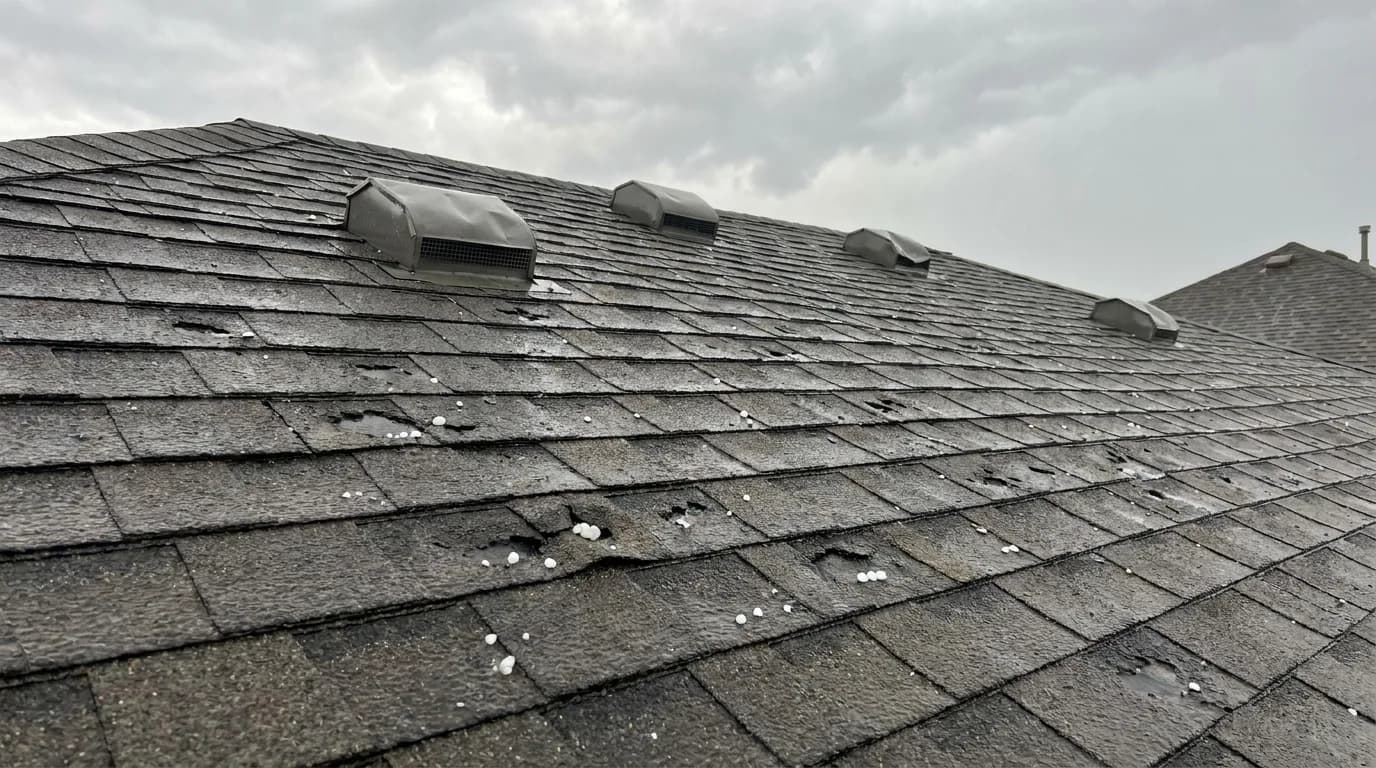
The granulated cap sheet resists small to moderate hail well; the mineral granules absorb some impact energy the way shingle granules do. A large, hard hailstone hitting at a steep angle can still crack or dent the cap sheet, and repeated hail over many seasons can wear granules thin in spots, exposing the asphalt underneath to faster UV aging.
Chinook wind is less of a direct threat to torch on roofing than it is to a ballasted membrane, because a fully torch-fused sheet has no loose components for wind to catch. The real Chinook risk is thermal cycling rather than uplift: a rapid swing from minus 20 to above zero and back stresses every seam and every flashing detail, and a seam that was under-heated during installation is the one most likely to open under that repeated stress.
Freeze-thaw is where the SBS polymer earns its keep. Standard asphalt without an SBS modifier becomes brittle and prone to cracking well before Alberta's coldest temperatures; SBS-modified membrane stays flexible through a much wider range, which is exactly why it displaced older built-up roofing here. The membrane's weak points remain the same ones freeze-thaw always finds: seams, flashing transitions and any spot where water can pond and refreeze against a laid-back edge.
Torch On Roof Cost in Airdrie and Calgary (2026 Price Guide)
Homeowners often search for flat roof torch on Alberta pricing, so here is the local picture as a rough 2026 guide. Torch on roof cost runs roughly $10 to $20 per square foot fully installed for a standard two-ply residential system, or about $1,000 to $2,000 per square (100 square feet). A three-ply system, extra flashing detail, or a full tear-off of old tar-and-gravel before the new membrane goes down pushes the price toward the top of that range or above it.
| Scope | What is included | Rough 2026 cost (guide) |
|---|---|---|
| Two-ply torch-on, re-cover over sound deck | Base sheet, cap sheet, standard flashing | $10-$15/sq ft |
| Two-ply torch-on, full tear-off | Removal of old material, deck repairs as needed, new two-ply system | $14-$20/sq ft |
| Three-ply system | Base sheet, mid-ply, cap sheet, heavier-duty flashing | $16-$24/sq ft |
| Small garage roof (200-400 sq ft) | Full install, higher per-sq-ft due to fixed costs | $2,500-$6,000 total |
Access, the number of penetrations, deck condition once the old roof comes off, and whether parapet or wall flashing needs rebuilding all move the number. For repair-only pricing on an existing torch-on section rather than a new install, see our flat roof repair cost guide, which breaks down patch and seam pricing separately.
Lifespan, Maintenance and Warranty for Torch On Roofs
A properly installed SBS membrane system typically lasts 15 to 25 years, with two-ply systems toward the lower end and heavier three-ply or premium cap sheets toward the upper end. Manufacturer warranties commonly run 10 to 20 years on materials, with workmanship warranties handled separately by the installing contractor.
Maintenance is similar to any membrane roof: a twice-yearly walk to check seams, flashing and drains, prompt attention to any blister, split or lifted edge, and keeping debris and standing water off the surface. Blisters, small air pockets trapped under the membrane during installation, are common and mostly cosmetic unless they grow or split; a split blister needs a patch before it becomes an active leak, which our roof repair service in Airdrie handles on both flat and pitched sections.
Granule loss on the cap sheet is normal over time and is not itself a failure, but a bald patch worn through to the black asphalt underneath is a sign that section is aging faster than the rest of the roof and worth watching.
Fire Safety, Permits and Cold-Applied Alternatives
Open-flame torch application is exactly what it sounds like: a propane torch heating asphalt to bonding temperature a few centimetres from combustible roof decking, insulation and, on a re-cover, whatever old roofing material is still in place. It is routine, safe work for a trained crew that follows standard fire-watch practice, including keeping an extinguisher on the roof and checking for smouldering material for a period after the torch is put away, but it is not a job for an untrained installer.
Some municipalities and insurers restrict or require permits for open-flame roofing work, particularly on multi-unit or attached buildings; confirm requirements with the City of Airdrie or your municipality before work starts, and ask any contractor how they handle the post-work fire watch.
Where an open flame is restricted, or a homeowner simply prefers to avoid it, cold-applied self-adhered SBS membrane is the alternative: the same rubberized asphalt chemistry, bonded with a peel-and-stick adhesive backing instead of heat. It costs slightly more per square foot, tolerates cooler installation temperatures, and removes the fire-watch requirement entirely, though it depends on adhesive bond quality rather than torch-fused bonding for its seams.
Season matters as much as method. Torch on roofing needs a dry deck and above-freezing conditions to bond predictably, and a wet or frosted substrate traps moisture under a membrane that is meant to be fully sealed, so spring through fall is the practical Alberta window. Late-season and emergency work is where a cold-applied self-adhered sheet, or a temporary repair held until spring, is usually the more reliable call.
Insurance Claims on Torch On (Flat and Low-Slope) Roofs After Storm Damage
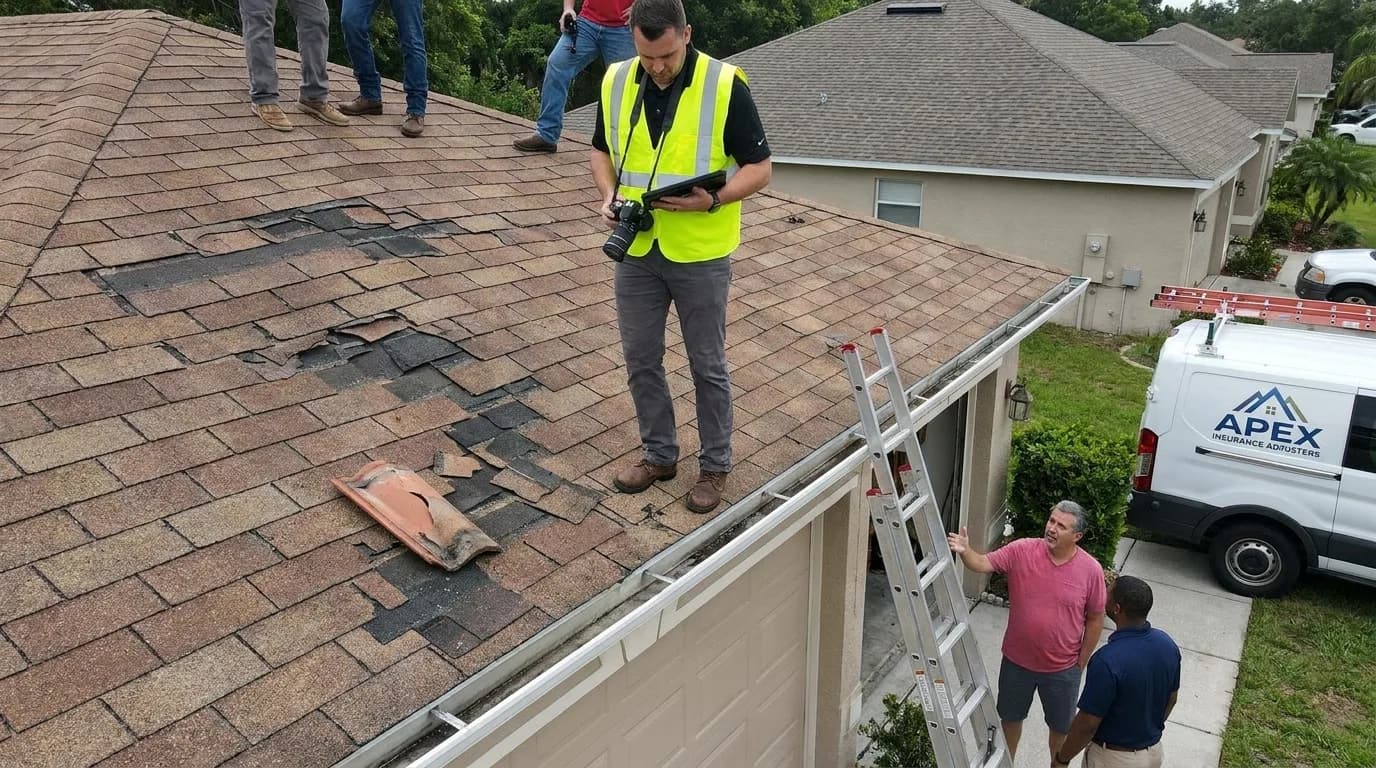
Insurance claims on a torch on roofing section after hail or wind work the same way they do on any flat membrane: the adjuster looks for punctures, cracked or lifted cap sheet, seam separation and flashing damage rather than the granule loss and bruising used to assess a shingle roof. Photograph any visible damage and any granule loss down to bare asphalt as soon as it is safe to do so.
ACV vs RCV settlement and depreciation schedules apply to torch-on claims the same way they apply to shingle claims, but how an adjuster ages a membrane roof, and what counts as storm damage versus ordinary wear like granule thinning, can differ from policy to policy. Confirm the specifics with your insurer or broker. Our roof insurance claim service in Airdrie documents flat and pitched roof damage together, common when a hailstorm hits a garage's torch-on roof and the home's shingles in the same event.
Hiring a Torch On Roofing Contractor: Questions to Ask
A torch-applied roof rewards installer skill more than almost any other flat roofing system, so the questions worth asking a contractor are about process, not just price. Ask how many plies they are quoting, whether the base sheet is fastened or torched, how seam overlaps are inspected, and what their fire-watch procedure looks like after the torch is put away for the day.
- Which system: two-ply or three-ply, and why that fits your roof.
- The tear-off: is old material being removed, or is this a re-cover over what is already there.
- Deck condition: will they check for soft or rotten decking before the new membrane goes down.
- Fire safety: what fire-watch procedure they follow and whether a permit is needed.
- Warranty: material warranty length versus the contractor's own workmanship guarantee.
A roof replacement in Airdrie that includes a flat garage or addition roof alongside a pitched main roof is common, and a contractor comfortable with both systems can quote the whole job in one visit rather than sending you to a separate flat-roof specialist.
Written by the Apex Roofing Airdrie crew
Practical guidance from the local roofers who inspect, repair and replace roofs across Airdrie and Rocky View County every season. We review our guides against current Alberta practice and update them when materials, code or insurer behaviour changes. About our team.