In this guide
- 01Metal Roof Over Shingles: The Quick Answer for Alberta Homes
- 02What a Metal Roof-Over Actually Involves
- 03When a Roof-Over Is Allowed: Layers, Deck Condition and Alberta Code Basics
- 04The Case for a Roof-Over: Cost, Speed, Landfill and a Little Extra Insulation
- 05The Real Risks: Trapped Moisture, Hidden Deck Damage and Voided Warranties
- 06Furring Strips vs Direct-to-Deck: Why the Method Matters Here
- 07Weight, Snow Load and Alberta Winters
- 08Hail Damage, Insurance Claims and Roof-Overs in Hailstorm Alley
- 09Permits: What Airdrie and Calgary-Area Homeowners Need to Check
- 10Roof-Over vs Tear-Off: Rough 2026 Alberta Cost Comparison
- 11When a Full Tear-Off Is the Better Choice
Metal Roof Over Shingles: The Quick Answer for Alberta Homes
A metal roof over shingles is technically possible on most Alberta homes, and in many cases it is allowed, though allowed and advisable are not the same question. A single layer of sound asphalt shingles over a flat, solid deck, paired with a metal system built for overlay, can save money and skip the mess of a full tear-off. Miss any of those conditions and the shortcut usually costs more than it saved.
Can you put a metal roof over shingles and expect it to perform the way a tear-off would? Mostly yes, with conditions. Manufacturers of standing-seam and metal shingle panel systems build products for exactly this job, using either furring strips or a slip-sheet laid straight over the old shingles. What decides whether it works on your house is what is happening under those shingles that you cannot see from the driveway.
This guide is about that retrofit question: whether to put new metal directly over the shingles already on your roof rather than removing them first. If you have not yet decided between metal and asphalt for a fresh reroof, our comparison of metal roof vs shingles for Alberta homes covers that separate decision.
What a Metal Roof-Over Actually Involves
A metal roof over shingles installation is not simply screwing panels through the old shingles. There are two accepted methods, and which one a contractor uses changes the cost, the airflow under the panels and how the roof performs over 20 or 30 years. The first is a direct-to-deck approach using a purpose-built slip-sheet or high-temperature underlayment laid over the shingles, with the metal panels fastened through that layer into the roof deck below.
The second method uses metal roof furring strips: horizontal wood strips fastened through the shingles into the rafters or trusses, which lift the panels off the old shingle surface and create an air gap underneath.
Both methods are recognized by metal roofing manufacturers, and both need the existing roof to be flat, free of soft spots, and structurally sound before a single panel goes down. The comparison further in this guide covers the two in more detail, because in Alberta's climate the choice is not just a cost decision.
When a Roof-Over Is Allowed: Layers, Deck Condition and Alberta Code Basics
The single biggest factor in whether a roof-over is allowed is how many layers of shingles are already on the roof. One layer is the generally accepted maximum for installing metal on top; a second or third layer adds weight, traps more moisture and makes it harder for fasteners to bite solidly into the deck. Most reputable installers decline a roof-over where two or more layers exist.
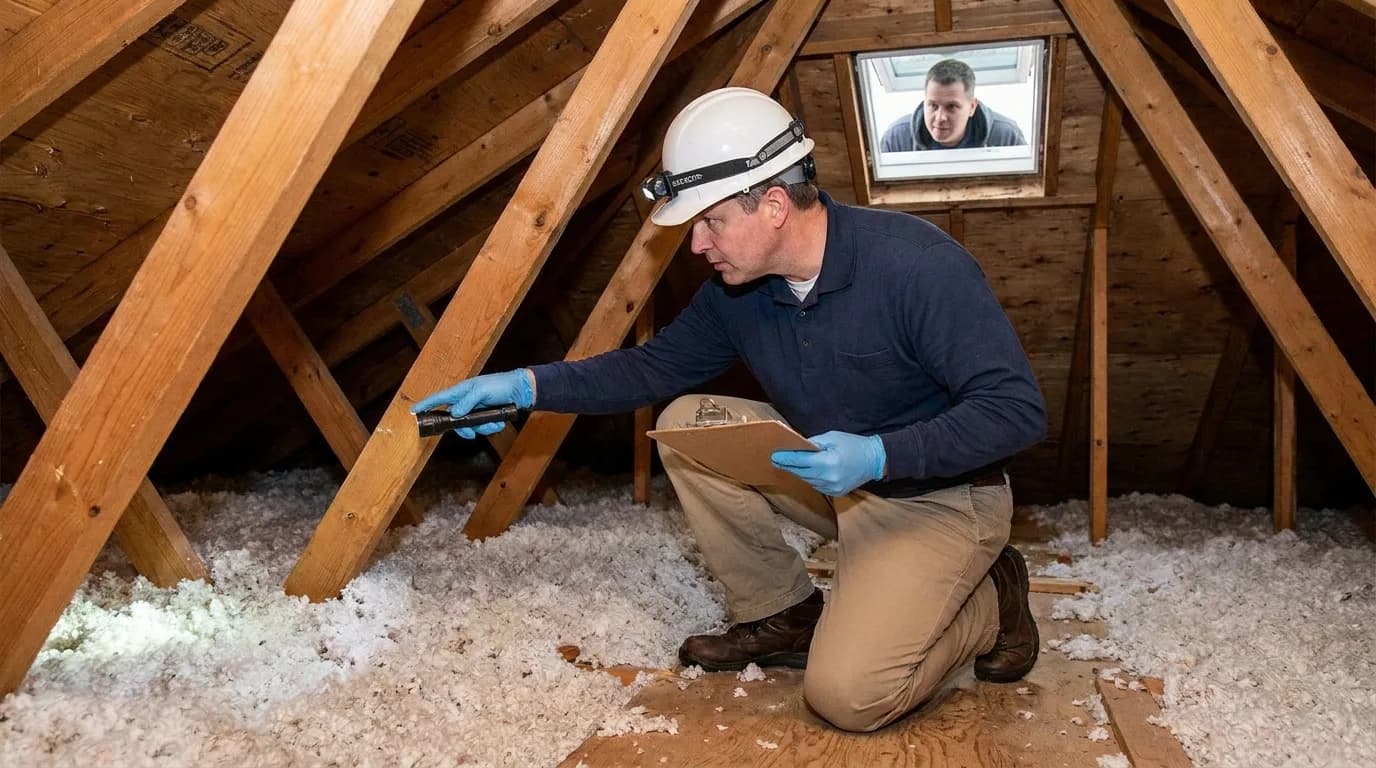
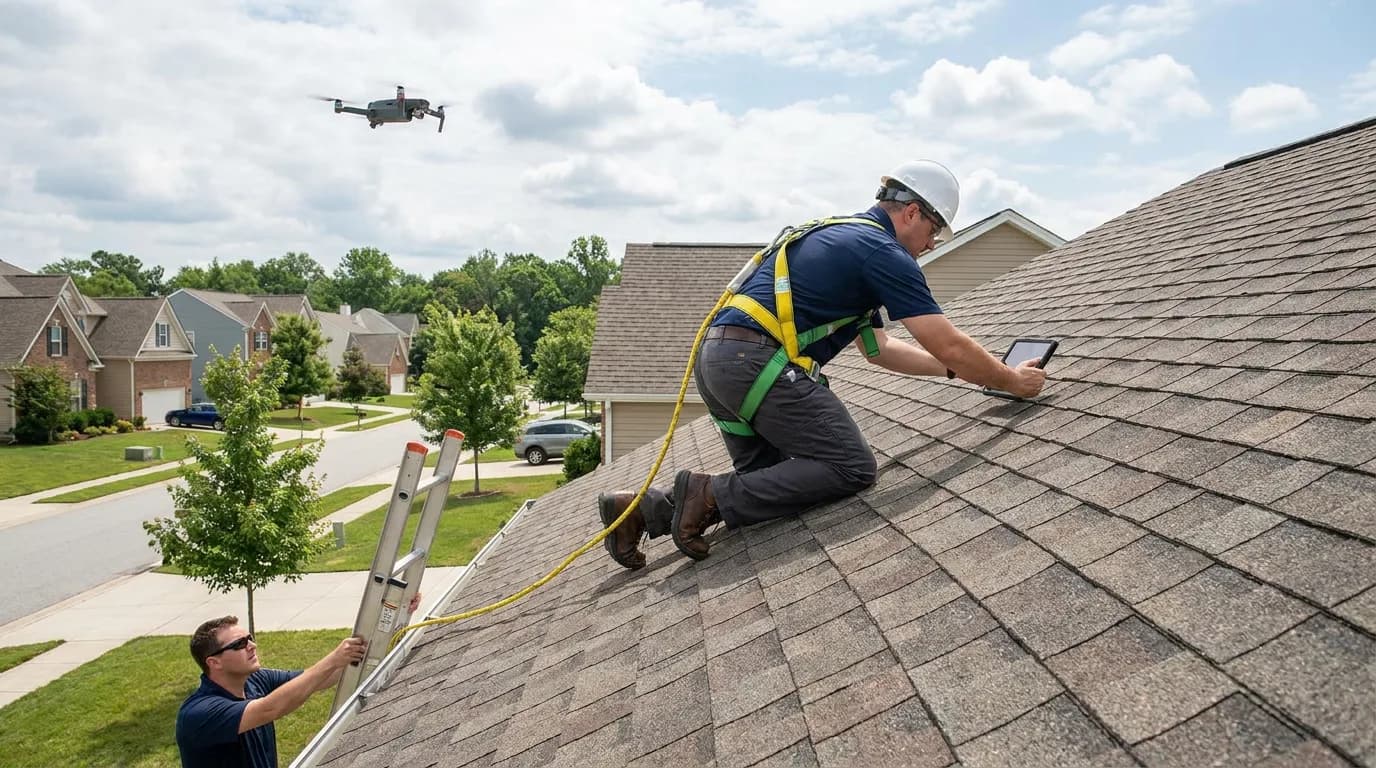
Deck condition matters as much as layer count. The plywood or oriented strand board underneath needs to be flat, dry and free of rot, delamination or soft spots you can feel underfoot. A roof-over hides the deck for the life of the new roof, so hidden damage stays hidden. A roof and attic inspection in Airdrie before you commit is the only real way to know what is under the shingles without pulling them off.
Alberta's building code framework leaves room for roof-overs under the right conditions, but requirements vary by municipality and change over time. Confirm the current rules, including any limit on shingle layers and whether a permit is required, with the City of Airdrie or your local municipality before you sign a contract.
- One existing layer of asphalt shingles: generally acceptable for a roof-over.
- Two or more layers: most installers will require tear-off first.
- Deck that flexes, feels soft, or shows staining from inside the attic: needs repair before any overlay.
- Roof valleys, skylights and vent penetrations: these details usually need extra flashing work regardless of the method chosen.
The Case for a Roof-Over: Cost, Speed, Landfill and a Little Extra Insulation
The appeal of a metal roof over shingles comes down to four things: cost, speed, waste and, in some systems, a small insulation bump. Skipping tear-off removes a full day or more of labour, a dumpster rental, and disposal fees for a roof's worth of old shingles, which is usually the single biggest reason homeowners look at this option in the first place.
Weighing the metal roof over shingles pros and cons starts with those savings. A roof-over also means no shingle debris going to landfill, and where furring strips are used, the air gap they create adds a modest layer of thermal resistance and helps the roof shed summer heat, on top of whatever benefit metal itself brings.
Speed matters more in Alberta than the brochures usually say: a shorter job means fewer days with the roof open to a surprise hailstorm or a sudden Chinook wind event.
The Real Risks: Trapped Moisture, Hidden Deck Damage and Voided Warranties
The metal roof over shingles problems that come up most often trace back to one thing: you cannot see what is happening beneath the new roof once installed. Trapped moisture is the biggest of these. If dampness is present in the old shingles or deck at installation, or condensation forms under a furring-strip system, that moisture has nowhere to go. Over several Alberta winters of freeze-thaw cycling, it can rot the deck, degrade the old shingles into a soft mat, and reach the panels' fastener penetrations.
Hidden deck damage is the second risk. A rotted or delaminated section that would be obvious and fixable during a tear-off gets covered up during a roof-over, and a soft spot you never see keeps getting softer under the extra weight of shingles, furring strips and metal panels.
An uneven nailing surface is the risk that gets least attention. Panels or furring strips fastened through a granular, slightly wavy shingle plane can end up under-driven on the high spots and over-driven on the low ones, and a screw that is not seated square through its washer is exactly where a leak starts. Furring strips help by re-establishing a flat plane to fasten to; direct-to-deck systems rely on the old shingle surface already being flat.
Warranty exposure is the fourth. Many manufacturers will only honour their material warranty over an existing roof if the installation follows their specific overlay instructions, including the underlayment or furring system they approve. Installing over shingles they do not consider suitable, such as a second layer or curling, brittle shingles, can void that warranty outright. Ask a contractor to show you, in writing, that their method is one the panel manufacturer actually supports.
- Damp or musty smell in the attic, or visible staining on the underside of the roof deck.
- Curling, cupping or brittle shingles that will not lie flat under furring strips or a slip-sheet.
- Soft spots, bounce or visible sagging anywhere on the roof surface.
- Curled or lumpy shingle surfaces that leave panels or fasteners sitting unevenly.
- A shingle layer count of two or more.
- A metal system the manufacturer has not approved for installation over existing shingles.
Furring Strips vs Direct-to-Deck: Why the Method Matters Here
Choosing between metal roof furring strips and a direct-to-deck slip-sheet system is not just a labour-cost decision in Alberta, it is a moisture-management decision. Furring strips create a ventilated air gap between the old shingles and the new metal, which gives any residual moisture in the old roof somewhere to dry out toward, rather than being sealed against the underside of solid metal panels.
Direct-to-deck systems fasten the panels straight through a slip-sheet onto the shingles and deck below, with no air gap. They are typically faster and cheaper to install, and they work well on a roof that is confirmed dry with a sound deck. Without an air gap, though, they offer no forgiveness if a small amount of moisture is already present, which is the scenario an Alberta winter is particularly good at revealing.
| Method | How it works | Best suited to | Trade-off |
|---|---|---|---|
| Furring strips | Wood strips fastened through shingles into framing; panels attach to strips, creating an air gap | Roofs with any doubt about dryness, or where a little extra insulation is wanted | Adds height, cost and labour versus direct-to-deck |
| Direct-to-deck (slip-sheet) | Slip-sheet underlayment laid over shingles; panels fastened straight through into the deck | Confirmed dry, flat, single-layer roofs | No air gap, so any trapped moisture has nowhere to go |
For most Airdrie homes with any history of a leak, a humid attic, or shingles more than 12 to 15 years old, furring strips are the more forgiving choice. A metal roofing installation in Airdrie from a crew that inspects the deck before quoting either method will tell you honestly which one your roof supports.
Weight, Snow Load and Alberta Winters
Metal roofing itself is light, generally lighter per square than asphalt shingles, so a roof-over does not usually push a roof structure near its design snow load. The combined weight of the old shingle layer, any furring strips, and the new panels is still well within what Alberta roof framing is built to carry, provided the structure was sound and only one shingle layer remains underneath.
Snow-shedding behaviour changes more than the weight does. Metal roofs shed snow in sheets once the sun warms the panels, which asphalt shingles never do, and a roof-over does not change that. Homeowners moving from shingles to metal should plan for that sudden release over entrances, walkways and parked vehicles. Our guide to snow guards for metal roofs covers where to place them and what they cost.
Chinook cycles add a wrinkle specific to Alberta. Rapid thaws followed by hard refreezes mean any moisture trapped under a roof-over, whether in the old shingles or in the air gap of a furring-strip system, goes through repeated freeze-thaw expansion. That is one more reason a confirmed-dry deck matters more here than it would in a milder, less variable climate.
Timing matters for the same reason. Late spring through early fall gives the most predictable weather window in Alberta and lets any residual dampness in the old shingles or the furring-strip air gap dry out before freeze-up, rather than being sealed in under new panels for the winter.
Hail Damage, Insurance Claims and Roof-Overs in Hailstorm Alley
Airdrie sits in Alberta's Hailstorm Alley, and that history changes the roof-over calculation in ways the manufacturer literature never mentions. If the existing shingles already have hail damage, whether from a storm like the August 2026 Crossfield-Airdrie hailstorm or an older event, covering them with metal buries that damage under a new roof surface where it can no longer be inspected or documented.
That matters if you ever need to file an insurance claim tied to the roof again, for wind damage to the metal itself or a leak tracing back to the buried shingle layer. An adjuster cannot inspect shingles that are no longer visible, and documenting pre-existing hail damage becomes harder to separate from new damage. Confirm with your insurer or broker how a roof-over affects future claims before covering shingles with unresolved hail history.
The safer sequence in a hail-prone area is to have any storm damage assessed and, if applicable, claimed and repaired before a roof-over goes on, not after. A roof with clean, undamaged shingles and a confirmed-dry deck is a much better candidate for a roof-over than one with unresolved hail damage sitting underneath it.
Permits: What Airdrie and Calgary-Area Homeowners Need to Check
Whether a permit for metal roof over shingles work is required depends on your municipality and can change as codes are updated, so this is one detail worth confirming before, not after, a contractor starts work. Some municipalities treat a roof-over the same as any other reroof and require a permit; others have different thresholds based on roof area, layer count or whether structural changes are involved.
Our guide to roofing permit requirements in Alberta walks through the general permit process for reroofing, and the same questions apply to a roof-over: whether a permit is needed and what documentation to keep for your own records and for any future sale of the home.
- Ask the City of Airdrie or your municipality directly whether a roof-over requires a permit, rather than relying on a contractor's assumption.
- Get the permit determination in writing or by reference number if possible.
- Confirm the shingle layer count is disclosed accurately on any permit application.
- Keep copies of the permit and final inspection for your records and for future buyers.
A reputable contractor pulls the permit when one is required and will not push back on you confirming it independently. If a contractor tells you a roof-over never needs a permit, check with the municipality yourself before signing.
Roof-Over vs Tear-Off: Rough 2026 Alberta Cost Comparison
Comparing roof over vs tear off costs in Alberta comes down to what a tear-off adds: labour to strip and dispose of the old shingles, deck repair where needed, and time. As a rough 2026 Alberta market guide, a metal roof-over typically runs somewhere in the range of 15 to 30 percent less than a full tear-off and reroof with the same metal system, though the gap narrows quickly if the deck turns out to need repair once it is exposed. Treat the per-square figures below as a rough 2026 Alberta market guide in CAD rather than a quote; a square is 100 square feet of roof area.
| Approach | What you save | What you give up | Rough 2026 Alberta cost (guide) |
|---|---|---|---|
| Roof-over (furring strips or direct-to-deck) | Tear-off labour, disposal fees, roughly one to two fewer days on the job | No inspection or repair of the deck; hidden moisture or damage stays hidden | $700 to $1,500 per square |
| Full tear-off | Deck inspected and repaired where needed; fresh underlayment and flashing throughout | Full labour and disposal cost; longer timeline; roof open to weather during the work | $900 to $1,800 per square |
Our metal roof cost in Alberta guide breaks down per-square pricing for both approaches in more detail. Treat every figure here as a market guide rather than a quote; the only way to know your real number is a written, itemised estimate against your specific roof.
When a Full Tear-Off Is the Better Choice
A tear-off is the better choice whenever the roof-over conditions above are not cleanly met. Two or more shingle layers, a soft or damp deck, unresolved hail damage from a past storm, or shingles old enough to be curling and brittle all point toward starting from a clean, inspected deck.
Tear-off is also the right call if you want the manufacturer's full warranty without overlay caveats, or you plan to stay in the home long enough that the extra upfront cost pays for itself in avoided problems. Our pillar guide to the best shingles for Alberta's climate is worth reading alongside this one if you are still deciding between metal and asphalt for that fresh start.
A free on-site estimate is the fastest way to find out which category your roof falls into, and whether a roof-over is realistic for your deck. Apex Roofing Airdrie inspects the shingle layers, checks the deck for moisture, and gives you an itemised written quote for both a roof-over and a full roof replacement in Airdrie where both are genuinely viable, so the decision is based on what is actually under your shingles.
Written by the Apex Roofing Airdrie crew
Practical guidance from the local roofers who inspect, repair and replace roofs across Airdrie and Rocky View County every season. We review our guides against current Alberta practice and update them when materials, code or insurer behaviour changes. About our team.