In this guide
- 01Why so many Alberta homes have a cedar shake roof
- 02How long a cedar shake roof really lasts in Alberta
- 03Maintaining cedar shake shingles to get the most from them
- 04Fire and insurance: the issue that often decides it
- 05How cedar shakes behave in Alberta hail
- 06Cedar shake roof cost vs the replacement options (2026 guide)
- 07Cedar shake vs asphalt, synthetic and metal: how they compare in practice
- 08Tear-off and decking: what converting from shakes involves
- 09Should you keep, re-roof or convert? A practical decision path
- 10Get an honest assessment of your shake roof
Why so many Alberta homes have a cedar shake roof
A cedar shake roof was the mark of a well-built home in Calgary, Airdrie and the surrounding towns from the late 1970s through the mid-1990s. Builders in neighbourhoods developed in that era, including much of Big Springs, Summerhill, Woodside and Thorburn in Airdrie and the older parts of Cochrane and north Calgary, put hand-split or taper-sawn western red cedar on the majority of two-storey and split-level homes. It was locally available, looked right against the foothills and outlasted the 15-year asphalt shingles of the day.
Three things have changed since. Asphalt shingles improved dramatically, with Class 4 impact-resistant lines now carrying limited lifetime warranties. Hail claims rose sharply and insurers began looking hard at roof materials. And most of those original shake roofs are now 30 to 40 years old, beyond what cedar can do here without heavy maintenance.
If you own one of these homes, the decision is the one thousands of Alberta owners make each year: maintain the shakes, re-roof in cedar, or convert. This guide sets out what each path involves and costs; our pillar guide on the best shingles for Alberta's climate is the companion piece.
How long a cedar shake roof really lasts in Alberta
Cedar's reputation for lasting 40 or 50 years comes from the damp, mild Pacific coast. Alberta is the opposite: intensely dry, high UV, extreme temperature swings and hail. As a rough guide, expect 20 to 30 years from a well-installed, maintained cedar shake roof here, and treat anything past 30 as borrowed time. The roof in front of you decides.
UV breaks down the surface fibres, so the shakes go grey, then soft and furry. Dry summers open checks (splits) along the grain; winter freeze-thaw drives water into them and widens them. Chinook winds lift shakes that have lost their grip on the nails, and hail splits the softened wood outright. South- and west-facing slopes typically fail 5 to 10 years before the north slope on the same house.
- Cupping and curling shakes that no longer lie flat.
- Splits running through the shake and past the nail line, which let water straight through.
- Missing or slipped shakes after wind events.
- Soft, spongy surface you can dent with a thumbnail.
- Moss or lichen on north slopes, holding moisture in the wood.
- Daylight visible through the roof from the attic, especially on skip-sheathed roofs.
- Rust streaks from failing galvanized nails and staples.
A roof showing three or more of these across a whole slope is in its final years. Our post on how long a roof lasts in Alberta compares cedar with the other materials on the same terms.
Maintaining cedar shake shingles to get the most from them
Cedar is the one common roof material that genuinely benefits from maintenance; a cared-for shake roof can perform a decade younger than a neglected one of the same age.
Keep it clean and dry. Needles, leaves and moss hold moisture against the wood and accelerate decay. Clear valleys, behind chimneys and along the eaves each fall, and brush off moss on shaded slopes. Trim trees back so the roof gets sun and air. Do not pressure wash; it strips the surface fibres and drives water into the checks.
Treat it periodically. Oil-based preservatives with a UV inhibitor, applied every 4 to 6 years, slow the greying and surface breakdown, and some add a fire retardant. Treatment runs roughly $2,000 to $5,000 per application on a large roof as a 2026 guide and does not reverse existing damage, so it makes most sense on a roof under 15 years old.
Repair promptly. Split, cupped or missing shakes can be replaced individually by sliding out the old piece, fitting a new one and nailing it under the course above. Doing a dozen each spring is normal on an older roof. If you are replacing a dozen every spring on every slope, the roof is telling you something, and our roof repair service in Airdrie will give you an honest read on whether it is still worth repairing.
Fire and insurance: the issue that often decides it
Untreated cedar is a combustible roof covering, and that matters to insurers and, in some areas, to building rules. Within Airdrie's suburbs wildfire exposure is low. In acreage and foothills communities to the west, wildfire risk is real and some municipalities and FireSmart programs discourage or restrict new wood roofing; check with the local authority before re-roofing in cedar outside town.
The bigger day-to-day issue is insurance. Across Alberta, a number of insurers now apply a surcharge to homes with wood roofs, cap the roof coverage at actual cash value, require an inspection or a maximum roof age, or decline to write new policies on them at all. Practices vary by company and change year to year, so confirm with your broker rather than relying on anything you read here. A worn shake roof is the most common reason homeowners tell us they have been asked to replace a roof to keep or obtain coverage.
The flip side is the discount. Replacing a cedar shake roof with Class 4 (UL 2218) impact-resistant shingles or metal earns a premium reduction with many Alberta insurers, and for a home that has been surcharged for years the swing can be significant. Our guide to Class 4 impact-resistant shingles in Alberta covers how the discount works. If a storm is what brought the roof to the top of your list, our roof insurance claim service can help document it.
How cedar shakes behave in Alberta hail
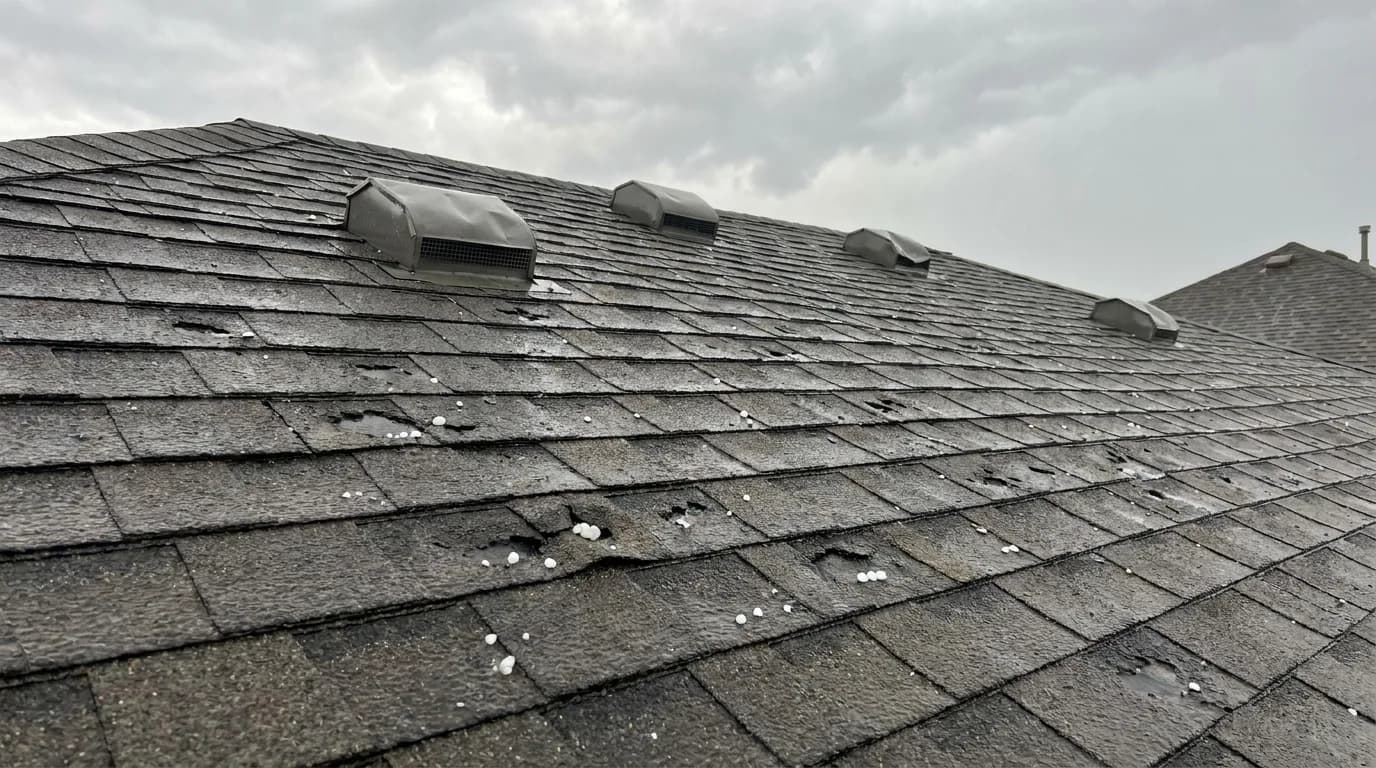
Airdrie sits in Hailstorm Alley, and cedar's hail performance is mixed. A new, thick, hand-split shake absorbs a hailstone well, and a small dent in fresh wood is cosmetic. That resilience disappears with age: a 25-year-old shake that has gone grey and dry splits along the grain when a large stone hits it, and a storm like the quarter-sized hail that tracked through northwest Airdrie on August 8, 2026 leaves an old shake roof looking shot at.
Adjusters assess hail on shakes by counting fresh splits and fractures per test square and separating storm damage from age-related weathering. That is where claims on older cedar get complicated: much of the damage may be attributed to wear, or paid at actual cash value on a roof with little value left on paper. Understanding ACV vs RCV on a roof claim before you file will save frustration.
The Insurance Bureau of Canada reports a major Alberta hailstorm every year for two decades and more than $11 billion in insured damage over that period. In that environment, an aging combustible roof that splits under hail is a hard sell to any underwriter.
Cedar shake roof cost vs the replacement options (2026 guide)
Prices below are rough 2026 market guides for a typical two-storey Airdrie home of around 25 to 30 squares, not quotes. Every shake conversion involves a tear-off and, almost always, new decking, which is included in the ranges here. Get a free on-site quote for an exact figure.
| Roof option | Rough 2026 installed cost, typical two-storey (guide) | Expected life in Alberta (guide) | Notes |
|---|---|---|---|
| New cedar shake roof, No. 1 grade, treated | $25,000–$50,000 | 20–30 years | Highest cost, ongoing maintenance, insurance issues |
| Architectural asphalt shingles | $12,000–$20,000 | 20–30 years | Cheapest conversion; standard Alberta roof |
| Class 4 impact-resistant asphalt | $14,000–$24,000 | 25–35 years | Insurance discount with many insurers |
| Synthetic shake (Euroshield rubber, composite) | $22,000–$45,000 | 40–50 years | Shake look, Class 4 rated, very light or moderate weight |
| Metal shake or shingle profile | $25,000–$50,000 | 40–60 years | Shake or slate look in steel, best hail and fire performance |
| Standing seam or metal panel | $20,000–$45,000 | 40–60 years | Different look; see our metal cost guide |
New cedar is now the most expensive common option and the only one with a shorter lifespan and an insurance question mark, which is why re-roofing in cedar has become rare on suburban homes. Class 4 asphalt is the value choice most owners pick. Synthetic and metal shake profiles exist for owners who want the look without the wood; our guide to Euroshield rubber roofing in Alberta covers the best-known synthetic, and roof replacement cost in Airdrie covers the asphalt range.
Cedar shake vs asphalt, synthetic and metal: how they compare in practice
Beyond price, each option changes how the roof looks, how it handles weather and what the house is worth to a buyer. The honest comparison, from experience on Alberta homes:
- Appearance. Nothing matches real cedar's texture and the way it silvers. Synthetic and metal shake profiles come close from the street; asphalt does not try to, though thicker architectural lines in wood-tone colours look right on the same homes.
- Hail. Metal and Euroshield lead; Class 4 asphalt is strong; new cedar is acceptable; old cedar is poor.
- Fire. Metal, asphalt and most synthetics carry Class A fire ratings; untreated cedar does not.
- Maintenance. Cedar needs regular care; the others need routine inspection only.
- Resale. In today's market, a new Class 4 or metal roof is a selling point; an old shake roof is a negotiating point for the buyer and a question for their insurer.
If you want to keep a shake look in a neighbourhood full of it, synthetic or metal shake is the answer. If you want the best value and the simplest insurance conversation, Class 4 asphalt is. Our guide to metal roofs vs shingles in Alberta goes deeper on the metal side of the decision.
Tear-off and decking: what converting from shakes involves
This is the part of a cedar shake replacement that surprises people, and it is the reason quotes for converting a shake roof are higher than for reshingling an asphalt roof of the same size.
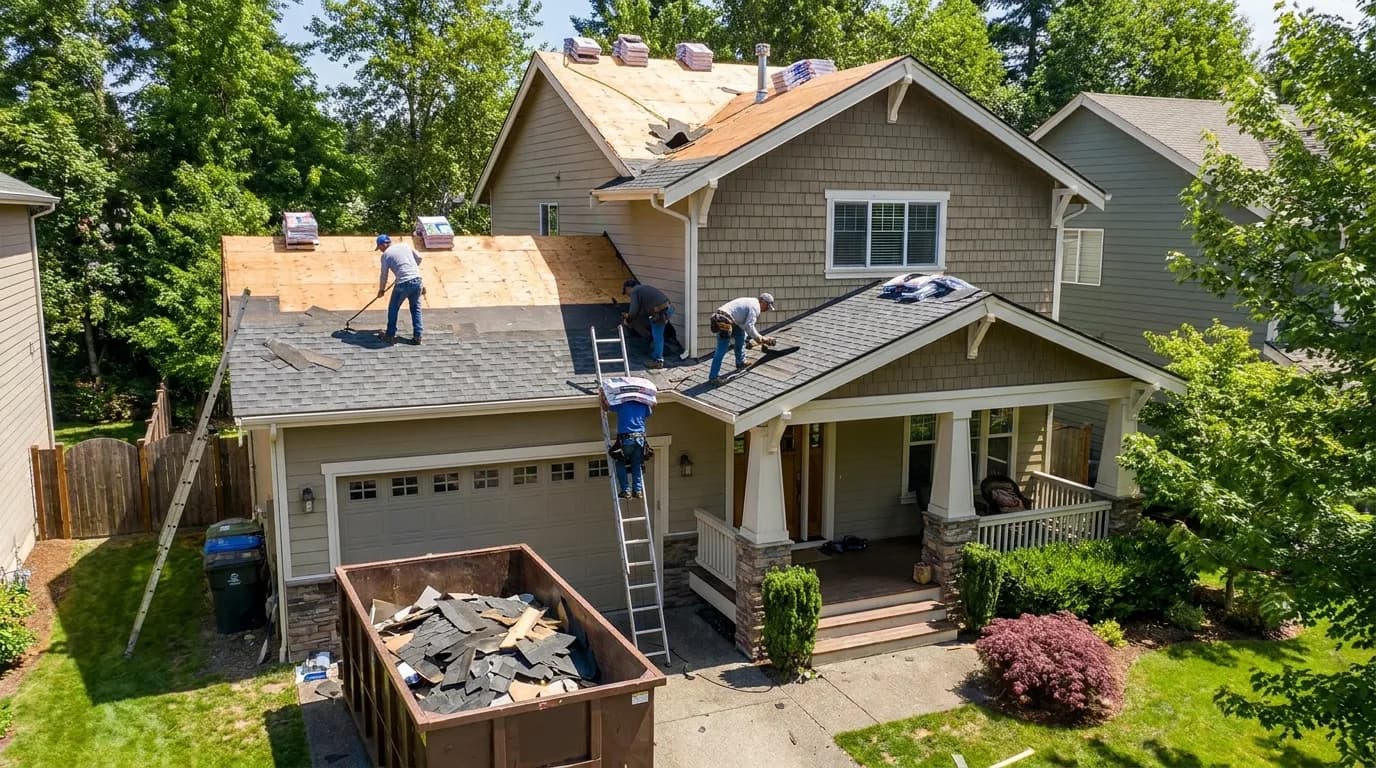
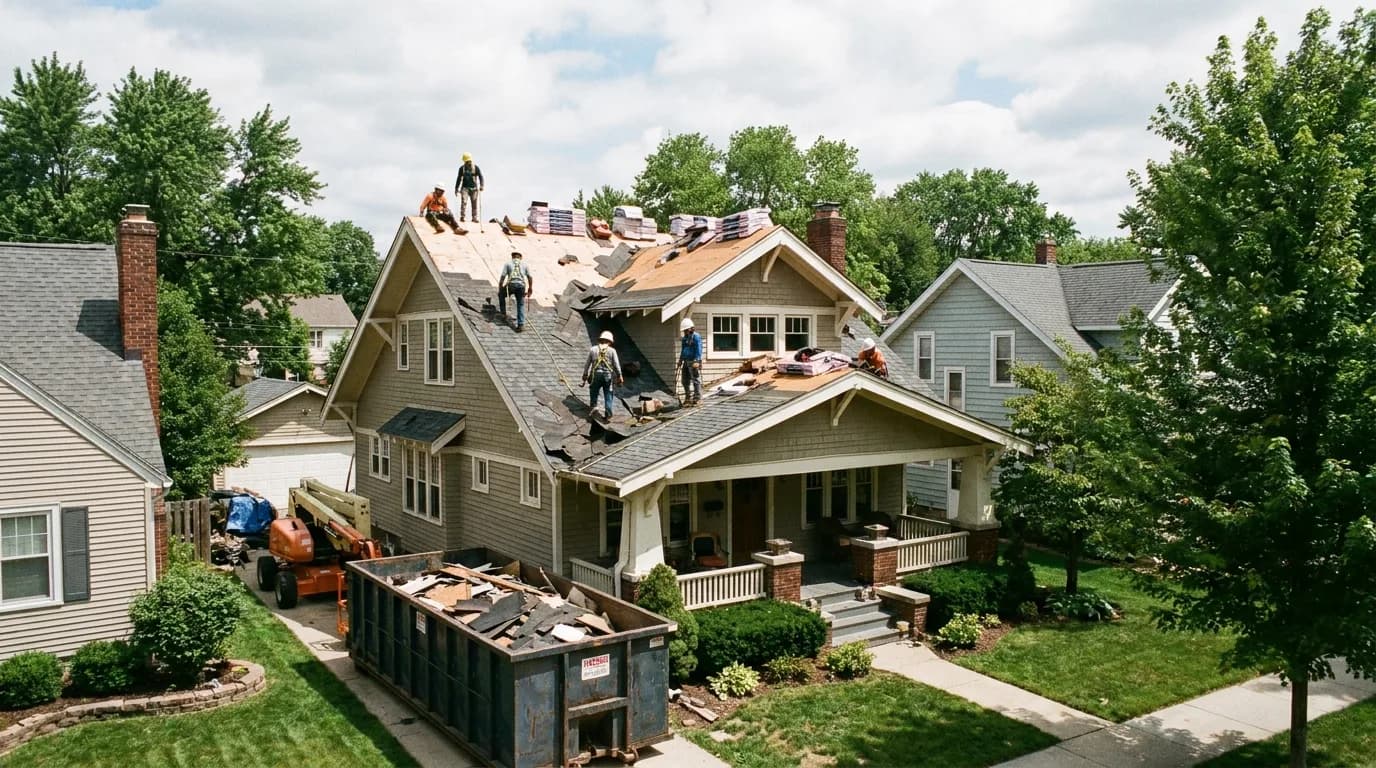
Most shake roofs in Alberta were laid over skip sheathing: spaced boards that let the shakes dry from below. Asphalt, synthetic shakes and most metal systems need a solid deck to nail into, so after tear-off the crew either overlays the boards with new plywood or OSB, or strips them and re-decks from the rafters. Overlaying is quicker and more common; stripping is needed where the boards are rotten or the extra height causes problems at flashings and eaves.
As a rough 2026 guide, new decking on a typical two-storey adds about $2,000 to $6,000, depending on roof size, sheet thickness and how much rot is found. Cedar tear-off is also slower and heavier than asphalt tear-off, so expect the conversion to take a few days longer than a straight reshingle; our guide on how long a roof replacement takes sets out a realistic schedule.
The upside is fixing everything underneath at once: ice-and-water membrane at the eaves and valleys (standard Alberta practice), synthetic underlayment, proper intake and ridge ventilation, and new flashings. A shake roof that has leaked slowly for years often hides rotten fascia and wet insulation; our roof replacement service in Airdrie itemises decking and rot repair separately in the written quote so there are no surprises.
Should you keep, re-roof or convert? A practical decision path
Keep and maintain if the roof is under about 20 years old, lying flat with only scattered splits, and your insurer is not surcharging it. Plan for replacement within 5 to 10 years.
Re-roof in cedar only if the look is essential, the home is outside any fire-restricted zone, your broker has confirmed coverage in writing, and you accept the maintenance and shorter Alberta lifespan.
Convert if the roof is over 25 years, showing widespread splitting, cupping or soft shakes, or if insurance is already a problem. Choose Class 4 asphalt for value and insurance benefits, synthetic or metal shake to keep the look, or metal panels for the longest life. A roof inspection in Airdrie with an attic look will tell you whether the decking underneath is sound and give you a firm basis for the decision.
Get an honest assessment of your shake roof
A cedar shake roof at the end of its life is not a crisis, but it is a decision with a lot of money attached, and the right answer depends on the shakes, the decking under them and what your insurer will accept. Guessing from the ground is how people replace a roof with years left in it, or keep one that is quietly rotting the fascia.
Apex Roofing Airdrie offers free, no-obligation on-site estimates with itemised written quotes, including tear-off, decking and rot contingencies shown separately. Our local, in-house crew backs every roof with a written workmanship guarantee on top of the manufacturer warranty, and we book estimates the same week. If hail has just hit your shakes, we can tarp and document the damage while you talk to your broker.
Written by the Apex Roofing Airdrie crew
Practical guidance from the local roofers who inspect, repair and replace roofs across Airdrie and Rocky View County every season. We review our guides against current Alberta practice and update them when materials, code or insurer behaviour changes. About our team.