In this guide
- 01What is roof underlayment and what does it do?
- 02Types of roof underlayment: felt, synthetic and rubberised
- 0315 lb vs 30 lb felt: does the heavier felt still make sense?
- 04Synthetic underlayment vs felt: the practical differences
- 05UV exposure limits: what happens when a job stalls
- 06Wind and cold-weather handling on an Alberta roof
- 07Underlayment for metal roofs: why high-temp matters
- 08How underlayment pairs with ice and water shield and drip edge
- 09Warranty implications: what the shingle maker requires
- 10Roof underlayment cost in Alberta
- 11Choosing underlayment for your reroof
What is roof underlayment and what does it do?
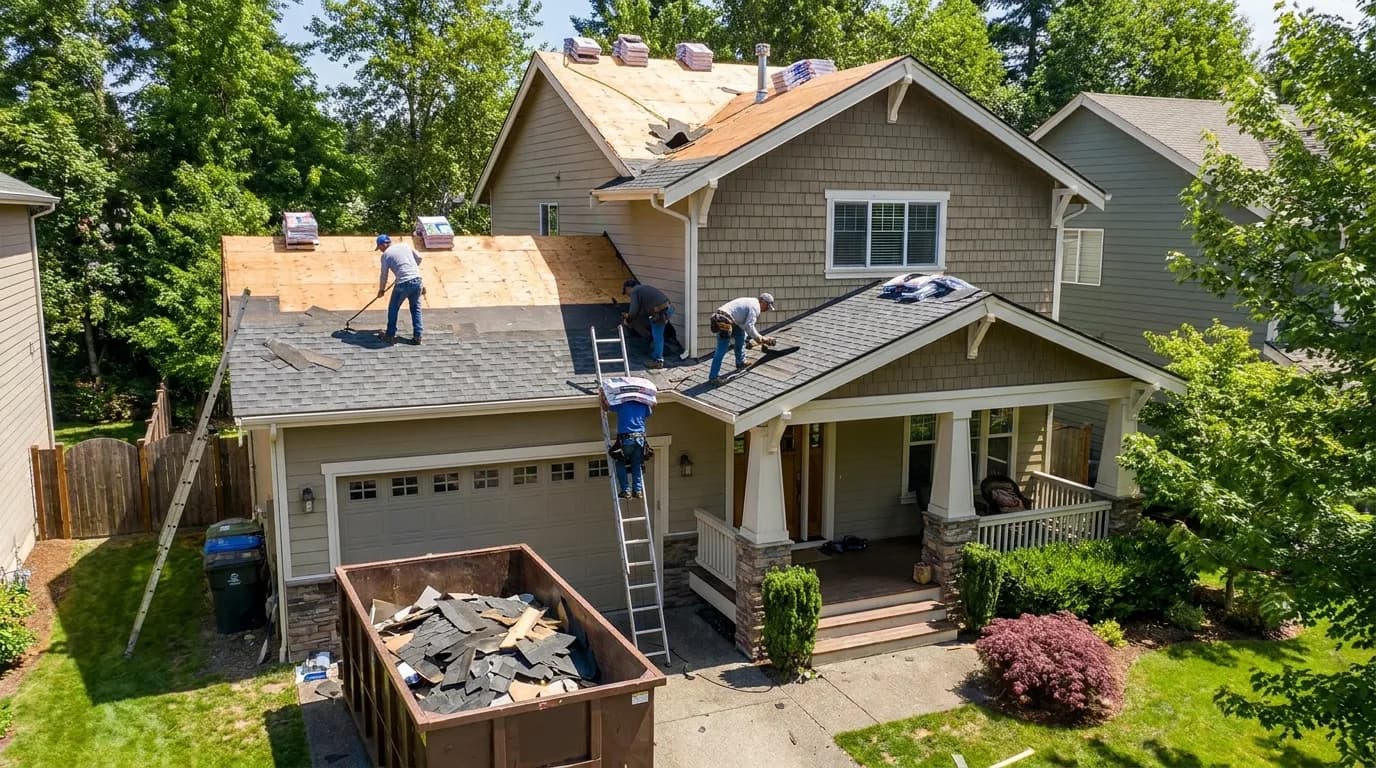
Roof underlayment is the sheet material rolled out over the bare roof deck before the shingles go on. It covers the whole roof, from the eaves to the ridge, and it does three jobs. It keeps the plywood or OSB dry between tear-off and shingling, it backs up the shingles against wind-driven rain and the occasional blown-off tab, and it separates the shingles from the resins and rough surface of the deck.
It is easy to confuse with ice and water shield, and roofers sometimes lump the two together as underlayment on a quote. They are different products. Underlayment is water-resistant, loose-laid and fastened with nails or cap staples. Ice and water shield is waterproof, self-adhered and seals around fasteners. A good roof uses both, in different places, and this guide is about the sheet that covers the majority of the deck.
For a long time the choice was between two weights of asphalt-saturated felt. Today, most roofs in Airdrie get a synthetic underlayment, and a few get a rubberised or self-adhered product over the entire deck. The sections below explain the differences and which makes sense on your roof.
Types of roof underlayment: felt, synthetic and rubberised
The table below compares the three families you will see on Alberta quotes. Product names vary by manufacturer, and specifications change, so use the table to understand the categories and check the data sheet for the specific product you are offered.
| Type | What it is | Weight per square | Exposure tolerance | Cold and wind handling | Typical use |
|---|---|---|---|---|---|
| #15 felt | Asphalt-saturated organic or fibreglass paper | About 8 to 12 lb | Days; wrinkles when wet, tears in wind | Poor; brittle in cold, tears at fasteners | Budget reroofs, small sheds |
| #30 felt | Heavier asphalt-saturated felt | About 20 to 30 lb | A week or two; still wrinkles | Fair; stiff in cold, better tear strength | Traditional standard, still used |
| Synthetic | Woven or spun polypropylene or polyethylene with a coating | About 2 to 5 lb | Typically 60 to 180 days rated | Good; stays flexible in cold, high tear strength, slip-resistant coatings | Most modern reroofs |
| High-temperature synthetic or self-adhered | Synthetic or rubberised asphalt rated for higher deck temperatures | 2 to 25 lb | Varies, 90 to 180 days | Good | Under metal, dark roofs, low slopes |
| Rubberised self-adhered (full deck) | Ice and water shield used over the entire deck | About 25 to 45 lb | 30 to 90 days | Good once bonded; needs warm deck to stick | Low-slope, high-exposure, premium installs |
Weight per square is a rough guide and a useful reminder of why crews prefer synthetics: a roll of synthetic covers ten squares and weighs less than a roll of #30 felt that covers two. Lighter rolls mean fewer trips up the ladder and fewer seams on the roof.
15 lb vs 30 lb felt: does the heavier felt still make sense?
Felt was the standard underlayment for most of the twentieth century and it still works when it is installed and covered promptly. The 15 lb vs 30 lb felt question is mostly about tear strength and how the sheet behaves when it gets wet. The numbers originally referred to weight per square, though modern felt is lighter than the labels suggest, which is why you also see it sold as No. 15 and No. 30.
On an Alberta roof, #15 felt has little going for it. It wrinkles as soon as it absorbs moisture, and those wrinkles telegraph through the shingles. It tears around the fasteners in prairie wind before the shingles are on, and it goes brittle in cold weather, so a crew working in October or November spends the day chasing rips. Its only advantage is price, and the saving is small.
#30 felt is a legitimate choice when it is installed and shingled the same day, and some experienced crews still prefer it because it lies flat, is easy to walk on and has a long track record under asphalt shingles. If a roofer quotes #30 felt, ask how quickly they shingle after laying it and what they do if weather stops the job. If the answer is that it may sit for a week or two, synthetic is the safer spec.
Synthetic underlayment vs felt: the practical differences
Synthetic underlayment vs felt is not a close contest on most of the factors that matter in this climate. Synthetics cost more per square than #15 felt and about the same as, or a little more than, #30 felt, and in exchange they solve most of felt's problems.
- Tear strength: Synthetics are woven or reinforced, so they do not rip at fasteners or in wind the way felt does. A synthetic sheet that survives a Chinook gust intact is worth the price difference on its own.
- Moisture: Synthetics do not absorb water, so they do not wrinkle, swell or rot. Felt does all three when it sits wet.
- Weight and coverage: A ten-square roll of synthetic is lighter than a two-square roll of #30 felt, which means fewer laps, fewer seams and less deck exposed at each lap.
- Walkability: Most synthetics have a textured or coated surface that grips boots better than wet felt, which matters on steep Airdrie two-storeys.
- Exposure: Synthetics are rated for weeks to months of UV exposure; felt is rated for days.
- Breathability: Most synthetics are vapour-impermeable, so they rely on attic ventilation to dry the deck from below. Felt breathes a little. On a well-ventilated attic the difference is academic; on a poorly ventilated one it argues for fixing the ventilation, not for choosing felt.
The best roof underlayment for most Alberta homes is a mid-grade synthetic from a major manufacturer, installed with cap nails, laid over ice and water shield at the eaves and valleys. Premium synthetics add thicker coatings and higher temperature ratings, which matter under metal and on dark, low-slope roofs but not on a typical shingle reroof.
UV exposure limits: what happens when a job stalls
Every roof underlayment has a rated exposure time, the number of days it can sit uncovered before UV breaks it down. Felt is rated for a few days. Standard synthetics are commonly rated for 60 to 90 days, and premium synthetics for 120 to 180 days. Self-adhered membranes fall in between, usually 30 to 90 days.
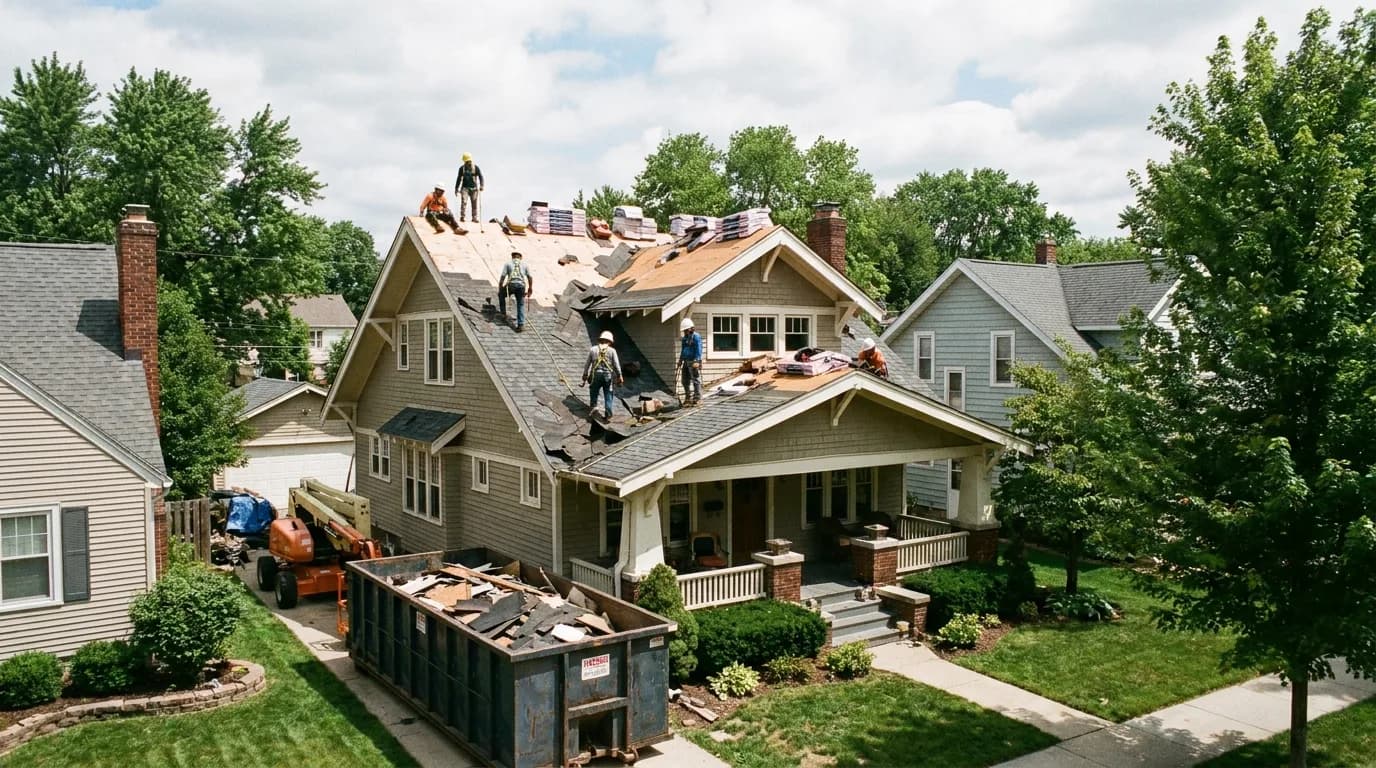
That rating matters more than it sounds. Roofs stall. A hailstorm sweeps through the Calgary to Red Deer corridor, shingle supply tightens for weeks, and a deck that was stripped and papered on a Tuesday may not see shingles for a month. Weather, a permit inspection or a discovered deck repair can do the same. When the underlayment is felt, a stalled job means wrinkled, torn, water-stained sheet that has to be replaced before shingling. When it is synthetic, the deck simply waits.
If your reroof is scheduled in the busy post-storm season, ask what underlayment the crew uses and what its exposure rating is. Our post on how long a roof replacement takes explains the normal timeline and where delays creep in.
Wind and cold-weather handling on an Alberta roof
Prairie wind is the enemy of loose sheet on a roof. Underlayment is fastened as it is rolled out, with laps of at least 50 mm on the horizontal seams and 150 mm at the end laps, and the fastener pattern is tightened on windy days. Cap nails or cap staples, which have a plastic or metal disc under the head, hold synthetic far better than plain staples, and most synthetic manufacturers require them for the warranty. A crew that uses a hammer stapler on synthetic is leaving it to the wind.
Cold is the other problem. Felt goes stiff and cracks below freezing, and self-adhered membranes will not bond to a cold deck without primer or warming. Synthetics stay flexible well below zero and are the practical choice for late-season work. Our post on roof replacement in winter in Alberta covers how crews handle underlayment and membrane on cold days, and when to wait.
Between the wind and the cold, a synthetic underlayment gives a crew a roof that stays sealed overnight and through a storm while the shingles go on. That is the single biggest reason most Airdrie roofers switched to it.
Underlayment for metal roofs: why high-temp matters
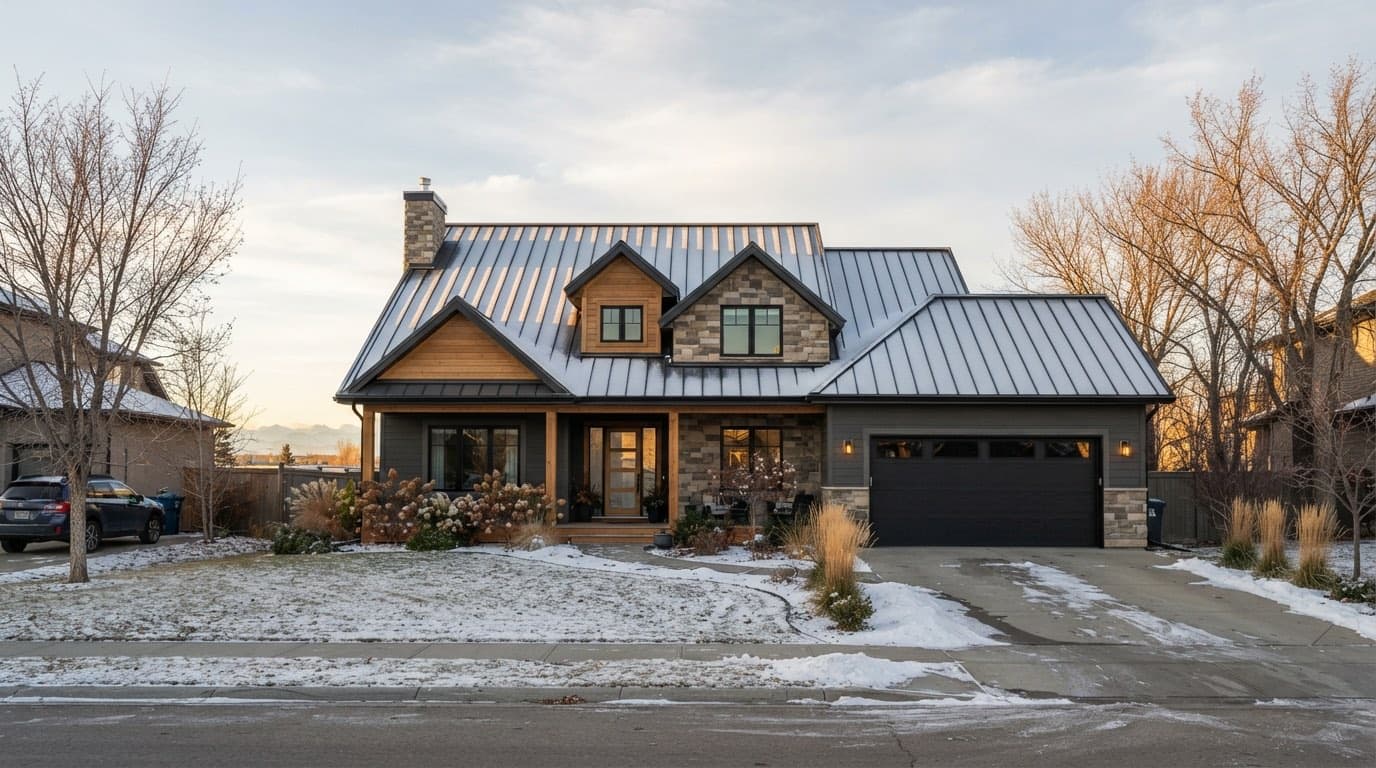
Metal roofing changes the job. A dark standing seam panel in July can push the deck temperature well past what a standard synthetic or self-adhered membrane is rated for. Standard products can soften, slump, or bond to the underside of the panel, and standard ice and water shield adhesive can bleed. Underlayment for a metal roof therefore needs a high-temperature rating, typically 115 degrees Celsius (240 F) and above, and most metal roofing warranties specify it.
High-temp synthetics and high-temp self-adhered membranes both exist, and which one goes where depends on the roof. A common Alberta spec is high-temp self-adhered membrane at the eaves, valleys and penetrations, with a high-temp synthetic over the rest of the deck. On low-slope metal or on roofs with a lot of snow retention, full-deck high-temp membrane is a sound upgrade.
If you are comparing quotes for metal roofing in Airdrie, the underlayment spec is one of the quickest ways to tell a metal specialist from a crew that mostly does shingles. Ask for the product name and its temperature rating in writing.
How underlayment pairs with ice and water shield and drip edge
Roof underlayment is one layer in a system, and the order of layers decides whether water drains out or gets trapped. At the eaves, the drip edge goes on the bare deck first, then the ice and water shield laps over the drip edge and up the slope to at least 900 mm inside the warm wall line. The underlayment then laps over the top edge of the membrane, so water running down the underlayment lands on membrane, not under it.
At the rakes, the underlayment runs to the edge of the deck and the drip edge goes over it, so wind-driven rain at the gable end hits metal before it can get under the sheet. Valleys get their membrane strip first, and the underlayment from each slope laps over it. Around penetrations, membrane goes on before the underlayment and the flashing goes on after.
That sequence is worth understanding because it is where budget reroofs cut corners. Skipping the membrane and running underlayment straight to the drip edge looks fine on the day. It is the ice dam three winters later that shows the difference.
Warranty implications: what the shingle maker requires
Every major shingle manufacturer, including IKO, BP, GAF, Owens Corning, Malarkey and CertainTeed, requires underlayment across the entire deck as a condition of the product warranty, and most specify ice and water shield at the eaves and valleys as well. Some enhanced warranty tiers go further and require the manufacturer's own underlayment and accessories, installed by a certified contractor.
The practical consequences are simple. A roof shingled straight onto bare deck, or with a patchwork of reused felt from the old roof, may have no valid manufacturer warranty at all. A roof with a generic synthetic underlayment usually qualifies for the standard warranty. A roof with the manufacturer's matched system may qualify for the longer non-prorated term. Our post on roof warranties explained covers what those tiers actually deliver.
Ask each roofer which underlayment they propose, whether it meets the shingle manufacturer's requirements, and whether the quote is for the standard or enhanced warranty tier. The answer tells you as much about the crew as the shingle brand does.
Roof underlayment cost in Alberta
Underlayment is a small share of a reroof budget. The figures below are rough Alberta market guides as of 2026, not quotes, and they move with manufacturer, supplier and how the roofer bundles labour. A typical Airdrie two-storey is roughly 20 to 30 squares.
| Product | Rough material cost per square (CAD, 2026) | Rough installed cost per square on a reroof | Typical home (25 squares), installed |
|---|---|---|---|
| #15 felt | $8 to $12 | $20 to $35 | $500 to $900 |
| #30 felt | $15 to $30 | $30 to $50 | $750 to $1,250 |
| Standard synthetic | $12 to $25 | $25 to $45 | $650 to $1,150 |
| Premium or high-temp synthetic | $30 to $60 | $45 to $80 | $1,100 to $2,000 |
| Self-adhered membrane, full deck | $45 to $90 | $90 to $150 | $2,250 to $3,750 |
The gap between felt and a standard synthetic on a typical reroof is roughly $100 to $400, which is one of the best-value upgrades on the whole quote. Full-deck self-adhered membrane is a bigger step and usually only justified on low slopes, complex roofs or metal. Get a free on-site quote for an exact figure, and ask for the underlayment product to be named on it.
Choosing underlayment for your reroof
For most Airdrie homes with an asphalt shingle roof, the spec to ask for is straightforward: ice and water shield at the eaves to the required line, in the valleys and around penetrations, a mid-grade synthetic underlayment over the rest of the deck, fastened with cap nails, and drip edge at every edge in the right layer. For a metal roof, the same layout with high-temperature products throughout.
Roof underlayment does not show in the finished roof, which is exactly why it is worth checking before you sign. A roof replacement in Airdrie is a once-in-twenty-years job, and the layers under the shingles decide how it handles the next two decades of Chinooks, hail and snow. Our pillar guide to the best shingles for Alberta's climate explains why those layers matter more than the brand on the shingle.
Apex Roofing Airdrie names the underlayment, membrane and drip edge products on every itemised written quote, so you can compare what is actually going on the roof rather than just the shingle colour. Book a free, no-obligation on-site estimate and we will walk you through the whole system.
Written by the Apex Roofing Airdrie crew
Practical guidance from the local roofers who inspect, repair and replace roofs across Airdrie and Rocky View County every season. We review our guides against current Alberta practice and update them when materials, code or insurer behaviour changes. About our team.