In this guide
- 01Sun tunnel vs skylight: what each one actually is
- 02How much light does a sun tunnel give compared with a skylight?
- 03Which rooms suit a sun tunnel and which need a skylight
- 04Installing a sun tunnel or skylight on an Alberta roof: flashing and insulation
- 05Hail: the Alberta question nobody asks until August
- 06Sun tunnel installation cost vs skylight cost in 2026
- 07Energy loss, ice dams and the attic
- 08Brands, warranties and what to look for in a quote
- 09Deciding, and getting an honest quote
Sun tunnel vs skylight: what each one actually is
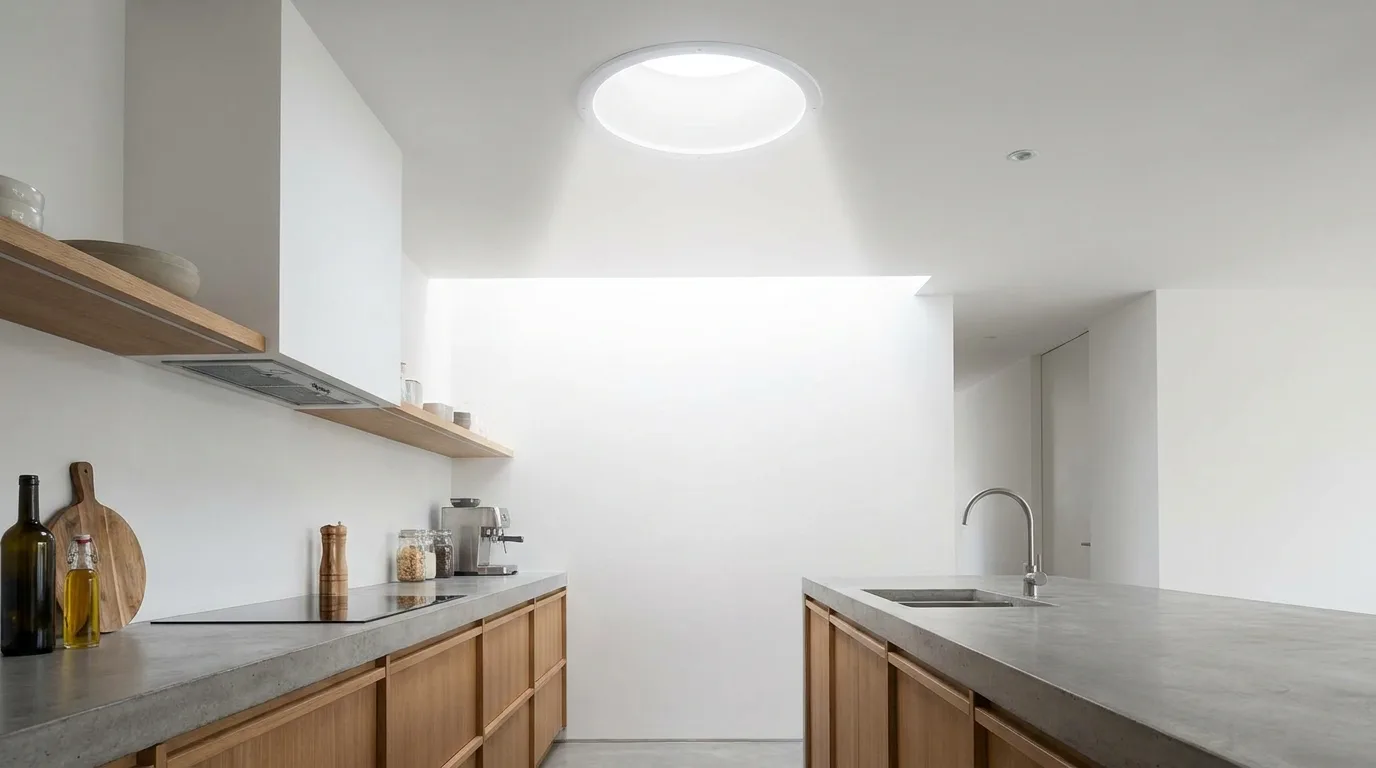
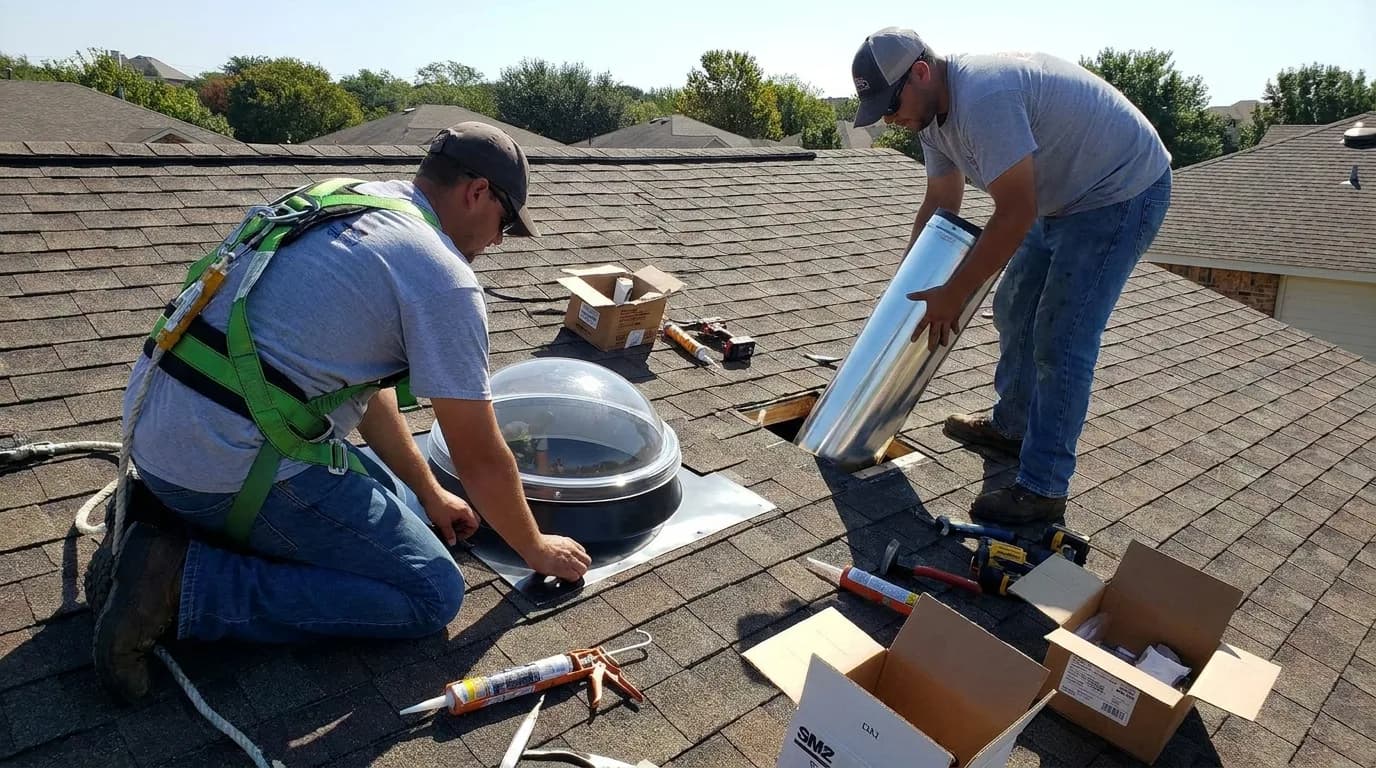
A sun tunnel, also sold as a solar tube, tubular skylight or light tube, is a compact daylighting system. A clear dome about 25 to 35 cm across sits on a flashed curb on the roof. Below it, a rigid or flexible tube lined with highly reflective film runs through the attic to a diffuser lens in the ceiling of the room below. Sunlight enters the dome, bounces down the tube and spreads across the room as soft, even light. Velux calls its version a Sun Tunnel, Solatube is the other big name, and several hardware-store brands offer similar kits.
A skylight is a window in the roof. It has a frame, insulated glazing (usually double-pane, often laminated on the outer lite), a flashing kit, and a finished light shaft through the attic to the ceiling. It brings in far more light, can be opened for ventilation in some models, and gives you a view of the sky. It also requires cutting and framing an opening in the roof structure, which is the main reason it costs more.
Both are roof penetrations, and every penetration on an Alberta roof needs to handle hail, wind-driven snow, freeze-thaw cycling and a 60°C swing between a January night and a July afternoon. That is where the differences that matter to an Airdrie homeowner show up, and it is why our skylight replacement service in Airdrie treats the flashing as the most important part of either job.
How much light does a sun tunnel give compared with a skylight?
Light output is the honest starting point, because marketing blurs it. A 25 cm (10 inch) tubular skylight on a clear Alberta summer day delivers roughly the light of a 200 to 300 watt incandescent bulb, enough for a bathroom, hallway, walk-in closet or laundry room. A 35 cm (14 inch) unit roughly doubles that. Output falls sharply on overcast days, at dawn and dusk, and in the low December sun, when a tube through a north-facing roof can be dim by mid-afternoon.
A 60 by 120 cm skylight has around six times the glazed area of a 30 cm tube and delivers light in proportion, plus direct sun and a view. For a living room or kitchen there is no substitute, though direct sun also brings glare and heat, which is why south- and west-facing skylights in Airdrie usually need a blind.
| Feature | Sun tunnel (tubular skylight) | Skylight |
|---|---|---|
| Roof opening | 25–35 cm round hole | 60 x 120 cm or larger framed opening |
| Light output (summer) | Roughly a 200–300 W bulb per 25 cm tube | Three to six times a tube of the same cost |
| View of sky | None (diffused) | Yes |
| Ventilation option | No | Yes, on venting models |
| Fits between rafters without framing | Usually | No; usually needs a header and trimmer |
| Best rooms | Hallways, bathrooms, closets, laundry, stairs | Kitchens, living rooms, bedrooms, vaulted ceilings |
| Heat loss in winter | Small, if tube is insulated | Larger; a roof window is a weak point in the envelope |
| Hail exposure | Small dome, replaceable | Large glass area, laminated outer pane needed |
Which rooms suit a sun tunnel and which need a skylight
The rule of thumb is simple. If the room has no exterior wall and you want it to stop feeling like a cave, a sun tunnel is the right tool. If the room is one you spend hours in and you want it transformed, a skylight is worth the extra cost and the bigger hole in the roof.
- Interior bathrooms and ensuites with no window: the classic sun tunnel job. One 25 cm tube usually replaces the daytime light entirely.
- Upstairs hallways and landings in two-storey Airdrie homes: a single tube at the top of the stairs changes the whole floor.
- Walk-in closets, laundry rooms and pantries: a tube is cheap, quick and does not need a light shaft.
- Kitchens: one large skylight or two 35 cm tubes over the work area; the skylight wins on light, the tubes win on cost and hail exposure.
- Living and family rooms, bonus rooms over garages: skylights, ideally with laminated glass and a blind on south or west slopes.
- Vaulted ceilings: skylights are straightforward because there is no attic to cross; tubes lose their advantage.
Tube length matters. A rigid run of 1 to 2 m through a standard attic loses little light; flexible tubes are easier to route around trusses but every bend costs output, and a 4 m flexible run can lose half the light. Where the room is on the main floor of a two-storey, a tube is usually not practical.
Installing a sun tunnel or skylight on an Alberta roof: flashing and insulation
The roof-side work is where either product succeeds or fails; a cheap installation shows up two winters later as a stain on the ceiling. Two details matter most.
Flashing. Both products come with a flashing kit designed for a specific roof type and pitch. On an asphalt shingle roof, the flashing must be woven into the shingle courses with the upslope side under the shingles and the downslope side over them, with ice-and-water membrane lapped around the curb before the flashing goes on. Sealant alone is not flashing. On a low-slope or metal roof, a different kit is needed, and forcing a shingle kit onto a metal panel is a leak waiting for the first Chinook rain. Our post on why skylights leak and how to fix them covers the failure modes in detail.
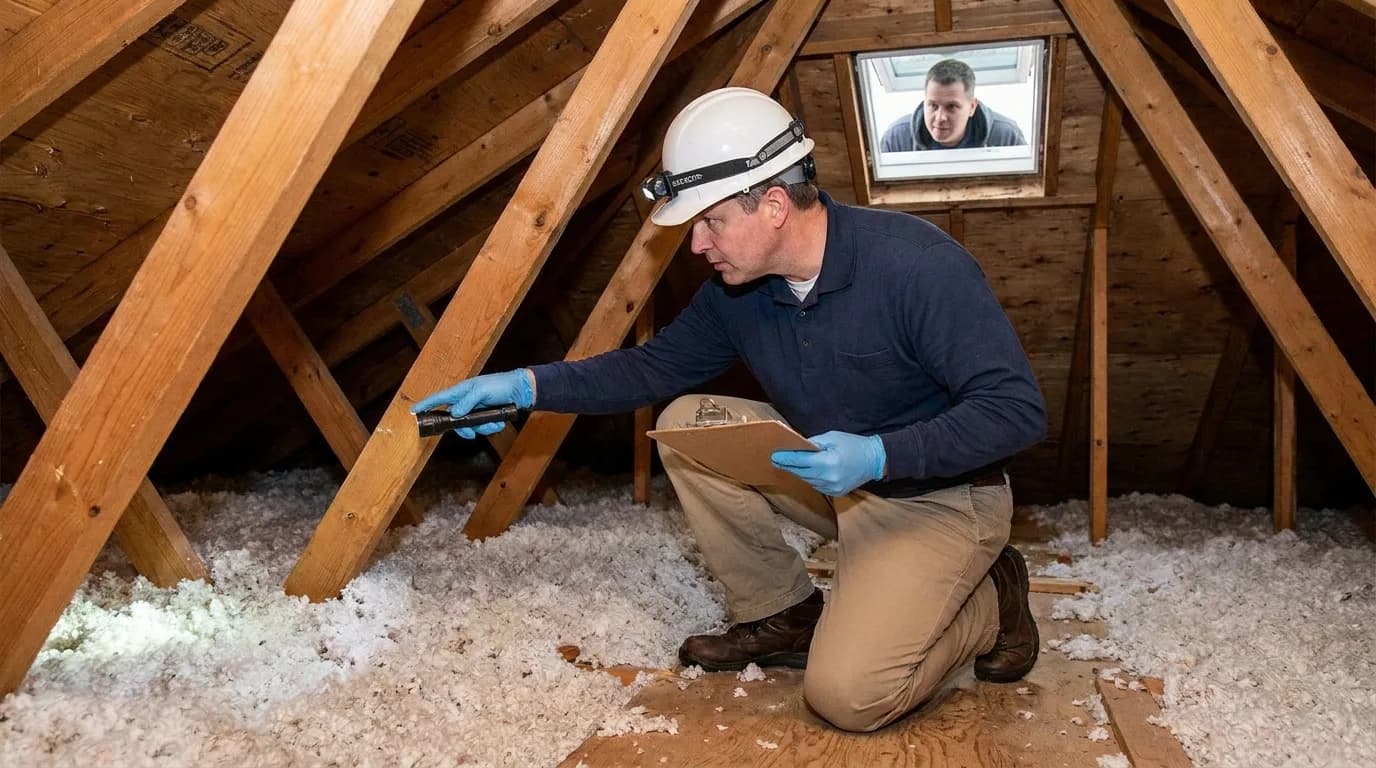
Insulating the tube. This is the step most often skipped. An uninsulated metal tube running through a -30°C attic is a cold pipe surrounded by warm, moist house air rising from the bathroom below. Frost forms on the inside of the tube and the underside of the dome, then melts during a Chinook and drips through the diffuser. Wrap the whole tube run in a fibreglass or foam sleeve, seal the ceiling ring to the vapour barrier, and use a double-glazed or sealed diffuser lens. The same logic applies to a skylight's light shaft, which should be insulated to the same level as the attic and finished airtight.
Hail: the Alberta question nobody asks until August
Airdrie sits in Hailstorm Alley, and a roof penetration is the most fragile thing on the roof. The August 8, 2026 storm that ran down the Crossfield to Airdrie corridor brought quarter-sized hail and damaging wind, and it was not a record storm. Domes and skylight glazing are the first things hail that size cracks.
Standard sun tunnel domes are acrylic. Acrylic goes brittle with UV exposure and cracks under hail after a few years on the roof. Most manufacturers offer a polycarbonate dome, and some offer an impact-rated dome tested to the same Class 4 (UL 2218) style standard used for impact-resistant shingles. For any tube going onto an Airdrie roof, specify polycarbonate at minimum. The upgrade is small money next to a replacement dome and a leak.
Skylights have more glass to hit. Tempered outer glass resists small hail well but shatters into pebbles under a large stone; laminated outer glass cracks but stays in the frame and keeps the weather out until it is replaced. Laminated is the right choice here, and it is what most quality units now ship with. If a storm has already hit, document the damage before any repair, because cracked skylights and domes are usually part of the same insurance claim as the roof; our roof insurance claim service can help with the paperwork.
Sun tunnel installation cost vs skylight cost in 2026
Prices below are rough 2026 market guides for the Airdrie and Calgary area, not quotes. The main variables are tube length, roof pitch and height, whether an existing opening is being replaced or a new one framed, and how much drywall finishing is involved; our dedicated skylight replacement cost guide breaks the skylight side down further.
| Job | Rough 2026 installed cost (guide) | What drives it |
|---|---|---|
| Tubular skylight, 25 cm, rigid tube up to 2 m | $900–$1,400 | Straightforward attic, single-storey roof |
| Tubular skylight, 35 cm, or longer/flexible run | $1,200–$2,000 | Tube length, extra elbows, two-storey access |
| Impact-rated dome upgrade | Add $100–$250 | Polycarbonate or Class 4 style dome |
| Skylight replacement, same size, existing opening | $1,500–$3,000 | Unit quality, laminated glass, flashing kit |
| Skylight replacement with size change or reframing | $2,500–$4,500 | Framing, light shaft rebuild, drywall |
| New skylight where none existed | $3,000–$6,000+ | Full framing, shaft, finishing, possible permit |
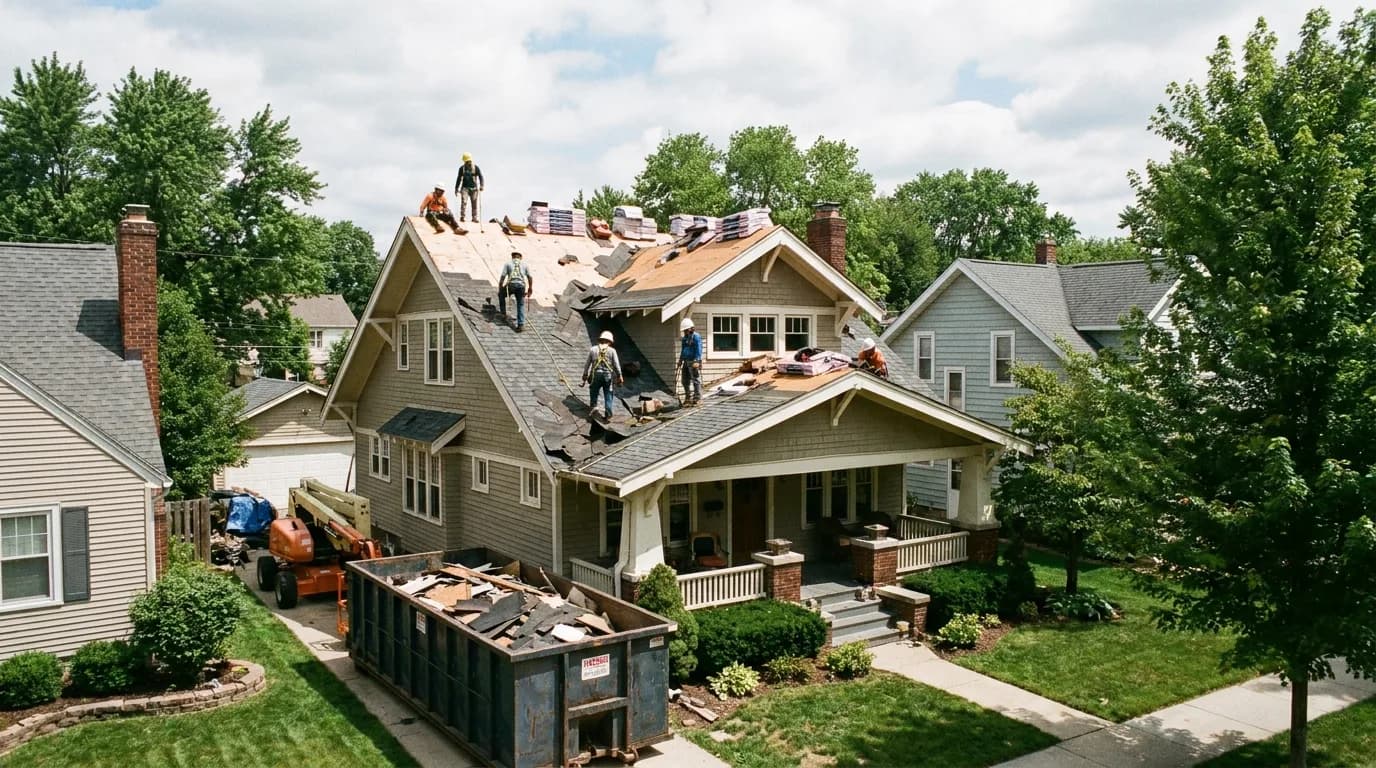
The tube's advantage is not just unit price. It fits between rafters or trusses without cutting structure and needs no light shaft, so the labour is a few hours and the drywall work is one ceiling ring. A skylight in a truss roof usually needs an engineer's letter because trusses cannot be cut without one. If the roof is due for replacement anyway, doing either job at the same time saves the flashing labour; see our roof replacement service in Airdrie.
Energy loss, ice dams and the attic
Every hole in the roof is also a hole in the building envelope, and Alberta winters punish envelope weaknesses. A skylight, even a good triple-glazed one, has an insulating value of roughly R-3 to R-5 against R-50 or more for the attic around it. The light shaft below it is a chimney for warm air unless it is insulated and sealed. The warm patch that creates on the roof surface melts snow above the skylight, and the meltwater refreezes at the eaves below. That is an ice dam, and skylights are one of its most common local causes.
A tube is a much smaller weak point: the dome is a poor insulator but the area is tiny, and an insulated tube with a sealed diffuser keeps heat loss small. The failure case is the uninsulated tube, which leaks heat into the attic, melts snow around the dome and frosts inside.
Both products benefit from a well-ventilated attic. Good intake at the soffits and exhaust at the ridge keeps the underside of the roof deck cold and even, so snow melts from the sun rather than from the house. If you have icicles hanging below a skylight or frost around a tube, read our guides on attic ventilation and roof vents in Alberta and preventing ice dams in Airdrie before you blame the product.
Brands, warranties and what to look for in a quote
Velux and Solatube dominate the quality end in Canada; Velux also makes full skylights, and both supply flashing kits for asphalt, metal and low-slope roofs. Hardware-store brands are often fine for a short rigid run over a bathroom, but check the dome material and whether the tube is rigid or flexible.
- Dome and glazing: polycarbonate or impact-rated dome; laminated outer glass on skylights.
- Tube: rigid, with a stated reflectivity of 98 percent or better; flexible only for short runs.
- Flashing kit: matched to your roof covering and pitch, with ice-and-water membrane at the curb.
- Insulation: tube sleeve and sealed ceiling ring specified in writing.
- Warranty: product warranty (often 10 years on tunnels, 10 to 20 on skylights) and a separate written workmanship guarantee from the installer.
- Access and safety: how the crew will work on a two-storey or steep roof, and whether any interior finishing is included.
If a quote does not mention flashing or insulation, ask; those two words separate a tunnel that works quietly for 20 years from one that drips every February. Our pillar guide on the best shingles for Alberta's climate covers the roofing the flashing has to work with.
Deciding, and getting an honest quote
If the room is a windowless bathroom, hallway or closet and you want it bright during the day, a sun tunnel is the right answer and the cheaper one. If the room is a kitchen or living space and you want sky, sun and a real change in how the house feels, a skylight is worth the extra cost, provided it gets laminated glass, a proper flashing kit and an insulated, sealed shaft.
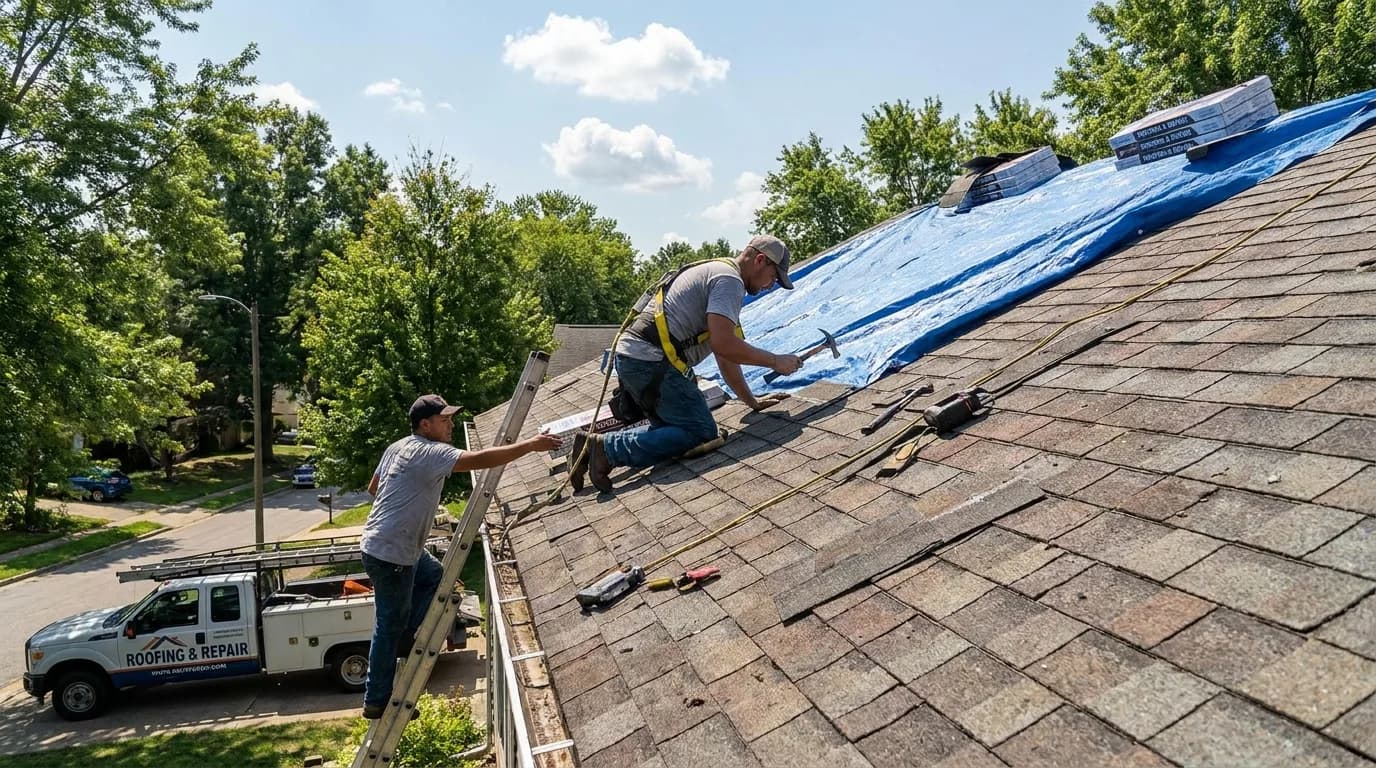
Either way, Apex Roofing Airdrie will come out for a free, no-obligation on-site estimate, look at the roof, attic and room, and give you an itemised written quote for the product that suits the spot. Our local crew installs and flashes both, backs the work with a written workmanship guarantee on top of the manufacturer warranty, and books estimates the same week. If hail has already cracked a dome or skylight, we can tarp and document it while you sort out the claim.
Written by the Apex Roofing Airdrie crew
Practical guidance from the local roofers who inspect, repair and replace roofs across Airdrie and Rocky View County every season. We review our guides against current Alberta practice and update them when materials, code or insurer behaviour changes. About our team.