In this guide
- 01Roof vents: which type is best for an Alberta home?
- 02Intake and exhaust: the balance every vent type depends on
- 03Types of roof vents compared
- 04Ridge vents: continuous exhaust and how they handle heavy snow
- 05Box vents: the practical choice on hip roofs
- 06Turbine roof vents: whirlybirds in prairie wind
- 07Gable vents and powered vents: where they still make sense
- 08Soffit vents: the intake half that makes the exhaust work
- 09Why mixing exhaust vent types short-circuits your attic
- 10Plastic vs metal roof vents in Hailstorm Alley
- 11Choosing roof vents during a reroof
Roof vents: which type is best for an Alberta home?
Roof vents come in five common types: ridge vents, box vents, turbines, gable vents and powered vents, with soffit vents supplying the intake that makes all of them work. Every roofer has a favourite, and most of the arguments you will read online are about products rather than roofs. In practice the right choice depends on your roof shape, your attic layout, and how much snow, wind and hail your roof sees, which in Airdrie is a lot of all three.
This guide is the product comparison. It does not repeat the net free area math in depth, because our post on attic ventilation and roof vent rules for Alberta already covers the commonly cited 1:300 ratio, how to measure your attic and how to tell whether you are short. Read that one for how much ventilation you need. Read this one to decide which vents to buy.
Intake and exhaust: the balance every vent type depends on
Every one of the roof vents in this guide is an exhaust vent except the soffit vent. Exhaust lets warm, moist attic air out near the top of the roof. Intake, at the soffits, lets cooler outside air in near the bottom. Air moves through the attic only when both exist and are roughly balanced, with at least half the total vent area at the intake.
That balance is the reason a homeowner can add six new box vents and still have frost on the underside of the sheathing in February. Exhaust without intake simply pulls air from the house through every gap in the ceiling, dragging moisture into the attic with it. Whatever vent type you pick from the table below, the first question is whether the soffits are open, and in many Airdrie homes with insulation pushed into the eaves, they are not.
Types of roof vents compared
The table below summarises how each roof vent type performs on an Alberta roof. Net free area (NFA) is the manufacturer's rating of the open area that actually passes air, and it varies by product, so check the label on the unit you are quoted. Costs are rough 2026 market guides for supply and installation during a reroof, not quotes; adding vents to an existing roof usually costs more per unit.
| Vent type | Typical NFA per unit | Rough installed cost (CAD, 2026 guide) | Snow and wind in Alberta | Hail vulnerability | Noise |
|---|---|---|---|---|---|
| Ridge vent | About 12 to 18 sq in per linear foot | $8 to $20 per linear foot | Good with an external baffle; can be buried in deep drifting snow | Low (shingle-over, low profile) | Silent |
| Box vent (static, low profile) | About 50 to 60 sq in each | $75 to $200 each | Reliable; hood sheds snow; can drift over in a big storm | High if plastic, low if metal | Silent |
| Turbine (whirlybird) | Roughly 100 to 140 sq in equivalent, more in wind | $200 to $450 each | Moves the most air in prairie wind; bearings ice up; can spin and rattle | High (thin aluminum fins dent and seize) | Audible in wind, worse as bearings age |
| Gable vent | Varies widely, often 50 to 150 sq in | $150 to $400 each | Depends on wind direction; drives snow into the attic in a cross wind | Low | Silent |
| Powered or solar vent | Rated by airflow, not NFA | $400 to $1,500 each | Effective when running; can depressurise the attic and pull conditioned air | Moderate | Motor hum |
| Soffit vent (intake) | Continuous strip about 9 sq in per linear foot; panels vary | $5 to $15 per linear foot | Unaffected by snow on the roof; blocked by insulation is the real risk | None | Silent |
Two cautions on the numbers. First, NFA ratings assume the vent is clean and unobstructed, and a screen full of cottonwood fluff or paint cuts real airflow a lot. Second, turbine ratings depend on wind speed, so a still, cold night in January gives you far less than the brochure figure. Use the numbers to compare types, not to size an attic to the square inch.
Ridge vents: continuous exhaust and how they handle heavy snow
A ridge vent is a low-profile strip that runs the full length of the roof peak, covered with cap shingles so it nearly disappears. Because it sits at the highest point and runs the whole ridge, it exhausts evenly across the attic rather than in a few spots, which is why it is the default on most new gable-roof homes in Reunion, Windsong and Southwinds.
In heavy snow, a ridge vent can be buried after a big dump, and airflow stops until the wind or the sun clears it. In practice, the ridge is usually the first place snow blows off in a Chinook, so the buried period is short, but it is real. The other snow concern is fine, wind-driven snow entering the vent. Ridge vents with an external baffle and an internal filter are far better at keeping it out, and the cheap roll-out versions without a baffle are the ones that cause complaints.
The ridge vent vs box vent decision usually comes down to how much ridge you have. A long, simple gable gives a ridge vent plenty of length to reach the required area. A short ridge, or a complex roof with many small hips and dormers, may not have enough linear feet of peak, and cutting the slot through a truss-heavy peak on some older homes is not always practical.
Box vents: the practical choice on hip roofs
Box vents, also sold as low-profile, static or slant-back vents, are the square hooded roof vents you see near the peak on most Alberta roofs built before ridge vents became common. Each one covers a hole cut through the deck and provides a fixed amount of exhaust area, so you add units until you reach the total you need, spaced evenly along the upper third of the roof.
On hip roofs, which have very little ridge, box vents are often the only sensible exhaust option, and there is nothing second-rate about them when they are metal and correctly placed. They shed snow well because of the hood shape, they have no moving parts, and they are easy to replace one at a time after hail. Their drawbacks are appearance, a few more penetrations through the roof, and the fact that each unit vents only the area of attic near it.
Placement matters more than people think. Box vents belong within about 900 mm (3 ft) of the ridge on the rear or least visible slope where possible, never low on the roof where they act as intake and pull air from the vents above them. If you are having a roof replacement in Airdrie, ask the crew to count the existing vents against the attic area rather than just replacing what was there, because many original builds were short.
Turbine roof vents: whirlybirds in prairie wind
A turbine roof vent, usually called a whirlybird, is a spinning aluminum head on bearings that uses wind to draw air up out of the attic. In the steady prairie wind of a typical Airdrie afternoon a 12 inch turbine moves more air than any box vent, and that is why they are so common on older homes and garages across the region.
The problems show up in the other seasons. Hail hits the thin fins and dents them, the head goes out of balance, and the bearings wear and start to squeak on windy nights. In winter the bearings can ice and stop, at which point the turbine is just a large, poorly hooded box vent. Wind-driven snow and rain can also enter when the head is damaged or the flashing has been disturbed.
Turbines still make sense on detached garages, workshops and outbuildings where noise does not matter and the roof is cheap to access. On a house in Hailstorm Alley, most crews now swap them for metal box vents or a ridge vent at reroof time, and if your roof took hits in the August 8, 2026 storm that tracked down the Crossfield to Airdrie corridor, dented turbines are worth photographing for your hail damage roof repair claim alongside the shingles.
Gable vents and powered vents: where they still make sense
Gable vents are the louvred openings in the end walls of a gable roof. On a small, simple attic they can provide both intake and exhaust when the wind blows through them, and on many 1970s and 1980s Airdrie bungalows they were the only ventilation ever installed. Their weakness is that they depend on wind direction, they do little on a still day, and in a cross wind they can drive fine snow across the attic and onto the insulation.
Powered vents, whether hard-wired or solar, use a fan to pull air out. They move a lot of air when running, but a fan strong enough to matter can depressurise the attic and draw heated air from the house through the ceiling when intake is short, which raises heating bills and moves moisture into the attic. They also add a motor to maintain on the roof. For most Alberta homes, passive vents with proper intake do the job without the running cost.
Soffit vents: the intake half that makes the exhaust work
Soffit vents sit in the underside of the eave overhang and let outside air into the attic at its lowest point. On most modern homes the soffit is perforated aluminum or vinyl panel, which is vented along its full length. Older homes may have individual rectangular soffit vents every few feet, or a solid plywood soffit with no venting at all.
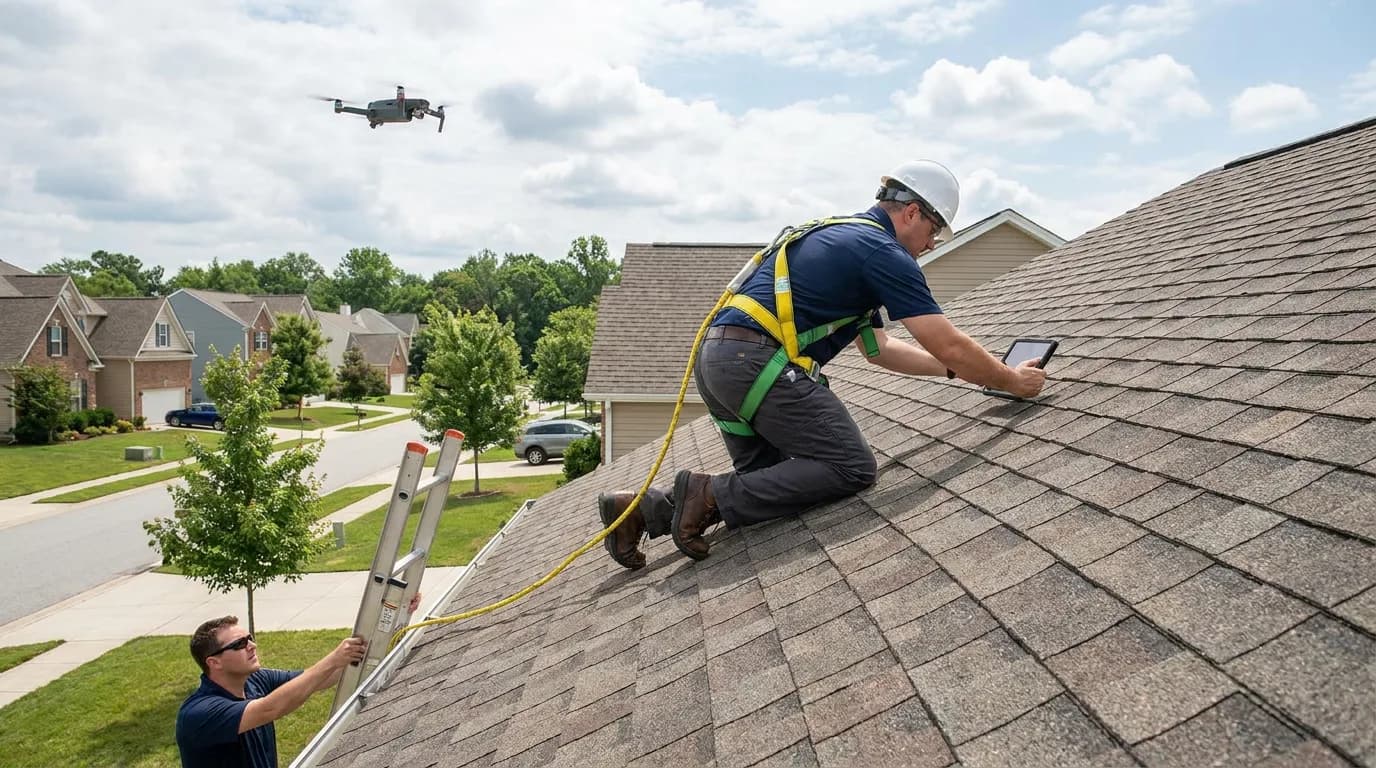
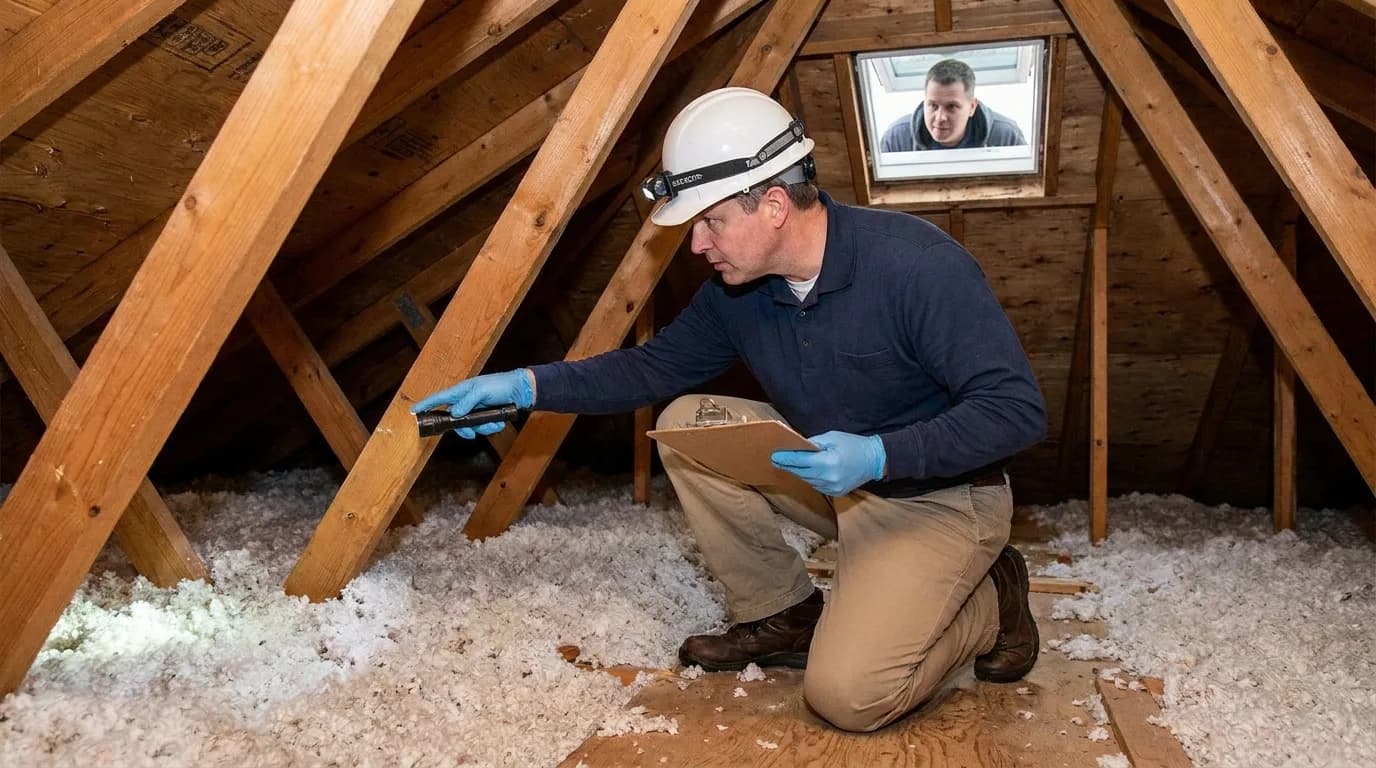
Intake fails in three ways. Insulation blown or pushed into the eaves blocks the air path from the soffit into the attic, which is by far the most common problem we find during a roof and attic inspection in Airdrie. Painted-over or dirty perforations cut the free area. And some perforated soffit products have far less open area than they appear to, so a long run of soffit can still be short on NFA.
The fix is usually rafter baffles (insulation stops) installed at every eave bay to hold the insulation back and keep the channel open, and replacing solid or under-vented soffit with a properly vented product. It is not glamorous work, but it is the difference between an exhaust vent that pulls air from outside and one that pulls it out of your bathroom.
Why mixing exhaust vent types short-circuits your attic
Air takes the easiest path. If an attic has a ridge vent at the peak and box vents, turbines or gable vents a little lower down, the ridge vent pulls its air from those nearby openings instead of from the soffits far below. The lower vents become intake, the top metre of the attic circulates nicely, and the rest of the attic, including the insulation and the underside of the sheathing near the eaves, gets almost no airflow.
That short circuit also pulls weather in. A box vent working as intake draws wind-driven rain and snow through its hood, and a gable vent working as intake drives snow straight onto the insulation below it. The result is a roof that looks well ventilated from the street and still grows frost, mould and ice dams. Our guide to preventing ice dams in Airdrie explains how that under-ventilated eave zone turns into the dam.
So the rule is one exhaust type per attic space. If you add a ridge vent, remove the box vents and turbines and seal the holes, and block the gable vents from inside. If you keep box vents, keep them all at the same height and do not add a ridge vent. Separate attic spaces, for example a main roof and a lower garage roof, can each have their own system.
Plastic vs metal roof vents in Hailstorm Alley
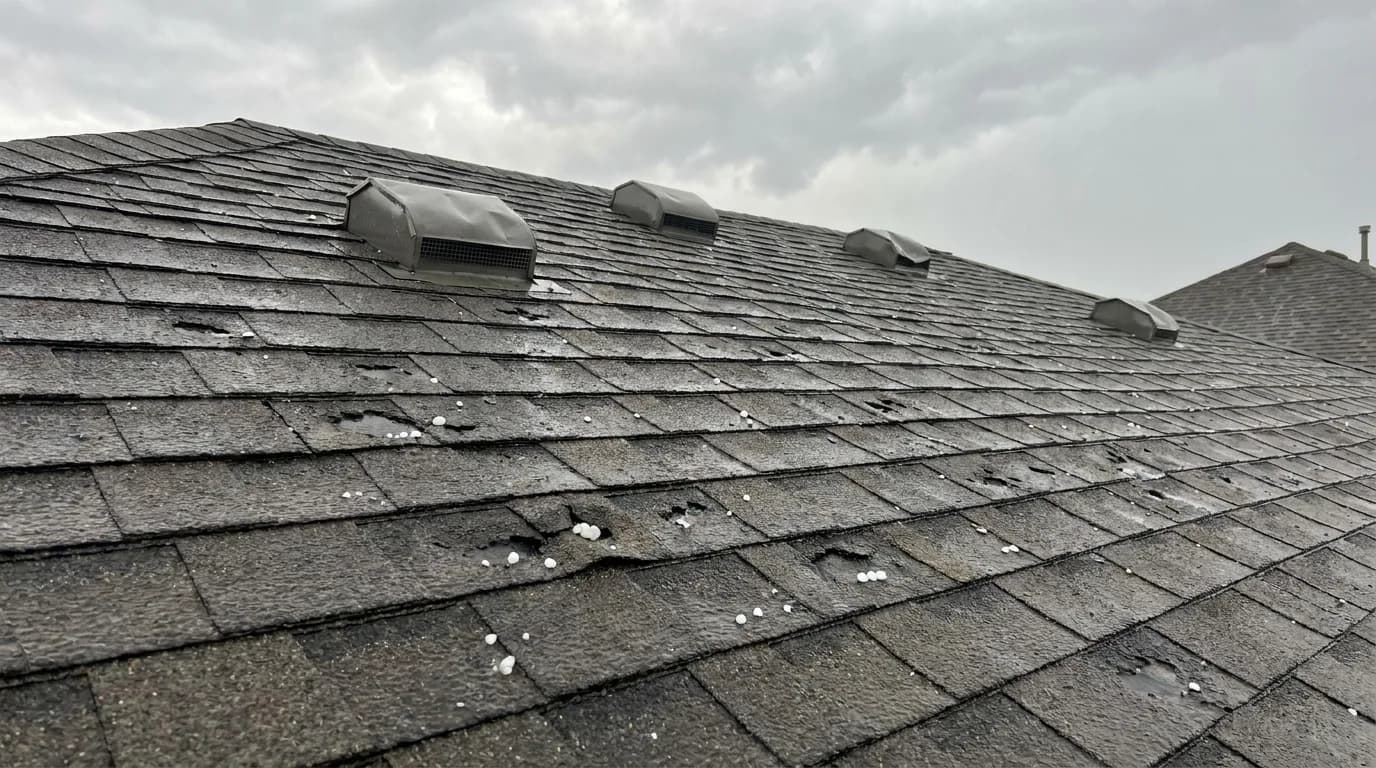
Many of the box-style roof vents sold in Alberta are moulded plastic because they are cheap and do not rust. In a normal climate that is fine. In Hailstorm Alley it is a recurring repair. Plastic hoods turn brittle after a few years of UV and cold, and quarter-sized hail cracks them, leaving a hole in the roof that goes unnoticed until water shows up on the ceiling below. Adjusters see cracked plastic vents on nearly every hail claim.
Galvanized or aluminum box vents dent instead of shattering and keep doing their job. A dented metal vent is cosmetic; a cracked plastic one is a leak. Turbines are metal but so thin that hail deforms the fins and stops the head. Ridge vents sit under cap shingles and take the least direct hail of any type, which is a quiet advantage in this corridor.
- Specify metal box vents on any house roof in the Calgary to Red Deer corridor.
- Choose a ridge vent with an external baffle and internal filter, not a bare roll vent.
- Replace plastic vents during hail repairs even if they look intact; hairline cracks open later.
- Keep every vent hood screened to stop birds, wasps and blowing snow.
- Check vents each fall as part of routine roof maintenance in Airdrie, because a cracked vent is a five-minute fix and a wet ceiling is not.
Choosing roof vents during a reroof
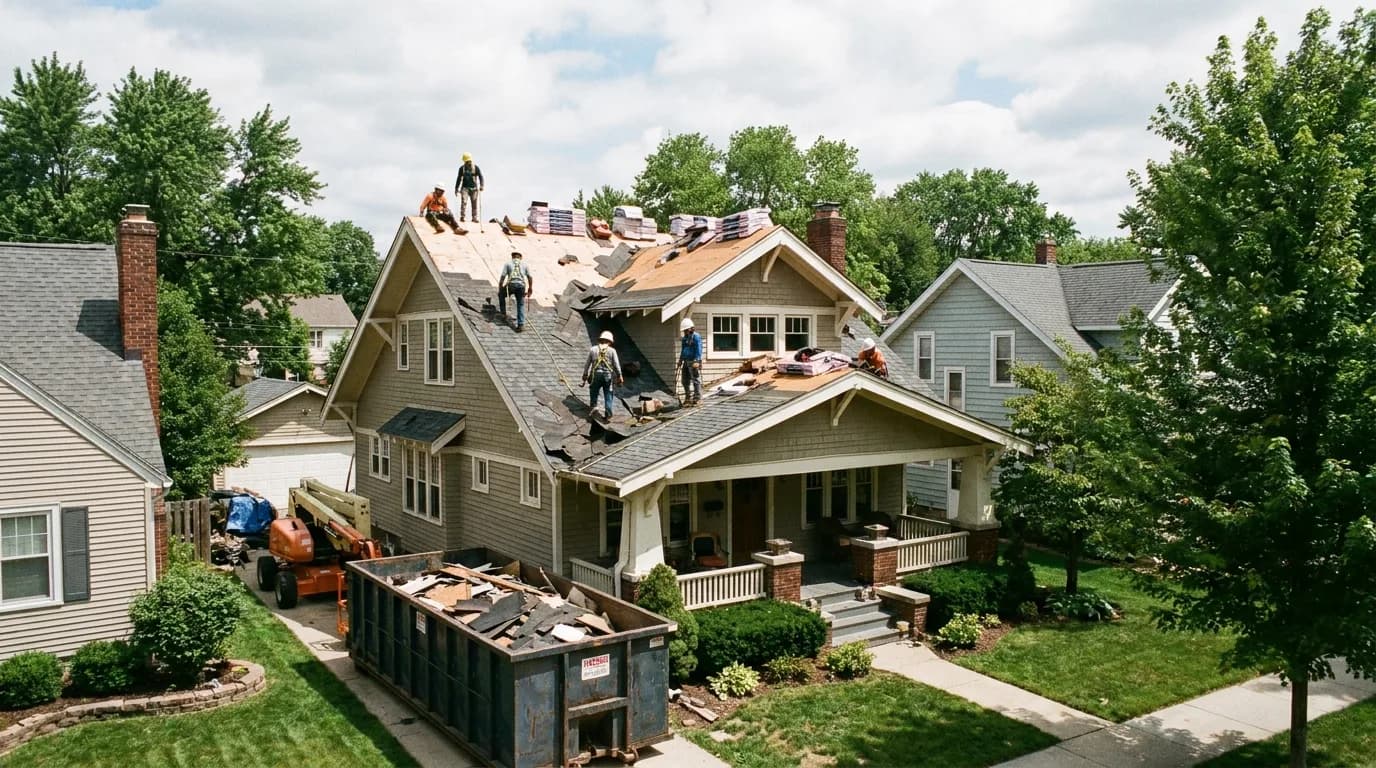
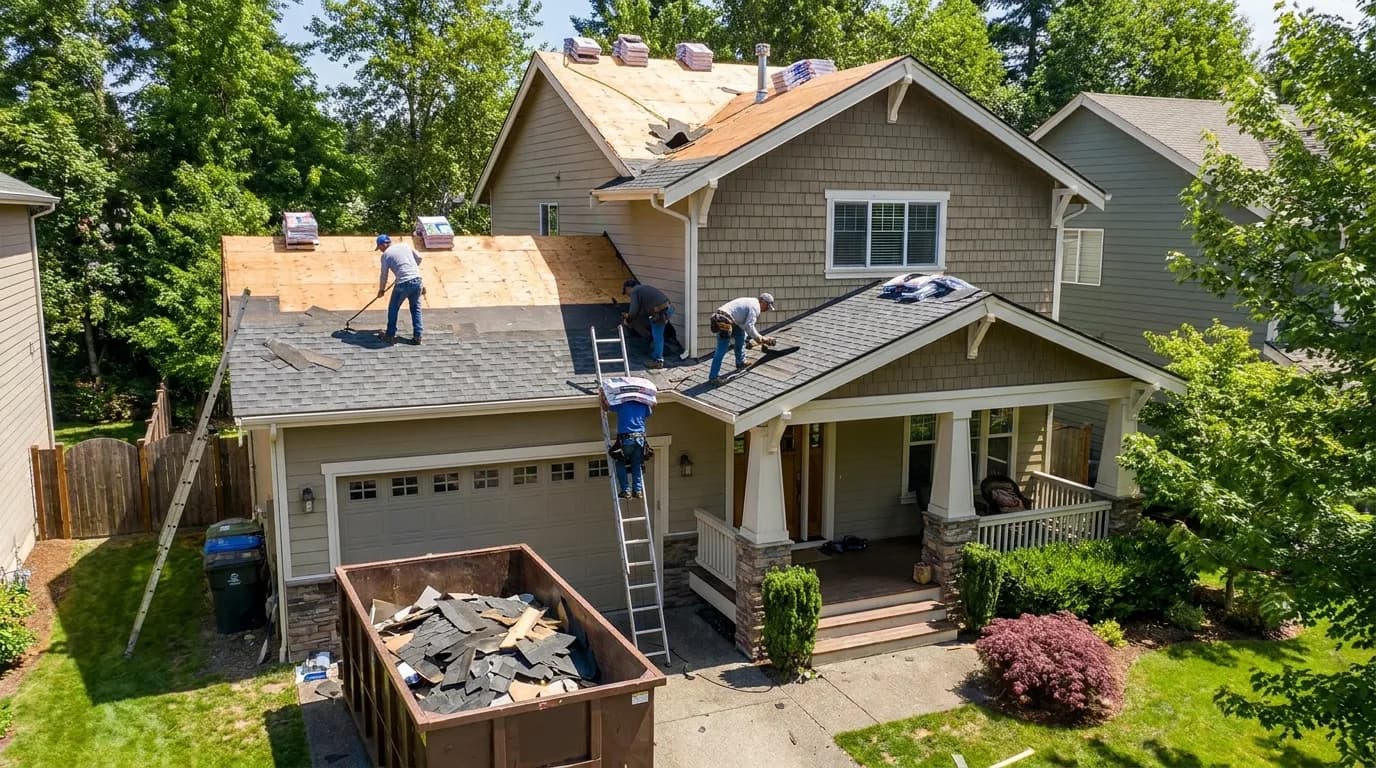
A reroof is the cheapest moment to fix roof vents and ventilation, because the deck is open, the crew is already on the roof, and every new hole is under new shingles. Ask each roofer to show you their vent plan: how much intake is open at the soffits, which single exhaust type they propose, how many units or how many feet of ridge, and what they will do with the old vents and gable openings. A quote that just says vents, as required, has not looked at your attic.
Ventilation is also part of the shingle warranty, and an under-ventilated attic is a common reason for a denied claim on a curled or blistered roof. Our pillar guide to the best shingles for Alberta's climate covers how ventilation, membrane and installation matter more than the brand on the wrapper.
Apex Roofing Airdrie checks the attic and soffits as part of every free, no-obligation on-site estimate and itemises intake, exhaust and vent type on the written quote. If your vents need correcting on their own rather than as part of a full reroof, our roof ventilation service in Airdrie covers exactly that. If you are unsure whether your box vents, turbines or ridge vent are actually doing anything, book an estimate and we will show you what we find.
Written by the Apex Roofing Airdrie crew
Practical guidance from the local roofers who inspect, repair and replace roofs across Airdrie and Rocky View County every season. We review our guides against current Alberta practice and update them when materials, code or insurer behaviour changes. About our team.