In this guide
- 01When is roof snow removal necessary in Alberta?
- 02Roof snow load in Alberta: what your roof is designed to carry
- 03How much does snow weigh? Snow type matters more than depth
- 04How much snow can a roof hold before it is a problem?
- 05Warning signs your roof is overloaded with snow
- 06When roof snow removal is actually worth the money
- 07How to use a roof rake safely from the ground
- 08Why you should not climb onto a snow-covered roof
- 09Roof snow removal cost: what professionals charge
- 10Snow removal and ice dams: how the two connect
- 11Not sure whether your roof needs clearing? Ask before you climb
When is roof snow removal necessary in Alberta?
Roof snow removal is one of those jobs that sounds prudent but is unnecessary for most Airdrie homes most winters. A pitched roof with trusses built to the Alberta Building Code is designed to carry the snow this region normally receives, and a fair amount more. Clearing 20 centimetres of powder off a sound roof does nothing for the structure and puts you at real risk of falling.
The honest answer is that removal matters in a handful of specific situations. Deep drifts against a second-storey wall or behind a dormer, wet snow after a rain-on-snow event, ice dams building at the eaves, a flat or low-slope roof that cannot shed, or an older roof with known truss or deck problems. In those cases, taking weight off the roof is money well spent.
This guide walks through how snow load works, how much snow a roof can hold, the warning signs of overload, how to rake safely from the ground, and what professional roof snow removal costs in the Airdrie area as of 2026. If you have an active leak right now, skip ahead and call our emergency roof repair service in Airdrie first.
Roof snow load in Alberta: what your roof is designed to carry
Every roof in Alberta is engineered to a snow load taken from the Alberta Building Code, which sets a ground snow load for each municipality and then derives a roof load from it using factors for slope, exposure, and drifting. Roofs in the Calgary–Airdrie area are typically designed for a ground snow load in the range of roughly 1.0–1.5 kPa, confirm with your municipality. That works out to about 100 to 150 kilograms per square metre, or roughly 20 to 30 pounds per square foot, before design factors are applied.
Design loads also include a safety margin. A code-built truss roof does not fail the moment it reaches its rated load; it is designed to carry that load without excessive deflection, with reserve capacity beyond it. That is why you rarely hear of a modern Airdrie house collapsing under snow, even in a heavy winter.
The roof snow load Alberta homes are built for has been revised over the decades, and older homes, garages, additions and outbuildings may have been built to a lower standard or with no engineering at all. Detached garages, carports, sheds and sunroom additions are the structures that actually fail in a bad winter, far more often than the house itself.
How much does snow weigh? Snow type matters more than depth
Depth is the wrong thing to measure. What loads a roof is the water content of the snow, and that varies enormously. A metre of dry, fluffy prairie powder can weigh less than 15 centimetres of slush or 5 centimetres of solid ice. The table below gives rough weights for a 30 centimetre (one foot) depth of each type, sitting on one square metre or one square foot of roof.
| Snow type (30 cm / 1 ft deep) | Approx. weight per m² | Approx. weight per sq ft |
|---|---|---|
| Fresh, dry powder | 15–30 kg | 3–6 lb |
| Settled, wind-packed snow | 30–60 kg | 6–12 lb |
| Wet, heavy spring snow | 60–100 kg | 12–20 lb |
| Slush or rain-soaked snow | 100–150 kg | 20–30 lb |
| Solid ice (per 30 cm) | 270–290 kg | 55–60 lb |
Two things follow from this. First, a foot of wet spring snow on top of a winter's packed base can approach the design load on its own. Second, a Chinook that melts the top layer, followed by a hard freeze, converts light snow into dense ice at the eaves and in the valleys, concentrating weight exactly where the roof is least supported. Rain on existing snow is the single worst case because the snowpack acts like a sponge.
How much snow can a roof hold before it is a problem?
Here is a rough rule of thumb, not an engineering opinion. If your Airdrie roof was designed for roughly 1.0 to 1.5 kPa, it can carry somewhere in the region of 60 to 100 centimetres of settled snow, or 30 to 50 centimetres of wet snow, before you are close to the design load. Fresh powder can pile deeper than that with no concern. Ice is the exception: 10 centimetres of ice across a roof is already a serious load.
Distribution matters as much as the total. Wind scours snow off the windward slope and dumps it on the lee side, so one slope may carry double the average. Drifts pile against dormers, chimneys, parapets and the taller wall of a split-level, and those concentrated drifts are what the code's drift factors are trying to account for. A half-metre average with a two-metre drift behind the dormer is a very different roof than a uniform half-metre.
Flat and low-slope roofs are a special case. They cannot shed snow, they collect meltwater that refreezes, and their drains block with ice. If you have a flat-roofed garage, addition or commercial-style section on your home, treat its snow load with more respect than the main pitched roof.
Warning signs your roof is overloaded with snow
A roof under too much weight usually tells you before anything dramatic happens. Check for these signs after every major dump and during any mid-winter thaw.
- A sagging ridgeline or a visible dip in a slope when you look at the roof from the street.
- Creaking, popping or cracking sounds from the attic or ceiling, especially at night when temperatures drop.
- Interior doors that suddenly stick or will not latch, because the frame above them is being pushed out of square.
- New cracks in drywall at the corners of door and window openings or where walls meet the ceiling.
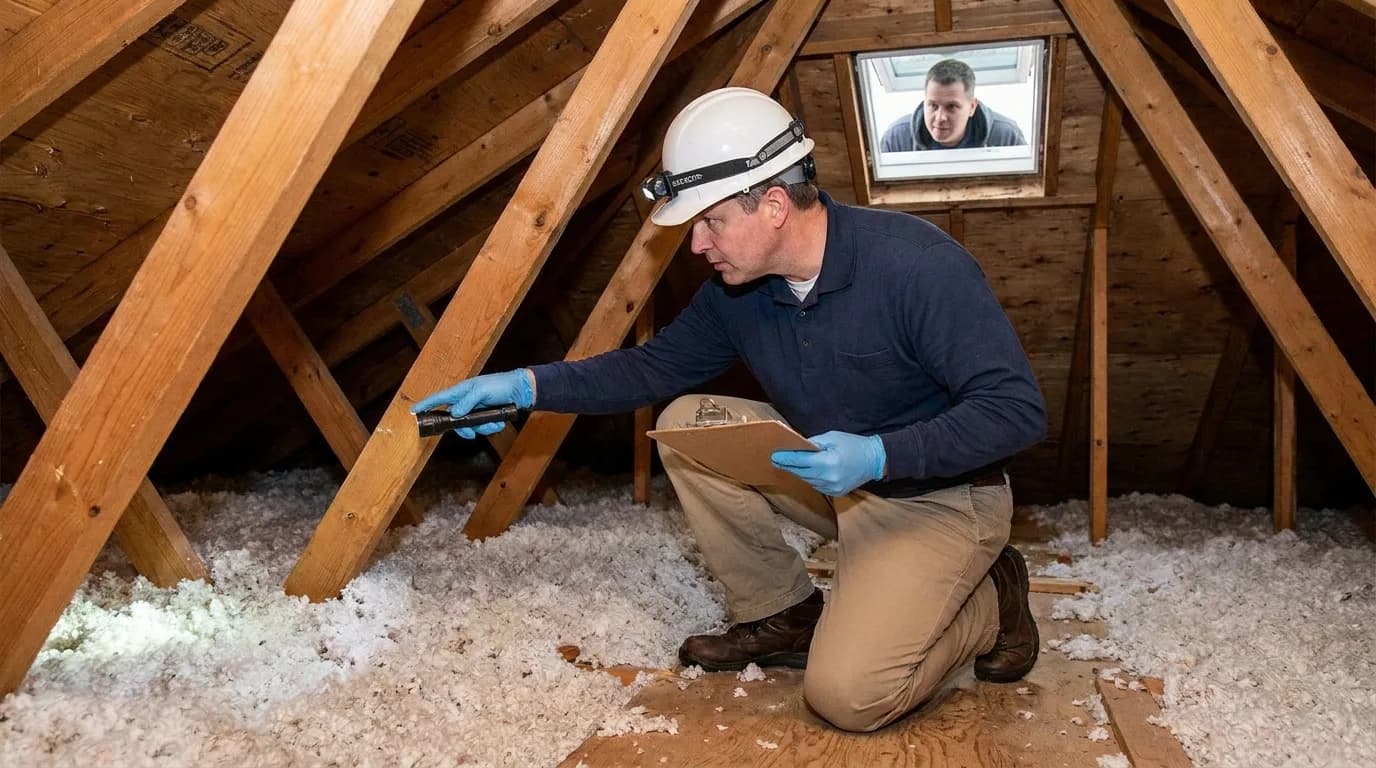
- Bowed or cracked trusses, purlins or rafters if you look in the attic with a flashlight.
- Ceiling stains or drips that appear during a thaw, which usually means an ice dam rather than a structural problem, but still needs attention.
- Sprinkler pipes, ductwork or the top plate of a wall bending in a garage or shop.
Sagging, creaking and sticking doors together are a same-day problem. Get the weight off the roof, keep people out of the rooms beneath the worst slope, and have the structure looked at. Cracked drywall on its own is often a symptom of seasonal truss uplift, which is common in Alberta and harmless, so weigh it against the other signs rather than panicking over one crack.
When roof snow removal is actually worth the money
Set the general caution aside and there are clear cases where clearing snow is the right call. Deep drifting is the first. If wind has piled a metre or more against a wall, a dormer or a chimney, that localised load can exceed what the roof was designed for even when the rest of the roof is nearly bare.
Ice dams are the second and the most common reason we get calls in Airdrie. When a thick ridge of ice sits at the eaves and meltwater is backing up under the shingles, removing the snow above the dam stops feeding it. Our guide on how to prevent ice dams in Airdrie explains the causes, and our post on ice dam removal methods and costs covers what to do once one has formed.
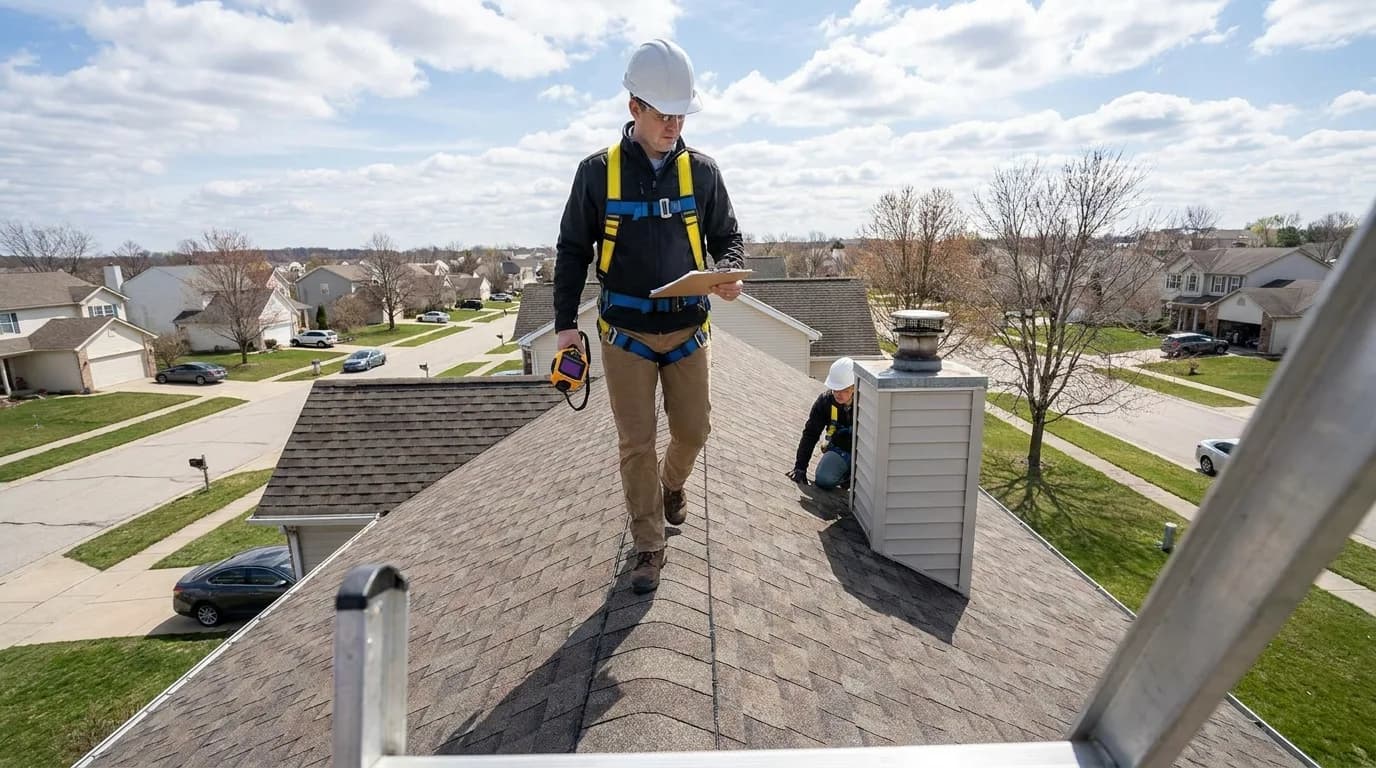
Flat and low-slope roofs, older homes with undersized rafters, garages and carports, and any addition that was built without a permit all deserve a lower threshold for action. So does a roof that has already shown overload signs in a past winter. If your roof was built in the 1970s or earlier, or you have never had the structure looked at, a roof inspection in Airdrie before the snow flies will tell you whether the trusses are something to worry about.
How to use a roof rake safely from the ground
A roof rake is a wide blade or wheeled cutter on a telescoping pole, and it is the only snow removal tool most homeowners should own. Used correctly it lets you take weight off the lower slopes and the eaves without leaving the ground. Used carelessly it strips granules off shingles and tears off ridge vents and eavestroughs.
- Rake from the eave upward in strips, pulling snow down toward you, and never stand directly beneath the section you are clearing.
- Leave 3 to 5 centimetres of snow on the shingles. Scraping to bare asphalt in the cold damages the granule surface and shortens the roof's life.
- Clear the first metre or so above the eaves first. That is where ice dams form and where the load sits on the least supported part of the structure.
- Keep the pole clear of power lines. The service drop to many Airdrie homes enters right at the eave.
- Work around vents, skylights and satellite dishes, not over them. Plastic vent hoods snap easily in the cold.
- Avoid raking wet, heavy snow in big pulls. A large slab sliding off a two-storey roof can knock an adult over and bury a pet or child.
Do not use a metal shovel, an ice chipper or an axe on the roof surface for any reason. And if the rake will not reach the drift that concerns you, that is the point to call someone with harnesses and ladder training rather than improvising. A roof maintenance visit can also clear eavestroughs and check vents while the crew is there.
Why you should not climb onto a snow-covered roof
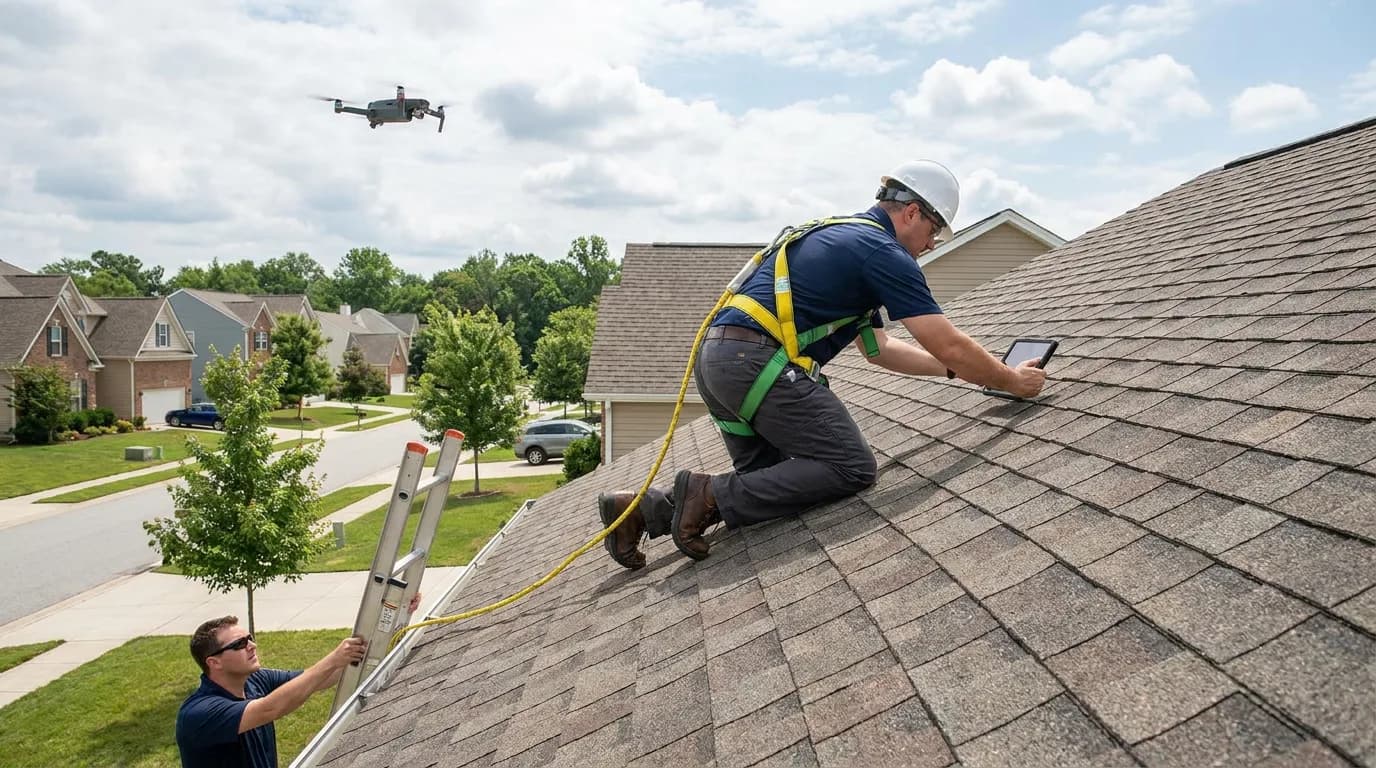
Falls from roofs and ladders are among the most common serious home injuries in Canada, and winter roofs are the worst case. Snow hides the edge of the roof, hides skylights, and hides the ice underneath. A pitched roof with 5 centimetres of packed snow on it has almost no grip, and a slab of snow that lets go under your feet takes you with it.
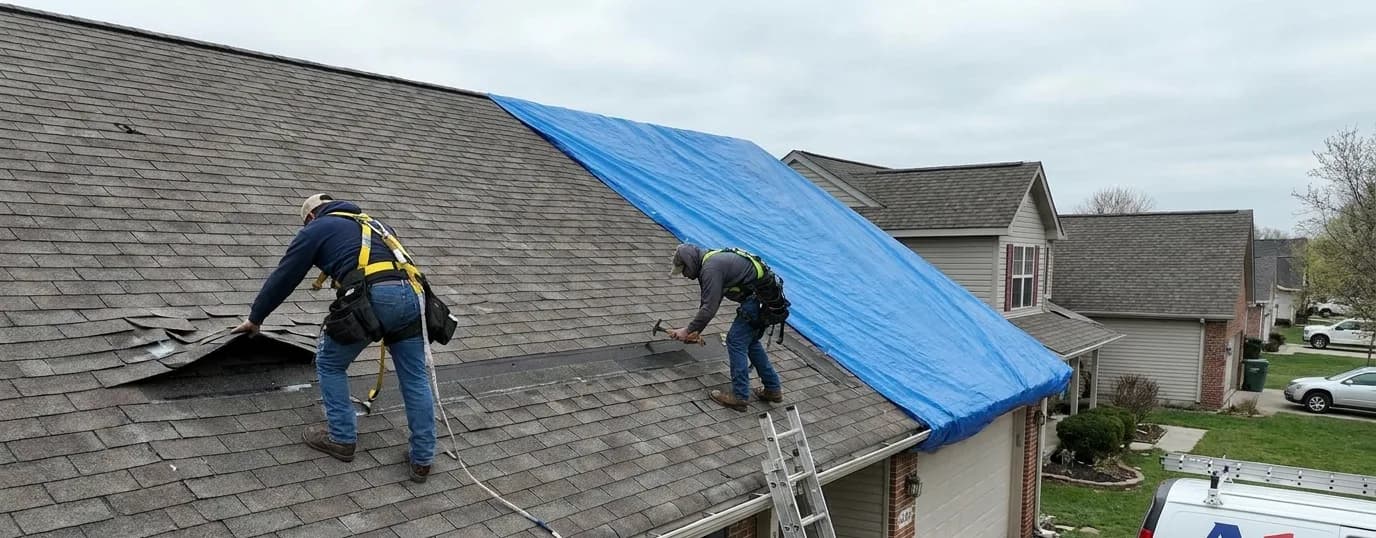
Professional crews use fall-arrest harnesses anchored to the structure, roof brackets, and ladders that are footed and tied off. They also work in pairs. A homeowner with a shovel and a deck ladder has none of that, and a fall from a bungalow eave onto frozen ground is still a hospital visit.
Then there is the roof itself. Shovelling on shingles at minus 15 breaks them, and blade strikes on flashing, vents and ridge caps are the leading cause of the spring leaks we get called to after a winter of DIY clearing. The weight you save by removing snow is small compared with the roof repair bill for a slope that was gouged in February.
Roof snow removal cost: what professionals charge
Prices vary with roof size, pitch, the amount and type of snow, access, and whether ice dams need to be dealt with at the same time. As a rough market guide for the Airdrie and Calgary area as of 2026, not a quote:
| Job | Rough 2026 cost guide | Notes |
|---|---|---|
| Roof rake clearing of eaves, bungalow, from the ground | $150–$300 | Often bundled with eavestrough checks |
| Full roof snow removal, typical two-storey home | $250–$600+ | Harnessed crew, shovels and rakes, snow left on the shingles |
| Large, steep or complex roof | $600–$1,200+ | Multiple slopes, dormers, deep drifts |
| Snow removal plus ice dam steaming | $500–$1,500 | Steam is billed hourly, usually $150–$300 per hour |
| Flat roof clearing, garage or addition | $200–$500 | Drains cleared at the same time |
The snow removal from roof cost climbs quickly if the crew has to carry snow away from the house or if the work needs to happen during a storm. Ask what is included, whether the price covers ice at the eaves, and whether they leave a protective layer of snow on the shingles. A crew that promises to scrape the roof clean is going to damage it.
Emergency calls during a widespread thaw cost more because every roofer in the region is busy. If you know your roof is prone to drifting or ice dams, booking a late-January clearing before the mid-February Chinook is cheaper and less stressful than calling when water is already coming through the ceiling.
Snow removal and ice dams: how the two connect
Most winter roof problems in Airdrie are not structural at all. They are ice dams, and snow removal is only half of the fix. An ice dam forms when heat escaping from the house melts the underside of the snowpack, the water runs down to the cold eave and refreezes. The dam grows, the pool behind it deepens, and water backs up under the shingles.
Removing the snow above the eaves cuts off the water supply and stops the dam growing, which is why snow removal and ice dam removal are usually done together. But the dam will come back next week if the attic is still leaking heat. The permanent answer is air sealing, insulation and ventilation, which is explained in our guide to attic ventilation and roof vents in Alberta.
If a dam has already pushed water inside, the damage can look worse than it is or a great deal better than it is. Stained drywall is cosmetic. Wet insulation, a soaked deck and mould behind the ceiling are not. Our pillar guide to the signs you need a new roof covers how to tell whether winter water damage has finished off an older roof or just marked it.
Not sure whether your roof needs clearing? Ask before you climb
The safest starting point is a look from the ground and a call, not a ladder. If you are seeing drifts, dams or any of the overload signs above, Apex Roofing Airdrie can assess the roof, clear the snow and ice safely with a harnessed local crew, and tell you honestly whether the structure or the shingles have been affected.
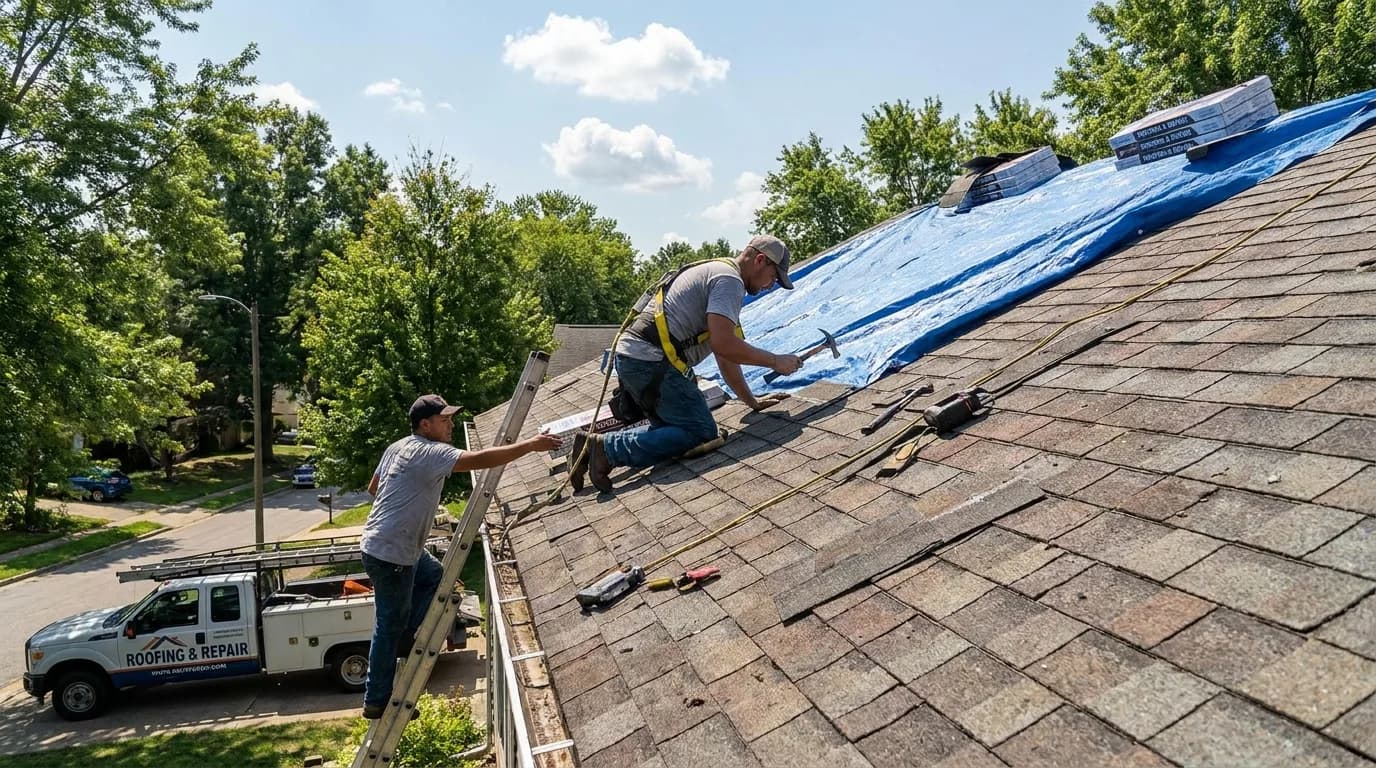
For a leak that is happening right now, our emergency roof repair service covers temporary tarping and stops the water while the weather does its worst. And if the winter has exposed problems that go beyond snow, we offer a free, no-obligation on-site estimate with an itemised written quote, so you know exactly what a repair or reroof would involve before spring.
Written by the Apex Roofing Airdrie crew
Practical guidance from the local roofers who inspect, repair and replace roofs across Airdrie and Rocky View County every season. We review our guides against current Alberta practice and update them when materials, code or insurer behaviour changes. About our team.