In this guide
- 01What roof raking actually does for an Alberta roof
- 02When roof raking is worth the effort, and when it is not
- 03Choosing a roof rake: telescoping, wheeled and cutter-style
- 04How to use a roof rake from the ground, step by step
- 05How much snow to remove: the 1 to 1.5 m rule
- 06When raking is pointless or actually harmful
- 07Safety: the part people skip
- 08Roof raking to prevent ice dams: what to do alongside it
- 09When to put the rake down and call a professional
- 10Rake smart this winter, then fix the reason you are raking
What roof raking actually does for an Alberta roof
Roof raking is the simplest form of roof snow removal: you stand on the ground with a long-handled rake and pull snow off the lower slope of the roof. It looks like a snow load exercise, and on a bad winter it can be, but for most Airdrie homes its real value is ice dam prevention.
Ice dams form when heat leaking from the house melts the underside of the snowpack, water runs down to the cold overhang at the eaves and refreezes. That ridge of ice grows with every Chinook cycle, and meltwater pools behind it and backs up under the shingles. If there is no snow on the lower slope, there is nothing to melt and nothing to refreeze. Raking removes the raw material.
That is why the technique in this guide focuses on the band above the eaves rather than on clearing the whole roof. Full-roof clearing is a different job with different risks, covered in our companion guide to roof snow removal in Alberta. This post is the hands-on how-to for the part you can safely do yourself.
When roof raking is worth the effort, and when it is not
Raking is worth doing when three things line up: there is 15 cm or more of snow on the roof, the forecast has a Chinook or a sunny spell coming that will start melt, and you have had ice at the eaves before. Homes in Airdrie with cathedral ceilings, bonus rooms over the garage, or older attics with thin insulation are the usual repeat offenders, because that is where the heat escapes.
It is not worth doing after every dusting. A few centimetres of cold powder on a well-insulated roof will sublimate or blow off in the prairie wind before it ever melts. Nor is it worth raking a metal roof; snow sheds on its own once the sun hits the panels, and a rake can scratch the finish and take the snow guards with it.
The honest test is your own eaves. If you have seen icicles longer than your forearm, ice creeping up the shingles, or a ceiling stain near an exterior wall in past winters, you are a raking household. If you have never had ice at the edge in a decade, your attic is doing its job and the rake can stay in the garage most of the winter.
Choosing a roof rake: telescoping, wheeled and cutter-style
A snow rake for roof use is not a garden tool with a long handle. The blade is wide, light and blunt, and the handle extends to 5 or 6 m. The three common designs suit different roofs and different amounts of snow.
| Rake type | How it works | Best for | Watch out for | Rough 2026 price (guide) |
|---|---|---|---|---|
| Basic telescoping aluminum rake | Flat blade 50–60 cm wide pulled toward you | Bungalows, low eaves, light to moderate snow | Blade drags on shingles unless it has a slide or bumpers | $50–$110 |
| Wheeled or rolling rake | Small wheels hold the blade a few cm off the surface | Most homes; protects shingles; less effort | Wheels ride up over ice; useless once a crust forms | $80–$160 |
| Cutter or slide-style rake | A blade cuts a slab that then slides down a fabric chute | Deep, heavy snow; two-storey eaves | Snow arrives in large slabs at your feet; needs practice | $100–$220 |
For a typical Airdrie two-storey, a wheeled rake with at least 6 m of reach covers the eaves band on most slopes. Buy one with a fibreglass or aluminum handle, never a metal pole you intend to use near power lines, and check the joints lock firmly because a handle that collapses under load is how people fall backwards onto icy driveways. Cheap rakes with plastic handles snap in the cold.
How to use a roof rake from the ground, step by step
Technique matters more than the tool. Done well, roof raking takes 20 minutes per side and touches nothing but snow. Done badly, it strips granules, pulls off shingles whose sealant has gone brittle, and dumps a slab of snow on your head.
- Start at the eaves, not up the slope. Work the lowest 30 cm first so snow above has somewhere to go, then reach a little higher on each pass.
- Take 1 m wide strips and pull with a steady downward motion. Short strokes, not one heroic drag.
- Do not scrape to the shingle. Leave 2 to 5 cm of snow. The point is to remove the mass, not to polish the roof.
- Keep the blade flat to the slope. Digging the edge in is what rips shingles.
- Work from the side, standing at an angle so the snow slides down beside you, not onto you.
- Clear the ground first. Snow that lands on a buried downspout extension, a gas meter or a walkway needs moving again anyway.
- Stop if you hit ice. A rake will not move an ice dam and forcing it damages the roof edge.
- Rake both sides of a valley and along the whole eave, not just the spot where the icicles are.
Do the sunny side of the house first if the forecast is for a thaw; that is where melt starts. On a shallow-pitched roof the snow may not slide and you will need to pull it in stages, which is slow but fine. If you find yourself thinking about a ladder to reach further, that is the point to stop and read the section on calling a pro.
How much snow to remove: the 1 to 1.5 m rule
The first 1 to 1.5 m above the eaves is what matters for ice dams. That band covers the overhang, which is unheated and always cold, plus the first section of roof over the exterior wall where the top of the insulation is usually thinnest. Clear that and meltwater from higher up runs off onto bare shingles instead of into a snowbank sitting on a cold edge.
Clearing higher than that is for snow load, not ice, and the maths rarely justifies it. Alberta roofs are built for the region's snow load, and a metre of settled snow on a normal Airdrie pitch is within design in most cases. The exception is drifted snow, where wind piles snow against a dormer, a second-storey wall or on the lee side of the ridge to double the depth. Those drifts are worth pulling down if you can reach them safely.
Pay attention to what the roof tells you afterward. If ice still forms at the eaves with the band cleared, heat is escaping faster than raking can keep up with, and the answer is in the attic. Our guide to preventing ice dams in Airdrie covers the air sealing, insulation and ventilation fixes that make raking a rare chore rather than a weekly one.
When raking is pointless or actually harmful
There are days when the rake should stay put. Cold, dry powder at minus 25 is the first. It does not melt, it blows off on its own, and asphalt shingles at that temperature are brittle enough that a rake catching a lifted tab can snap it. If you must clear after a big cold-snap dump, wait for a milder day.
Old shingles are the second. A roof past 18 or 20 years with curling, cracked or granule-bare shingles cannot take raking without losing material, and each pass takes a little more. If that describes your roof, rake very gently with a wheeled rake and leave more snow on, and read our pillar guide on the signs you need a new roof, because the ice dams are probably not the roof's biggest problem.
Metal roofs, as noted, shed on their own and scratch easily. Roofs with solar panels should not be raked at all; a rake cracks the glass and the panels are warm enough to shed anyway. And once an ice dam has formed, raking the snow above it can make things worse by exposing the dam to more sun and creating more melt with nowhere to go. At that stage you want ice dam removal methods that are safe and priced honestly, not a rake.
Safety: the part people skip
Roof raking is safe because you never leave the ground. The moment that changes, the risk profile changes with it. Every winter people are hurt using rakes from ladders, from garage roofs and from decks, and the injuries are almost always from falls, not from the rake.
The other serious hazard is electrical. A 6 m aluminum or wet fibreglass pole will reach the service drop on most Airdrie homes. Know where the line comes in before you start, keep the rake at least 3 m from it, and work the opposite side of the house if you cannot. Do not rake in wind that is moving the pole around.
Then there is the snow itself. A cutter-style rake brings down slabs that can weigh 20 kg or more, and a strip of roof snow releasing all at once can bury a small child or a pet standing at the eaves. Keep people and animals out of the drop zone, wear a helmet if you are doing a two-storey, and never rake above a doorway someone might walk out of.
Roof raking to prevent ice dams: what to do alongside it
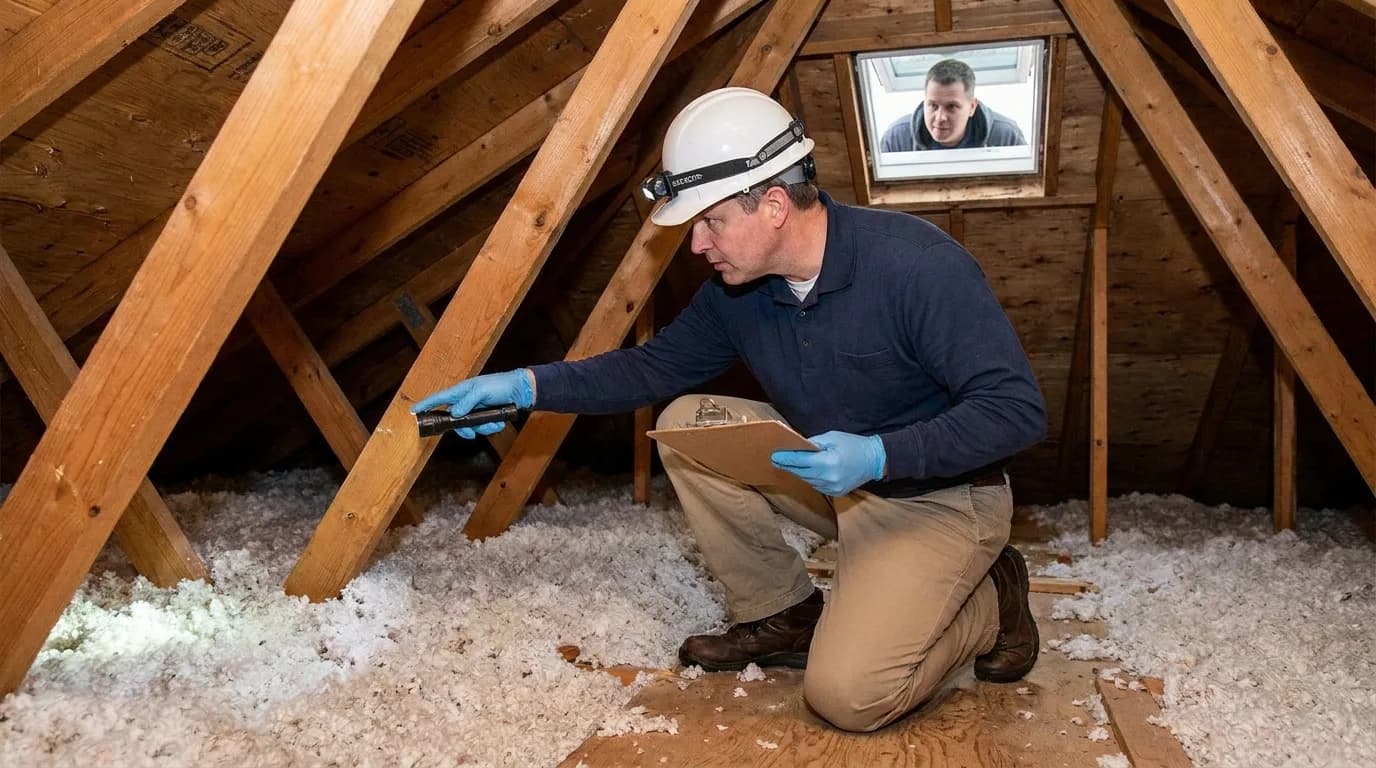
Raking treats the symptom. If you are raking every week, the cause is warm air reaching the underside of the roof deck, and until that is fixed the rake is a winter subscription. The permanent fixes, in order of effect, are sealing the air leaks from the house into the attic, topping up attic insulation to current Alberta norms, and making sure the soffit and ridge or roof vents actually move air.
A few things help in the meantime. Keep eavestroughs clear before freeze-up so meltwater has a path off the roof. Check that bathroom and dryer fans are not venting into the attic. Turn down the temperature in bonus rooms and finished attics. And keep an eye on the eaves after every Chinook, because that is when ice grows fastest.
A fall roof maintenance visit ties this together. Our roof maintenance service in Airdrie clears the eavestroughs, checks the attic ventilation and looks at the eaves detailing before winter, which is the cheapest time to catch the problem that has you raking in the first place.
When to put the rake down and call a professional
Some situations are past what a rake from the ground can handle. Call in a roofer rather than improvising if:
- Ice has already dammed and water is staining the ceiling or running down an interior wall.
- Snow is more than about 60 cm deep or drifted heavily on a low-pitch or flat section.
- The eaves are above 6 m and you cannot reach them from the ground.
- The roof is steep, icy, or has skylights, solar panels or old brittle shingles that a rake will damage.
- You hear creaking, see a sagging ceiling or doors that suddenly stick, which can indicate structural load.
- You are not steady on icy ground, which is most of us in February.
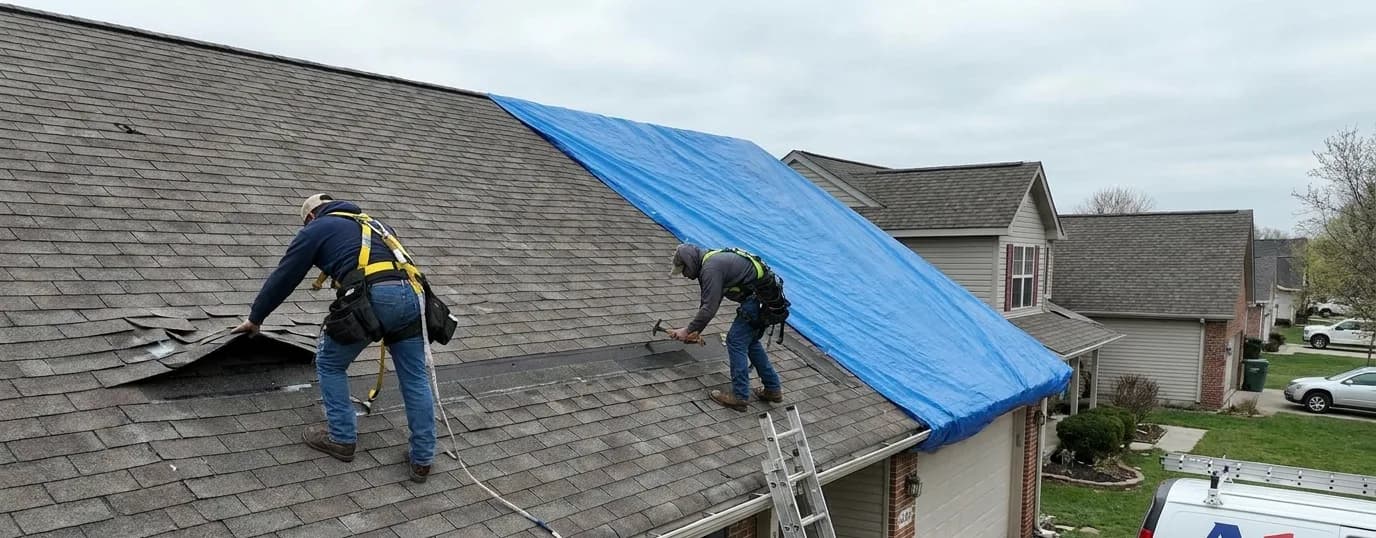
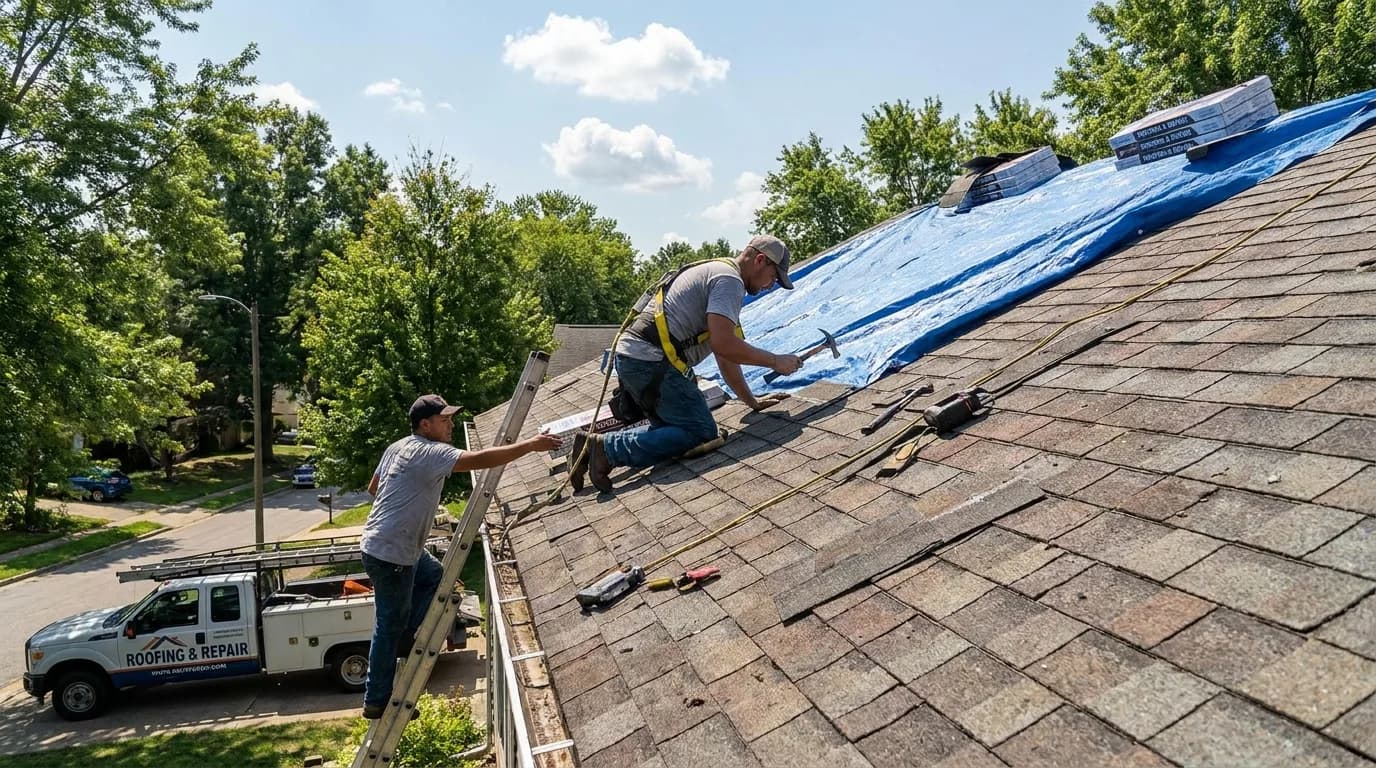
Professional roof snow removal in the Airdrie area typically runs a few hundred dollars for an eaves-band clear on a normal home and more for full clearing or steam ice dam removal; treat that as a rough 2026 guide, not a quote. If water is already coming in, emergency roof repair in Airdrie from Apex Roofing Airdrie can tarp and stop the leak the same day and then deal with the ice safely.
Rake smart this winter, then fix the reason you are raking
A wheeled roof rake, a clear plan for the eaves band and a healthy respect for power lines will get most Airdrie homeowners through the winter without an ice dam. Do it after significant snowfalls, ahead of a thaw, and stop the moment you hit ice or start thinking about a ladder.
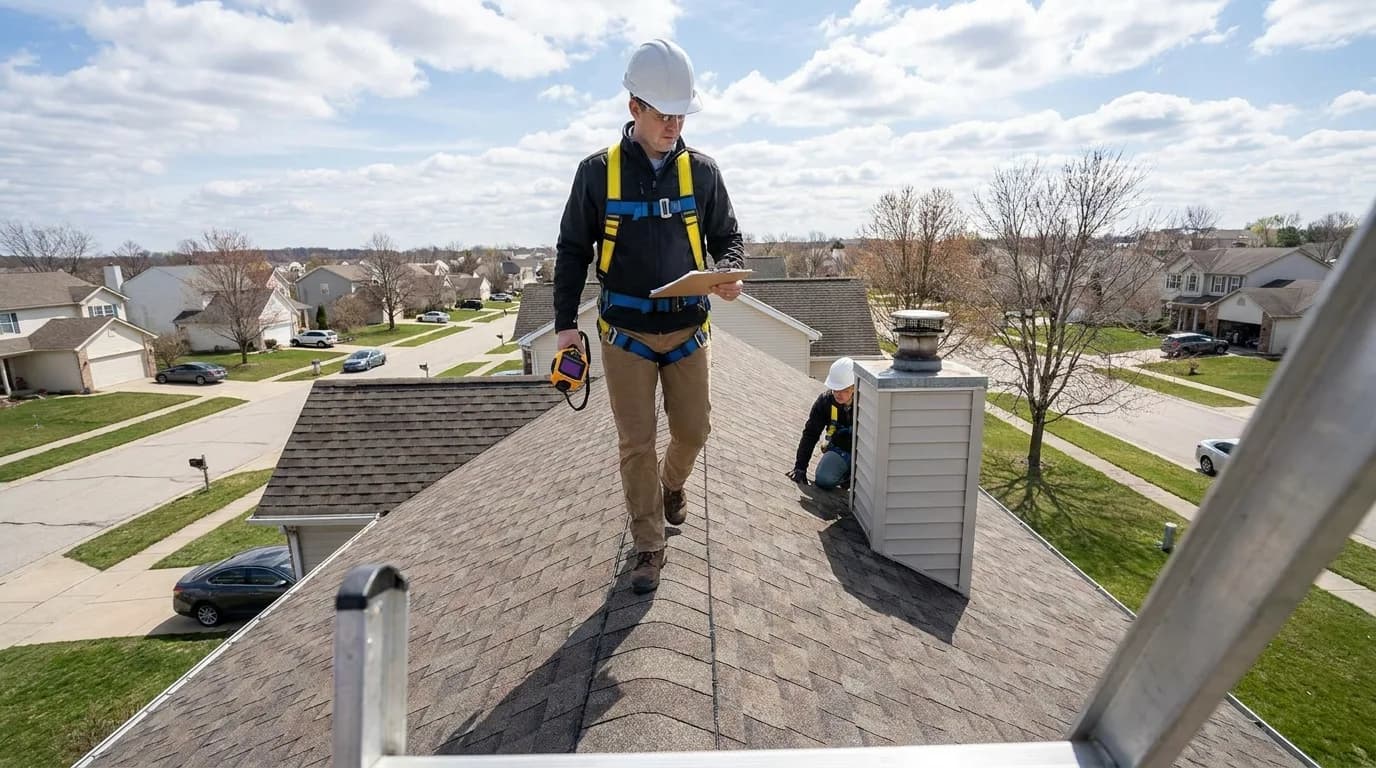
If the same edge dams every year no matter how much you rake, the roof is telling you something about the attic, the ventilation or the age of the shingles. A free on-site inspection from Apex Roofing Airdrie will pin down which one, with an itemised written quote for any work that makes sense and no pressure to do it before you are ready.
Written by the Apex Roofing Airdrie crew
Practical guidance from the local roofers who inspect, repair and replace roofs across Airdrie and Rocky View County every season. We review our guides against current Alberta practice and update them when materials, code or insurer behaviour changes. About our team.