In this guide
- 01Roof moss removal in Alberta: why it matters less here than on the coast
- 02Moss, algae streaks or lichen: what is actually growing on your roof?
- 03How moss on a roof actually damages shingles
- 04Safe roof moss removal, step by step
- 05Roof moss killer options compared
- 06What not to do: pressure washing, scraping and walking on wet moss
- 07What professional roof cleaning costs in Alberta (2026 guide)
- 08Preventing moss from coming back
- 09When moss is a sign of something else
- 10Get a straight answer before you spend money on cleaning
Roof moss removal in Alberta: why it matters less here than on the coast
Roof moss removal is a routine annual chore in Vancouver and Victoria. In Airdrie it is an occasional job, and for many homes it never comes up at all. The reason is simple: moss needs sustained moisture and shade, and Alberta gives it neither. Airdrie averages roughly 400 mm of precipitation a year against more than 1,100 mm on the BC coast, our summers are long and bright, and Chinook winds dry roofs out even in January.
Alberta roofs are not immune, though. Moss shows up in predictable places: north-facing slopes in shadow most of the day, valleys and areas below dormers where water lingers, and any roof under a mature spruce or poplar. The older, treed neighbourhoods around Big Springs, Woodside, Summerhill and Thorburn see more of it than open newer subdivisions like Cooper's Crossing or Windsong.
Roof age matters too. Fresh shingles have a full coat of granules that moss struggles to grip; past 15 years the rougher, thinning surface holds the dust and debris moss roots into. If growth is showing on a roof that age, read our guide on how long a roof lasts in Alberta, because the moss may be a symptom rather than the problem.
Moss, algae streaks or lichen: what is actually growing on your roof?
Before you buy a roof moss killer, look closely at what you have, because the three common growths behave very differently and only one of them is truly harmful.
| Growth | What it looks like | Where it appears | Damage risk |
|---|---|---|---|
| Algae (Gloeocapsa magma) | Black or dark grey streaks running down the slope | Any slope, worse on north and shaded sides | Cosmetic; slightly raises shingle temperature |
| Moss | Green, spongy cushions or a fuzzy carpet, thickest at shingle edges | Shaded, damp areas, under trees, in valleys | Real; lifts shingles and holds water |
| Lichen | Crusty grey, pale green or orange patches bonded tightly to the surface | Older roofs with thinning granules | Moderate; pulls granules off when removed |
Algae streaks on a roof are the most common complaint we hear about, and they are cosmetic. Moss is the one to act on: it grows as a mat with root-like rhizoids that work under the exposed edge of each shingle, and it behaves like a wet sponge sitting on your roof for months. Lichen bonds to the shingle surface and removing it aggressively takes granules with it, so on an older roof it is often best left alone until the roof is replaced.
How moss on a roof actually damages shingles
First, mechanical lift. A moss cushion growing at the butt edge of a shingle thickens over several seasons and wedges the shingle upward. That breaks the seal strip bond to the course below, and a shingle with a broken seal is exactly what a 90 km/h Chinook gust needs to peel it back or tear it off. We see this on the north slopes of older Airdrie homes: a strip of moss along every shingle edge and, after a windstorm, a row of lifted tabs directly above it. Our post on wind damage and lifted shingles from Chinooks covers what happens next.
Second, moisture retention through freeze-thaw. A wet moss mat holds water against the shingle surface and under the lifted edge. In Airdrie that water freezes on a January night, thaws in a Chinook two days later, and refreezes the night after. Each cycle expands in the shingle's fibre mat and at the nail heads. Over a few winters that cracks the shingle, works nails loose and can open a path to the underlayment. On a roof with thin or no ice-and-water shield at that spot, it eventually shows up as a stain on the ceiling below.
Safe roof moss removal, step by step
Safe roof moss removal means killing and loosening the moss without disturbing the granules or seal strips. It is a half-day job on a typical bungalow. Pick a cool, overcast day; cleaners evaporate too fast on hot shingles and work poorly below about 5°C.
- Work from the ridge down, never up. Brushing upward drives water and debris under the shingles and lifts them. Use a soft-bristle push broom or a long-handled soft brush, and sweep with the slope so loose moss slides toward the eaves.
- Dry-brush the thick cushions first. Most of the bulk comes off dry once it has had a few sunny days. Bag it rather than washing it into the eavestroughs, where it clogs the downspouts.
- Apply a cleaner. A 50/50 mix of water and outdoor (sodium hypochlorite) bleach in a garden sprayer is the traditional remedy. Commercial roof moss killers based on sodium percarbonate, potassium salts of fatty acids or zinc sulphate are gentler on plants and metal and are sold at Airdrie hardware stores. Follow the label rate.
- Let it dwell 15 to 20 minutes without drying out, then rinse from the ridge down with a garden hose at normal pressure. Some products are no-rinse and rely on rain.
- Protect what is below. Wet down shrubs and lawn before and after, cover anything you care about, and disconnect or divert downspouts that feed a rain barrel.
- Leave the rest to time. Killed moss turns brown and sheds over the following weeks with wind and rain. A second light brushing in a month finishes the job.
Work from a ladder at the eaves or a tied-off position on the ridge, never by walking across the moss. Above about 6/12 or on a two-storey roof, hand it off. The safety side is covered in our Alberta roof maintenance checklist.
Roof moss killer options compared
Most products work. The differences are speed, what they do to your landscaping and eavestroughs, and how long they keep the moss away.
| Treatment | How it works | Pros | Cautions |
|---|---|---|---|
| 50/50 water and outdoor bleach | Kills moss and algae on contact | Cheap, fast, widely available | Kills plants below, corrodes aluminum eavestroughs and metal flashings if not rinsed, no lasting effect |
| Sodium percarbonate (oxygen bleach) | Releases hydrogen peroxide | Safer for plants and metal, effective on moss and algae | Slower; needs a longer dwell time |
| Potassium salts of fatty acids (moss soap) | Breaks down cell walls | Low toxicity, registered for roofs in Canada | Works best on active green moss, not lichen |
| Zinc sulphate powder or spray | Poisons moss over weeks | Long residual effect | Slow; avoid runoff into ponds and gardens |
| Zinc or copper strips at the ridge | Rain carries metal ions down the slope | Years of prevention from one install | Prevents rather than removes; only protects about 4–5 m below the strip |
Whatever you use, keep it off metal. Bleach pits galvanized flashings and streaks aluminum eavestroughs, and both cost more to replace than the moss ever did. Rinse the metal when you rinse the roof.
What not to do: pressure washing, scraping and walking on wet moss
Most of the roofs we see damaged by roof moss removal were damaged by the homeowner or a handyman, not the moss. Three mistakes come up again and again.
Pressure washing is the worst. A pressure washer at even 1,500 psi blasts the protective granules off asphalt shingles, and once the granules are gone the asphalt underneath is exposed to UV and fails quickly. It also drives water under the shingles and into the deck. Most shingle manufacturers, including IKO, BP and GAF, list pressure washing as a practice that voids the material warranty. A garden hose is the maximum.
Scraping with a blade, wire brush or stiff broom takes granules off with the moss. If a soft brush cannot move it, kill it first, let it decay for a few weeks, then brush.
Walking on wet moss is how people fall off roofs. A moss mat on a 4/12 slope is as slippery as ice, and a wet, cleaner-coated shingle under it is worse. If the job cannot be done from a ladder at the eaves, it needs someone with fall protection.
One more: moss alone is not a reason to reshingle. On a 12-year-old roof it is maintenance. On a 25-year-old roof with curling tabs and bare patches it is one sign among several, and our pillar guide to the signs you need a new roof will tell you which case you are in.
What professional roof cleaning costs in Alberta (2026 guide)
If the roof is steep, two storeys or heavily overgrown, or you simply do not want to be on a ladder, hiring it out is reasonable. As a rough market guide as of 2026, professional roof moss removal and cleaning on a typical Airdrie home runs about $300 to $800. Easy-access bungalows sit at the low end; large, steep two-storey homes with heavy moss can exceed it.
| Job | Rough 2026 cost (guide) | Notes |
|---|---|---|
| Moss treatment only (spray, no brushing) | $200–$400 | Relies on weather to shed the dead moss over weeks |
| Soft-wash roof cleaning with brushing | $300–$800 | Most common; includes rinse and eavestrough clear-out |
| Zinc or copper strip installation | $150–$400 | Often bundled with a cleaning |
| Roof cleaning plus minor repairs | $500–$1,500 | Re-sealing lifted tabs, replacing a few shingles |
Ask any roof cleaning company two questions before you book: what pressure they use (the answer should be garden hose or soft wash, never a pressure washer) and whether they carry liability and WCB coverage. A cheap clean that costs you a strip of granules is not cheap. Our roof maintenance service in Airdrie handles moss treatment, lifted-tab resealing and eavestrough clearing in one visit, and we will tell you honestly if the growth is cosmetic and not worth paying to remove.
Preventing moss from coming back
Prevention is mostly about light and air. Moss cannot establish on a roof that dries out within a few hours of rain, which is why the sunny south slope of your house is clean and the north slope is not.
- Trim trees back so branches sit at least 2 to 3 m clear of the roof surface. That opens the slope to sun and wind and stops needles and leaves collecting in the valleys.
- Keep the roof clear of debris. A layer of spruce needles holds moisture and is the seedbed moss starts from. Clear valleys and behind chimneys each fall.
- Install zinc or copper strips just below the ridge cap. Every rain carries a trace of metal ions down the slope, which stops moss and algae from establishing for roughly 4 to 5 m below the strip. On a tall slope, add a second strip mid-way.
- Choose algae-resistant shingles at replacement time. Most Canadian lines (IKO, BP, GAF, Owens Corning) now offer copper-granule blends that resist black streaking for 10 years or more.
- Fix the drainage. Clogged eavestroughs keep the bottom courses wet. Clean them, and consider our guide on whether gutter guards are worth it in Canada if you are under trees.
When moss is a sign of something else
Moss is usually a surface condition, but where it grows can point at a hidden problem. Heavy growth in one valley or below one dormer usually means water is not draining there, often because of a clogged valley, a poorly lapped flashing or a sagging eavestrough backing water up the slope. A moss line along the bottom course alone suggests overflowing eavestroughs.
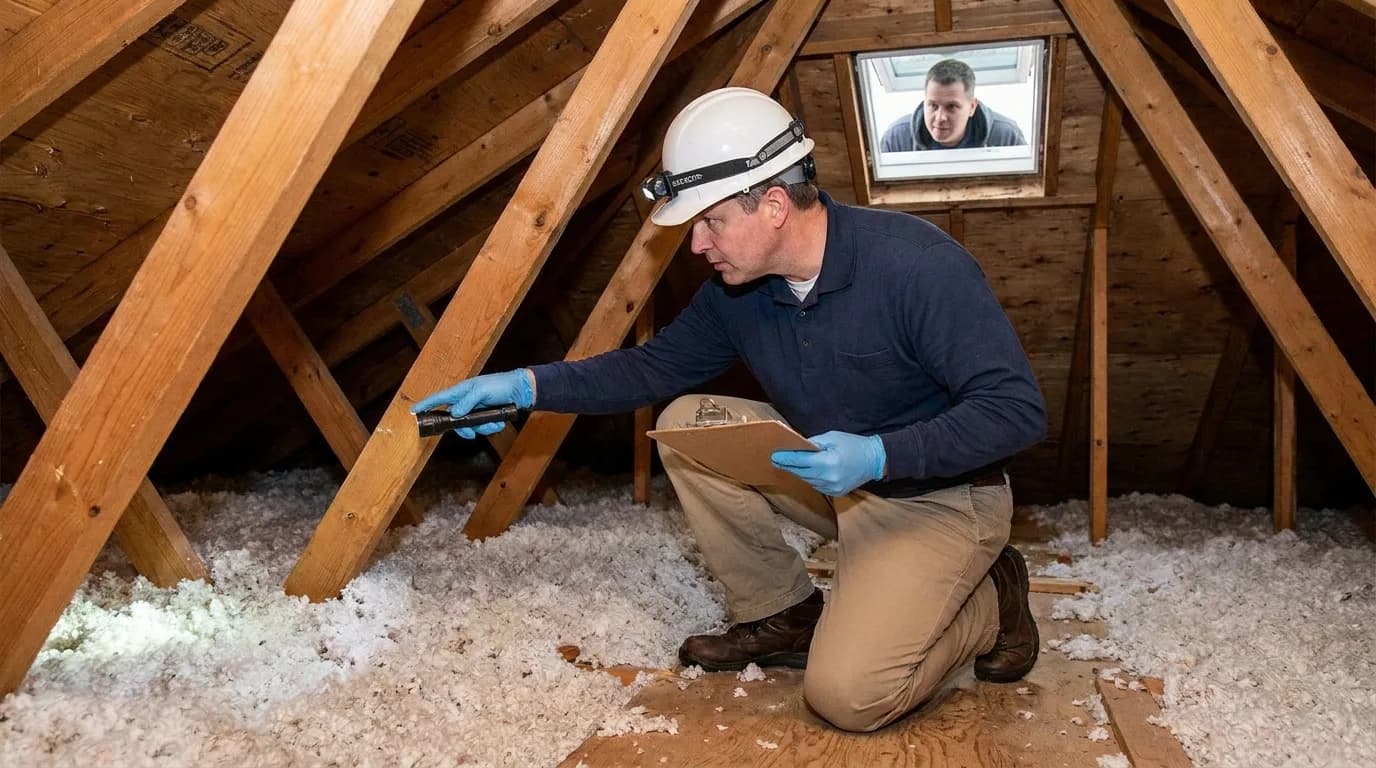
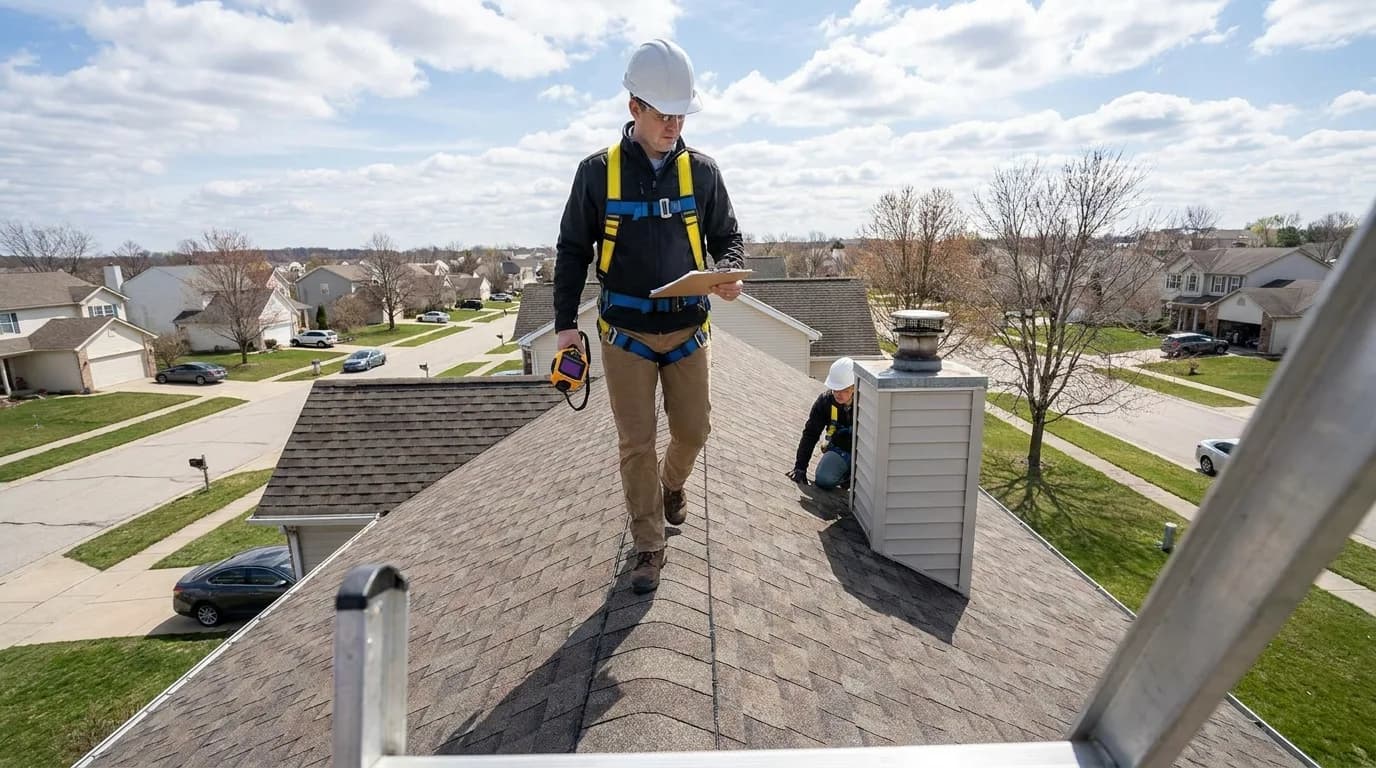
A professional roof inspection in Airdrie sorts this out quickly. We look at the shingle condition under the moss, check the seals and nail heads on the affected slope, and look inside the attic for the staining or frost that tells you water has been getting through. On a roof that is otherwise sound, the answer is a clean and a zinc strip. On a roof at the end of its life, roof moss removal is money better spent toward the replacement.
Get a straight answer before you spend money on cleaning
Most moss on Airdrie roofs is a small, manageable problem: a shaded north slope, a tree that has grown taller than anyone expected, and a mat of green that needs a soft brush and a spray on a cool weekend. Handled that way, roof moss removal costs a few dollars and an afternoon and adds years to the shingles underneath.
If you are not sure whether you are looking at moss, algae or lichen, whether the roof is safe to work on, or whether the growth is hiding something worse, Apex Roofing Airdrie offers free, no-obligation on-site estimates. Our local crew will check the affected slopes, tell you plainly whether cleaning is worth doing, and give you an itemised written quote for any repair that is genuinely needed, booked the same week.
Written by the Apex Roofing Airdrie crew
Practical guidance from the local roofers who inspect, repair and replace roofs across Airdrie and Rocky View County every season. We review our guides against current Alberta practice and update them when materials, code or insurer behaviour changes. About our team.