In this guide
- 01How to Fix a Leaking Roof Yourself, or When to Call a Roofer
- 02Finding Where the Leak Is Actually Coming From
- 03Safety First: What to Check Before You Go Anywhere Near the Roof
- 04Temporary Fixes From Inside the Attic
- 05Temporary Fixes From the Roof: Tarps, Roof Cement and Sealant Patches
- 06What to Do If Your Roof Is Leaking Right Now, in the Rain
- 07Winter and Freeze-Thaw Leaks: Why Alberta Roofs Leak Differently
- 08Common Causes of Roof Leaks on Airdrie Homes
- 09Could This Be a Hail or Storm Insurance Claim?
- 10How Much It Costs to Fix a Roof Leak: A Rough 2026 Alberta Guide
- 11When to Call a Professional Roofer
- 12Preventing the Next Leak
How to Fix a Leaking Roof Yourself, or When to Call a Roofer
Knowing how to fix a leaking roof starts with an honest read of what you are dealing with. A single obvious source, like a lifted shingle you can see from a ladder or a loose pipe boot on a low, walkable roof, is often something a careful homeowner can patch temporarily. A leak whose source you cannot find, one on a steep or icy roof, or one that shows up after a hailstorm is a different problem, and trying to fix it yourself usually costs more time than it saves.
This guide walks through both paths: the temporary roof leak repair options that buy you time and stop water damage from spreading, and the point at which the smarter move is a phone call rather than a ladder. Every fix described here is temporary by design. Even a well-executed patch from a homeowner is meant to hold until a proper repair happens, not to replace one, and treating a temporary fix as the end of the job is how small leaks become expensive ones.
The rest of this guide moves from finding the leak, to the safety checks worth doing first, to the actual temporary fixes from inside and outside, then into the Alberta-specific causes and costs that most general guides skip entirely.
Finding Where the Leak Is Actually Coming From
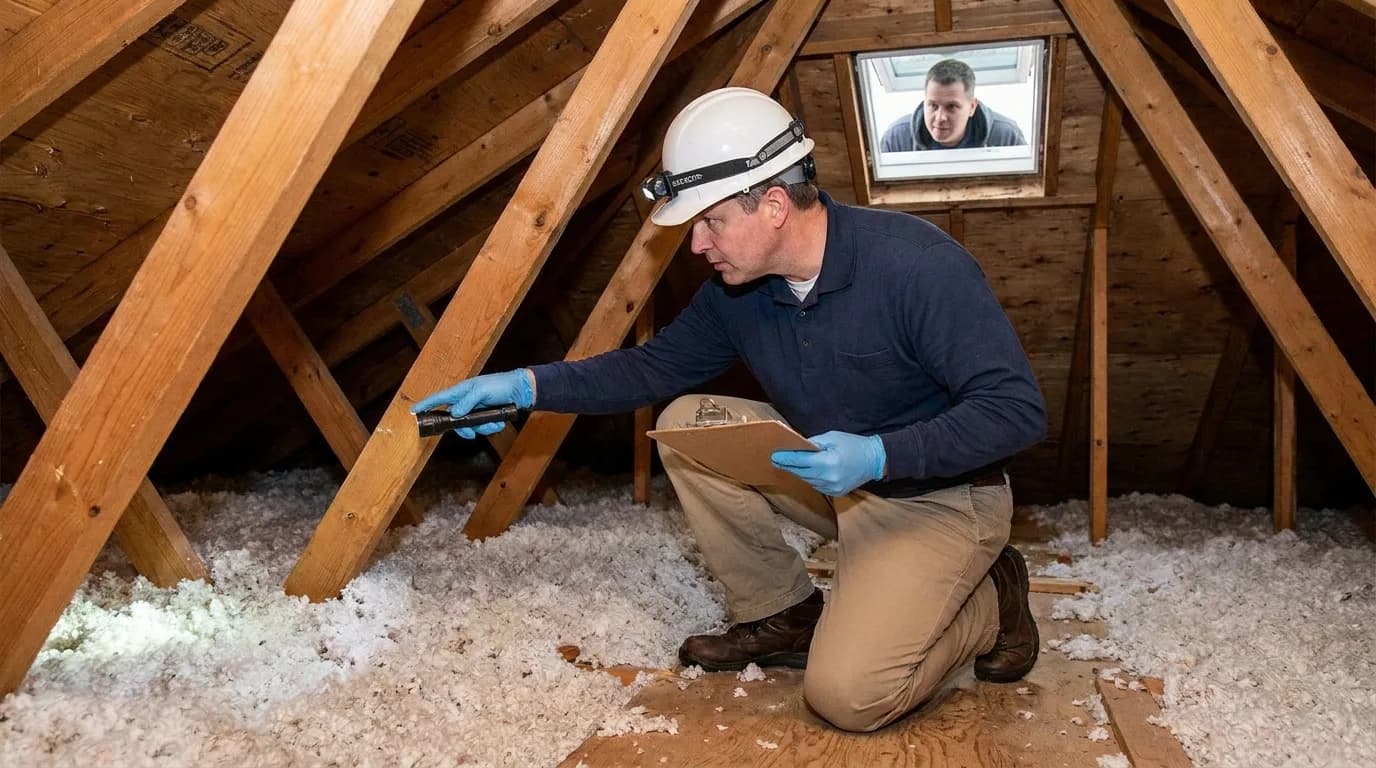
Working out how to fix a leaking roof always starts with finding where water is actually entering, not with reaching for a tube of sealant. Water almost never enters directly above the stain on your ceiling; it runs downhill along the underside of the roof deck, along a rafter, or inside a wall cavity before it finds a low point and drips through drywall, so the visible damage sits well downhill of the real entry point. Start in the attic, if you have one, with a flashlight, on a day it is actively raining or right after a rainfall.
Look for the obvious signs first: a wet or dark-stained rafter, water actively dripping rather than just condensation on a cold nail tip, stained or sagging insulation, and daylight showing through the roof deck at a flashing point. Trace the wet trail uphill toward the roof edge or a penetration, since that direction, not straight down, usually points to the source.
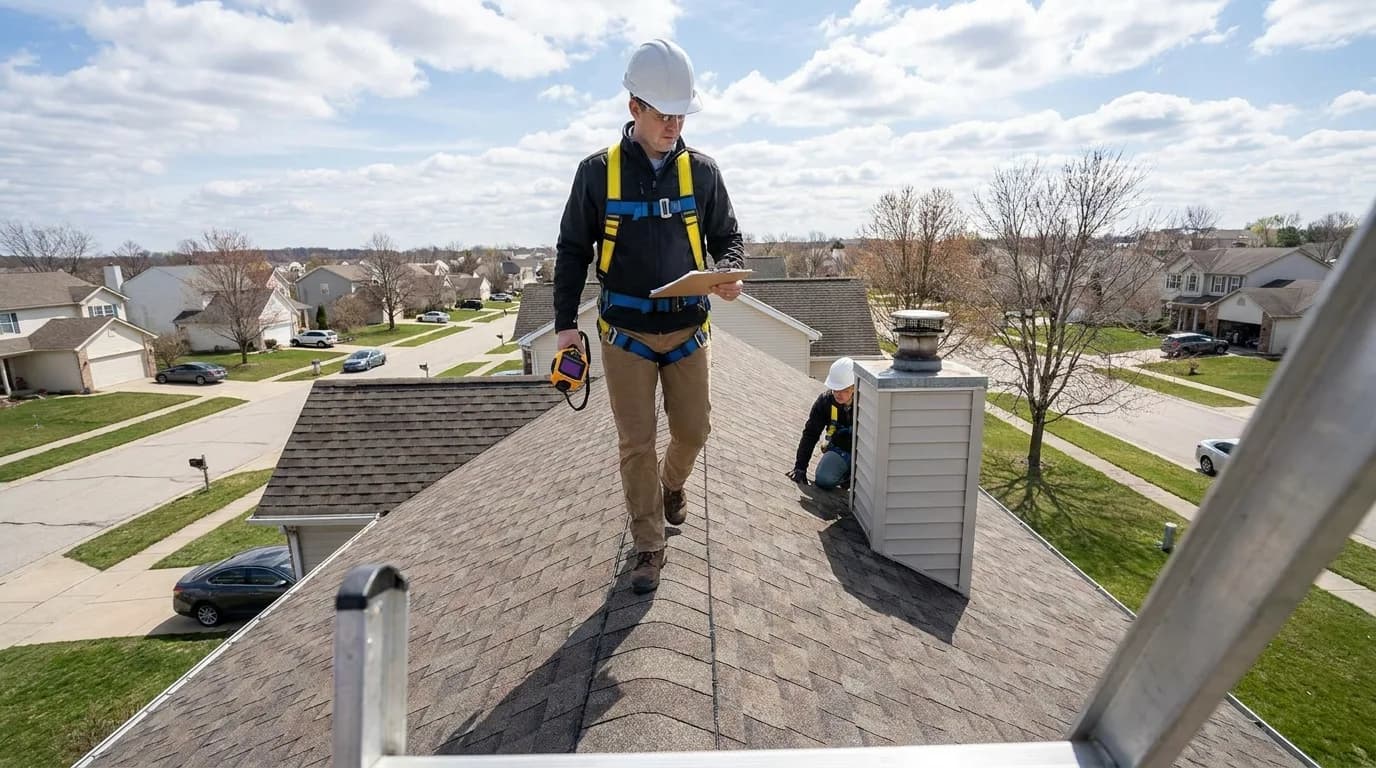
From outside, look at everything that interrupts a plain run of shingles: chimneys, plumbing and roof vents, skylights, dormers, valleys where two slopes meet, and the step flashing where a roof meets a wall. These details fail far more often than the open field of shingles itself. If you cannot safely get on the roof, binoculars from the ground after a storm will often show a curled shingle, a torn piece of flashing, or debris sitting in a valley.
If the leak only happens with wind from a particular direction, or only in winter, or only during a fast melt, note that pattern. It narrows the cause considerably and is one of the most useful pieces of information you can give a roofer if the DIY search comes up empty. Our companion guide on why your roof is leaking goes deeper into diagnosing specific patterns if this section does not turn up an obvious answer.
Safety First: What to Check Before You Go Anywhere Near the Roof
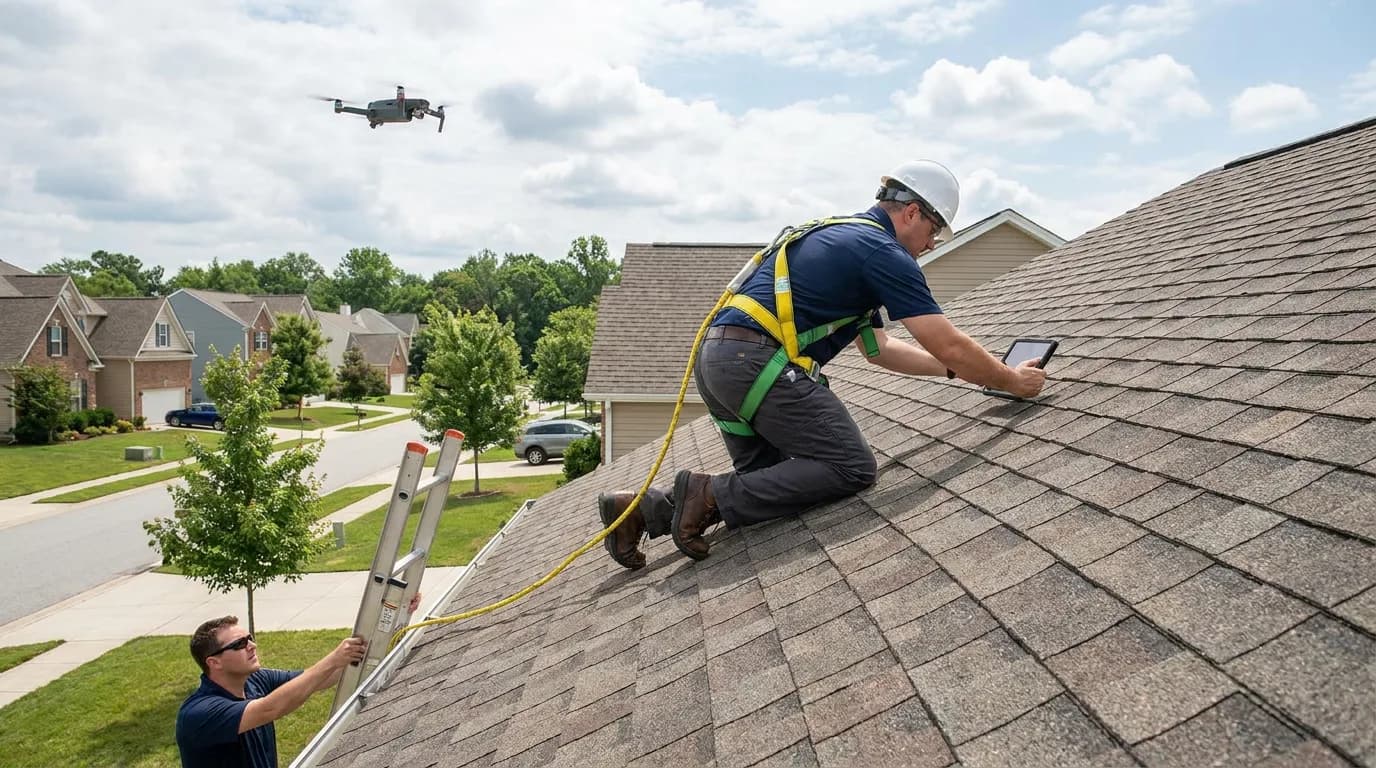
A leaking roof creates pressure to act fast, and that is exactly when people get hurt. Before any ladder goes up, check the obvious: is the roof wet, icy or frosted, is there active lightning or high wind, and is the ladder rated, on firm level ground, and footed by another person. None of the fixes in this guide are worth a fall.
Alberta adds a hazard most general roofing guides never mention: a roof that looks merely wet can be carrying a hidden skin of ice underneath, especially in the shoulder seasons when daytime melt refreezes overnight. Shingles that feel gritty and secure in July can be an ice rink in October or April. If there is any frost, dew that has not burned off, or recent freeze-thaw activity, treat the roof as unsafe and do everything you can from the attic or the ground instead.
Overhead power lines deserve the same caution as ice. Know where the service line enters the house before extending any ladder or long-handled tool, and keep both well clear of it. And if the leak has caused a ceiling to sag, or you see cracking plaster or a bulge, stay out of that room; a saturated ceiling can hold a surprising amount of water and can fail suddenly.
Temporary Fixes From Inside the Attic
Part of learning how to fix a leaking roof is accepting that the fastest damage control often happens indoors, not on the roof, especially if it is raining, dark or unsafe to climb. Start by protecting the house: move anything valuable out from under the drip, and set a bucket or bin under the water. If a ceiling is visibly bulging with trapped water, carefully puncture the lowest point of the bulge with a screwdriver into a bucket; this sounds counterintuitive, but it releases the water in a controlled way instead of letting the whole section of drywall collapse on its own.
In the attic itself, once you have found the point where water is entering the underside of the deck, a temporary interior patch is possible in some cases, and this kind of roof leak repair from inside the attic is far less reliable than a proper exterior fix because you are working against gravity, often in a cramped space. Roofing cement or a flexible roof sealant pressed into a crack around a nail or a small gap in the sheathing can slow a leak in the meantime. Our guide to roof sealant and roof coating explains which products hold up and which do not.
A simple and often overlooked trick is to redirect the water rather than stop it. Running a length of string, wire or even a nail from the wet spot on the underside of the deck down to a bucket gives dripping water a path to follow instead of soaking further into the insulation and spreading across the ceiling. It buys time without touching the roof at all, and it works whether the source has been found yet or not.
Wet insulation should come out once the leak has stopped, not left in place. Fibreglass loses most of its R-value when saturated and stays a source of moisture and mould risk long after the roof is dry, so plan to pull and replace the affected section as part of the eventual repair.
Temporary Fixes From the Roof: Tarps, Roof Cement and Sealant Patches
If it is safe and dry enough to get on the roof, exterior work is how to stop a roof leak most effectively, because it stops water before it ever reaches the deck. The three common tools are a tarp, roofing cement, and roof sealant, and each suits a different situation.
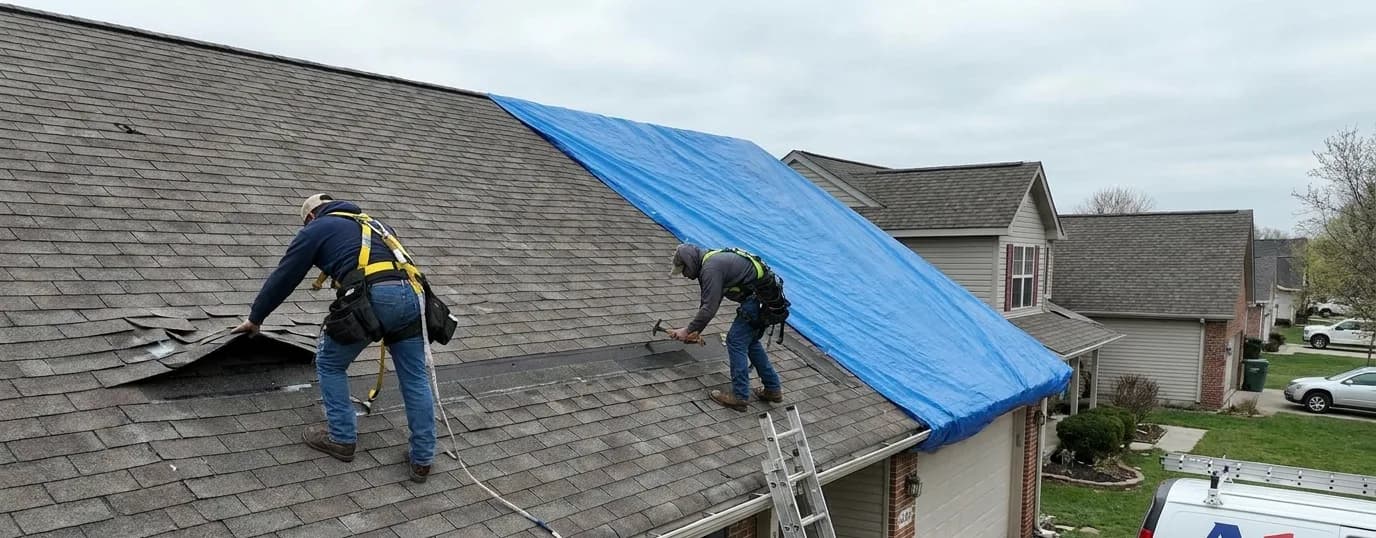
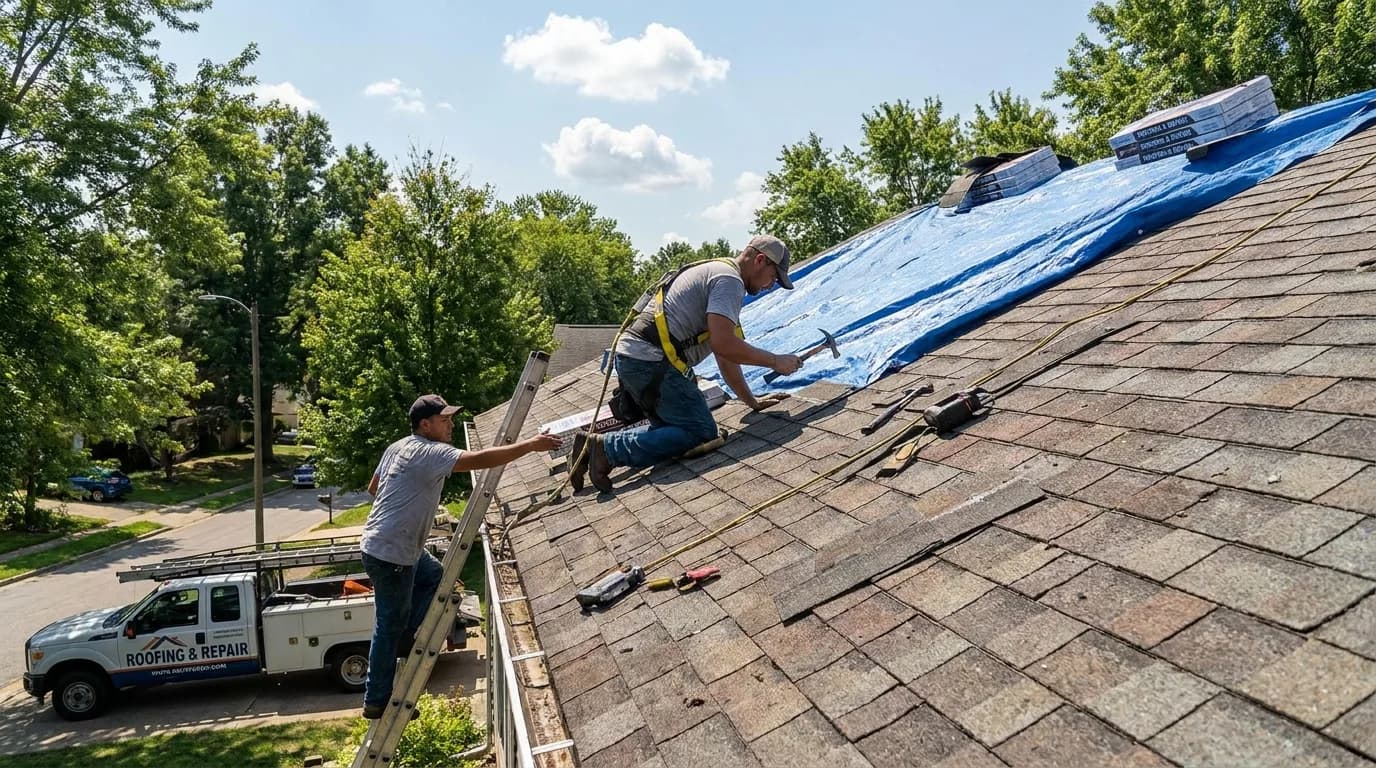
A tarp is the right call for a large area of damage: missing shingles, a hole from a fallen branch, or storm damage covering more than a shingle or two. Run the tarp from well above the damage over the ridge if possible, and secure it with boards screwed into the roof framing at the edges rather than loose bricks or ropes that a Chinook gust will lift. Our step-by-step guide on how to tarp a roof covers sizing, securing and the mistakes that let a tarp fail in wind.
Roofing cement, applied with a putty knife under a lifted shingle tab or over a small crack, is a fast fix for a localized problem, and it is what most flashing repairs start with even on a professional job. Roof sealant, run along a flashing edge or over a nail head with a caulking gun, is the right tool for a single small penetration rather than a wide area. Our detailed guide on which roof sealant types hold up through Alberta freeze-thaw explains which type holds up best and how long to expect it to last.
A word on spray-can and Flex Seal-type products, since they come up in almost every search for a quick fix: they can stop a very small leak for a short time, but they are not a substitute for a proper patch, several manufacturers note reduced adhesion in cold or wet conditions, some asphalt shingle manufacturers exclude warranty coverage where a coating has been applied over the shingle surface, so confirm with your shingle manufacturer before spraying anything, and a sprayed-on coating can complicate an insurance inspection later because it obscures the original damage. Use them, if at all, as a stopgap measured in days, not a repair measured in years, and treat every fix in this section as temporary: schedule the real repair rather than leaving a tarp or a bead of cement to become the permanent solution.
What to Do If Your Roof Is Leaking Right Now, in the Rain
A roof leak emergency during a storm calls for a different order of operations than a leak you have time to plan around, and how to fix a leaking roof safely in the rain comes down to what you do indoors, not what you do on a wet roof. People typing fix roof leak in rain into a search bar are really asking what to do before the storm passes, and the honest answer is: very little on the roof itself. Do not go on the roof in the rain; wet shingles, wet ladders and lightning make it one of the more dangerous jobs in roofing even for professionals.
Move furniture and belongings out from under the drip, protect flooring with towels or a tarp, and set containers to catch the water, emptying them before they overflow. If a ceiling is bulging, puncture the lowest point as described earlier so the water drains in a controlled way. Photograph the damage as it happens, including the container catching water and any visible ceiling staining, since this documentation matters later whether you are dealing with a contractor, an insurer, or both.
Once the immediate water is under control, resist the urge to climb onto a wet roof to chase the source. Wait for the rain to stop and the roof to dry and, ideally, for daylight, then work through the attic search described earlier. If the leak is significant, spreading fast, or you cannot get ahead of it with buckets, that is the point to call for emergency roof repair rather than wait out the storm and hope it stops on its own.
Winter and Freeze-Thaw Leaks: Why Alberta Roofs Leak Differently
A roof leak in January or during a spring melt often has a different cause than one in July, and the fixes above do not always apply the same way. The most common winter cause in Airdrie is an ice dam: heat escaping from the house melts the underside of the snowpack, the meltwater runs down to the cold overhang at the eaves and refreezes, and a ridge of ice grows with every Chinook cycle. Water backing up behind that dam finds its way under shingles that were never designed to shed water running uphill.
Chinook winds add a second, less obvious cause. A sudden jump from minus 20 to plus 10 within a few hours creates rapid pressure and temperature swings that can lift a shingle tab whose sealant strip never got the chance to properly bond, or peel back a section of flashing that was already marginal. This kind of wind-driven leak can appear well outside the usual spring and summer storm season, which catches homeowners off guard because they are not expecting roof trouble in November or February.
If a leak appears during a thaw and stops when temperatures drop again, an ice dam is the likely cause, and the fixes in this guide should be treated as short-term. Removing snow from the lower roof slope with a roof rake reduces the meltwater available to refreeze, but the lasting fix is addressing the attic heat loss that is causing the melt in the first place. If you are working out how to fix a leaking roof in the middle of an Alberta winter, start with the attic, not the shingles, and avoid chipping at roof ice, which damages shingles further.
Common Causes of Roof Leaks on Airdrie Homes
Beyond ice dams and wind, a handful of causes account for most leaks we see on Airdrie roofs. Age-related shingle failure, where granules have worn away and the mat underneath has become brittle, is the most common; a roof past 18 to 20 years old is far more prone to leaking at any weak point, not just one spot.
- Failed flashing: at chimneys, walls, valleys and skylights, where two materials meet and rely on a metal or membrane detail rather than shingles alone.
- Nail pops and improperly sealed fasteners: a nail that backs out over time, or one that missed the framing, opens a small but persistent path.
- Clogged or damaged eavestroughs: water that cannot drain backs up under the shingle edge instead.
- Ice dams and Chinook wind lift: covered above, and the most Alberta-specific causes on this list.
- Skylight seals: original seals typically last 10 to 15 years and are a common late-life leak source.
- Attic condensation mistaken for a leak: poor ventilation can leave moisture on the underside of the deck that looks like a leak but has no roof-surface source at all.
Matching the pattern of the leak (only in wind, only in winter, only after heavy rain, or constant regardless of weather) against this list narrows the cause quickly, and it is the same process a roofer works through on an inspection, just with more experience and better access to the roof surface. A roof inspection that turns up more than one of these causes at once is common on an older roof, and it usually means the leak you called about is not the only one waiting to show up.
Could This Be a Hail or Storm Insurance Claim?
Before you spend money fixing a leak yourself, it is worth asking whether the damage might be covered by your home insurance. Airdrie sits in Alberta's Hailstorm Alley, and a leak that started suddenly, especially right after a hailstorm or a windstorm, is often the kind of sudden, accidental damage that home insurance policies are built to cover, as opposed to gradual wear and tear, which most policies exclude.
The distinction matters because it changes what you should do first. If the leak has an obvious storm connection, photograph the damage before making any repairs, note the date of the storm, and confirm with your insurer or broker whether the damage is covered and how they want it documented before you patch anything permanently. A sealant bead or a re-shingled patch applied before an adjuster sees the roof can make it harder to establish that the damage was sudden rather than gradual, which is exactly the distinction a claim often turns on.
Emergency measures to stop water actively entering the house, like the interior fixes and a tarp covered earlier, are generally fine and often expected; insurers do not expect you to let a house flood while you wait for an adjuster. The line to be careful of is permanent repair or cosmetic patching before the damage has been assessed. If a hailstorm is the likely cause, our guide on does home insurance cover roof leaks walks through coverage mechanics in more detail, and a roof inspection from Apex Roofing Airdrie includes photo documentation that supports a claim either way.
How Much It Costs to Fix a Roof Leak: A Rough 2026 Alberta Guide
Costs vary enormously with the cause, but the ranges below are a rough 2026 Alberta market guide in Canadian dollars to help you judge whether a quote is reasonable. Treat every figure as a starting point, not a quote; an on-site look is the only way to price your specific roof.
| Fix | What it covers | Rough 2026 cost (CAD, guide) |
|---|---|---|
| DIY materials only | Tarp, roof cement, sealant for a small area | $30-$100 |
| Emergency tarp service | Emergency tarp-over on an active leak | $200-$600 |
| Small professional repair | One flashing detail, a handful of shingles, a pipe boot | $250-$700 |
| Larger repair | Multiple details, a section of decking, valley flashing | $700-$2,000+ |
| Full reroof | Tear-off and new shingles once repeated repairs stop paying | See our roof replacement cost guide |
The gap between a small repair and a larger one usually comes down to whether the roof deck itself needs replacing underneath the leak point. Wood that has been wet for a season or more often has to be cut out and replaced before new shingles go down, which adds materials and labour that a simple shingle swap does not need. That is one of the main reasons two quotes for what looks like the same leak can come back very different; our roof repair cost guide breaks down typical price drivers in more detail.
When to Call a Professional Roofer
Some situations are past what a temporary fix from a ladder or an attic can responsibly handle, and that is the point where how to fix a leaking roof stops being a solo project and starts being a professional's job. Call a roofer rather than continuing to patch when the leak's source is not obvious after a genuine attempt to trace it, when the roof is steep, icy or otherwise unsafe to access, when more than a small area of shingles or flashing is affected, or when the leak followed a hailstorm and insurance may be involved.
Also call sooner rather than later if the ceiling has already sagged or shows a spreading stain, if this is the second or third time you have patched the same spot, or if the roof is old enough that one leak is likely the first of several. A professional roof repair traces the actual water path, checks flashing and decking a homeowner cannot always assess safely, and gives an itemised written quote for what needs fixing. If water is actively coming in and it cannot wait, emergency roof repair can tarp and stabilize the roof to stop water getting in while the permanent repair is quoted, and a same-week estimate is generally realistic outside of storm season for anything less urgent.
And if this is not the first leak on an aging roof, it is worth stepping back from the single repair and asking a broader question. Our pillar guide to the signs you need a new roof covers the age, granule loss and recurring-leak patterns that tell you whether you are one leak into a much bigger project.
Preventing the Next Leak
Once the current leak is fixed, preventing the next one matters as much as knowing how to fix a leaking roof in the moment. Clear eavestroughs before freeze-up so meltwater has somewhere to go, check attic ventilation so heat is not building up under the deck and driving ice dams, and have flashing at chimneys, vents and valleys looked at every couple of years since these are the details that fail first.
If a leak keeps coming from around a chimney or wall specifically, our guide to roof flashing repair for chimney and wall leaks covers that failure mode in detail. And a scheduled visit through Apex Roofing Airdrie's roof maintenance service checks the flashing, eavestroughs and shingle condition together, which is how most of the leaks in this guide get caught before they ever reach a ceiling. Spring and fall are the two best times for that visit, since they bracket both the winter freeze-thaw season and the summer hail season.
A free on-site inspection is the fastest way to turn a homeowner's temporary fix into a permanent one. Apex Roofing Airdrie gives an itemised written quote for anything that needs work, with no obligation, so the patch you made today does not have to be the only thing standing between your ceiling and next winter.
Written by the Apex Roofing Airdrie crew
Practical guidance from the local roofers who inspect, repair and replace roofs across Airdrie and Rocky View County every season. We review our guides against current Alberta practice and update them when materials, code or insurer behaviour changes. About our team.