In this guide
- 01What does vinyl siding cost in Canada in 2026?
- 02Vinyl siding cost per square foot compared with other claddings
- 03Whole-house examples: 1,500, 2,000 and 2,500 square feet of wall
- 04What drives vinyl siding installation cost up or down
- 05Cost to replace vinyl siding versus repairing one wall
- 06Hail-damaged vinyl siding and insurance in Hailstorm Alley
- 07Vinyl grades and thickness: why .040 and .046 are different products
- 08James Hardie vs vinyl cost: is fibre cement worth double?
- 09DIY vinyl siding versus hiring an installer
- 10How to compare siding quotes in Airdrie
- 11Getting an exact vinyl siding figure for your house
What does vinyl siding cost in Canada in 2026?
As of 2026, vinyl siding cost in Alberta sits in a band of roughly $6 to $12 per square foot of wall, installed, as a market guide. That range covers the panels, starter strip, J-channel, fasteners and the labour to hang it on a house that is ready to receive it. It does not include tearing off old cladding, adding foam board, or rebuilding rotten sheathing, and those extras are where most of the surprises live.
Treat every figure in this guide as a rough guide, not a quote. Two houses with the same square footage can differ by $5,000 depending on how many corners, windows and storeys they have. The only way to get an exact number is a measured, itemised written quote, which is what our siding repair and replacement service in Airdrie provides at no charge.
Vinyl siding cost per square foot compared with other claddings
The table below sets out installed cost per square foot for the claddings most Alberta homeowners actually choose between. Vinyl siding cost per square foot is the lowest of the group, which is why it still covers the majority of homes built in Airdrie since the 1990s, but it is not the cheapest over 50 years and it is not the best performer in hail.
| Cladding | Installed cost per sq ft (2026 Alberta guide) | Typical lifespan | Hail and cold performance | Maintenance |
|---|---|---|---|---|
| Standard vinyl (.040–.042 in) | $6–$9 | 20–30 years | Cracks in hail when cold; fades on south and west walls | Wash only |
| Premium or insulated vinyl (.044–.048 in) | $8–$12 | 25–35 years | Noticeably tougher; foam backing stiffens the panel | Wash only |
| Fibre cement (James Hardie, Allura) | $12–$20 | 40–50 years | Excellent; dents rarely, does not crack in cold | Repaint every 12–15 years |
| Engineered wood (LP SmartSide) | $10–$18 | 30–50 years | Very good; resists impact well | Repaint every 10–15 years |
| Steel or aluminum | $9–$16 | 40+ years | Dents in large hail but does not crack | Minimal |
| Cedar (real wood) | $14–$25 | 20–40 years | Moderate; needs staining | Stain every 3–5 years |
Installed means the panel and the labour to hang it. Trim, corners, soffit and fascia, and house wrap are sometimes bundled and sometimes listed separately, so check that line by line when you compare quotes. Fibre cement in particular carries extra labour because the boards are heavy, must be cut with dust control, and need painting or a factory finish.
Whole-house examples: 1,500, 2,000 and 2,500 square feet of wall
Most people know their home's floor area, not its wall area, so start there. Walk the perimeter of the house, multiply by the wall height (roughly 9 feet per storey plus the gable triangles), and you have gross wall area. A 1,200 square foot bungalow often has 1,400 to 1,700 square feet of wall; a typical Airdrie two-storey has 2,000 to 2,600. Most installers price on gross area because cutting around openings wastes material and adds labour, so windows and doors rarely reduce the bill.
| Wall area | Vinyl siding cost (installed guide) | Fibre cement | Engineered wood |
|---|---|---|---|
| 1,500 sq ft (bungalow) | $9,000–$18,000 | $18,000–$30,000 | $15,000–$27,000 |
| 2,000 sq ft (average two-storey) | $12,000–$24,000 | $24,000–$40,000 | $20,000–$36,000 |
| 2,500 sq ft (large two-storey or walkout) | $15,000–$30,000 | $30,000–$50,000 | $25,000–$45,000 |
Add roughly $1 to $2 per square foot if old siding has to come off and go to the landfill, and $1.50 to $3 per square foot if you want rigid foam board under the new panels. On a 2,000 square foot two-storey in Kings Heights or Cooper's Crossing, that is the difference between a $14,000 job and a $22,000 job with the same panel on the wall.
What drives vinyl siding installation cost up or down
Panel price is only about a third of the final number. The rest is labour and the extras that depend on your particular house. When you look at why one neighbour paid $13,000 and another $19,000, it is almost always one or more of the items below rather than a different vinyl siding cost per panel.
- Removing old siding: tear-off and disposal adds $1–$2 per square foot; asbestos-era cement board or stucco costs more and needs testing.
- House wrap and insulation board: wrap runs $0.50–$1 per square foot; rigid foam $1.50–$3, and it pays back through lower heating bills in a Chinook climate.
- Trim, corners and J-channel: every outside corner, window and door is a trim assembly with its own labour; a house with 30 openings costs more than one with 18.
- Storeys and access: second-storey walls need scaffolding or lifts; walkout basements in Bayside and Ravenswood add a third storey of wall on the back.
- Gables and complex shapes: angled cuts, dormers and bump-outs slow the crew and waste material.
- Rotten sheathing or framing: usually found only after tear-off; budget a contingency of 5–10 percent.
- Colour and grade: dark and premium colours, insulated panels and thicker gauges add 10–25 percent to material.
- Season: vinyl is brittle below about -5 °C, so many crews stop hanging it in deep winter, and spring and fall book up fast after a hail year.
If the eavestroughs, soffit and fascia are also tired, doing them in the same visit saves a return trip and scaffolding fees. Our eavestrough repair and replacement service handles that side of the job, and the guide to soffit and fascia replacement cost explains what to budget for the pieces that frame the siding.
Cost to replace vinyl siding versus repairing one wall
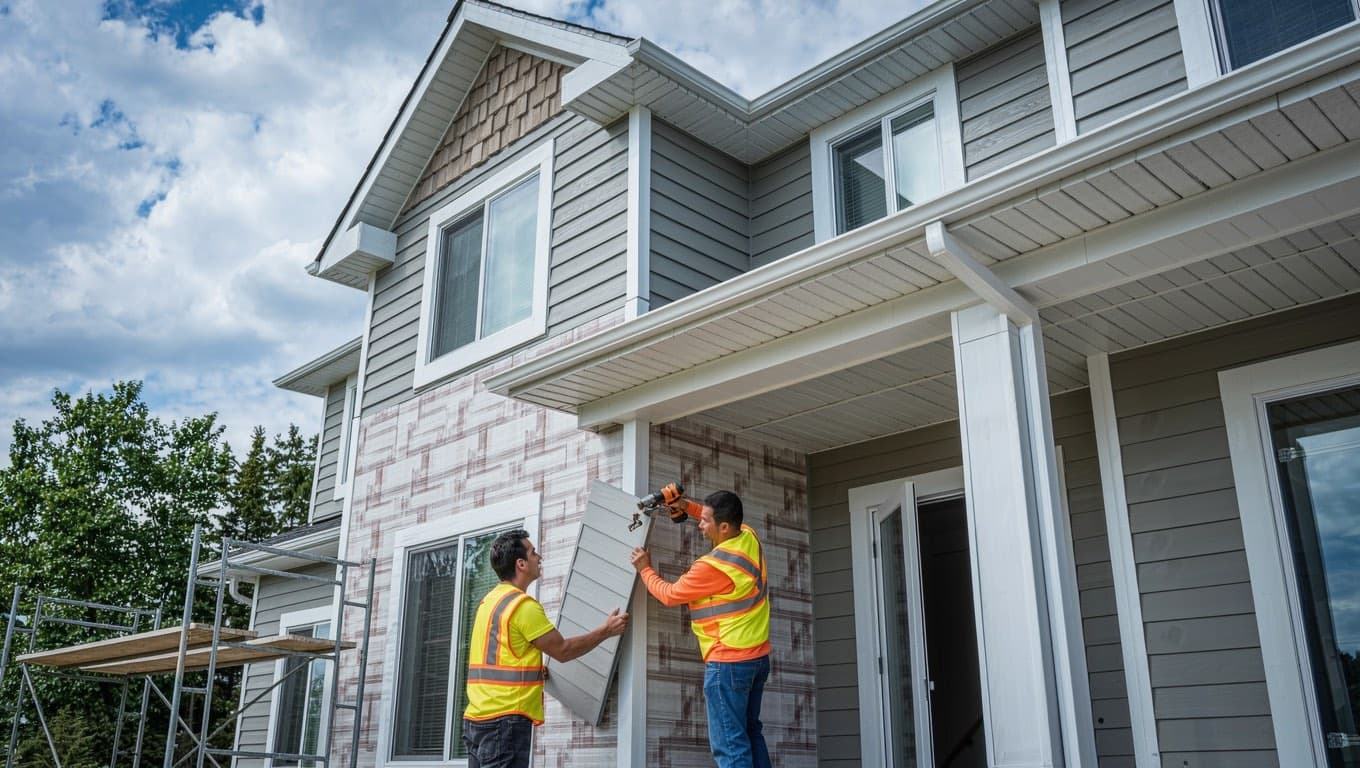
Not every job is a full wrap. A single elevation of 400 to 600 square feet, replaced with matching panels, runs roughly $3,000 to $7,000 as of 2026, depending on whether the old panels come off cleanly and whether the profile and colour are still made. Small patch repairs of a few cracked panels typically land between $300 and $900.
The catch is matching. Vinyl fades a little every summer, and a manufacturer's colour that was current in 2012 may no longer exist. A new panel beside a 14-year-old one will show, especially on a west wall. That is why full-elevation replacement is often the sensible minimum, and why insurers weigh the same question when hail strikes only one side of the house.
A full replacement makes more sense when panels are cracking on more than one wall, when the old siding was hung tight and is buckling, or when you want to add foam board and fix the building envelope properly. In that case the cost to replace vinyl siding is the whole-house figure above, and it is worth pricing fibre cement at the same time because the tear-off and prep are the same either way.
Hail-damaged vinyl siding and insurance in Hailstorm Alley
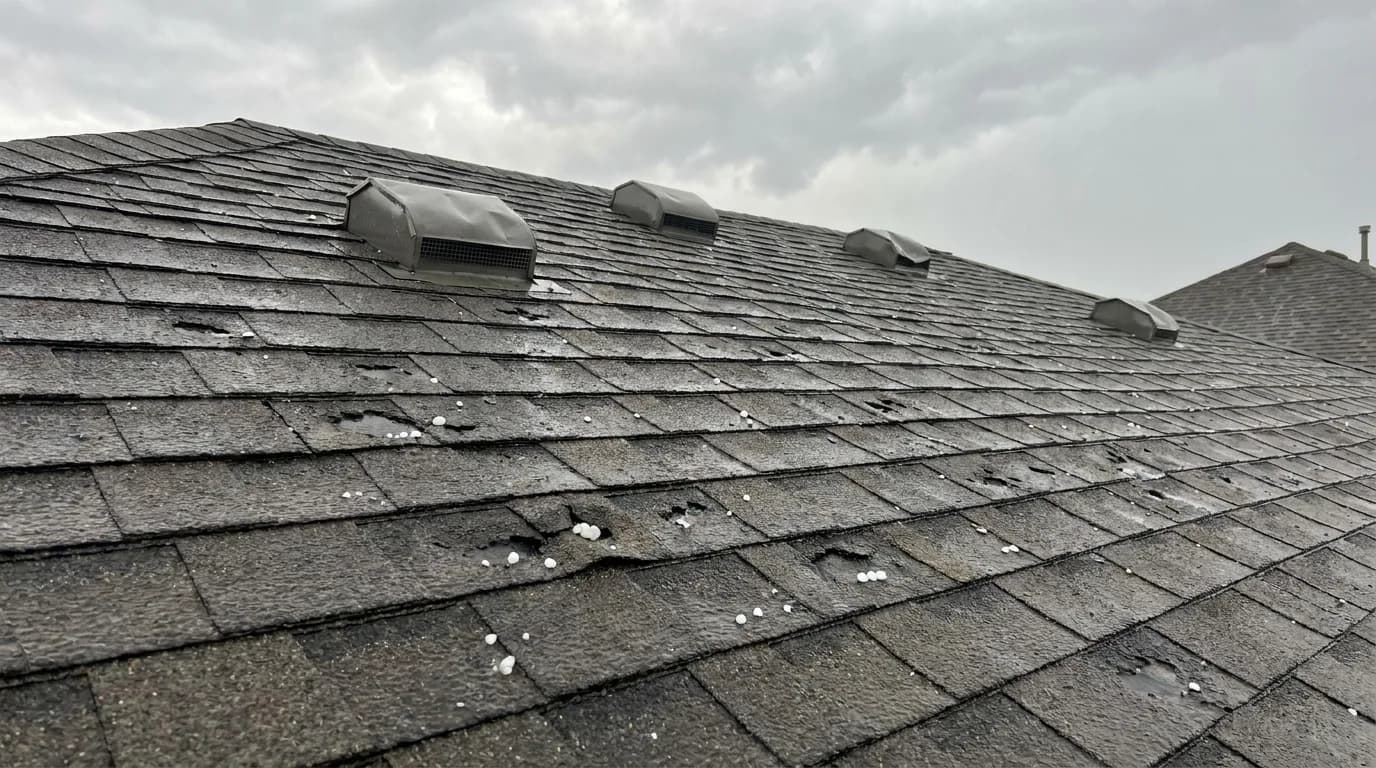
Airdrie sits in the Calgary–Airdrie–Red Deer corridor that insurers call Hailstorm Alley, and vinyl is the cladding that shows it first. Cold vinyl cracks rather than dents, so a summer evening storm with quarter-sized hail, like the one that tracked down the Crossfield–Airdrie corridor on August 8, 2026, leaves half-moon fractures and punched holes on the windward walls.
Storm damage to siding is generally covered under a standard Alberta home policy, less your deductible, and many insurers require hail claims to be filed within 12 months of the storm. Whether they pay to reside one wall or the whole house comes down to your policy's matching wording and your adjuster; confirm the details with your insurer or broker. Our guide to hail damage siding repair and insurance walks through photographing damage, the claim steps and what to expect on matching.
Because the roof usually takes the same storm, we look at both in a single visit and provide the itemised documentation adjusters ask for. Vinyl siding cost on an insurance job is priced the same way as a retail job, and Alberta homeowners choose their own contractor, so you are not bound to whoever the insurer suggests.
Vinyl grades and thickness: why .040 and .046 are different products
Vinyl siding is sold by panel thickness, and the difference between grades is not cosmetic. Builder grade panels are around .040 inch, standard residential .042, premium .044 and super premium .046 to .048. Thicker panels lie flatter, hold their colour longer, carry higher wind ratings, and crack far less in a cold hailstorm. Insulated vinyl bonds a contoured foam backer to the panel, which stiffens it further and adds a modest insulating value.
| Grade | Thickness | Rough material premium over builder grade | Where it makes sense |
|---|---|---|---|
| Builder | .040 in | baseline | Sheds, garages, rental units |
| Standard | .042 in | +5–10% | Most resale homes |
| Premium | .044 in | +10–20% | Exposed prairie lots, south and west walls |
| Super premium or insulated | .046–.048 in | +20–40% | Long-term homes, wind-exposed edges of Airdrie |
On the open edges of Windsong, Southwinds or Prairie Springs, where there is nothing between the house and the wind off the fields, premium gauge is worth the difference. The vinyl siding cost increase is a few hundred dollars on a typical house, and it buys years of flat panels and fewer wind claims.
James Hardie vs vinyl cost: is fibre cement worth double?
Fibre cement runs roughly $12 to $20 per square foot installed against $6 to $12 for vinyl, so a 2,000 square foot two-storey is about $12,000 to $16,000 more. The extra goes into the material, the heavier labour and, if you choose unprimed boards, a paint job. In return you get a cladding that shrugs off hail, does not melt near a barbecue, does not crack at -30 °C, and typically lasts 40 to 50 years.
Over a 40-year horizon the math tightens: a vinyl house in Hailstorm Alley may see two or three partial resides, a fibre cement house two repaints. If you plan to sell within ten years the resale bump for Hardie rarely covers the whole premium; if you plan to stay, it usually does.
A middle path is engineered wood at $10 to $18, which handles impact almost as well as fibre cement and is lighter to install, or premium insulated vinyl at the top of the vinyl range. Whatever you choose, comparing total vinyl siding cost against fibre cement only works when both quotes include the same tear-off, wrap and trim, so ask for them on the same basis.
DIY vinyl siding versus hiring an installer
Vinyl is the most DIY-friendly cladding, and material alone runs about $2 to $5 per square foot for panels plus $1 to $2 for trim and accessories. On a detached garage or a shed, doing it yourself is reasonable. On a two-storey house it rarely is, and the reasons are technical rather than about effort.
Vinyl expands and contracts about 6 mm over a 12-foot panel between a January cold snap and a July afternoon. Every nail must be centred in its slot and left loose by the thickness of a dime; every panel end needs an expansion gap in the J-channel. Hang it tight, as most first-timers do, and it buckles the first summer and cracks the first winter. Flashing at windows, kick-out flashing where a roof meets a wall, and correct lapping of house wrap are where DIY installs fail and leak into the framing.
A professional crew also brings scaffolding, brake-bent aluminum for trim, and a warranty on the work. On a full house the labour portion of the vinyl siding cost, usually $3 to $6 per square foot, is buying that skill, and a manufacturer's warranty can be voided by an installation that ignores their nailing spec.
How to compare siding quotes in Airdrie
Two quotes with the same bottom line can describe very different jobs. Ask each contractor to itemise, then compare line by line on these points.
- Gross wall area used and whether openings were deducted; a quote based on less area is not cheaper, it is measured differently.
- Panel brand, profile, colour and thickness, written down; .040 and .046 are not the same product.
- Tear-off and disposal included or excluded, and who pays if the old cladding turns out to be cement board.
- House wrap, foam board and tape specified by product, not just described as included.
- Trim package: corners, J-channel, window and door surrounds, and whether soffit and fascia are in scope.
- Flashing details: kick-out flashing, window head flashing and sill pans, which are the leak points.
- Sheathing repair allowance: a per-sheet price agreed in advance.
- Warranty: the manufacturer's term plus the installer's written workmanship guarantee.
- Timing and payment schedule: deposit, progress and final, with final held until you have walked the job.
The same checklist applies to a reroof, and the two jobs are often quoted together after a hail year. Our pillar guide to roof replacement cost in Airdrie covers how roofing quotes are built, and our post on what to check in a roofing contract applies almost word for word to siding.
Getting an exact vinyl siding figure for your house
Everything above is a market guide as of 2026, and your house will land somewhere inside those ranges based on its shape, its existing cladding and what you want under the new panels. The way to turn a range into a number is a measured, on-site quote.
Apex Roofing Airdrie provides free, no-obligation on-site estimates with an itemised written quote for siding repair and replacement, along with hail damage documentation if a storm is the reason you are looking. If the roof and eavestroughs need attention at the same time, we price them in the same visit so you can see the whole exterior in one document and decide what to do first.
Written by the Apex Roofing Airdrie crew
Practical guidance from the local roofers who inspect, repair and replace roofs across Airdrie and Rocky View County every season. We review our guides against current Alberta practice and update them when materials, code or insurer behaviour changes. About our team.