In this guide
- 01Why the roofing contract matters more than the price on it
- 02What a proper roof estimate itemises
- 03Payment terms, the roofing deposit and Alberta's prepaid contracting rules
- 04Start dates, finish dates and weather clauses
- 05Change orders: what happens when the deck is rotten
- 06Warranty wording: workmanship versus manufacturer
- 07Insurance, WCB and the lien holdback
- 08Cancellation rights and the storm-chaser clause
- 09Roofing contract checklist: tick every line before you sign
- 10Questions to ask a roofer before the contract is drawn up
- 11Get an itemised quote you can actually compare
Why the roofing contract matters more than the price on it
A roofing contract is the only thing that turns a conversation in your driveway into an enforceable agreement. It is where the promises about product, method, timing and warranty either get written down or quietly disappear. When two roofing quotes are $3,000 apart, the difference is almost always buried in what one of them left out, and the contract is where you find it.
In Alberta, roofing is not a licensed trade in the way electrical and plumbing are, so the contract carries more weight than it would in a regulated industry. Anyone with a truck can quote your roof. The paperwork is how you tell the crews that will still be in Airdrie in ten years from the ones that will not. Our pillar guide to how to choose a roofing contractor in Airdrie covers vetting the company; this guide covers vetting the document.
Read it in the order below. Scope first, then money, then time, then what happens when things change, then warranty and insurance, then your exit rights. A contract that handles all six clearly is a contract from a company that has done this many times.
What a proper roof estimate itemises
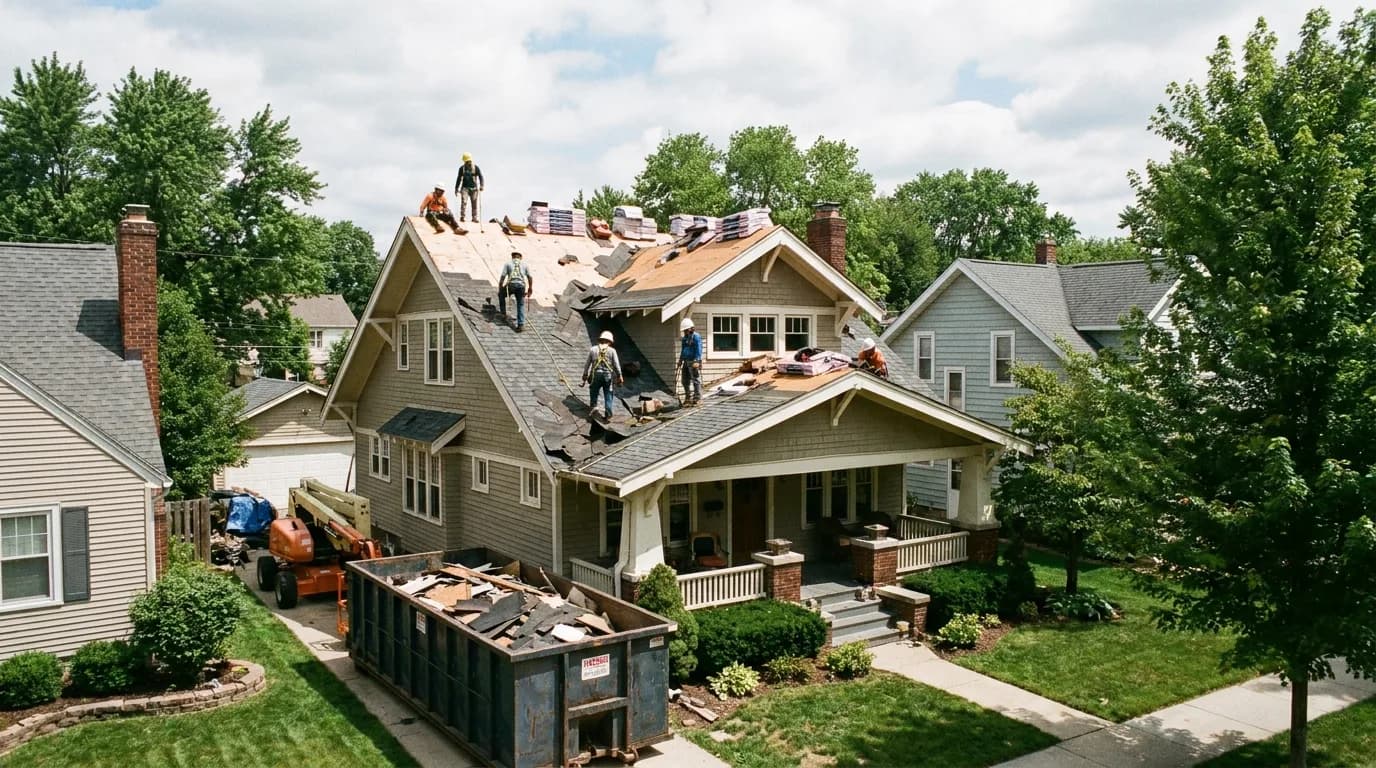
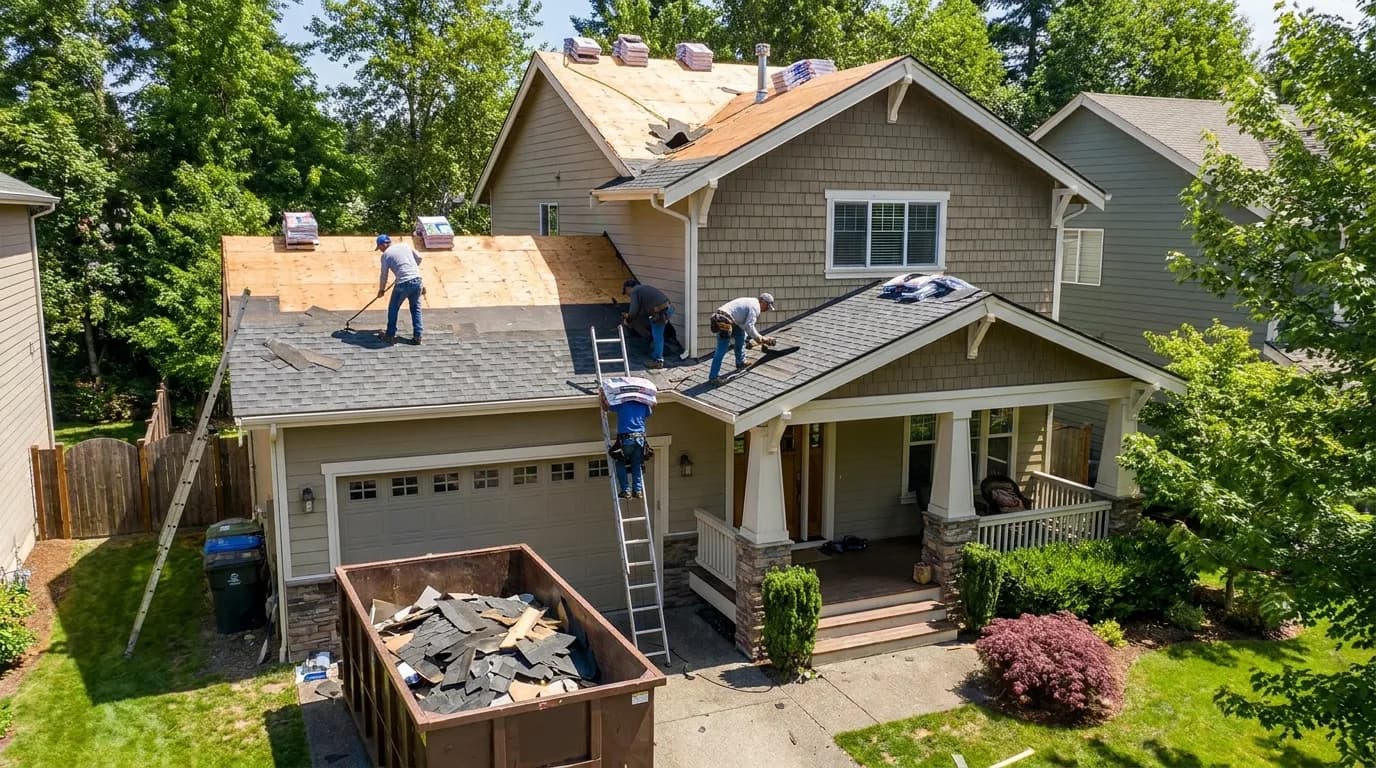
A roofing quote for a full replacement should read like a bill of materials plus a description of the work, not a single number. Below are the line items you should expect on an asphalt reroof of a typical Airdrie home, whether it is a bungalow in Thorburn or a two-storey in Kings Heights.
| Line item | What it should specify | Why it matters |
|---|---|---|
| Tear-off | Number of existing layers removed, down to the deck | Layover reroofs are cheaper and shorter-lived; you should know which you are getting |
| Disposal | Bin, hauling and dump fees included | Often a surprise extra on cheap quotes |
| Decking allowance | Price per sheet of plywood/OSB replaced, and how many sheets are included | Rot is only visible after tear-off; a per-sheet rate stops it becoming a blank cheque |
| Underlayment | Synthetic or felt, product name, full coverage | Synthetic is standard practice now; felt is a cost cut |
| Ice-and-water shield | Product name and where applied: eaves (to at least 600 mm inside the wall line), valleys, penetrations | Standard practice in Alberta and the main defence against ice-dam leaks |
| Shingles | Manufacturer, product line, grade (architectural, Class 4), colour, number of squares | The single largest material cost and the one most often substituted |
| Starter and ridge cap | Manufacturer starter strip and ridge product, not cut-up shingles | Cheap substitutes fail first in Chinook winds |
| Flashing | New step, counter and chimney flashing, pipe boots, drip edge, valley metal | Reusing old flashing is a common shortcut and a common leak |
| Ventilation | Type and count of vents, net free area, whether intake at the soffit is checked | Undersized ventilation voids many shingle warranties |
| Cleanup | Magnetic nail sweep, debris removal, protection for landscaping and driveway | A roof sheds thousands of nails |
| Permit | Whether a permit is required and who pulls it | Usually not for like-for-like reshingling; see the permit guide below |
If any of those rows is missing from the roofing contract, ask. The two most revealing are the decking allowance and the shingle line: a contractor who writes "30-year shingles" without a brand and product is leaving room to install whatever is cheapest on the day. On permits, our guide to roofing permits in Airdrie, Alberta explains when one is needed. For what each of those items contributes to the total, our roof replacement service in Airdrie page explains how we itemise every quote.
Payment terms, the roofing deposit and Alberta's prepaid contracting rules
Alberta regulates businesses that take money before delivering work under the Consumer Protection Act's prepaid contracting rules. In broad terms, contractors taking deposits are expected to be licensed for prepaid contracting and to either post security or limit the deposit they take. The details change, so confirm current requirements with Service Alberta at https://www.alberta.ca before you pay anything. The point is that a company asking for half up front in cash is not following the usual model.
A reasonable payment structure for a residential reroof looks like a modest deposit to secure materials and a date, a possible progress payment on a multi-day or multi-trade job, and the balance on completion after you have walked the roof edge and yard with the crew lead. Payment by cheque, e-transfer or card gives you a record; cash discounts are a red flag for a company that may not be around to honour a warranty.
The contract should also state the total price, whether GST is included, what is excluded, and how extras are priced. On the last point, decking replacement priced per sheet and disclosed before installation continues is the norm. A vague "additional charges may apply" with no rate is not.
Start dates, finish dates and weather clauses
A roofing contract should state an expected start window and an expected duration, and it should be honest that both are subject to weather. Roofing in Alberta is a weather business. Rain, wind over about 40 km/h, and temperatures below the shingle manufacturer's sealing threshold all stop work, and a contract that promises a firm date with no weather clause is either naive or written to be broken.
What you want is a clause that says the contractor will notify you of delays, that a partially stripped roof will be dried in with underlayment and tarped at the end of every day, and that the job will not be left open over a weekend. Read our guide to how long a roof replacement takes for realistic timelines by roof size. In peak hail-repair season after a storm like the one on August 8, 2026, start windows can stretch to weeks; a written date protects you from being bumped by a bigger job.
Change orders: what happens when the deck is rotten
The most common mid-job surprise on an Airdrie reroof is soft or rotted decking found after tear-off, usually along the eaves where ice dams sat for years, or around a chimney or skylight that leaked slowly. The second most common is a ventilation problem that has to be fixed for the manufacturer warranty to apply. Both are legitimate; both should be handled by a written change order.
- The contract states the per-unit price for decking replacement before the job starts.
- The crew shows you the damaged area, or photographs it, before covering it.
- You approve the extra in writing (text or email is fine) before the work proceeds.
- The change order shows the quantity, the rate and the new total.
- No other scope changes are made without the same process.
A contractor who finds rot and simply shingles over it is doing you no favours, and one who finds rot and adds $2,000 without showing you is doing something worse. The change-order clause is how you avoid both.
Warranty wording: workmanship versus manufacturer
Every reroof carries two warranties and the roofing contract must keep them separate. The manufacturer's warranty covers the shingle product against defects, and its length, coverage and the conditions that void it are set by IKO, BP, GAF, Owens Corning, Malarkey or CertainTeed, not by your roofer. The workmanship warranty covers the installation, which is where most leaks actually come from, and it is only as good as the company behind it.
The contract should state the workmanship warranty term in years, what it covers (leaks from installation defects, flashing failures, blow-offs in normal wind), what it excludes (storm damage, foot traffic, other trades), and how to make a claim. It should also say whether the manufacturer's extended or system warranty is being registered, by whom, and confirm that the products used qualify. Many extended warranties require a full system of matching starter, underlayment, ridge cap and ventilation, which is another reason the itemised list matters. Our guide to roof warranties explained goes through the fine print.
At Apex Roofing Airdrie, we put a written workmanship guarantee on top of the manufacturer warranty on every reroof, and it is on the contract, not on a handshake.
Insurance, WCB and the lien holdback
Two documents protect you if something goes wrong during the job. The first is a certificate of commercial general liability insurance, which covers damage to your property and injuries to third parties. The second is a Workers' Compensation Board (WCB) Alberta clearance letter, which shows the contractor's account is in good standing, so an injured worker on your roof does not become your problem. Ask for both, dated within the last 30 days, and confirm the named company matches the one on your contract.
Alberta's Prompt Payment and Construction Lien Act allows subcontractors and suppliers who go unpaid by your contractor to register a lien against your property. The Act provides for a holdback, commonly 10 percent, that the owner retains for a set period after completion. Whether that applies to your job and how to handle it is worth a question to a lawyer or Service Alberta; at minimum, know that using a company with an in-house crew and direct supplier accounts, rather than layers of subcontractors, sharply reduces the risk.
Cancellation rights and the storm-chaser clause
Alberta consumer protection rules give you cancellation rights on certain contracts signed at your home, typically a cooling-off period of ten days for direct sales. The specifics depend on how and where the contract was signed; confirm the current rules with Service Alberta. A legitimate contractor will tell you about them without being asked. A storm chaser will try to get you to sign and pay on the doorstep before you have read anything.
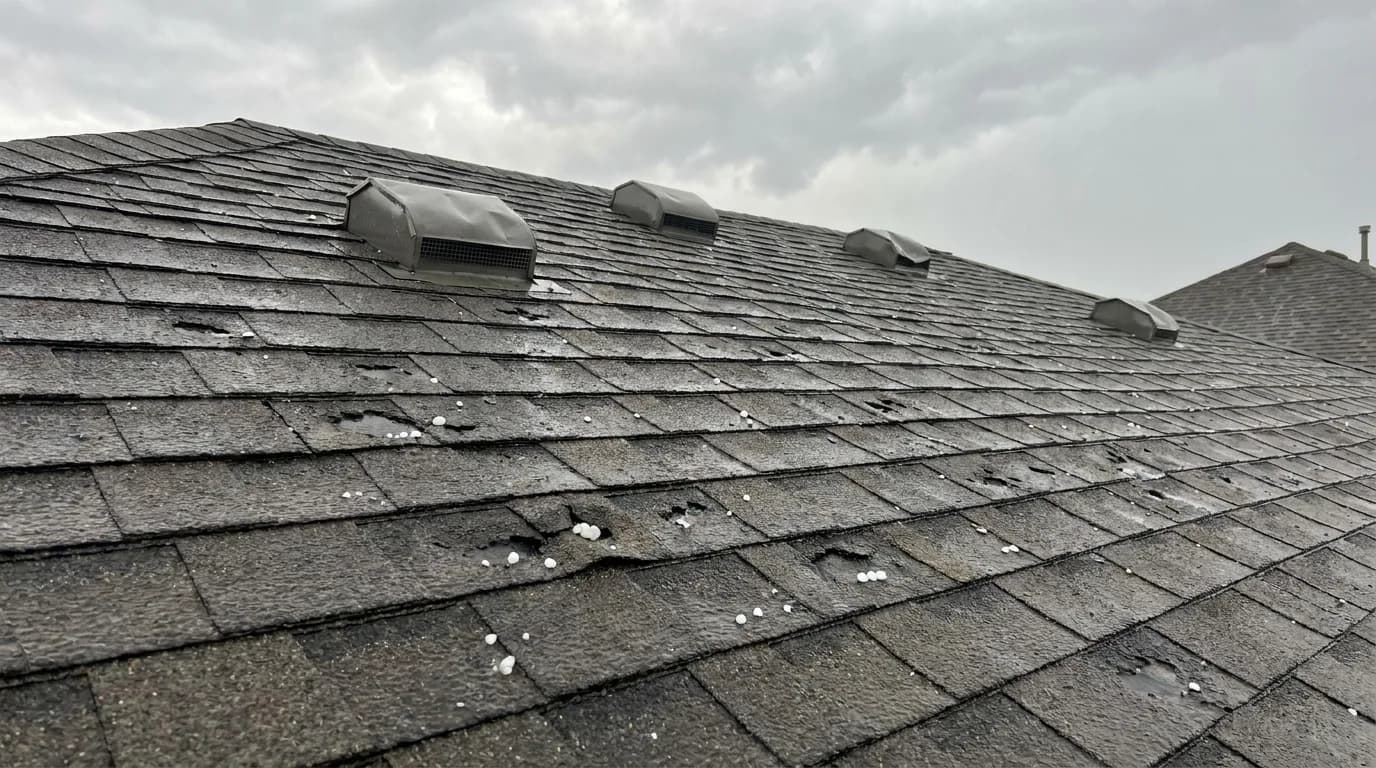
Watch for contracts that assign your insurance claim to the contractor, authorise them to negotiate with your insurer on your behalf, or make the contract contingent on the insurer's approval with a cancellation fee if you back out. In Alberta you choose your own contractor on a hail claim, and you do not need to sign anything to get an insurer's estimate. Our guide to roofing scams and storm chasers in Alberta covers the patterns that appear after every major hail event.
Roofing contract checklist: tick every line before you sign
Print this and go through your roofing contract line by line. Anything you cannot tick is a question for the contractor before you sign, not after.
- Scope: full tear-off stated; number of layers; disposal included.
- Materials: shingle manufacturer, product line, grade and colour; underlayment product; ice-and-water product and coverage; starter and ridge cap; flashing (new, not reused); drip edge; vent type and count.
- Decking: per-sheet price and included quantity.
- Price: total, GST status, exclusions, and how extras are calculated.
- Deposit and payments: amount, timing, method; consistent with Alberta prepaid contracting rules.
- Dates: start window, expected duration, weather clause, daily dry-in commitment.
- Change orders: written approval required before extra work proceeds.
- Warranty: workmanship term, coverage and exclusions; manufacturer warranty registered and by whom.
- Insurance and WCB: liability certificate and WCB clearance letter attached, company names match.
- Permit: who applies, cost included or not.
- Cleanup: magnetic sweep, debris removal, property protection.
- Cancellation: your rights stated; no insurance assignment clauses.
- Signatures: legal business name, address, GST number, signed by someone with authority.
Notice that "lowest price" is not on the list. The cheapest quote is often the one missing the most rows.
Questions to ask a roofer before the contract is drawn up
A few questions asked in the driveway save a lot of contract negotiation later. Who exactly will be on my roof, employees or subcontractors? Which shingle product, and can I see the wrapper on install day? What is your decking price per sheet? What happens if it rains mid-job? Who registers the manufacturer warranty? Can I have your insurance certificate and WCB letter? How do you handle extras? When was the last Airdrie roof you did that I can drive past?
The answers matter less than how easily they come. A company that quotes hundreds of roofs a year has the paperwork ready and answers without flinching.
Get an itemised quote you can actually compare
Every estimate from Apex Roofing Airdrie is a free, no-obligation, itemised written quote from an on-site visit, with the product names, the decking rate, the dates and the warranties on the page. Our crew is local and in-house, and we carry the insurance and WCB paperwork you should be asking every roofer for. If you have a quote from someone else and want to know what it leaves out, bring it along; we are happy to walk through it line by line. Book a same-week estimate and put the contract to the test.
Written by the Apex Roofing Airdrie crew
Practical guidance from the local roofers who inspect, repair and replace roofs across Airdrie and Rocky View County every season. We review our guides against current Alberta practice and update them when materials, code or insurer behaviour changes. About our team.